Tag Archives: mind

… prayer …

When I hear of colleagues and friends who are having a stressful time, I usually exit my often self-defeating stream of thoughts and clear my mind – so my well-wishes can broadcast clearly. What works for me is tuning into thankfulness and often a little prayer or song comes to mind.

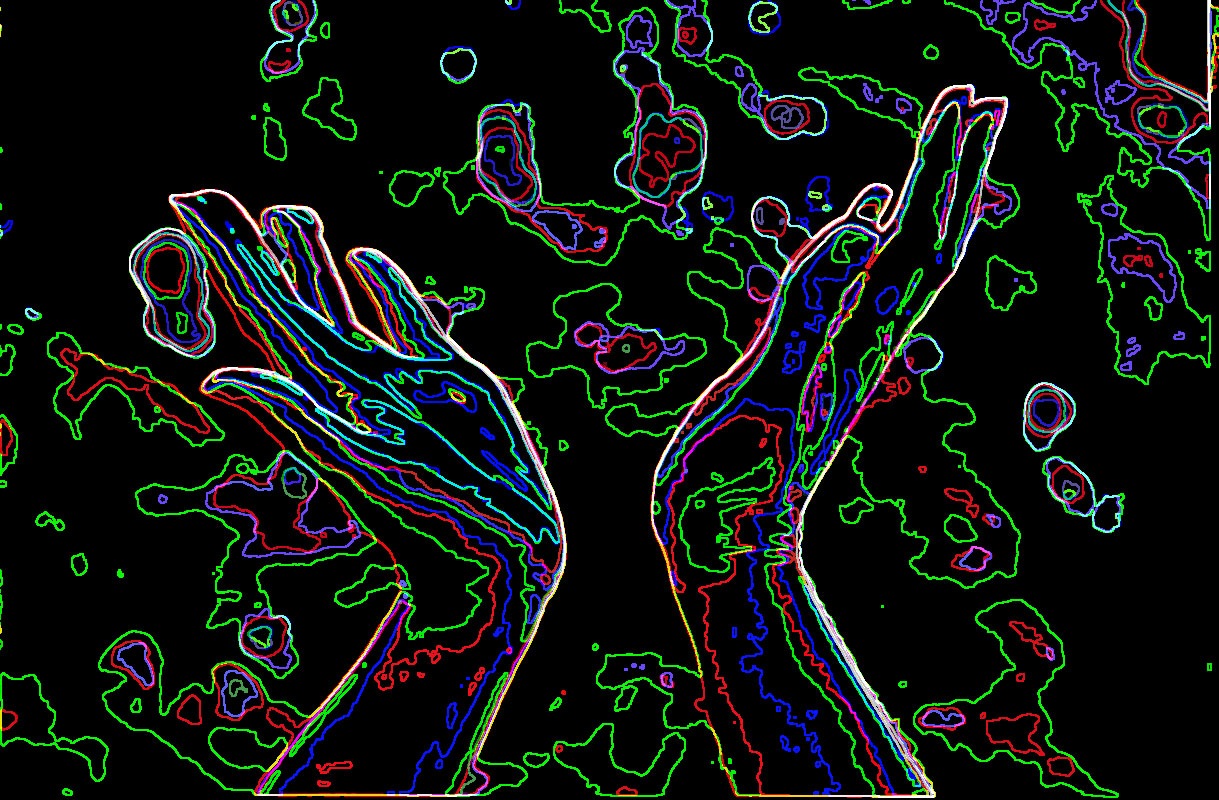
An image transformed during a rare attempt to be adventurous with photoshop.

An image transformed during a rare attempt to be adventurous with photoshop.


Who or what are my little prayers addressed to?                                                                                                                       The One in me I’m not ready to manifest and therefore bow to.


Below is a German song that came to me just now.

The text misses two dots above the ‘o’ in the word ‘schonen.’ I’d be grateful if someone could point me to a source for dots.


Dank Dir fur jeden schonen Morgen

Dank Dir fur jeden neuen Tag

Dank Dir dass ich all meine Sorgen

Auf Dich legen mag.

Very freely translated: Thank you, for every lovely morning, thank you for every novel day. Thank you, that I may leave my sorrows in your wisdom’s way.

Some time ago I shared my favourite prayer, also a song, with words by Hazrat Inayat Khan: …https://courseofmirrors.wordpress.com/2011/05/08/my-favourite-prayer/

11 Comments

Filed under Blog

… global vision & synchronicity …

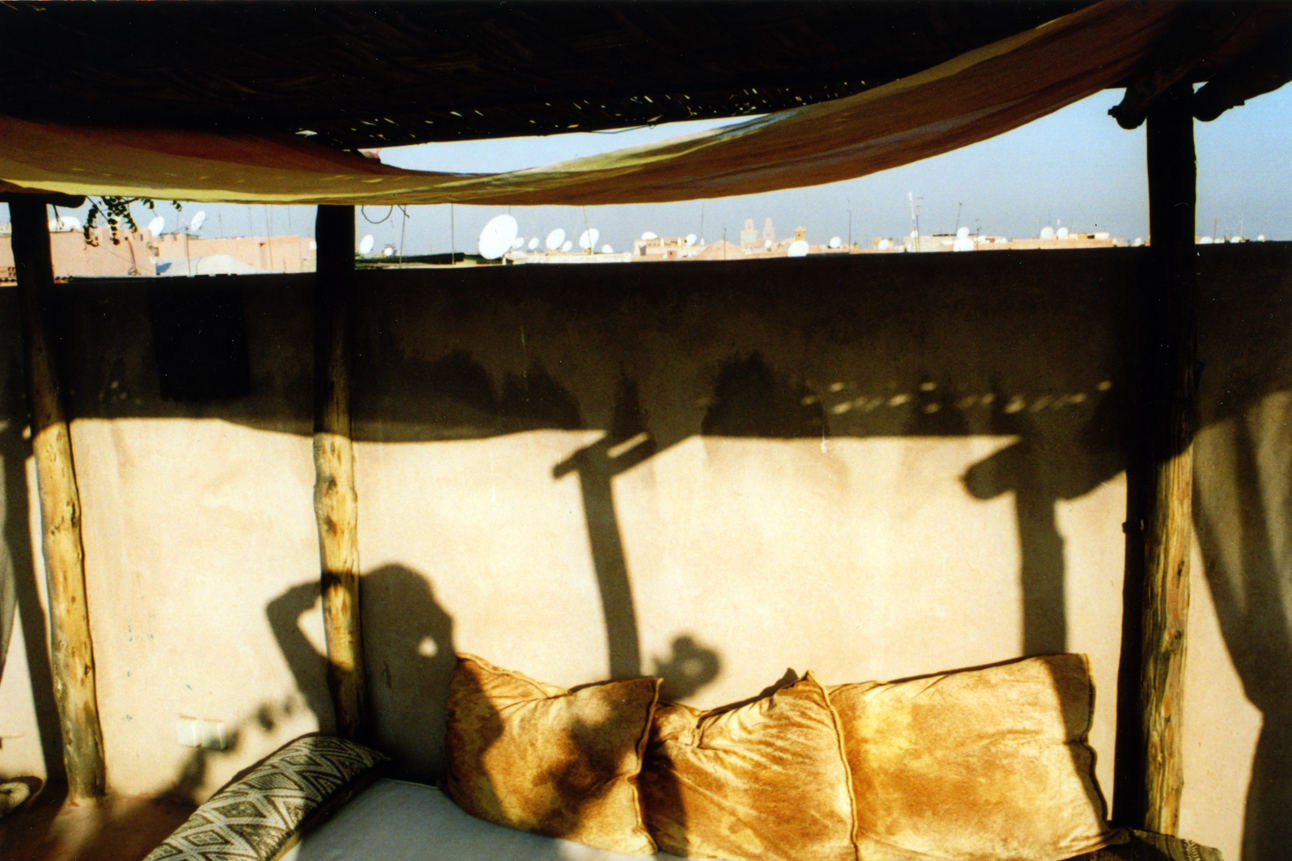
Moroc, Marrakech Riad roof, golden vision - low     Less than 80 years ago, across the world, only about 200 televisions sets were in use. Today, a simulated reality confronts us with our collective mind. A click away, we sample the zeitgeist and witness some disturbing trends, like the continuous robbery of world resources.

How do we filter the mass of information? Do we shout treason when we see the failure of economic systems that allow 1 % of the population to own 40 % of global wealth, or when we discover that certain corporations privatise water –  even rainwater  –  in underdeveloped countries? Traversing from one patch of light to another, do we make connections that apply to our scope of action? Or, lacking a meaningful context, are we hypnotised by this enlarged mega-screen, the global vision of a world that can mirror our inner fragmented states  –  a world where every viewpoint exists simultaneously, that over-exposes so-called reality and blinds us? Are we ourselves living inside the screen-myth, as extras, freed into bits, a reservoir of data?

As writers, what in-forms us, what material do we disseminate? And what is it that makes choices, switches from one networks of influence to another? What guides us through the data jungle? Are there perceptions beyond our wilful personalities that determine, agencies that operate through us from beyond time and space? I’m weary of the term God. For me this agency is a consciousness composed of past, present and future intelligences, a light-wave that echoes different signals according to the receptivity and needs of each animated vessel. Humans can be dense, but a calm mind recognises clear signals of this wave, since they chime with a joyous feeling of connectedness, a larger symphony, maybe even the sense of a destined purpose.

In my experience, this consciousness operates through synchronicity. There exist conceptual similarities between the behaviour of sub-atomic particles and archetypal images, (C G Jung and Wolfgang Pauli discussed such similarities in the context of synchronicity), a striking link between mind and matter that has been largely ignored. It implies that mind and matter connect, relate, mirror each other, and reciprocate. The process is given life in the realm of the psyche as imagination, not structured by time and space, but through layers of meaning illuminated by consciousness. Psyche is the changing room between cosmos and pneuma.

Moroc, Marrakech, Riad roof, shadow - lowJung thought of archetypes not as fixed, but as changing predispositions, universal patterns inherent in the human psyche, images that comprise our collective past and future unconscious. A pattern stirred into activity by an emotionally charged event in our lives, brings home related experiences, often through meaningful coincidences in a non-linear and a-causal way.

Such synchronicities draw on a deeper life-sap, as if an eternal intelligence were at work.

David Bohm proposed that subatomic particles remain in contact with one another regardless of the distance separating them, and that their separateness is an illusion. Here a facet of his thinking – a short first part of a 5 part series  http://www.youtube.com/watch?v=oGyDVF8GrLk                                                                                              A great and humble man I greatly admire. He has beautiful hands  🙂

A dream, for example, can attract an outer event, a meaningful coincidence, that powerfully substantiates a message from the unconscious, often accompanied by a numinous quality. In my own life, synchronistic events have challenged my narrow reasoning at certain crossroads towards seemingly irrational decisions. Exploring a hunch, while not attaching to the outcome, often clarifies a situation for me. Consequently, I respect the unconscious, and heed my intuitions.

‘The universe does not exist, out there, independent of all acts of observation. Instead, it is in some strange sense a participatory universe.’ – John Wheeler

Just as scientist are branching out from traditional imperatives that divide the world into subjects and objects, so we all, presented with a global vision, must modify some of the archetypal imperatives, images and ideas that have outlived their use, and look for symbols that carry a fresh mystery.

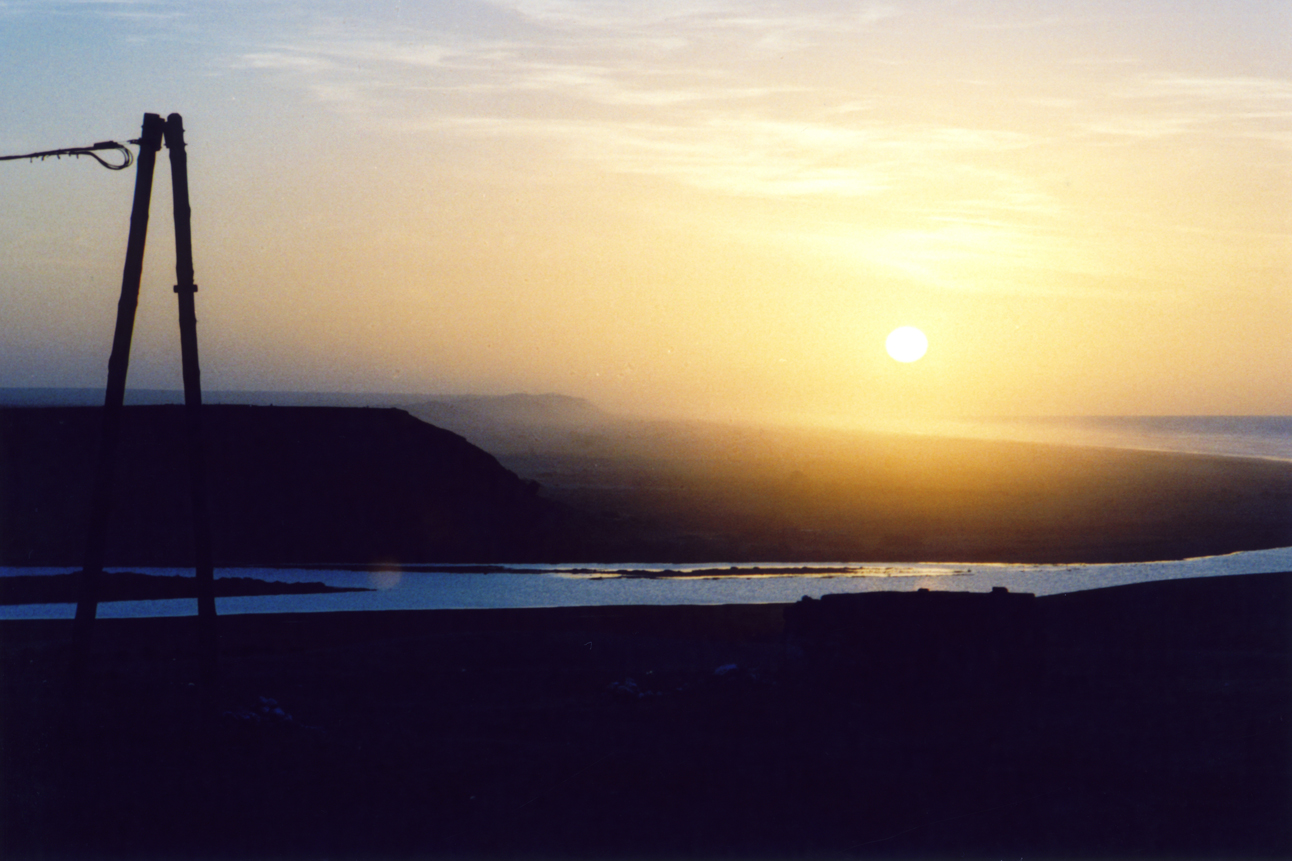
Moroc, Plage Blanche sunset - low

While sun and moon are forever formative and feed our imagination, they are no more our only lights.

With new associations from science come fresh symbols and exciting probabilities, in that we can question assumptions about time and progress, about the relationship between matter and mind, about our view of social units, and even the meaning we give to gender.

‘It’s a poor sort of memory that only works backwards’. The White Queen says to Alice.

*    *    *

Many of my posts here touch upon similar themes, but maybe pattern-which-connect in particular: https://courseofmirrors.wordpress.com/2012/05/25/pattern-which-connects/

6 Comments

Filed under Blog

… snow and silence …

Snow is a miracle that touches a deep silence in me, a silence I cannot speak of well – words seem wanting. And still I try, as many of us continue doing in various ways.

We may share the banter of our lives, our witty observations, our advice, our humour, our existential pain, or we may reach out with a warm hand of reconciliation. I do all these things, at times, but underlying my often competing voices, I tend to channel my experiences into the roaming eye of future becoming. If friends misread me, I like to console myself with this Ralph Waldo Emerson’s quote –

Nothing is at last sacred but the integrity of your own mind.’ 

Each one of us has unique perceptions, and there is enormous inspiration and joy in our differences.

P1110081

So much for the still sphere snow touches in me. The other miracle about snow is that it draws my attention to the surreal nature of reality, highly sensuous, yet stripped of  bright colours and removed from habitual seeing – to the bones of shapes, to deeper gestures and essences. For me, a snow-covered scene is a metaphor of restraint that slows down or speeds up time to alien levels of dimension. It occasions one of those time-independent spheres, where I make pattern-connections and create new meaning.

A simple poem follows my thoughts on the miracle of snow.  I tried to limit myself to  5/7/5  Haiku count, and hope it delights:

in silvery vaults

an angel ruffles her wings –

a leisurely shrug –

Grass and snow, low

the sparkle begins –

slipping from her hand as a

powdery shower

of crystalline downs –

feathery light on the silence

hidden between breaths –

fine gauze swirls and drifts

across the tired features

of a dreaming land

to drape every

plane and angular slope in

white geometry

Snow-tracks, 2 low

My appreciation for the geometry of life resonates with my love for black & white photography, see two posts back:

https://courseofmirrors.wordpress.com/2012/12/31/the-inner-silence-of-henri-cartier-bresson/

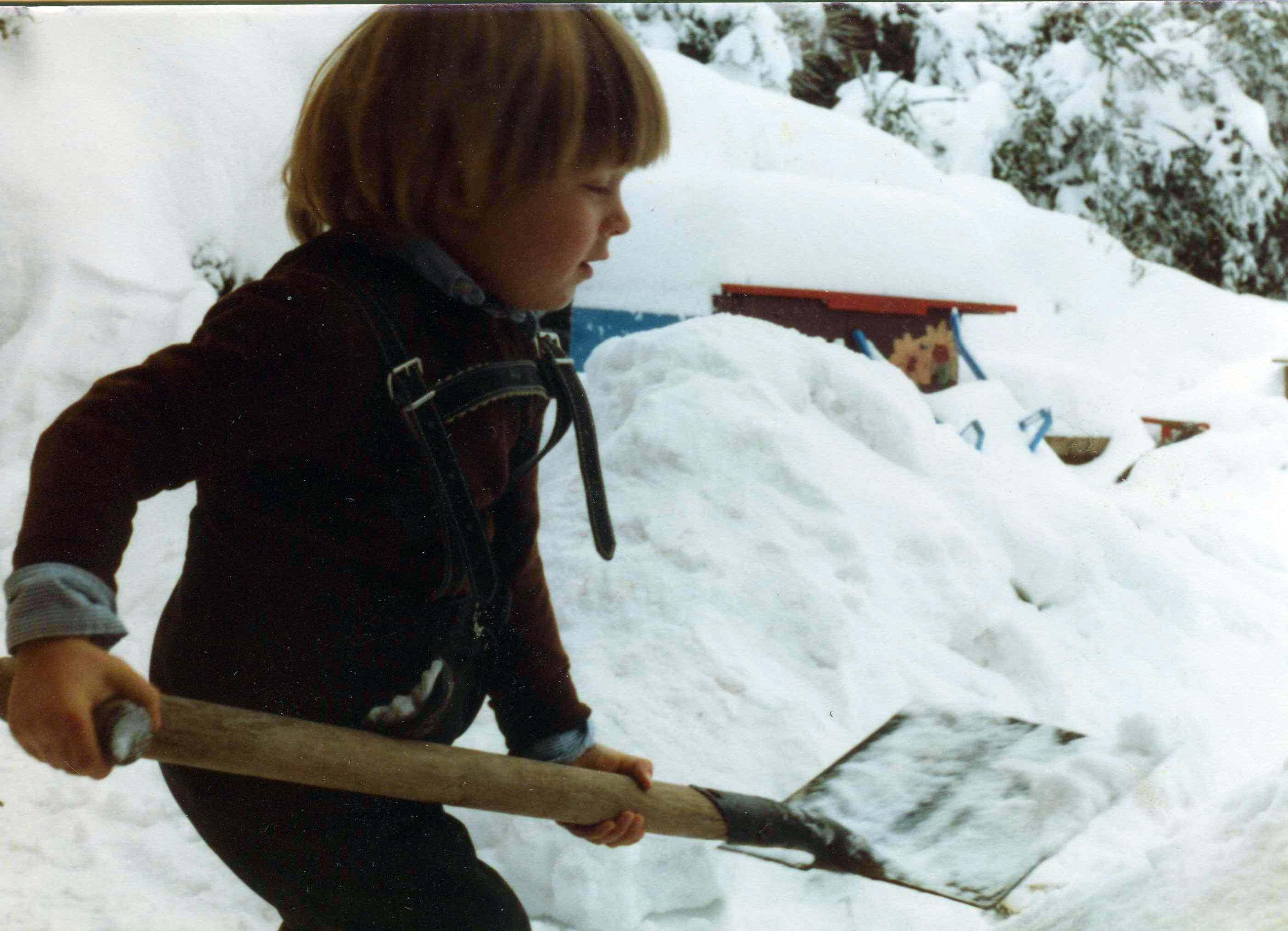
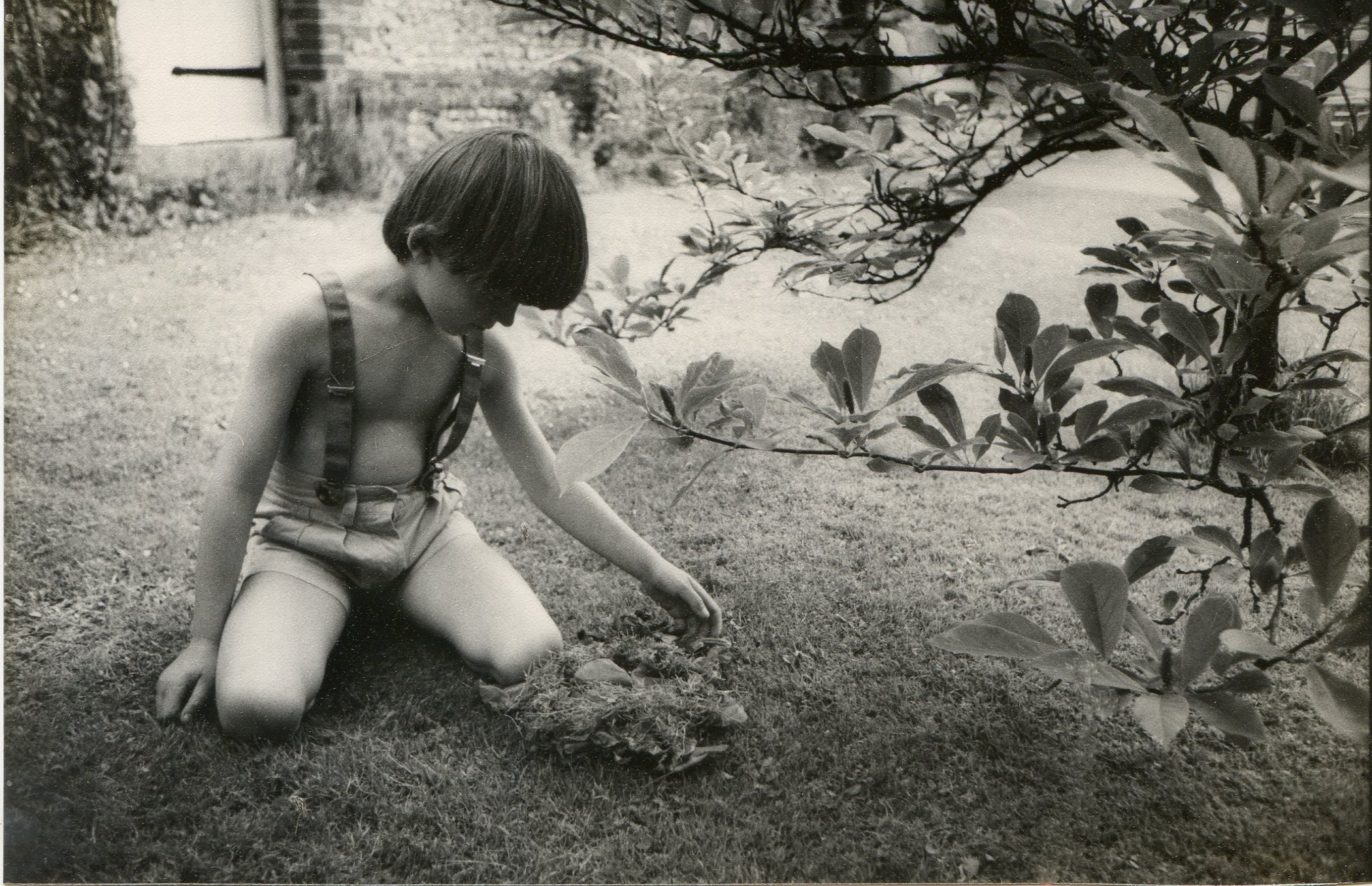
There are other pleasures to be had from snow, as my enthusiastic and capable son demonstrated in 1982 Somerset, and as the adorable puppy of a friend of mine discovered in Dorset yesterday.

Yeshen shovelling snow, 82

Susanne's puppy

16 Comments

Filed under Blog

… the shock of disorientation – the unknown …

Change is the only reliable constant. I sometimes wished I could pledge my life to a convincing reality. For me, what is derived from facts or beliefs in our culture often lacks a vital ingredient – the acceptance of the continuous process of harmony unfolding from cycles of necessary chaos – so I watch the river flowing and imagine stories and create worlds.

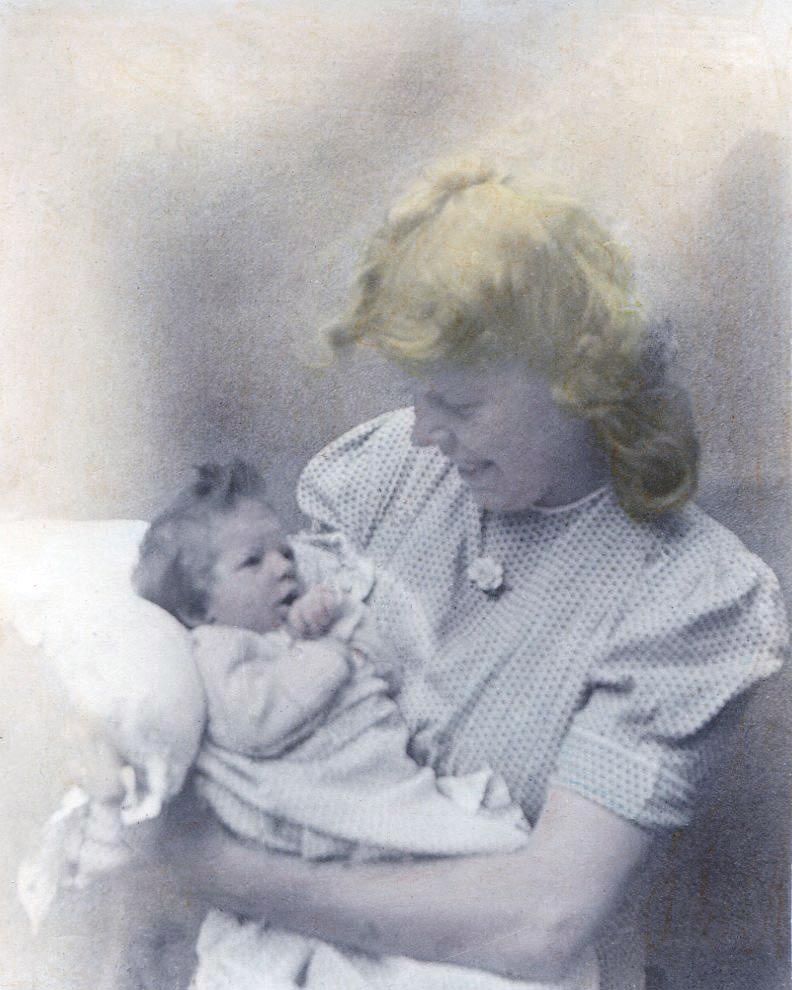
four weeks old

Though my childhood had its trials, I was lucky to be held during my early years, both physically and metaphorically, which gifted me with a sense of basic trust, a right to exist, a right to question, and a playful irreverence. Maybe this is why my little wisdoms play with facts and beliefs, dust the inner mirror, value what is emerging, the ever higher level of coordinates of truth and beauty, like a trajectory of the love I received.

For someone not held at birth, change can be dreaded, or seen as a means of escape from an unsafe environment. What we all have in common, is a longing for sufficient containment, and periods of relaxation.

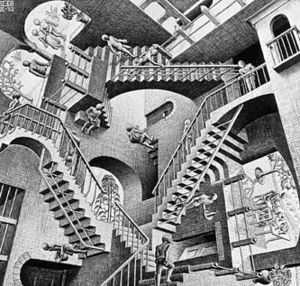
Some years ago, I walked up the stairs of the Social Services centre where I worked. The building had two sections of offices that mirrored each other in design, with exactly the same stairway on each side. A lift in the middle accesses both sections. Being lazy, I usually took the lift up to the third floor, though I liked to take the stairs down on the far side. On this particular day I wanted exercise, and time to ponder a logistic problem. Steeped in thought, I headed for the staircase in sight. Arriving at my floor, I entered the office with its familiar layout and was hit by a sense of total disorientation. Wrong, all wrong, on my desk sat a row of bright, fluffy soft toys, not the company I had round my computer. In a split-second I noticed other irregularities, the quality of light – a smell of heady perfume. The entire atmosphere in this office was alien, the wrong music – alien to my expectations.


M. C. Escher

First thought – I must have time-jumped, returned from the past – my mother often marvelled at my vivid imagination. More laser-fast thoughts – perceptions are tenuous and dreamlike reality is self-made and its boundaries are fragile. Calling in episodes of lucid dreaming, my fear switched to wonder, until I grasped the situation. With my thoughts dwelling in abstract orbs, I had walked up the wrong set of stair, expecting to see my desk, which was however in the other, mirror-part of the building.

Being sandwiched between two realities, the expected and the unexpected, the cognitive familiar and the unknown, tends to cancel time for an instant, long enough to escape the compulsion of identifying with objects or thoughts. Shocked awake, the mind is free and spacious, a delightful state.


Disorientation, if tolerated, can bring a sudden glimpse of unidentified consciousness in action.

Not discounting trance and meditation, or the vast variety of personal experience – mind and body work in synergy if we loosen up our ideas and learn to relax. In synergy the combined intuitive intelligence of body/brain and the collective mind brings us into resonance with a reality beyond our comprehension – the reflection of a universal order. Not a miracle.

As a child I once dived into a swimming pool. The brilliant sky was of the same blue as the tiles that lined the floor and walls of the pool, which would have been fine had I not opened my eyes under water – the blue world overwhelmed. I lost all sense of direction and panicked. With no way out, I instinctively shut my eyes, which calmed my racing heart and allowed my muscles to relax. My body naturally floated upwards.

I later learned, during experiential Sufi practices, that apt intentional exposure to situations depriving us of habitual coordinates, can prepare us to face change, the unknown, with less stress and more equanimity.

Have you had moments of disorientation – even if it was putting a cup to your lips expecting coffee and tasting tea?

*    *    *

The theme of ‘disorientation’ came up after recent posts by a blogger friend, Joe Linker (see blog roll), on Buckminster Fuller – his thoughts on synergy are powerfully relevant today – http://en.wikiquote.org/wiki/Buckminster_Fuller

… We are now synergetically forced to conclude that all phenomena are metaphysical; wherefore, as many have long suspected — like it or not — ‘life is but a dream’ …

Buckminster Fuller

So we might as well dance … http://www.youtube.com/watch?v=pXpaI5IMQsg&feature=related


13 Comments

Filed under Blog

… imagination …

From its fountain, the psyche pours compositions of light and darkness, images shaping the natural elements that engender our sensual experiences. Countless composite images trickle through our mind. Do we pause to ponder which to let pass, like dry leaves floating down the river, and which to absorb deeply into our heart – and give life to?  

The images we energise are re-envisioned and re-told through our perception. Nature spirits, archetypes, monsters and fairies, heroes and villains, deities, gods, devils and angels, the dark unknown – mankind’s entire mythical landscapes are encapsulated by the imagination and affect our everyday life.

Through this phenomenological process we discovered language, numbers and geometry, tools that potentially enable us to re-create nature. Some scientists maintain that matter constitutes the real and all phenomena derived from nature’s building blocks is not real. But deep inside we know … our search for the world we intimately desire attracts to us enlightened scripts. Through trial and error we learn to apply these scripts, and, for better or worse, we make our worlds real. Worlds within worlds are born from the imagination.

The young in heart have a natural curiosity to play and explore what lies beyond the horizon, literally and metaphorically, with a keen drive to discover facets of their soul reflected in all matter, experiencing matter not as dead, but as vibrantly alive and animated.

Consider the present demand for SF or its playful sister, fantasy, or magic realism. These genres overlap, they deal with the human condition, the desire for a home, in the widest sense – be it for another planet, an island, a heaven, a yesterday, a tomorrow, or the grail of now. To achieve the latent desire for the ineffable, a writer, any artist, becomes a deep-sea-diver of the psyche, and, on coming up for air, re-arranges the booty found there. Some of my favourite writers are R Heinlein, C S Lewis, R Bradbury, I Asimov, M Atwood, Garcia Marquez. Jorge Luis Borges, Doris Lessing and Ursula Le Guin …

It’s time to re-discover the bridge between the two hemispheres of our brains and balance the outlook of our material societies, value reverie, art and fresh perspectives, engage in play, song, dance and storytelling.

Time to embrace unstructured activities, which sidestep reason’s often pre-conceived observations, the epistemological obstacle, as Gaston Bachelard calls it, the grid of unconscious mental patterns that block seeing through our deeply personal and grounded experience, through the heart.

I’ll never forget the visit during the 70s, instigated through a Sufi friend, to a small Trappist community in the vicinity of Washington DC. The handful of monks rotated duties in house and gardens, interspersed with reading time in their fabulous library. Each one of them also enjoyed an annual 40-days-silent-retreat in one of the huts sprinkled over the many-hectare-estate. My then partner and I were privileged to listen to some of the monks sharing their vastly different cosmologies, psychologies and spiritualities. What struck me was that each monk had a vastly different idea about God, including one admitting that he thought God was man-made and no less real for that. What a stimulating place to be, where you are respected for the envisioning of your world.

 ‘The imagination is not a state; it is human existence itself.’ – William Blake

‘In our most private and most subjective lives we are not only the passive witnesses of our age, and its sufferers, but also its makers. We make our own epoch.’  – C G  Jung, 1934 

‘If children grew up according to early indications, we should have nothing but geniuses.’ – Johann Wolfgang von Goethe

Relevant links:

Re: CS Lewis  http://users.etown.edu/d/DOWNINDC/dungeon.htm

Gaston Bachelard  http://www.newworldencyclopedia.org/entry/Gaston_Bachelard

The World Within, C G Jung video  http://www.youtube.com/watch?v=Z6MHRHKd4Ps&feature=related

See also https://courseofmirrors.wordpress.com/2012/05/25/pattern-which-connects/

For those with a metaphysical interest in the imagination, here is an article of mine: https://courseofmirrors.com/wp-content/uploads/2011/03/science-of-the-heart.pdf

Excerpt … The mystic aims to raise sensory data to a higher level. This happens via the visionary imagination, the ‘presence of the heart’, and it happens precisely in that intermediate world where material beings take form and where material beings dissolve again to become subtle bodies. This intermediate world exists not at the other end of the universe, but right here with us, between each of our breaths. This is how the presence of the heart affects, how ideals, in whatever way we conceive of our Ideal, become realised. What we give being to in this intermediate sphere inevitably appears and becomes endowed with an outward reality. This is so, even when it is visible only to the inner eye, the eye of the heart, just beyond what can be perceived by the senses.

*     *     *

The rose image: detail of ‘The virgin of the unfading rose,’ eighteen century.

13 Comments

Filed under Blog

… pattern which connects …

For a recent book-sharing with a group of irreverent friends (archventures), I had the wish to share so many books that I instinctively reached more or less blindly into one of my shelves. Books in my home, I must add, are in a muddle. The only order to speak of is their relationship to each other through time. I picked Alice in Wonderland and Mind and Nature. During our afternoon of reading there was not enough time to do honour to the latter, Gregory Bateson’s work. So I said I’d write up something. Oh dear. After pages and pages, I finally recalled this was supposed to be a blog-post, not a novel .

I first came upon Gregory Bateson books, ‘Steps to an Ecology of Mind’ and ‘Mind and Nature,’ during the early 1980’s, after his death. The clarity of his notion that biological forms arrange themselves through relationships struck a deep chord. What totally resonated with me was his thought that the structure of nature and the structure of mind are reflections of each other.  He had a broad perspective for a Biologist, and wanted to build a bridge between the facts of life and behaviour, and what we know of the nature of pattern and order. He was active in, and connected up many different fields of study – anthropology, psychiatry, biological evolution and genetics and the new epistemology which comes out of system-theory and ecology. He challenged basic assumptions and methods of scientific investigations, pointing to the processes beneath structures. He quoted Goethe …

A stem is what bears leaves

A leaf is that which has a bud in its angle

A stem is what was once a bud in that position …

And he provoked new thinking: ‘What pattern connects the crab to the lobster and the orchid to the primrose and all four of them to me. And me to you?’ 
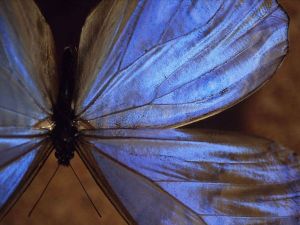
His interest in morphology, the study of structure and form of organisms, involved context, meaning and communication. He distrusted reductive models of cause and effect, the scientific approach that lines up parts and classifies them, focussing on quantity.

Comparing systems, one to another, he perceived the mind as an ecological system. And he used the analogy that ideas, like seeds, can only take root and flourish according to the nature of the system receiving them. This thought alone deserves deep contemplation.

He had a way with stories … ‘There was a man who had a powerful computer, and he wanted to know whether computers could ever think. So he asked it – Will you ever be able to think like a human being? – The computer clicked and rattled and blinked, and finally it printed out its answer on a piece of paper, as these machines do. The man ran to pick up the printout, and there, neatly typed, read the following words: ‘That reminds me of a story.’ 
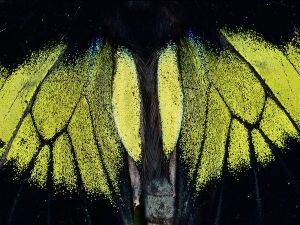
Concerned about the decimation of aboriginal populations (he did field-work with Margaret Mead), the degradation of ecological systems, economic oppression, and senseless wars and arms races, he took these ominous signs of contemporary life to be manifestations of deeper disorders, which he defined in terms of cybernetic systems of communication and meaning that comprise life, mind, and society. In his view, consciousness dominated by purposeful thought has a linear structure that establishes goals and ways for attaining them without being necessarily sensitive to the circular network of cause and effect that orders the systems.

Looking at human consciousness as an adaptive system, he thought the cure for its inadequacies, evidenced by the negative side-effects of purposive rationality, was not to reject it in favour of a passionate non- rationality, as in the extreme romantic position, but to augment and complete it by engaging with non-discursive, pattern-comprehending and emotional processes. He advocated the befriending of the unconscious aspects of the mind through utilising images and metaphors.

In a civilization which separates mind from body, mythologies about the survival of a transcendent mind are often meant to soften the idea of death, or even deny death as part of life. For Bateson, who saw the mind as being immanent not only in pathways of information which are located inside the body but also in external pathways, death took on a different aspect. ‘The individual nexus of pathways which I call ‘me’ is no longer so precious because that nexus is only part of a larger mind. The ideas which seemed to be me can also become immanent in you. May they survive, if true.’  (Afterword to a collection of celebratory essays, 1972)

Yet there are scientists that can no more perceive the language of nature, and politicians who feel beleaguered by sections of society that seek balance and a fresh context towards ‘an ecology of mind.’  The extreme factions of believers, for what else are they, should look again at the bridge  Bateson prepared.


This lovely video gives a taste of what it is all about :

Update … I discovered recently, in 2019, that some the links in this post don’t seem to work anymore. Here , however, is his daughter’s great documentary on Vimeo, unfortunately not free, apart from the trailer.  https://vimeo.com/ondemand/bateson

Looking at the structure of nature and the structure of mind being reflections of each other, it becomes obvious that not only does nature mirror our habit of thinking, but our thinking also mirrors the state of nature. Ecology and psychology must therefore both engage in listening, and seeing, and working ceaselessly towards the integration of knowledge and the re-adjustment of a dynamic balance.

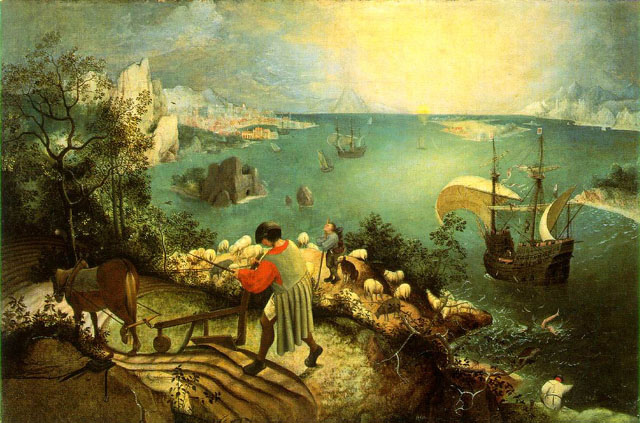
I could go on, but want to bring in a famous painting of Icarus by Brueghel.                                                             Anthony Stevens, a brilliant expositor of Jung’s thought, used the painting as cover for the first hard-cover edition (1995) of his book Private Myths.

http://www.anthonystevens.co.uk/index.html
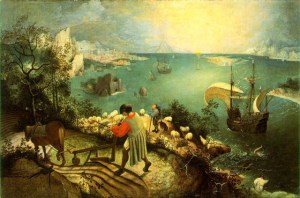


Stevens quotes from a poem by Wystan Auden:

In Brueghel’s Icarus, for instance: how everything turns away

Quite leisurely from the disaster; the ploughman may

Have heard the splash, the forsaken cry,

But for him it was not an important failure; the sun shone

As it had to on the white legs disappearing into the green

Water; and the expensive delicate ship that must have seen

Something amazing, a boy falling out of the sky,

Had somewhere to get to and sailed calmly on.

What goes up must come down. Who knows how many Big Bangs there were before the one we so ardently explore? There is an organising intelligence behind life’s cycles, while consciousness forever expands. Thinking in metaphors we can perceive similar patterns, forms in nature and mind, cosmos and psyche, mirroring each other across scale and time. In other words, life teems with realities we can tune into, as long as we assign context and meaning.

Check out Gregory Bateson’s books ‘Steps to an Ecology of Mind’ and ‘Mind and Nature.

His family continue his work: His daughter Nora and his wife – Mary Catherine Bateson:   http://www.interculturalstudies.org/main.html

Peripheral Vision

 http://www.amazon.com/exec/obidos/tg/detail/-/0060926309/mead2001centenni

Free chapters of Angels Fear:  http://www.oikos.org/angelsfear.htm

Nora Bateson, recently created a film:

http://www.anecologyofmind.com/

Last not least, the themes:  pattern which connects, mirroring and bridging, are subjects of my novels.

25 Comments

Filed under Blog

… Is a parent ever unemployed ? …

Something new – AVAAZ encourages individual campaigns now . I started one. Click the link and read the proposal, and if you like the idea vote for it.

http://www.avaaz.org/en/petition/Put_parents_on_the_payroll/?fHNQuab&pv=0

Yes, it makes sense – put parents on the payroll – tied to the attendance of courses.  Here some more thoughts as to why …

Family structures are changing for a variety of reasons. No use blaming parents and home-makers that are unable to cope. No good romanticising the past. Parents and carers need  support in this time of flux.  New structures are emerging, single parents or carers, for example, seek families of heart and mind. Our policy-makers don’t seem to take note of this phenomenon. Think of independent units around a communal space that would allow socialising and the sharing of skills.

And why not use the psychological knowledge that has been available for decades? Why is this knowledge not disseminated to parents? Corporations require further training from their employees, offer courses that teach people skills, because they realise these skills improve business.

Parenting is important business, without question the most important one.  Years ago, when I was involved with Parent-Link, sharing skills, I had an idea how to create more opportunities for parents and raise their status. You can read about it by clicking on the AVAAZ link above.  And please vote, or come up with your own ideas.

Present social policies often force a mother or father to beg alms from the state, become unemployed. Is a parent ever unemployed?  Children are the future and must concern us all. I meet many parents, who, even with heightened awareness, tenacity, creativity and sacrifice, struggle to stay sane.

Thanks

3 Comments

Filed under Blog

… the wild horse of the mind …

I thought I open the window a bit to what I’m immersed in, drafting the sequel to Course of Mirrors, called Shapers. Another mythic adventure, and more. The short piece below is not representative of the tense action this story has plenty of, but depicts a pivotal moment. The scenery is  Eire, where time-zones overlap. In 2550 AD the island is called Sax, where Rhonda, the super-controlling power, cast their misfits.  In the excerpt below, Tilly (Cassia in Ana’s story) has arranged for Cara and Mesa to meet in Kerry during the 1970s.

The theme touches on the creative process. Something for my writer friends. I welcome any feedback to the draft.

*    *    *

Tilly’s ruined estate on the Kerry peninsula was one among many places around the world where past and future began to cross or run parallel during the 1970s. Not all drop-outs travelling through Derrynane were aware of the phenomenon. Those open to the new wavelengths either tuned in, or received no more than garbled white noise. The going slogan was – love, don’t think – though it should have been – love and think – and stay grounded. These were turbulent times. Traditionalists abhorred the breaking free of conditioning. Leaps into the unknown frightened them.

This is Cara’s time, and these are her thoughts: Personal myth is a complex self-creation, mainly unconscious, but less so once we replace the postulates we inherited with our own, and are drawn to our psychic kin. Every night when the body rests we visit beings in other spheres. We may discount these sojourns as dreams unrelated to our daily existence. Yet bridging occurs when we value inner dynamics and re-story the associative symbols of images. Resonance momentarily fills the void between the known and the unknown, and meaning is assigned to events. Some good people trust in God, but then abnegate their creativity. Are we not the desire of a divine will? Are we not the ears, eyes, nose, hands and feet of a universal intelligence, of which we are the deed? Does not our speech derive from one sound? And is love not the creed that breathes all things and directs the movement of all spheres? I don’t understand the need to prove or disprove a universal intelligence that is within and all around us. The world I create is imperfect and suffers from on-going flux. But I can bring my small flame to its shadows.

Now that Cara’s myth caught up with her, and she was confronted with the net of postulates she had cast into the future. She found herself challenged to engage with what she animated, because she was animated by it.

Gutch spotted Tilly talking to Cara and Mesa in the hall. He was bursting with pleasure. ‘I found my clan,’ he said. ‘This place is teeming with talented actors. We’re going to do some magic theatre. Are you joining us?’

‘I need to take care of something,’ Tilly said. Can you keep an eye on Gart?’

‘That devil had some weird conversion trip and is sound asleep under the table.’

‘Excellent. Let him sleep.’

When Cara and Mesa arrived at the cottage across the atrium, Tilly had lit a fire in the hearth. A nest of chairs invited them, and the smell of fresh coffee. ‘Have some,’ she said, ‘pointing to a steaming pot, ‘and there’s chocolate cake, too.’ Mesa soaked up the atmosphere, transported to Ana’s world, reminded of Cassia’s kitchen. Tilly placed a small leather pouch in Cara’s lap. ‘Here, forged by fire, polished by the sea, a gift of remembrance.’

Cara opened and turned the pouch. A black stone fell into her hand – smooth as marble, yet radiating warmth and shining in the glow of the fire. ‘Ana’s talisman!’

‘Yes, and you might as well own it.’ Tilly paused, gazing into the flames. ‘I have a favour to ask from you, for Mesa’s benefit.’

‘What favour?’ Cara poured cups of coffee for everyone, dished out giant slices of chocolate cake and added a dollop of whipped cream to each.

‘Your future, Cara, has come to visit you. Mesa returned to assimilate what was lost to her. With Ana’s story you re-animated her soul. Certain events in history require beings to return, to right things or bring a message.  Mesa will take on her role in the odyssey of the Ypocs. And she’s going to be the narrator of your story, Cara.’

‘Huh, this takes a leap of the imagination. I haven’t even smoked the weed.’

Tilly smiled. ‘You know what it takes. Uncovering a personal myth is different from writing a Hollywood script. To help Mesa to re-connect with random creative processes, I want you to explain to her in as much detail as possible how your mind works.’

Cara heaved a breath. ‘The idea sucks every thought from my head.’

‘That’s a good start.’

‘All right, here goes a slice of random micro processing … Momentarily stuck with a paragraph, I remember to stretch my legs. In the kitchen I snatch a yogurt from the fridge. I notice a sticky shelf – mental note – clean it soon. Dark clouds gather outside, looks like rain. I run up to the bathroom and close the window. On the way down, I see dust-clouds on the stairs – mental note. Heading for the desk I stop by the fridge again because I’m now really hungry. I prepare a sandwich – mental note – put butter on shopping list. I use the loo – mental note – toilet paper is running out. Telephone rings. The answer machine kicks in. Just as well, I’ll return the call later – mental note. A letter that needs sending sits next to the phone, I put a stamp on it – mental note – post it. A fly is trapped in the window. I release the fly and study a tree out front that leans over and needs pruning. I quickly assess which branch to cut – mental note. Off to my desk. Passing a shelf I spot the book I couldn’t find earlier. What a relief! I plonk it on my research file and am reminded of an article I need to chase – mental note. The sun shines again. I open the backdoor and listen to the birds. Grass needs cutting – mental note. Finally back with my paragraph the writing flows, sheer bliss. At a natural break in the narrative I decide to go shopping. In the car I have an epiphany relating to a character in my story, to do with birds – mental note. The walker I pass reminds me to visit a certain person – mental note. I recall this person collects small antique tins. I could find him a present – mental note. I think of metaphors, how obsessions, like collecting tins, are really personalised teachings – mental note.’

Mesa had listened with rapt attention. ‘What happens to all the mental notes?’

‘Ha, ha … they’re promises. They’re torture. They heap up. They demand execution. My way to deal with accumulative pressures and gain time to focus on my writing is through procrastination. I’ve become patient with nagging voices. They’re not jailors. They’re easily humoured until the time is right for a blitz. Then I act fast and achieve a great deal in a short time, happy to have cleared the space.

‘But why give these mental notes the power of demands over you? Mesa asked.

Cara glanced at Tilly, who had taken up knitting, as if the dialogue bored her.  What was her agenda? Was this really for Mesa’s benefit? Tilly smiled and said, ‘Go on.’

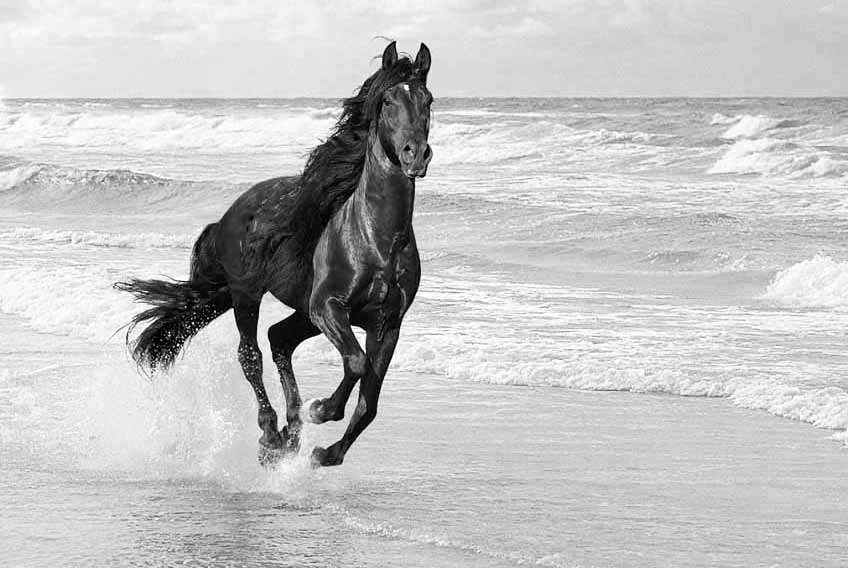
‘It started out as compulsive pattern. I was conditioned to respond to the needs of my environment, and to maintain order. There are exceptions. Some days, it could be the weather, a dream, the stars … from the moment I open my eyes everything flows effortlessly. My brain is relaxed and I attract harmonious thoughts, like I’m fine-tuned to a subtler station, beyond the busy bandwidth of neurotic naggers. The tuning can be learned. It’s like taming a wild horse. I can actually do it, when necessary. But I like letting the horse run wild. I find wild things that way.’

‘We have different conditioning,’ Mesa said. ‘From early on I was trained to tame my mind, to let it rest like a still pond, or focus thoughts like laser beams. Then free play was introduced, disrupting Rhonda’s order, and all went wrong for the Ypoc.’

‘Aha! I bet you didn’t have to juggle a deep conflict, and oppose a controlling father.’

Tilly dropped her knitting. ‘This gets interesting. It’s what Mesa came back for.’

* * *

Apologies: The origin of the image of the horse is unknown to me.  Many thanks to the photographer.

10 Comments

Filed under Blog