Tag Archives: metaphors

… the child in us …

Close your eyes and imagine standing on a beach … warm sand under your bare feet – a light sea breeze brushing your skin – gulls sailing above the sparkling crests of waves. Breathe a while, to the rhythm of the surf lapping at the shore – in – out – in – out – in – out – and let your eyes rest on the silver skyline.

There is nobody here but you – and a visitor – a child you invite to appear as it will.

At what distance does the little person appear?

Observe its posture, age, gender?

What do you sense about it?

Does it look at you, or not?

Is it curious, shy, withdrawn?

Notice your thoughts and feelings, don’t draw conclusions – do nothing.

Sense the realm of consciousness this little person lives in, and still your mind. If the child plays with shells do the same, remaining where you are. If the child skips along the surf, wait. If it takes one step towards you, wait. If it turns its back on you or walks away, sit down and wait. All the while communicate silently – I’m here as a friend.

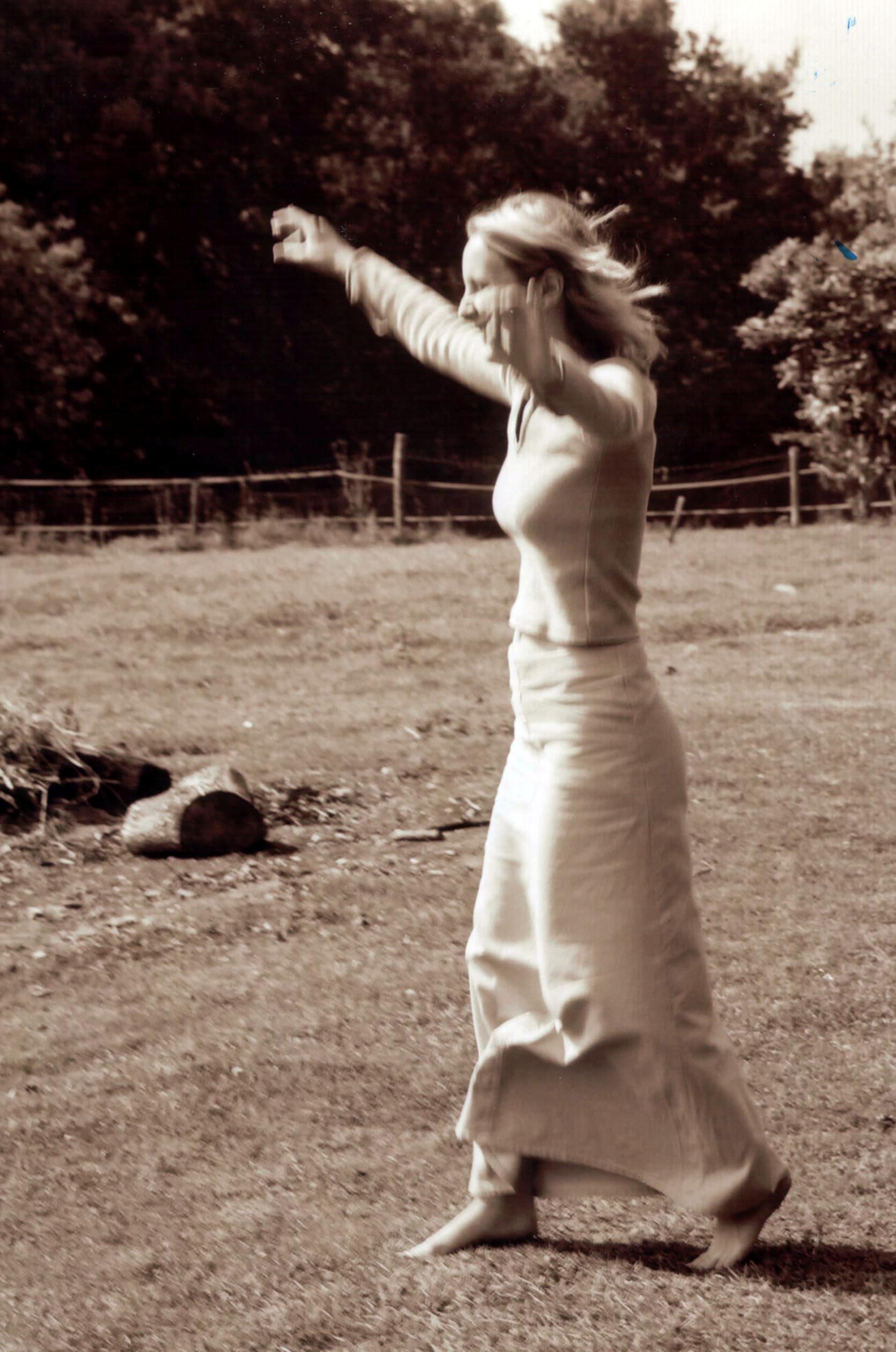
Yeshen in Surf, colour - lowresHe or she may come close – or not – play with you – or not. Be patient. This little one represents your essence and must be free to approach the strange adult you’ve become as it chooses and when it’s ready. Maybe next time. Don’t over-act. Even if the child is friendly, keep in mind it may try to please your expectations. Remain calm, interested, approachable.

*    *    *

Visiting an imaginary coastline, metaphorically a boundary between the conscious and the less conscious psyche, brings insights even if no images emerge. Try and silence your usual thinking process. Enter the scene as in a daydream, or have a friend slowly read the text.

Insights change from day to day, according to mood. You could experience joy, get a glimpse of what’s important in your life, or be prompted to engage in frank reflections – a valuable process, helping us to develop empathy.

For example, if sadness or pain knock at the sight of this child, ask yourself … have guardians chided your curiosity and strong spirit, or humiliated your weakness and poor confidence? As a result your own adult may have unwittingly come to reject your child as unworthy, regarding it as ungrateful, stubborn, nagging, or awkward with the shame of buried secrets?  Consider – fear of abandonment, punishment or guilt about early fantasies may compel children to please grown ups in order to cope and emotionally survive. The legacy could be a distrust one’s own feelings. Signals received as pain, or love, might equally overwhelm.

Next time you hear a baby or toddler screams, let’s say, in a supermarket, observe what happens in your body, and watch other shoppers. It grates at our nerves at best, and can trigger physically embedded memories of helplessness, and sometimes more. Good to remember when we  judge people who shout and act irrationally. There are behavioural therapies to desensitize triggers that threaten to overwhelm people with rage. Then again, active imagination is more deeply transforming, and the symbolic expression of complex emotions (see later) frees energy and meaning, making a difference to our collective state of consciousness.

If some of these reflections ring true,  return to the imaginary shore as long as it takes to earn the trust of your child. Your adult’s task is simply to be present, reflect, and allow the younger being to initiate communication.

In daily life, begin to set aside pockets of time for that little person in you, encourage a symbolic process, without pressure, to write or draw about early joys, pains, hurts or dark thoughts, like having hated a parent, or once wished someone to drop dead. Children have such fleeting fantasies when they feel threatened and powerless. It’s normal. Holding on to self blame is the problem.

Suffering brought to consciousness lifts the spell of self blame. Despite appearances of confidence and adult bravado, the child in us is often anxious. Deep down may linger legitimate anger, and, deeper still, sadness and the longing for a precious moment of total acceptance. We call it love. It takes time to soften hearts.

Imagination serves multiple roles. It can draw us into habitual loops of negativity and self harm, or stimulate insights and enhance creativity. Artists know this. Imagination can also heal psychic wounds frequently handed down through generations. The healing aspect is especially powerful when employed consciously. Jung called it ‘Active Imagination.’

In this way, every imaginary journeys can be followed up by freeing condensed energy and meaning – symbolically – through drawing, painting, writing, movement, music or play, allowing what wants to emerge, be it forgotten wonders, or burdens, like unacknowledged anger a child had no means to express in early life.

And most significantly, nurturing a trusting relationship and rapport with our younger being invites the Beloved – our essence – and with it the light of intuition and inner guidance.

‘Lovers don’t finally meet somewhere. They’re in each other all along.’  ― Rumi –

Perhaps all the dragons of our lives
are princesses who are only waiting to
see us once, beautiful and brave.
Perhaps everything terrible is in
Its deepest being something
that needs our love.               
— Rainer Maria Rilke –


The imagery above is in continuation of my last post ‘journey into mystery.’

https://courseofmirrors.wordpress.com/2014/02/06/journey-into-mystery/
23 Comments

Filed under Blog

… journey into mystery …

Close your eyes … switch on a light in the area around your heart and see the image of a rose bud emerge … at first a luminous tip of colour … the bud stirs … the sepals gradually turn outwards. See the petals unfold in a slow and fluid movement … until the rose has opened and exudes its delicate fragrance.

Imagine the rose expanding in size … to a palatial sphere that invites into its passages. Overcome the weight of your thoughts and wander barefoot with feather-light steps towards the luminous centre. Rest here for a while … absorb the tenderness of the realm’s ambience and the exquisite fragrance of rose into every cell of your body.

Rose, autum 4 low crop 2

Become the rose …

Move your consciousness upwards … lift on spirit wings and witness the rose palace merge with the landscape below. Soar higher and look down on clusters of houses, roads, cities, fields, hills, rivers, woods … see the shape of countries, continents, coastlines and oceans spread and curve the horizon. Move higher still, until the whole earth floats in deep space like a marble.

Feeling light and trusting, imagine you are level with the moon and look back at the shining marble turning in space … ribbons of white cloud, blue oceans, pale sands, green forests, red rock and snow-topped mountains – your home – vast in your memory but also small enough to be held in your palm.

Think of the people who have been and are close to you … in love … or alienated by hurt and dispute … people you shelter in your heart or have expelled from it. Sense the mysterious weaving of souls in the tapestry of the universe … your separate thread belonging and active in the creation of earth, the home of your human family.

Know that every sincere thought travels … know the creative potential alive within you is reflected in all life forms throughout the universe …

We are the mirror as well as the face in it.
We are tasting the taste this minute                                                                                                                                                                 of eternity. We are pain                                                                                                                                                                                        and what cures pain. We are                                                                                                                                                                                  the sweet, cold water and the jar that pours. – Rumi


Slowly descend – return to earth – into the rose palace.

Step away from the luminous sphere … let it ebb back into the small flower, petals folding … see the bud float into you open hand … sense how its power wishes to stay alive in you … for its beauty to unfold whenever you need loving. Here is how – place the rose and the whole experience of rose-becoming into your heart.

*    *    *

Over the years I composed many similar imageries with archetypal themes. They are tools of reflection I use with clients and in workshops. When I guide, the process becomes subtly interactive and explorative. Some journeys are safe to walk alone, like the one above, and they are as powerful as your imagination allows.

Should I share more such imageries? Let me know.

Here a more elaborate space visit … http://aeon.co/film/overview/

The poem from ‘Open Secret’ – Rumi transl. by John Moyne and Coleman Barks.

28 Comments

Filed under Blog

… interludes – and poetry by W S Graham …

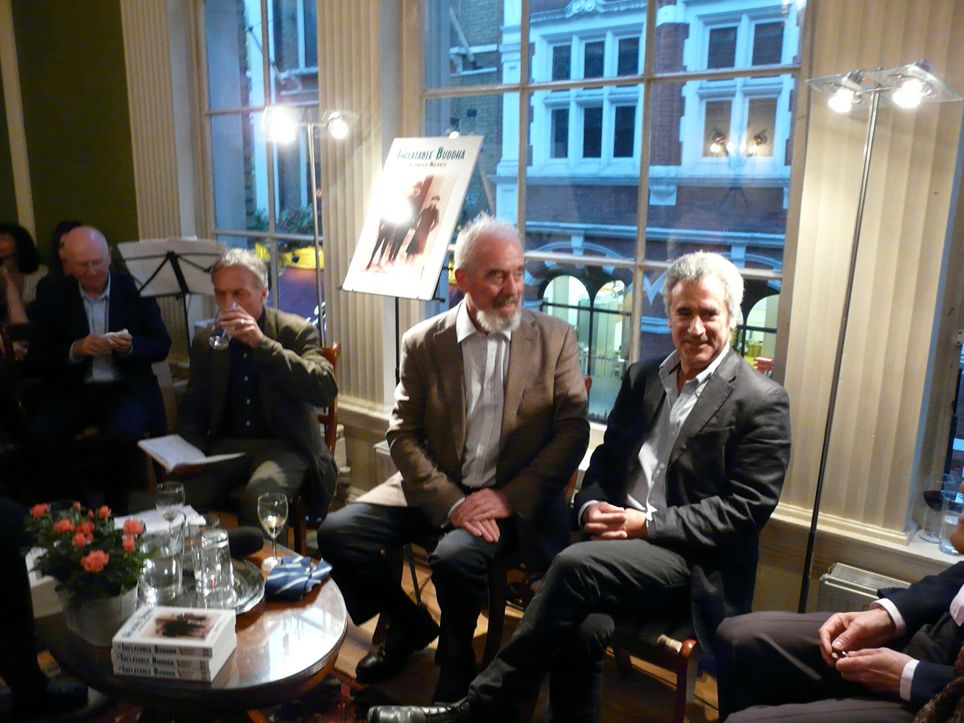
I’ve neglected you, my reader friends, immersed in writing the sequel to ‘Course of Mirrors’ and a few interludes. Like, my writing fixation was pleasantly disrupted last week through meeting my son at Covent Garden, and later attending the launch of ‘The Inflatable Buddha’ by András Kepes at the Hungarian Cultural Centre in London.

Armadillo Central launches 'The Inflatable Buddha.'

Armadillo Central launches ‘The Inflatable Buddha.’


It is the newest project of my to-be publisher http://www.armadillocentral.com/  András’s novel offers a more subtle perspective than officially recorded history, showing the fictional lives and wits of three ordinary, idiosyncratic Hungarians during the twentieth century. The sample readings enticed me, and I’m now looking  forward to reading the book. The well-attended, grand launch event also gave me a taste of what is to come – being exposed to questions about my own epic .


Then came a traumatic interlude to my writing …

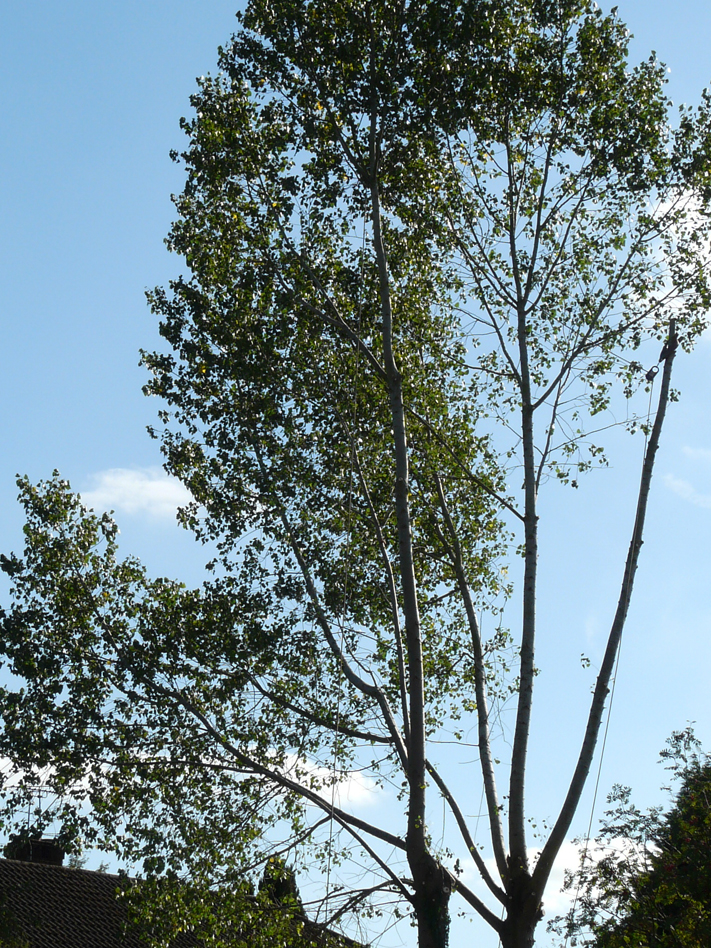
I mourn the shimmer and music of its leaves.

I mourn the shimmer and music of its leaves.

During the last two days, to the grinding noise of chainsaws and a shredder, I mourned the loss of a beautiful poplar/aspen tree in my neighbourhood, which has grown too high for its owner. The now mutilated tree (the image shows a third of its size) will be gone completely next week. I’ll miss the shimmer and the watery music of its leaves, produced by the slightest breeze, and the golden hearts trailing into my garden come autumn. I picked a few early leaves to treasure, pressed to dry in my dictionary.

Today a most pleasant surprise … a poetry book arrived unexpectedly in the post, sent by a Scottish friend/poet, who is at this moment working with a visual artist on a project about Tin-mining in St Ives. Due to blank spots in my education I rely on stumbling upon poets less publicised, and was delighted to receive this gift of an expertly edited ‘New Collected Poems’ by W S Graham. So I thought I’ll share excerpts from his poems – on themes that will chime with fellow writers .

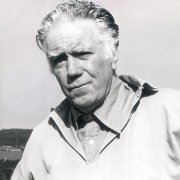
W. S. Graham (1918-1986) grew up in Clydeside, Scotland, and initially followed the footsteps of his father, who was a structural engineer in the ship-building trade. However, a year studying philosophy and literature at an adult education centre outside Edinburgh set him on the path of writing poetry for the rest of his life, irrespective of meagre financial rewards. He travelled to London and New York City, but later lived with his wife in Cornwall.

W S Graham, image by Sally Fear

W S Graham, image by Sally Fear

I was delving into the book this morning. Here some facets, unconnected lines, the first from THE NIGHTFISHING    (1955) – a melodic composition, speaking to the seen and unseen,  from a night in a herring boat out on the North Sea.

… Gently the quay bell

Strikes the held air …

Strikes the held air like

Opening a door

So that all the dead

Brought to harmony

Speak out on silence …

I am befriended by

This sea which utters me …

… Far out calls

The continual sea.

Now within the dead

Of night and the dead

Of all my life I go.

I’m one ahead of them

Turned in below

I’m borne in their eyes

Through the staring world.

The present opens its arms …

… Each word is but a longing

Set out to break from a difficult home. Yet in

It’s meaning I am …

… The bow wakes hardly a spark at the black hull.

The night and day both change their flesh about

In merging levels …

The iron sea engraved to our faintest breath

The spray fretted and fixed at a high temper,

A script of light …

… The streaming morning in its tensile light

Leans to us and looks over on the sea.

It’s time to haul. The air stirs its faint pressures

A slat of wind …

… The white net flashing under the watched water,

The near net dragging back with the full belly

Of a good take certain …


Some of the last lines of – THE NIGHT CITY – a turning point … I found Eliot and he said yes … T S Eliot was then with Faber and Faber. He became Graham’s publisher.

… Midnight. I hear the moon

Light chiming on St Paul’s

The City is empty. Night

Watchmen are drinking their tea …

Between the big buildings

I sat like a flea crouched

In the stopped works of a watch.


From IMPLEMENTS IN THEIR PLACES (1977) I picked a refrain from WHAT IS LANGUAGE USING US FOR ?

… What is the language using us for?

It uses us all and in its dark

Of dark actions selections differ …


And last – AIMED AT NOBODY – Poems from Notebooks (1993)

PROEM

It does not matter who you are,

It does not matter who I am.

This book has not been purposely

made for any reason.

It has made itself by circumstances

It is aimed at nobody at all.

It is now left just as an object by me

to be encountered by somebody else.


*    *    *

This may well be how it feels for most writers who simply can’t help sculpting experiences into words. What do you think?

6 Comments

Filed under Blog

… the mystery of thoughts …

Every child is truly switched on to the imagination. But frequently the environment belittles the imagination, and the gift can end up suppressed under the blanket of rationality. People with a strong creative drive may settle down to live in a straitjacket, and then find themselves overwhelmed by images, thoughts and associations, especially around full moon.

As a child I was intensely curious about the spaces between things, and about light. Had I not locked horns with an opinionated physics teacher I might have taken up the challenge to study sciences. Another fascination of mine was pattern repetition – how the veins in a leaf resemble the shape of a tree. And scale – how tiny bodies, big bodies, our planet, galaxies, the universe, are all reflected in each other.

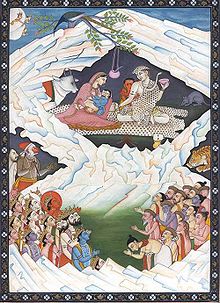
 Hindukailash, image from wikipedia.

Hindukailash, image from wikipedia.

Like Indra’s net of pearls in Vedic mythology, where the surface of each pearl mirrors all other pearls, a metaphor for the interconnected networks of mutual relationships between parts and systems. Mount Kailash is depicted here as the timeless and motionless centre of this net, housing Shiva’s family.

Not only visible structures are held together by interactive nets, our social systems, political systems, spiritual systems and the internet operate within a network. We can observe that the invisible psyche (mind) functions not only through logic, but also through aesthetics, independent of space/time, and is held by another kind of coherence – a net of meaning. And what is generated from this net of meaning is a finer kind of energy, not evidenced by present scientific methods – namely intelligence.

We knew it all along – research established that our emotional experiences leave an imprint in the cells of our body, that the brain is more than the squishy mass under our skull but a medium spread throughout the body via a network of neurotransmitters. There have been hair-splitting arguments for and against the idea that the recipient of an organ can experience personality traits of the donor, based on the speculation that each cell carries a hologram of the whole body and its memory.

Feelings and thoughts arising in my consciousness are filtered through my body’s memory. They also depend on my state of anxiety or calm, my interest, attitude and other variables, such as the weather, my relationship with the elements, with people, the collective mood, solar flares, or the constellation of planets. On some days, maybe after a meaningful dream, or a spell of mantras, thoughts are forming clearly on the breath, like reflections in a still pond, on other days, thoughts rush in on water rapids threatening to drown me, or they plod in like turtles, slow and guarded.

Objective reality is not the only game there is – what in the universe has not interacted at some point in time, irrespective of distance? Everything is linked up. Einstein called it the ‘spooky action.’

The motherboard for this wonderful instrument we call the brain, which comprises our whole body, is formed in the womb. I believe the intelligence involved in creating any specific body must lay in more than known DNA codes, must include the indeterminable non-local DNA of a spirit world. Our body foremost operates like a receiver and transmitter for as many wavelengths our radio station in time attracts or is able to tune into.

From this station, stabilized by repetition, I sort clusters of sensations and feelings, and process thoughts and ideas attracted to me from the collective psyche, a vast sea, which the individual mind must learn to navigate. Images and signifiers are coloured by whatever I consciously or unconsciously mirror and relate to.

No matter how much information we absorb, through our senses, through language and concepts, through comparing patterns, reasoning and calculation, everything, comprehended or not, will be filtered through the body’s motherboard that keeps adjusting to experiences and expanding fields of perception, fields that extend way beyond personal memory. All this information is continuously re-shuffled, as is the meaning we assign to it.

Our body is a motherboard – planet earth is a motherboard – the whole cosmos is a motherboard for a spirit we cannot comprehend, an invisible hand that touches us like a breeze, made visible through what it animates.

All we know is that images, thoughts and ideas are reflected in us. They travel via synapses in the neurons of our body, they travel on the air between minds, they travel among stars, they echo from under the sea, waving to us as plankton, they speak to us from every creature, from every blade of grass, from every stone, and they beep from within our bodies through tweaks of pleasure or pain. All matter, all people and objects we interact with store the memory of that interaction, including interactions with things we hate or nurture, and with places we live in.

We don’t invent anything, we re-discover, re-connect and re-create from the vast storehouse of knowledge and information provided to us by nature, and by the spirit between matter that makes up the cosmos, an embodied being that is becoming conscious of itself.

We are on the air, sent, programmed, radioed and broadcast, identified with all manner of things, ideas and beliefs. Yet if we look deep inside our emptiness, we know, the non-material aspects of us can potentially detach and be free, maybe enjoy tea with Shiva’s family and witness the world turn on its axis – a state some people experience spontaneously or through meditation. A state of pure consciousness not identified with this or that. In the meantime, we could at least be kind to ourselves …

‘Thoughts are beings that generate … One thought of kindness gathers a thousand beings of love and kindness around one.’            Hazrat Inayat Khan

I don’t know if a singular mind/psyche, the incredible art of a lifetime, survives the physical death of the body. Maybe a coherent individuated mind leaves a dent, an influence within the collective psyche. Like the organ of the heart, over time, achieved its definite function. But does it matter? Nothing is lost. All information is continuously re-shuffled into new forms and constellations.

Digital storage provides a metaphor – information exists and roams freely in the wind of the collective psyche (unconscious) until it is embodied and gathered towards a purpose. Every event has a consequence. Nature is exacting, but also generous, what has been repressed in the flow of evolution will always return in one form or another.

Everything alive speaks to us, and all such relationships are processed in the stories we share, stories being containers of the richest kind of information. 

*    *    *

You can source other posts on the theme of reflection in the tag cloud on the right of this page. Like this sequenc of posts: https://courseofmirrors.wordpress.com/tag/hazrat-inayat-khan/

And you might want to check out posts under the tag ‘psychology,’ especially the one on ‘awareness,’ where I share R. Assagioli’s 10 psychological laws – how the body affects the mind and the mind affects the body. https://courseofmirrors.wordpress.com/tag/psychology/

*     *    *

This post also appeared at  Third Sunday Blog Carnival: September 2013 | Third Sunday Blog Carnival

17 Comments

Filed under Blog

… storytelling and the primary world …

Knowledge is not the rare gem it used to be. Then again, without recording, analysing, sorting, summarising, calculating and disseminating mega quantities of data we’d have none of our ingenious toys to play with. Without statistics our systems would grind to a halt, and, yes, it’s annoying that almost daily yet another quantitative study announces what’s good, or detrimental, for our well-being. Thankfully, none of the churned out evidenced facts can make a claim on meaning. Humans remain idiosyncratic. We apply messy values to our life-choices, and we frequently ignore the logical road signs of scientific landscapes, or blank out the hassle of linear time.

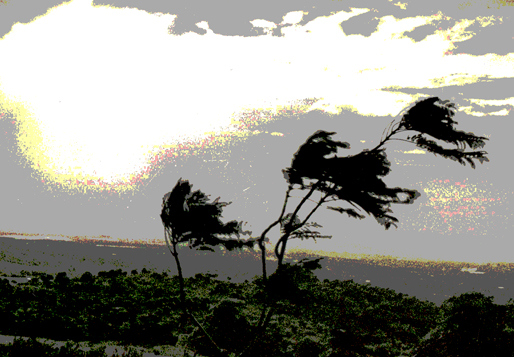
Wind


Instead, we are tossed along by emotional encounters, the unexpected, are awestruck after a quantum leap of intuition, and are generally guided by what appeals to a body/mind that likes the stimulation of nature, her moods, seasons, the phases of day and night suggesting action or repose, like the in-and-out-breath, between which we may catch a glimpse of a dream, a relevant truth, an eternity even. Hardly anyone I know is without this conflict: liking order and control, as well as yearning for rapport with the dance and rhythm of nature.

Over 300 years ago G W von Leibnitz, who could’ve been a poet, was gripped by an emerging idea, to collate all human knowledge and to systematize it via a common language. Computers would have been his bliss. He loved to correspond with most scholars in Europe during this baroque era. And he might have gone some way to explain the whole universe in the hope to solve every conceivable problem. Paradoxically, he also stated … the universe had to be imperfect otherwise it would not be distinct from God. Near the end of his life, Leibniz wrote in a letter that combining metaphysics with mathematics and science through universal characters would require creating what he called:

a kind of general algebra in which all truths of reason would be reduced to a kind of calculus. At the same time, this would be a kind of universal language or writing, though infinitely different from all such languages which have thus far been proposed; for the characters and the words themselves would direct the mind, and the errors — excepting those of fact — would only be calculation mistakes. It would be very difficult to form or invent this language or characteristic, but very easy to learn it without any dictionaries …

Source:  http://en.wikipedia.org/wiki/Characteristica_universalis

I’m not doing honour to this remarkable man, so here is a sketch of a biography … http://www-history.mcs.st-andrews.ac.uk/Biographies/Leibniz.html … should you have the patience to read this, note the time it took for letters between Leibniz and Newton to be delivered, which makes me admire the tenacity of these scientists.

The notion of a calculus for a universal language intrigues and troubles me. Nature speaks a language everyone understands. Key-terms of my mother tongue (see my last blog post) easily bring back the plot of land my toddler feet bounced across. The stories I most enjoy writing grow organically, with tendrils of their roots nourished by the alpine woods and hills of my childhood.

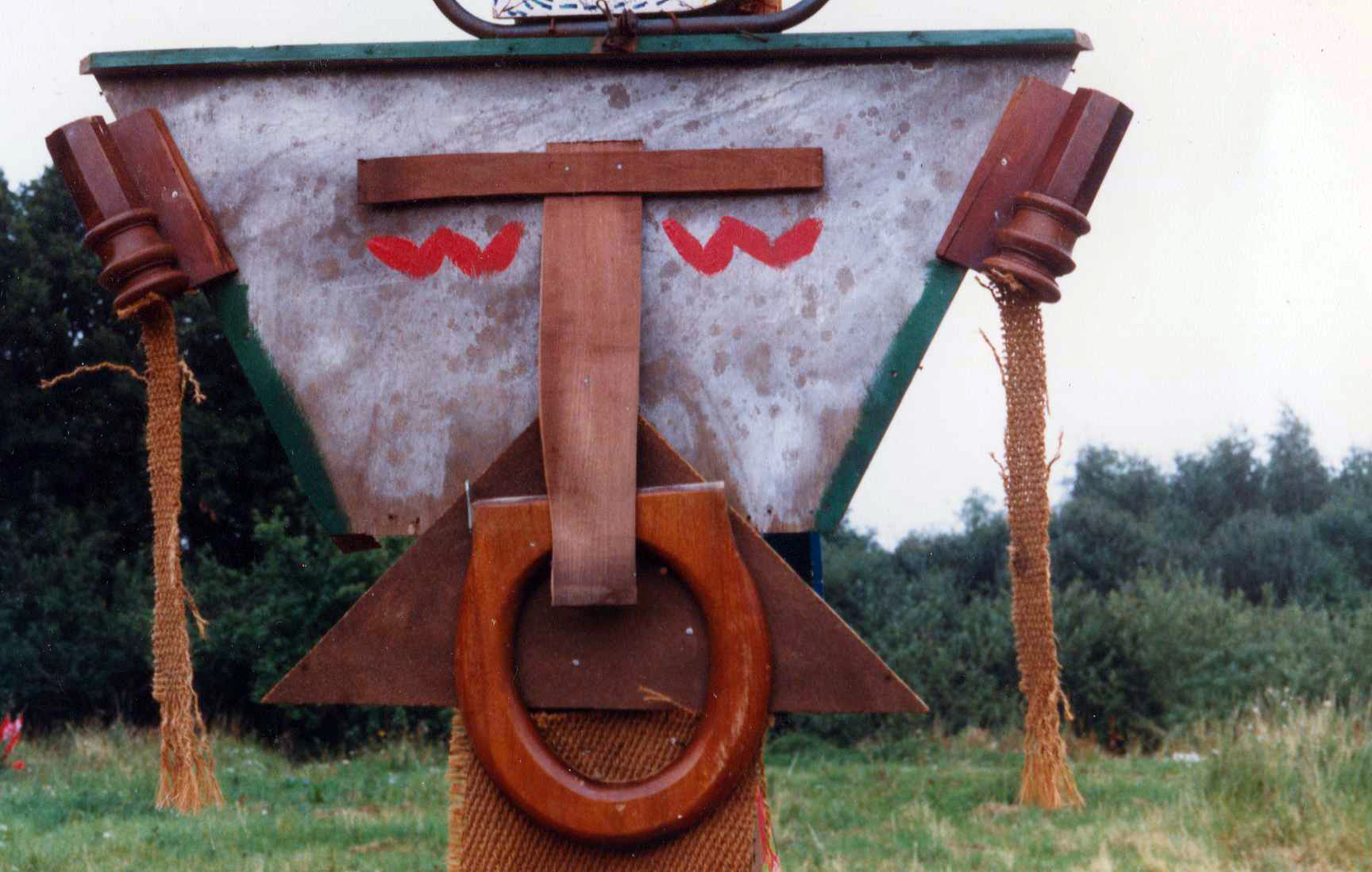
But things change. Data collation is now available to authors, promising control, over marketing, though formulas and blueprints are now offered for the creative process, like how to write a novel in four week. Imagination serves many masters and is not easily controlled – its life-sap flows through all forms. Totempole 4

We can only explore everything known continuously in fresh situations and move on, in the way that children and creative people place a familiar object into a new context. The play of imagination destroys and creates, and has the power to shift the meaning of our past, present and future.

‘There is the truth of truth as well as the truth of fact.’                   D.H. Lawrence

Being part of the dynamic process of evolution (which Philippa Rees ingeniously terms ‘Involution’ in her book of that title) we are walked by the tightrope of ecstasy and pain, of dependencies on environments and people, for better or worse, dependencies on beliefs too, mostly not by choice, but driven by binding needs.

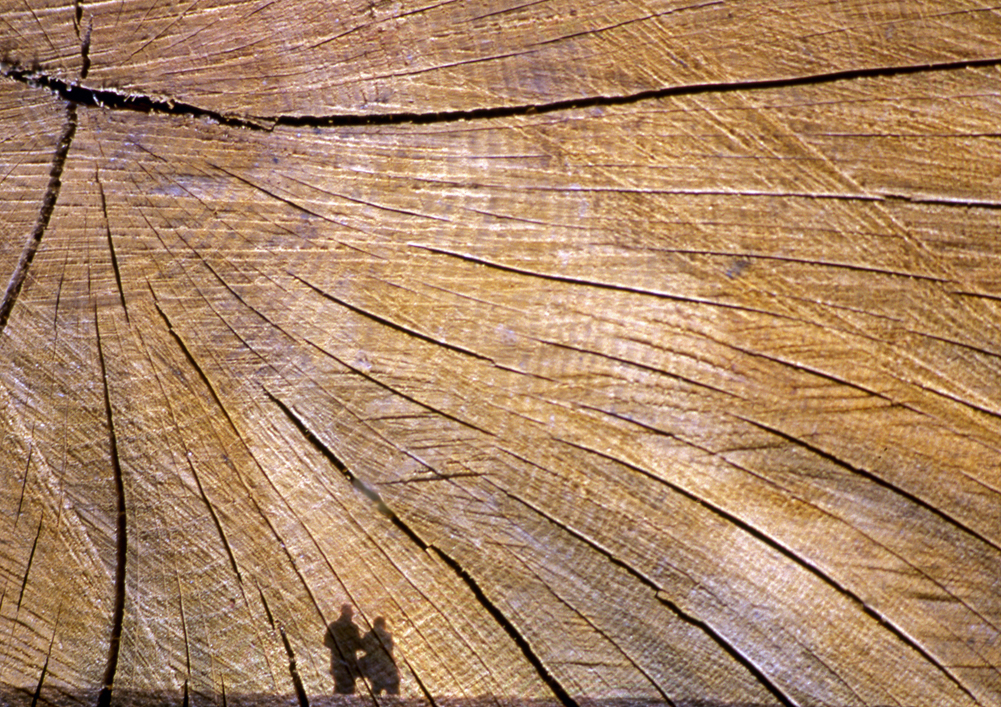
Couple shadow series, 3a small

We face exploitation, conflict, sudden change, harmony alternating with phases of chaos – the story of life, a record marked in DNA and every tree trunk. Instigating control, or preaching harmony while shading off the dark, the chaos, the collective psyche of humanity, will only repeat the distortions of otherwise genuine messages from enlightened thinkers, sages and prophets.

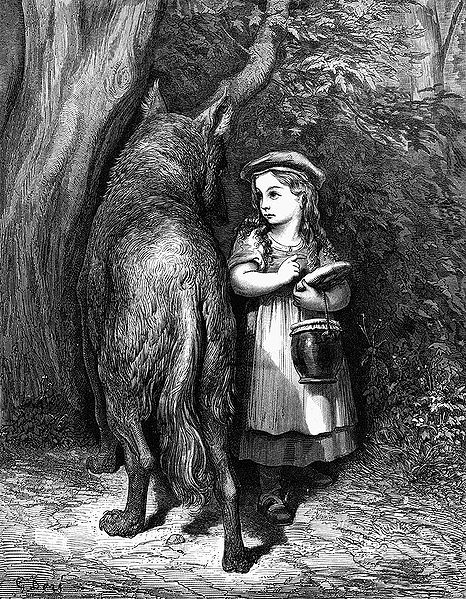
It would serve us as well to teach our children how to accept the dark and how to deal with conflict. Reading the collected folk tales of the Grimm Brothers to children would be a start.

Dore - public-domain-image

Dore – public-domain-image

The inspired P L Travers, author of Mary Poppins, had a talent for highlighting the vital function of myth, symbol and story. She shared her reflections in a collection of essays that appeared in Parabola Magazine. The essays were later published in a book, titled: ‘What the Bee Knows.’

She wrote … The Primary World, in order to go on living, needs the things man cannot create – the earth with all its composted dead, the rain that raineth every day, the seasons, nightfall, silence – and the ear free of all pulsation but that of its own blood.

… The Primary World is that which has never been invented but came into being, along with the blood stream, as a legacy from the Authors who, according to Blake, are in Eternity. All the rest is manmade, or as Tolkien has it – sub-created.

As a writer I sub-create and grow stories from within, using images and words that resonate with personal experiences, myths and visions that provide an ever-changing way of relating to myself, to others and the worlds we share. So when Travers says … nothing is truly known until it is known organically … this chimes for me.

We forget – a happy fault – imagine there was no pause between one dream and another, no night. We forget so we can re-member creatively, which takes practice. We walk on star dust and ancestral bones that inform our bloodstream, as much as the stories of this world nourish our imagination, continuously re-shuffling our psyche, which explains our function as being the bridge between matter and spirit. Every bee knows this.

Image by Yeshen Venema

Image by Yeshen Venema

What the Bee Knows, by P L Travers http://www.amazon.co.uk/What-Bee-Knows-Arkana-Travers/dp/0140194665/ref=sr_1_3?s=books&ie=UTF8&qid=1376737128&sr=1-3&keywords=what+the+bee+knows   Wow, no reviews

Parabola Magazine: http://www.parabola.org/

‘Involution’ by Philippa Rees: http://www.goodreads.com/author/show/30171.Philippa_Rees


Images are mine unless the captures say otherwise.

6 Comments

Filed under Blog

… mother tongue & other tongue …

Starnbergersee

Starnbergersee


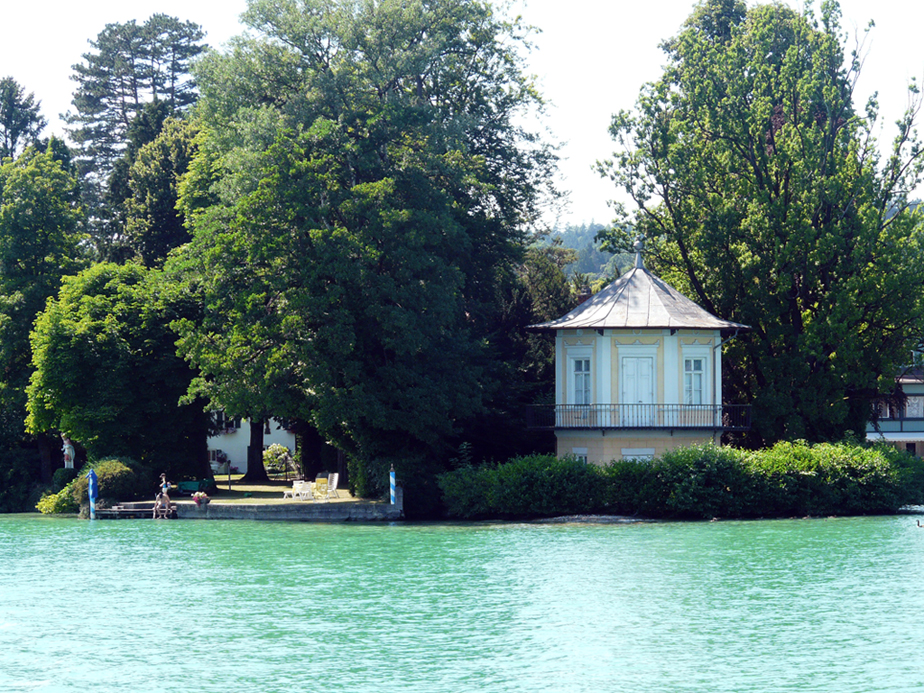
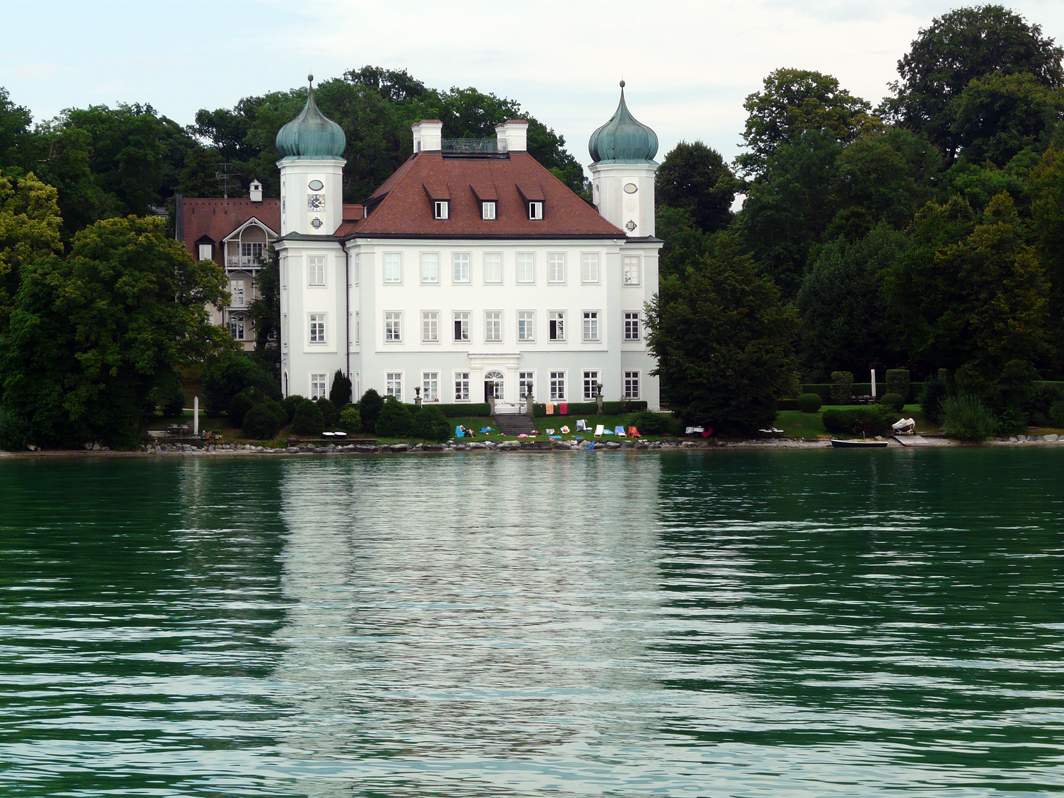
Two languages, two rhythms, two patterns, two spheres, two perceptions … last week I attended a re-union of my primary school class in Bavaria. Around 20 of us turned up.  The event included a ship ride on the lake that marks the geography of my childhood – Starnbergersee – whose shores are garlanded with castles and grand villas. Once I’ve won the lottery I’ll snap up one of these dream places and invite all my readers to a prolonged party with performances of magic theatre. Yeah!


Das Vogelhäuserl

Das Vogelhäuserl


The tour added a refreshing breeze to the sweltering heat. Later in the day a smaller group gathered at a lakeside restaurant, the same spot where, as a child, I turned up in summer holidays, at sunrise, to assist the local fishermen bringing in their full nets, in return for the free use of a small sailing boat during afternoons.

A re-union

A re-union

The encounter with classmates I hadn’t seen for over half a century unfolded like a surreal dream as we cooled down with beer and wine and gossiped time away into the evening. I’m still trying to fit names to faces and places, and make sense of stories that cast stray beams on my memories of the village I grew up in, a village close to the Alps, set in landscapes whose ambiance morphed into the beginning of my first novel.


Schloss Berg

Schloss Berg


Among my class mates were a few women I quickly chimed with, not surprisingly, we were close friends during those early years, though we lost touch when we moved on to different schools. It’s deep and wondrous – the mystery of this precious resonance called friendship.


This is me, aged 6, on my first school day. I was a single child.

Erster Schultag

Erster Schultag

And I well remember the excitement. The Zuckertüte, the upside down magician’s hat filled with bonbons, chocolates and presents to sweeten the transition into the big world seems to grace my head in the photo my dad took. I can’t find the image right now, but I did receive a proper Zuckertüte on the day, filled to the rim.

My favourite teacher (in the group photo with the village poem post, link below) turned up at the re-union, slow on his legs but sharp witted. His eyes lit up when he recognised me, which gave me a warm feeling all over.

Living in England since several decades, I visit Germany periodically to see my grumpy late-artist-dad, and dear German friends, made during my later Sturm und Drang phase. What struck me about the school re-union was how the primary sensation of my childhood was brought to life through words tossed into the conversations, keywords from my mother-tongue, embedded in local dialect. My mother, who came from Berlin, never picked up the Bavarian dialect, neither did I, however, the term mother tongue incorporates for me my early environment, the village. https://courseofmirrors.wordpress.com/2012/08/31/village-poem/

For the greater part of my life I thought by and spoke in the other tongue, which I first learned at school. Aged 18, unsure of my path, I spent a cultural year with a family friend in London. She cherished me. Our relationship was a healing experience for both of us, given her loss of friends and family members in the Holocaust, and my inherited burden of the atrocities having taken place in my country. Later, studying in Munich, English was the language connecting a multicultural student population. When 9 years on I married a Dutch man and we moved to England together, my German vocabulary gathered dust during further studies. The distance from my mother tongue freed up a wider perception. It also helped me overcome an encoded traumatic experience. At secondary school I had written an essay, freely based on a painting of my choice by Spitzweg – writing was then a blissful creative process. The teacher read the essay aloud, praising its brilliance, after which she informed the whole class that I could not have composed this myself – a screaming insult! And yet, I thank the stupid woman, it changed the course of my studies. I initially used photography to express myself, resuming poetry and imaginative writing later, finding that English allowed me the necessary wings.

Who knows what the dusted off layer of my mother tongue will bring round. Writing in the other language helped me to transcend the mere facts of my life to essential themes, universal metaphors. The divided kingdom of parents, the psychology of the single child, her assumed bridging function between patterns of seeing, like the rational and imaginative perception, the distorted mirrors of relationships, betrayals, the search for the real, and the meeting of soul families. Essential themes lifted like green islands from dark waters during my protagonist’s river journey west.

Course of Mirrors is a gripping adventure story, as well as a psycho mythical opus. In its sequel the teller of the story is revealed as the visionary myth-maker overtaken by her myth – in the way that we can re-arrange the past and postulate possible futures, explore different time-zones, and expand expectations.

I must leave it to my readers to judge the results of my experiment. The first book, Course of Mirrors, will be published next year, by a small but devoted publisher.


Are you a writer/artist who processes experience through two or more languages?


38 Comments

Filed under Blog

… a Sunday in July …

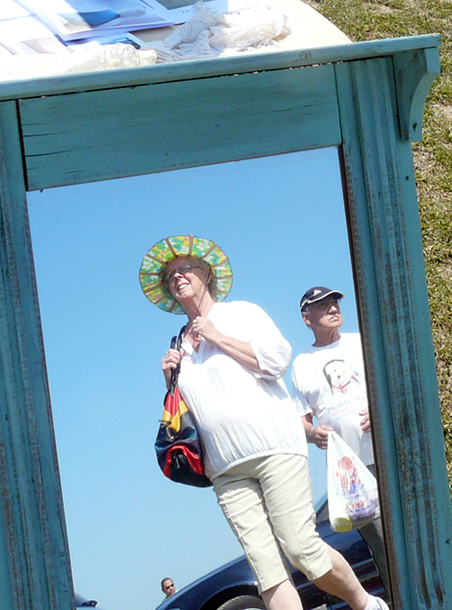
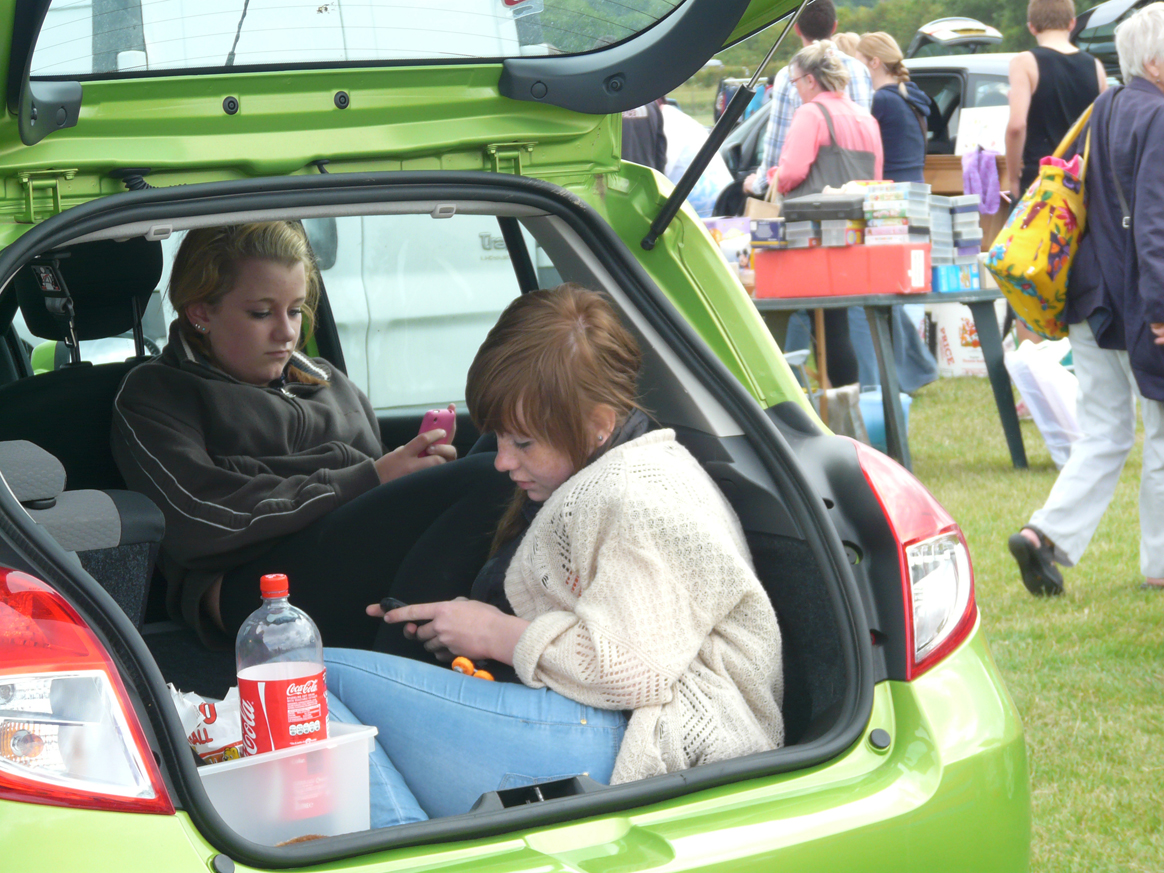
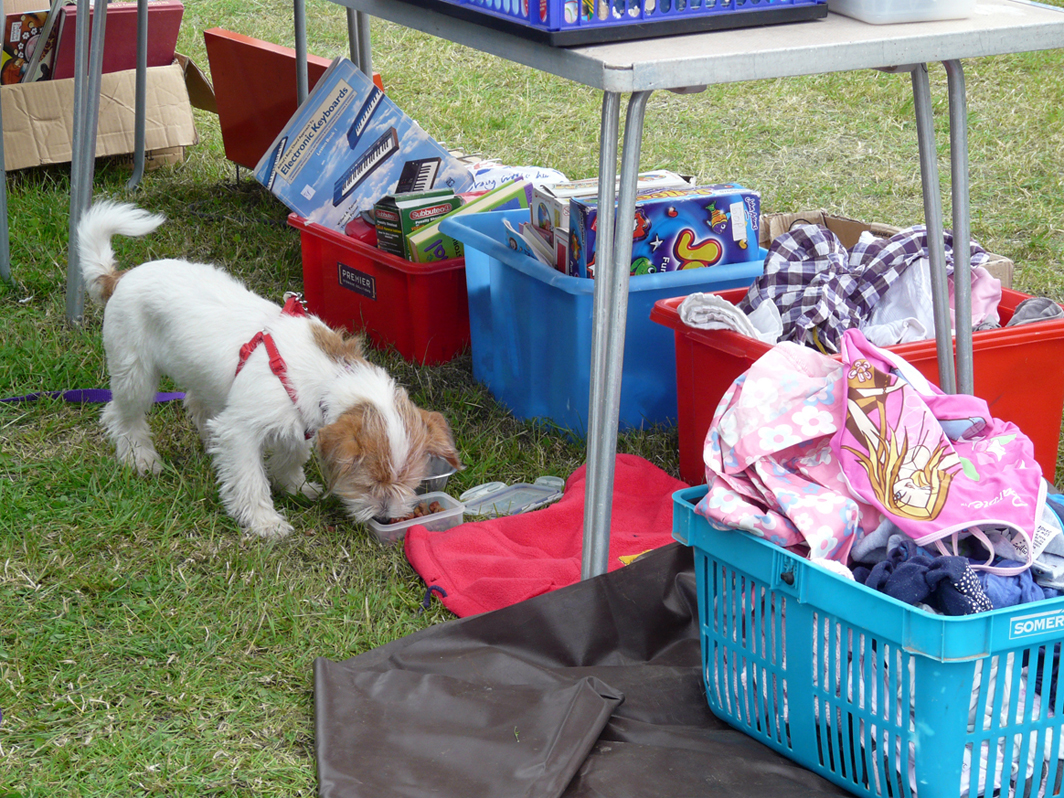
A Sunday car boot sale. Eyes swivel left, right, down, up, for value. People dream or stop to chat … how much for that? A fiver … three, two, one, or nearest offer … teddies, dolls and plastic swords, toys on wheels … she’ll love that … glasses, cables, plugs, unwanted gifts, mugs, pots, rags, shawls, jumpers, trousers, frocks, linen, shiny trinkets, books, mags, prints, discs, records, chairs, shelves, mirrors, bells, rugs, tools … objects of desire lure as metaphor … stuff … beautiful and ugly scraps, are carried off in plastic bags.

P1110274

Carboot 3


Carboot 1People, thin and fat observe each other, nod or shrug shoulders, roam … ladies walk stately in big hats, toddlers run off, sunburned babies sleep, bored kids tweet or text, dogs strain on a leash or are fed, men with tattoos strut, a batman rises from the neck, geometric arms, flowery legs, stars form a line down a spine …

Leaving the cross currents of the human aspirations, I retreat …

P1110278 - lowres

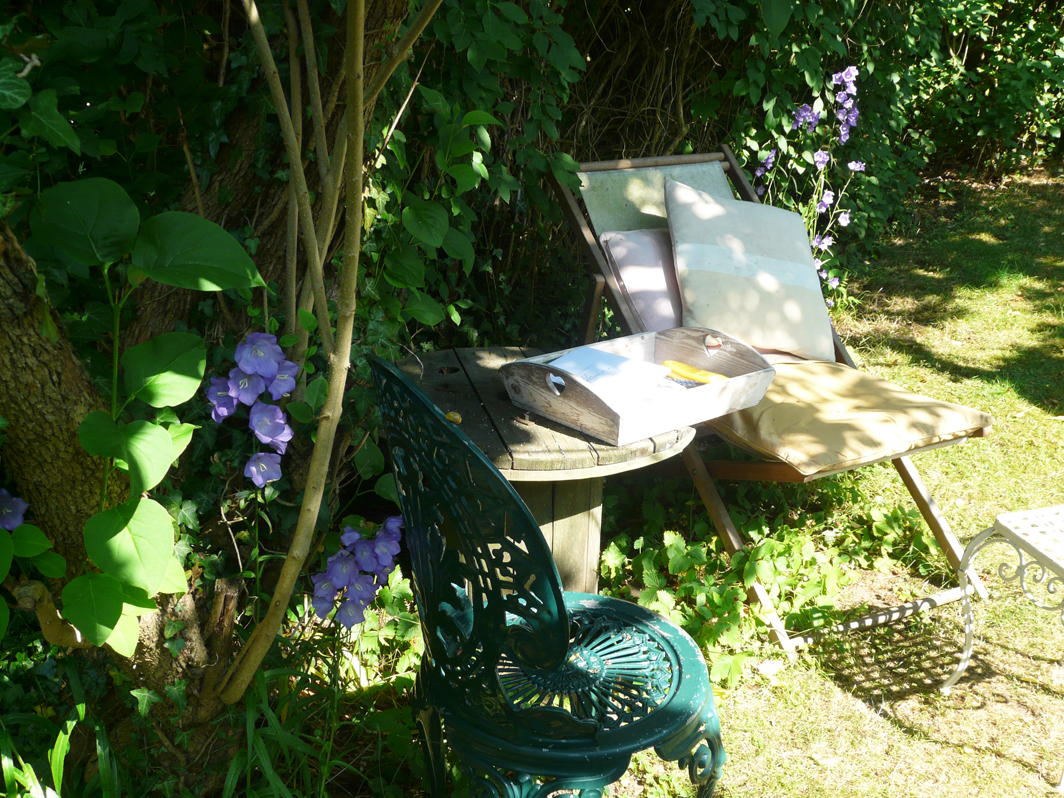
back to my peaceful patch, where ribbons flutter in the breeze, endowed with wishes. Colours glow with life, ever changing. And simplicity affords my gaze inside – through the gap of nature’s light and shade.

P1110284 lowres


P1110279 - lowres


P1110291 lowres


And later that night I watch the wide screen … tragic accidents, people fighting for what they presume right, trapped in beliefs, and, oh, Andy Murray wins a tennis match for the UK, and is glorified as UK’s knight.


20 Comments

Filed under Blog

one raindrop – ten raindrops – what’s the difference?

Before I went to bed last night I asked for a dream, as I do when I want guidance from my unconscious. After all, the greater part of our psyche is out of sight, submerged, with only the top in view, which is why Freud used the image of an iceberg to depict the psyche, the submerged part having deeper connections with the sea of the collective unconscious in which we all swim.

Iceberg - Ri han - Shutterstock

Iceberg – Ri han – Shutterstock

My question was related to the global web, and what’s rising to the surface like long drowned skeletons bobbing along the electric rapids of information, memories re-shuffled, all with a kind of speed only fearless surfers can negotiate. And how every link you and I click is traced, analysed and fed back to the media, politicians, businesses, twitter-birds, face bookers, bloggers and so on. At times it seems like a kind of vivisection in a shiny mirror looking back at us, surreal.

I’m seasoned. There was no TV in my early childhood, it astounds me what I’ve adapted to over the years, but the present tech-apps-avant-garde makes me feel like I’m missing a boat, along with, let’s take a breath, at least sixty-one-percent of the world population (that’s the kind of people with no internet at all.) And because I tend to reflect on cultural trends, searching for wider purpose, meaning and metaphors, I put this to my unconscious: please give me some insight.

On waking, the first thing I gazed at was the raindrops netting my skylight. A phrase came:

                 … one raindrop – ten raindrops – what’s the difference? …

It stuck. I stopped myself diving into associations, about raindrops, the number one, about the history of zero – as symbol for something that doesn’t exist but has become a place-holder. I stopped myself from quoting Rumi, too.

The phrase I received is enigmatic and feels creative. Does it come down to postulation, the everything-and-nothing-matters kind of power we have to envision and re-assemble stories, the delicious freedom to speculate without limits …?

Maybe purpose and meaning are becoming old hats and I’m missing the point entirely. What do you make of the phrase … either with your knowledge of maths and physics, or with your imagination? Even with the phrase or image of a dream ☼


19 Comments

Filed under Blog

… the house-guests of body electric …

SHE calls me body electric. SHE – incarnate as hu-wo-man – oh the mystery – and such hard problem for the scientists who establish evidence of truth via the elimination of untruths. Meanwhile they identify my parts, their functions and complexities …

I’m a miracle, my ears perk at the slightest sound – the little groan in the joints of wood and brick when the house moves a fraction as the weather swings about, soft tweet of a bird, the hum of fridge and its sudden shudder, a rumbling pipe, creak of loose floorboards, or the faint scrape on the stair in the middle of night, when the tip-toeing lodger sneaks to the kitchen to pinch a little honey. Not my concern, I only notice. Exquisitely attuned to my network of neurons, I pick up irregularities, tiny fluctuations of mood, unfamiliar smells, odd tastes, taut muscles … the chatter of Jego, but more of him later.

Magic-Leila's wings02Whoever I house, I prompt stretching exercises, crack joints to unblock energy, flex shoulder-blades that still mourn their wings, and shortly massage cold fingers-tips, my antenna for vibes. I rejoice in my multitasking, my handling of objects with skills no programmed AI creature could ever hope to achieve. With the unfailing accuracy of a spy, I pick up signals against the faint background buzz of the blood river and readily adjust to spheres beyond my skin palace.

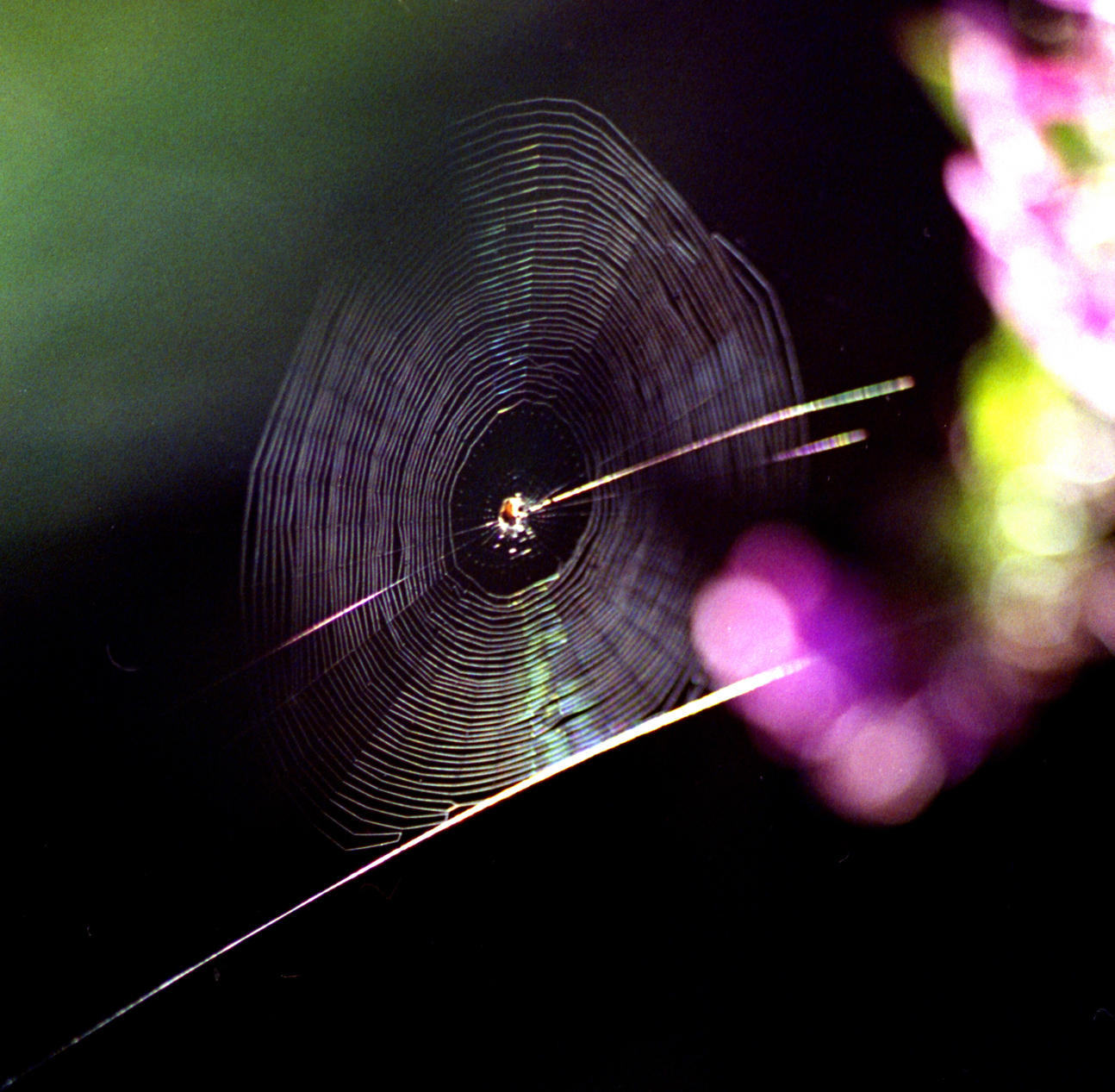
And SHE – my occupier – revels in the fleeting novelties of my gift, the senses – the paradox of pain and joy, where humour lurks between tears and laughter, moments with friends, bliss in a garden, like pruning branches for light to fall through foliage. SHE loves light. A breeze lifts the smoke of a roll-up, diaphanous shapes flow illuminated against a sunbeam until the shade swallows the spectacle, fluorescent spider webs, and blossoms fall.

Spider, 3

I have bouts of melancholy, made aware that my fine architecture is only a short, temporary abode for my occupier. It saddens me when SHE pays no attention to my signals, or is absent, travelling in abstract realms.

One day she’ll be gone altogether, leaving me behind. There’ll be no more breath and currents flowing through my organs, cells, brain — switchboards to her mind-spheres. Will she take along her impressions and associations?

I perceive phenomena in passing, pure and simple, with an artist’s sensibility. Semi permanence is the business of Jego, a sophisticated but battered and nervous entity that draws conclusions from what my senses transmit.

Example – SHE lets me drive a car to visit a friend. On instinctive pilot, I allow Jego to grab surplus energy. He elaborates on what he perceives through my senses.

That pub, why did the new owner paint it dark grey? A monstrosity, insulting the eye, aesthetically revolting, this must be someone’s idea of a cool concept, what a waste of paint!

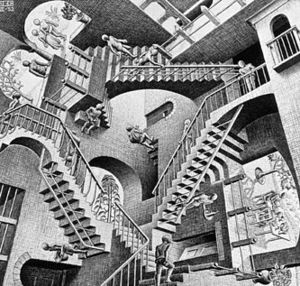
Escher's_RelativityThough amusing, his habit of sending spam into mind-clouds affect my equilibrium.

I draw attention to a stomach-cramp. Jego quickly analyses the cause before chasing another thought. It’s marvellous, and thoroughly compulsive, how he creates realities, juggles thoughts, day and night, unless SHE attempts a pause – counting breaths, reciting mantras to calm my overexcited synapses, or diligently monitoring Jego’s pranks to get him to focus on something coherent and creative.

On occasions he achieves concentration, calms, then we all relax into harmony, and for a short while a crystal-clear comprehension dawns …

Ah – we are dancers in a hologram – oh – who’s in charge?

Here Pomp makes an appearance, an intuitive entity, a messenger born of many traditions, with equally many names and disguises, a channel to the universal psyche. Though Pomp is not in charge, he knows stuff, and brings a tribute, the remembrance of an unfathomable awareness behind timeless intelligences every particle has contributed to, is essentially part of …

‘We are more than dust,’ SHE confesses, ‘and to fulfil our purpose I must embrace you, little body electric, and partake of your pain and joy.’

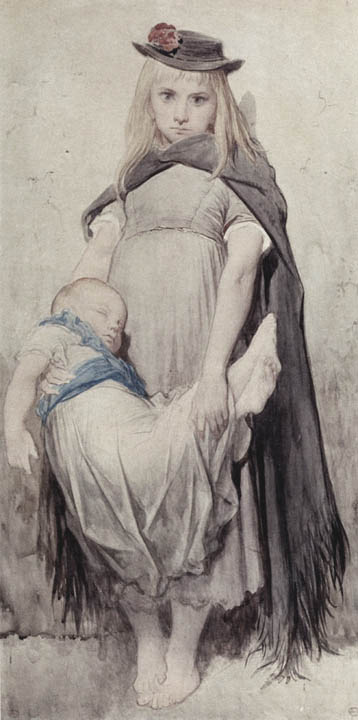
‘What about Jego?’ I ask.Dore - Jeune_Mendiant - desat

‘Poor chap, either he’s praised to heaven or cursed to hell. Some spiritual experts blame him for everything, and label him the greatest obstacle to higher evolution. It’s evidenced what happens to children we treat like that … we must be gentle with Jego.

His task is the hardest. In time, if we model tolerance and patience, he’ll learn to create more coherent realities.’

Her kind words calm me, and make me feel all warm and fuzzy.

Neti neti – not this, not this – no description suffices – what prevails is supreme consciousness, unidentified and unidentifiable, slipping in and out of embodied existence like a wind of light.

Though it gives us equal joy and pain, do you like your body electric?

birds-1a.jpg

And are you on a warpath with your neurotic ego, or do you exercise patience?

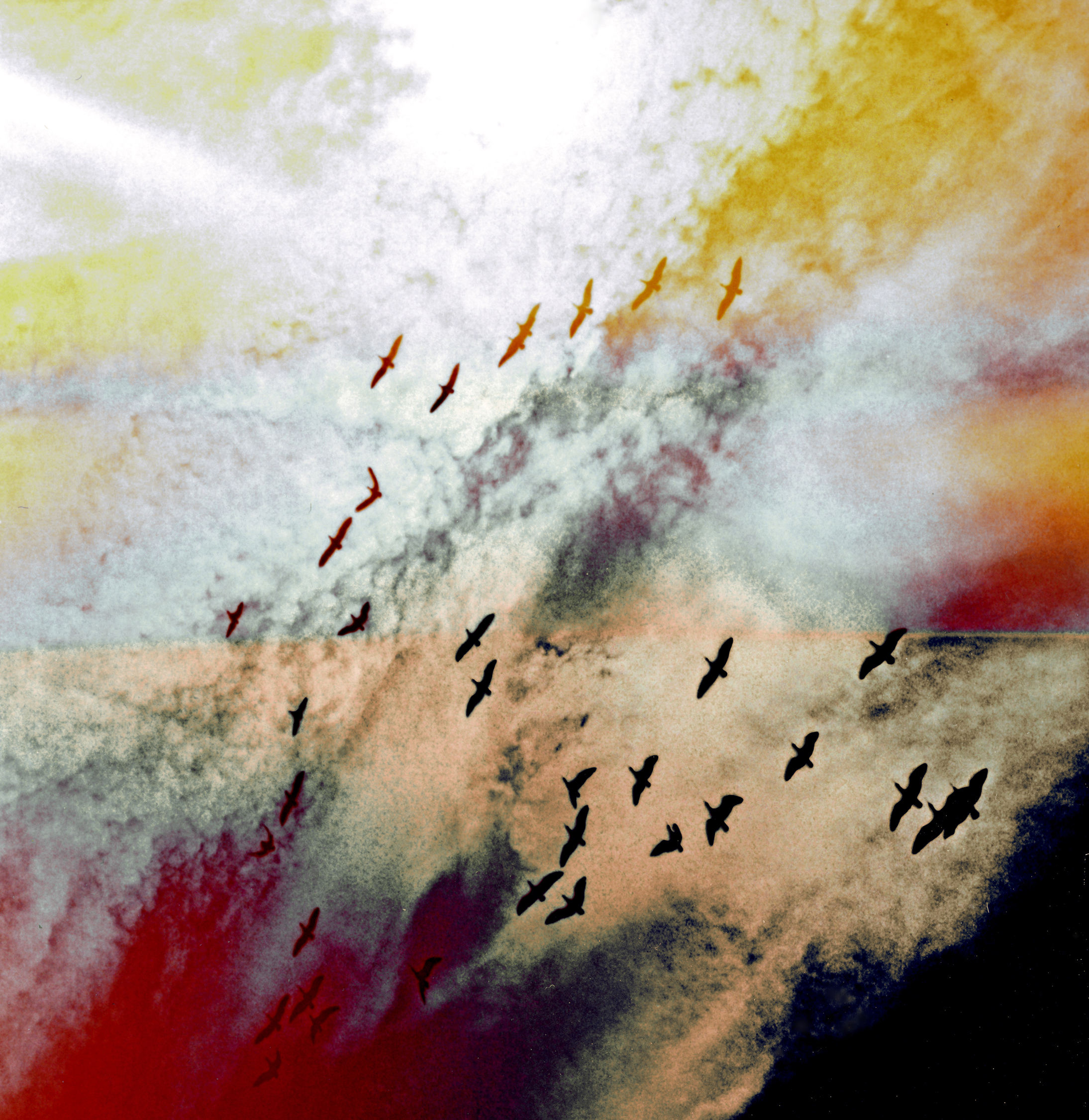
‘There is a strange frenzy in my head, of birds flying, each particle circulating on its own. Is the one I love everywhere?’ 

~ Rumi ~ transl. Coleman Barks.

14 Comments

Filed under Blog

… consciousness – the mystery …

People who engage in therapeutic work with me often ask – why dig up my past, it holds pain, why look at attachment patterns, why explore the theme (myth) of my life? What a waste of time. I only want to get rid of my symptoms.

We all, without exception, suffered injuries. The creative question to ask is – how has the injury shaped my life, and what purpose does it serve? Many years ago, during a group dialogue following the inspirational talk of my Sufi teacher, we discussed three basic kinds of injuries. I connect my own experience to the third injury.

1        Having experienced physical injury can result in fight and flight behaviour – it brings a heightened sensitivity and develops a sharpening of the senses.

2        Having experienced sexual, sensual and emotional injury can result in escape from one’s self into others, estrangement from self, lack of differentiation and boundaries – the great challenge is to accept one’s self, differentiate as an individual from the tribe and take responsibility for one’s unique potential.

3        Having experienced injury on a cognitive level accelerates individuation – the escape is into deeper realities, a search for authenticity and truth and the development of symbolic reality – universal reality.

My novel, Course of Mirrors, is the fictionalised account of an aspect of my personal myth made universal – in the sense that memories of events don’t have to be real for a story to be true.

@ Natasha Tonkin

@ Natasha Tonkin

Even the most die-hard materialists among us grok that life is animated and guided by an all-pervading spirit? We are vessels, psychic switchboards for the spirit that animates and records all life.

An ungraspable phenomenon we try to name in vain.

Mental states pass through us. We call in and then process thoughts and feelings, seeking coherence, and – given we assign meaning to what happens to us – are gaining wider perspectives and deeper insights. With every new connection made and every little light brought to what is forgotten and unknown – collective consciousness grows.

Our body knows, if we care to notice, what stirs in our psyche, what wants to unfold and emerge. When energy flows freely through us our essential nature is uplifted, and our desire is aligned with the potential in us that seeks actualisation – in the way a cocoon reveals the butterfly. Our life has many cocoon and wing stages. The proverbial flutter that causes a stir in all spheres of the universe is like yet another love-transcended aspect of us emerging from yet another cocoon.

Presence, responding to situations, accepting differences and contradictions, frees energy that is ghosted and stagnant. While blocked energy creates frustrations and often painful symptoms, it is totally inevitable, since every organism evolves through condensed experiences. Life enhancing and life destroying events subject us to a pattern of repetition in time until we embrace change.

‘A truth outgrown crushes you under its weight.’   Fazal Inayat-Khan

To bring a repeating pattern to a higher level of flow requires a kind of quantum leap of consciousness. Small leaps occur frequently, especially when we befriend the unconscious and allow fresh symbols into awareness. The released light/energy brings new meaning and allows the self-actualisation of new potential.

‘It is obvious that the percolation of a timeless NOW is penetrating everything!’  –  Philippa Rees

*      *      *

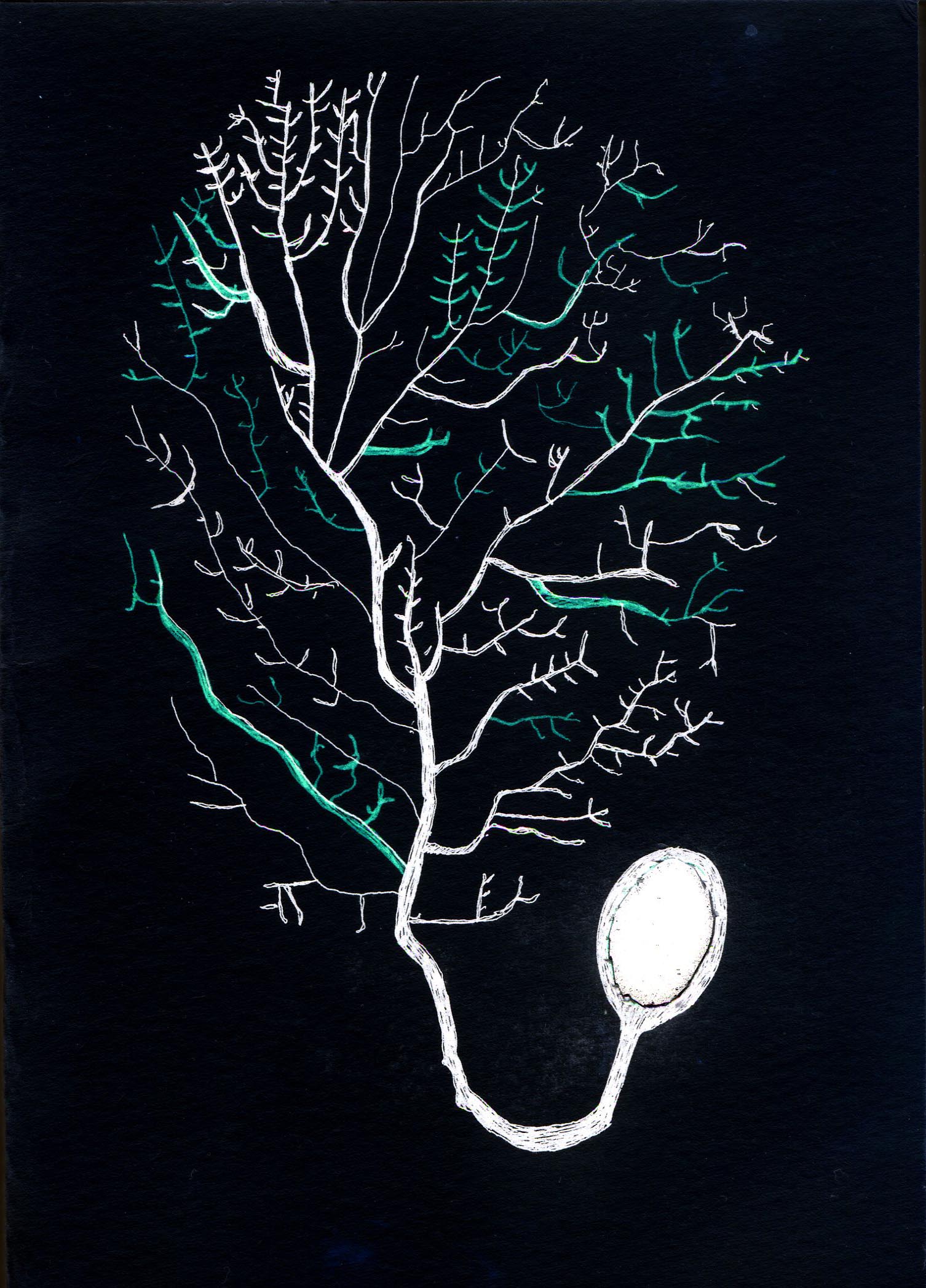
The image above is by Natasha Tonkin, my son’s partner. It was done two years ago as Christmas card and gift idea towards illustrating my novel, to help bring it to life. I scanned and inversed the image for the mirror to appear light. Natasha’s animation website: http://pandahorse.com/

Link to a book I co-edited about the Sufi teacher I mentioned above, Fazal Inayat-Khan. http://www.amazon.co.uk/Heart-Sufi-Inayat-Khan-Reflections-ebook/dp/B00BFUO0T6/ref=sr_1_1?s=books&ie=UTF8&qid=1369084226&sr=1-1&keywords=heart+of+a+sufi

Link to ‘Involution,’ an exceptional book by a kindred spirit, Philippa Rees.                                         http://involution-odyssey.com/  her book will soon hit the market. Her site is being developed.

6 Comments

Filed under Blog