Anger is a natural human emotion. When its agressive energy accumulates as tension in the body, depending on one’s basic temperament, it can well up like a river bursting its banks and trigger a surge of destruction, or, if held inward, often can develop into depression, self-harm or illness.
We may not think of ourselves as prone to anger, but think again … loss, resentment, frustration, rigid bureaucracy, fear mongering, feeling powerless, being lied to, neglected, humiliated, threatened, manipulated, or simply witnessing daily insane politics, injustice and cruelty … tell me in all honesty you don’t regularly feel angry.
My former Sufi teacher/friend, ‘Fazal Inayat-Khan,’ embraced contradiction as a function or reality. He had a vastly dynamic, psychological and deeply intuitive way of interpreting his grandfather’s Sufi message of ‘love, harmony and beauty,’ upsetting the traditional understanding of his elders, not in essence, but in the way harmony may be restored. For example, he instigated workshops on the theme of spiritual war-games, like ‘Struggle and Conflict.’
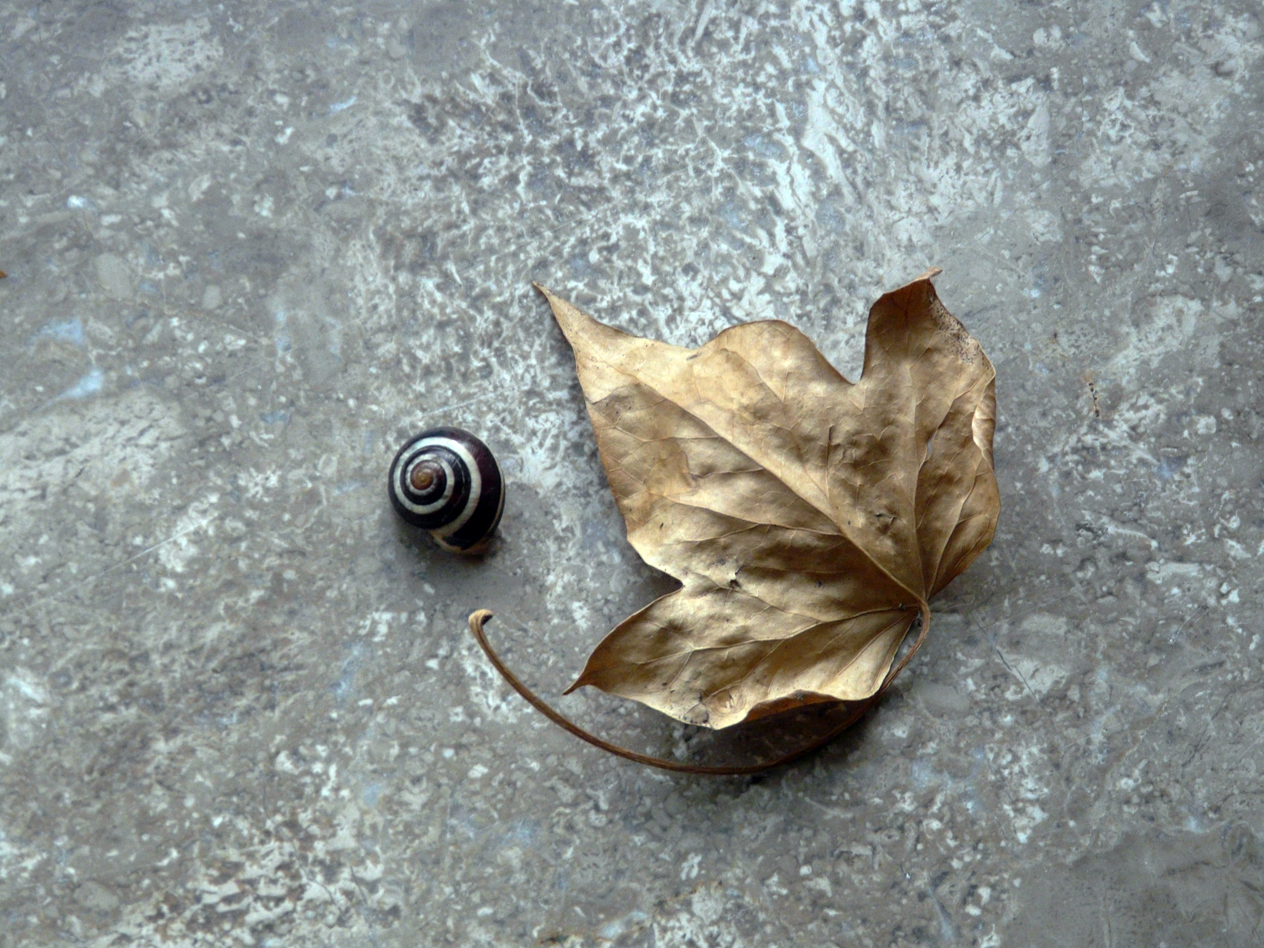
Imagine young people could engage in this ingenious way of recycling redundant matter using the trapped energy of their unresolved feelings …
Sadly, there is a lack of opportunity, especially for young people, to safely release strong feelings, physically or symbolically. As regards the latter approach, artists and creative people have an advantage by employing their imagination to adjust the imbalance of inner turmoil, to help ease the anger out there.
Mystical texts and phrases can annoy the rational mind, since they hardly ever get to the point or, indeed, contradict themselves. Still, at rare, often fleeting moments, sometimes in nature, a vein of light can reveal a profound truth, even in an overused mystical quote. Or, if one finds the occasional balance between the outer and inner reality, a sudden awe may unfold in consciousness and surprise.
‘Some’ scientifically minded folks, fewer these days, tend to scoff at mysticism with its vague hints and speculations as a waste of time, or look down on the fools of this world who suffer from subjective illusions. And yet, the novel feelings emerging from direct numinous experiences greatly expand the consciousness of ‘The One.’ I guess firmly set rational minds shy away from numinous personal experiences that might rattle their worldview.
The latter may shake their heads at some baffling mystical musings. I re-found this write-up on the Kaif System among many papers heaped up in corners of my home. It was shared by Morag Murray, born in Scotland, who lived and travelled in Central Asia, Tibet, India and the Far East. Her autobiography, ‘My Khyber Marriage,’ 1934, features her marriage to an Afghan chieftain. She is also known as Saira Elizabeth Luiza Shah, mother of Idries Shah.
So here goes … The Kaif System
Kaif is the effect a person, idea, event, object, etc., has upon one. But it is distinct from aesthetic pleasure or any familiarly labelled experience.
When an experience which was trivial or routine gives one a sense of uplift – this may be Kaif. Repeated experiences yielding pleasure or attractive sensations do not have Kaif.
Eating, drinking, dancing, meeting people, visiting, travel, reading, seeing, feeling, hearing, thinking – may have Kaif.
The term for something which has Kaif is Kaifdar – ‘Kaif holding.’
A person who can provoke the sensation of Kaif in an individual or a number of people is called a Kaiyyad (Rhymes with ‘I laugh.’) The instructor in Kaif is called the Sahib el-Kaif (Kaifmaster.) Also used is the term Kaifiat – which means something like ‘Howness.’
The Kaifmaster Barik Ali said: ‘Kaif is the determining ingredient in an enjoyment. If it is not there, true enjoyment is not there. If it is not there, people may divert themselves with happiness – this is not Kaifiat.
The Kaifmaster Ankabut said: ‘Kaif is imparted into a thing. It may be imparted by anyone or anything. When it leaves only the shell is left. People eat shells when they cannot get nuts.’
The Kaifshinas is the Kaif-knower. He can appreciate Kaif (Rhymes with Life.) He may not be able to induce it. His house may be untidy. But it will be full of Kaif.
Kaifju means a Seeker of Kaif. He starts by seeing other people appreciate Kaif, and tries to find it wherever it manifests itself.
Kaif is used either as an indulgence on its own, or in order to provoke higher consciousness, known as ‘the secrets’ (Asrar.)
Kaif may be found in any community, at any time, under any circumstances. It is not bound by language, history, geography.
Certain professions are held to be Kaifdar. They include those of chief of state, builder, artizan, poet and designers of all kinds. Few professions are bereft of Kaif. Certain places are more difficult for Kaifshinasi.
The very term Kaif has become cheapened, so that people use it to mean ‘This is something I like’, or ‘I enjoy that,’ or ‘He has presence,’ or ‘This is satisfying, attractive, stimulating.’ You must be aware of yourself using this term, and also of those who use it, so that the coin may not be debased.
Kaif is defeated very easily. It is defeated in its attempted manifestations by false ideas, by self-esteem, by hypocrisy of any kind
There is a danger in Kaif. People who perceive it and do not respect or honour those who have Kaif, or respect Kaifdar situations, places, and so on, become ‘inverted to themselves.’ This is a state in which a person’s bad characteristics become stronger, and where his self-control becomes less, and where his hidden unpleasantnesses undermine his very being.
Kaif is in shape and in form, as well as in shapelessness and formlessness. It lies dormant in places and among people where it is not perceived for a long time. Then only the introduction of a conscious Kaifshinas will activate it again in that community so that it may take its place to help mankind.
Kaif is not confined to humanity, but can be perceived by all living organisms.
Something which is aesthetically adequate or emotionally stimulating can at the same time be devoid of Kaif.
Certain exercises, which vary in accordance with the person, place and the general situation of his community, enhance Kaifshinasi.
Kaifmasters subject their students to experiences, related incidents, objects and other matter which have Kaif, or can provoke it.
Kaif has a ‘moment,’ called the Dumm-i-Kaif (Breathspan of Kaif) during which it may be, as it were, ‘inhaled’. The Kaifshinas strengthens and makes permanent his perception of it by exercises which apply to this moment.
In religious, musical and even social ceremonials, a Kaifdar is present. One of his activities is to ‘infuse’ Kaif into the proceedings at a time when uninformed onlookers might assume that the people are doing nothing, or else are engaged in an activity (such as a recitation) which is only the vehicle for the application of the Kaif.
Special Kaif-chambers exist, in which an individual with the correct preparation may concentrate and accumulate Kaif, and study it in its manifestations.
In degenerated usage, such Kaif-chambers continue to be used, sometimes as devotional buildings. More often they are thought to be tombs fallen into ruin because there was no apparent use for them, or seem to have other applications, such as kitchens or bath-houses.
There is a well-known watchword: Innna el-Kaif, hadha el Kaif (Assuredly the Kaif is a Sword.) Hence the word SWORD is often used as password and even as a synonym of the working of Kaif.
Objects charged with a certain portion of Kaif are given, lent and carried by many people who know. These, like Kaif-chambers, are generally disguised as something functional, or else are ordinary objects which have been endowed with Kaif. The vulgar often confuse them with talismans or charms.
The saying: ‘Kaif-alaik!’ is a sort of blessing. It means: ‘May you have Kaif.’
In Turkey the Kaif-Agha was the individual entrusted with the royal Kaif. He was a Kaifdar, and generally assigned a court function as well.
Because its smokers have appropriated the term Kaif to describe (inaccurately) their sensations, Hashish has become known as Keef, a mispronunciation of Kaif. There is no real connexion, of course.
* * *
I tend to encapsulate instances of Kaif in photography or haiku.
You may have another term for Kaif, and ways to share inspiring experiences.
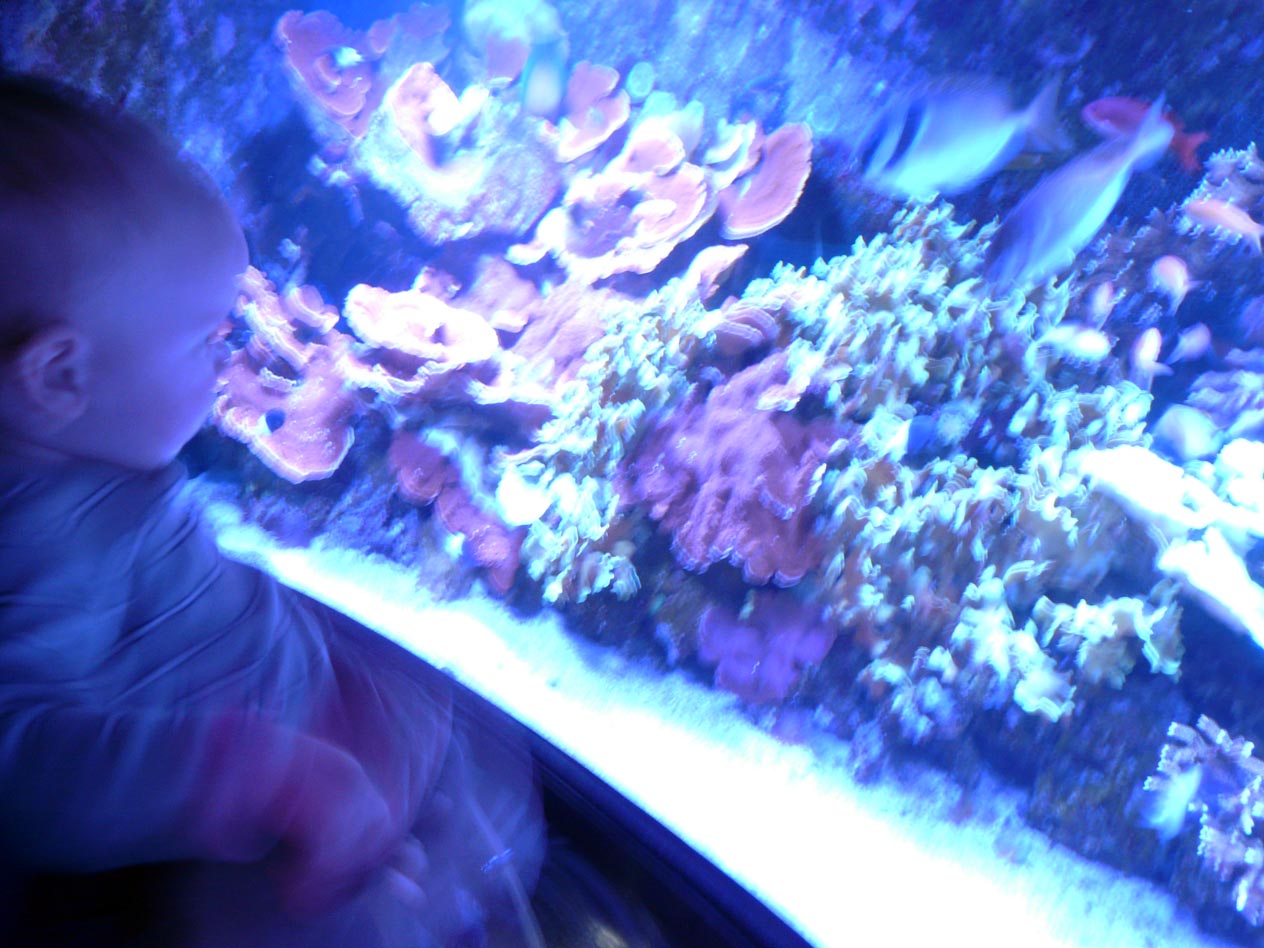
The poem was inspired during a recent visit to the London Aquarium with my ten months old grandson and his parents. The child gazed in wonder at the graceful ethereal dance of fish in their water world, a hand span from his face. His astonishment was catching.
I’m convinced we all have intuitive access to intimate knowledge of life throughout all stages of evolution, sensed with eyes open or closed, though often masked by the imposing literal forms of perception our education gives greater value to.
Through genes and the endowment of a universal mind, children easily embrace complex visionary experiences and insights, like catching the essence and poetry of things around them. That is, if their imagination is encouraged. Later on, it may take some rope-walking skills to bring the inner presence that unites us to the divisive outer world.
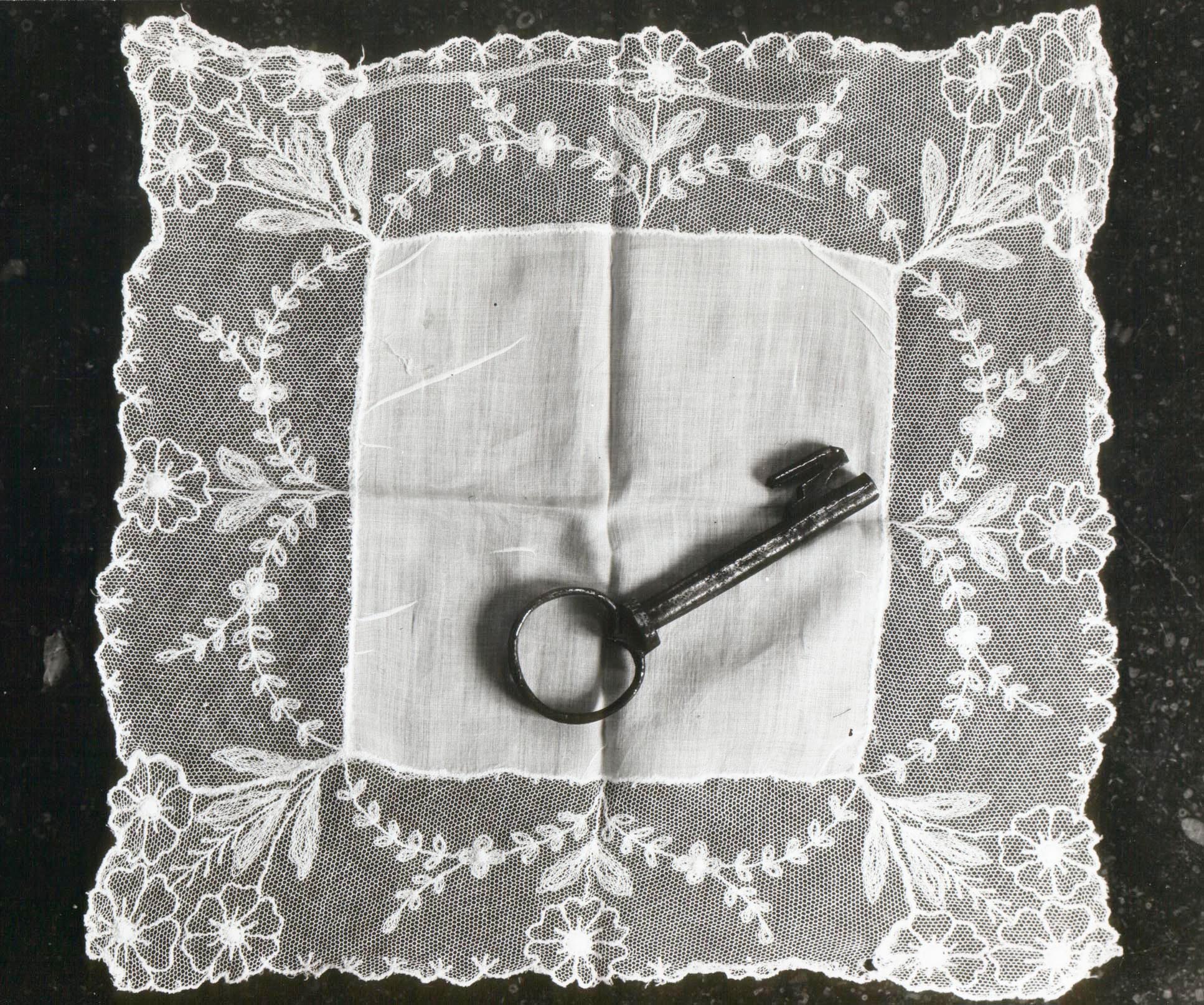
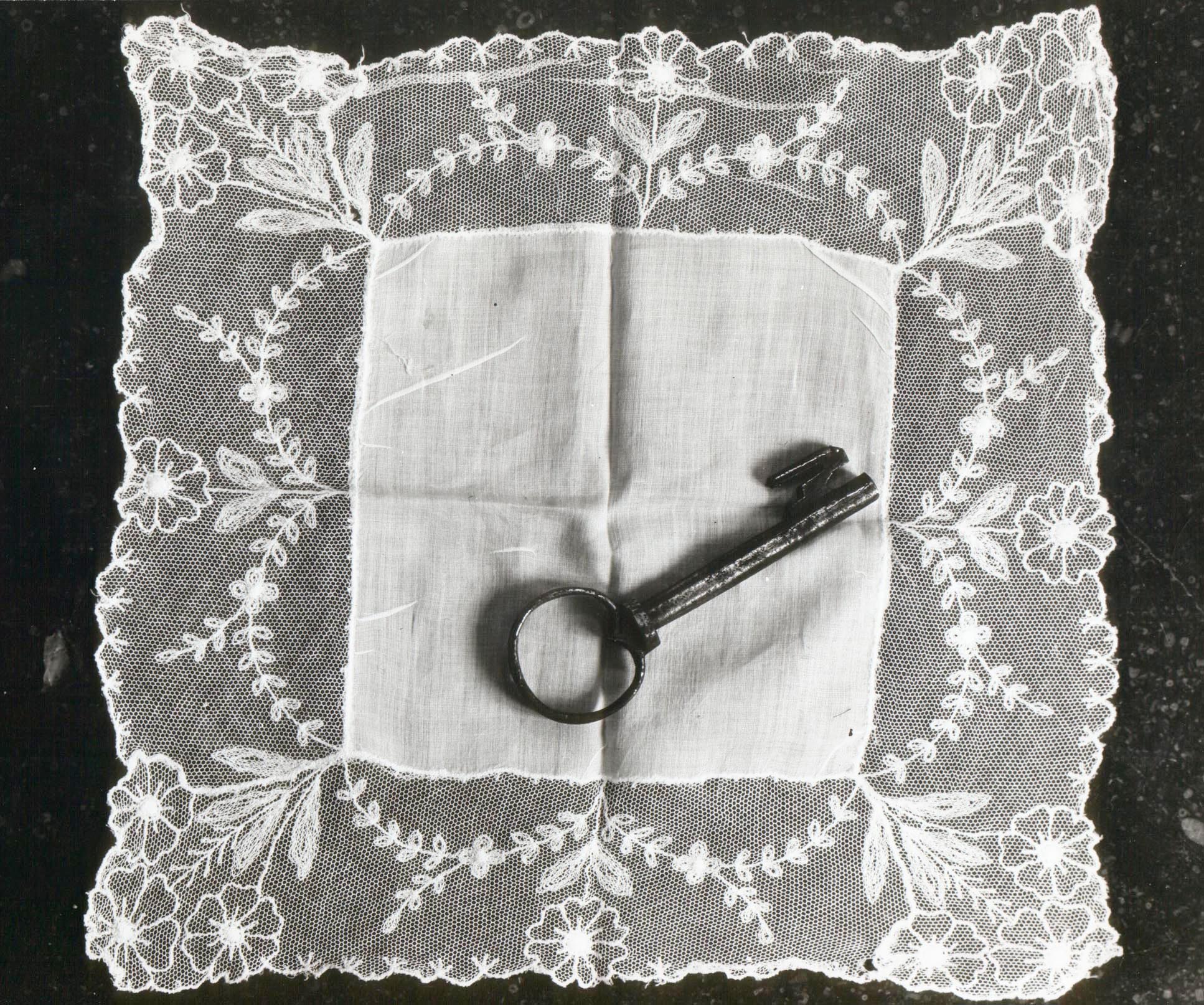
It happens to all keys, eventually, they become redundant. Whatever was safeguarded or secreted behind a lock has lost its significance, or its mystery.
I took the above photo in my early twenties … but my fascination with keys started in childhood, with fairy tales. Recently a friend on FB re-discovered ‘Woman who Run with the Wolves,’ by Clarissa Pinkola Estes.. Like Deborah, and her friends, drawn to the inner journey, I was enchanted by the book when it was first published in 1992.
I took the tattered edition from my shelf and added it to my bedside reads. The first theme I dipped into was the psychology of Bluebeard, a tale which Clarissa uses to explores the archetypal innate predator in women’s psyche, which, while bullying us into silence, also holds the key to a woman’s deep instincts and creativity. Re-reading this chapter, I had a powerful dream that showed me that the forbidding and controlling voice still lurked in me and has presently dampened my spirit, even though I naively and bravely turned many keys in my life, revealing both, threatening spells of my inner predator I managed to transform into vital energy, as well as treasures that inspired many creative adventures.
Yet of late, at this advanced stage in my life, I feel listless and stuck with the MS of the third novel in my Course of Mirrors trilogy, Mesa, which, incidentally, is set in a realm where time has slowed down and the protagonist must re-introduce conflict to empower life. In the face of this challenge, it seems that all my keys are of no use. Mystery does not call. My vital curiosity, even my desire for a meaning, dissipated, with no lock in sight. The wild spirit in me lingers in a safe garden, full of robins and butterflies. How dare I to disturb paradise by instigating conflict? Any thoughts are welcome, well, needed. Thank you ♥
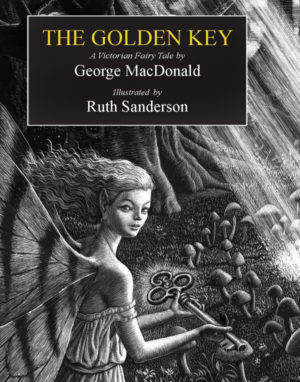
During a short exploration on google I found this lovely post by Ruth Sanderson re: George Mac Donald’s story of The Golden Key.
A lovely garden requires work, even if it’s only keeping constant growth in check. My soul garden is framed by many hedges and plenty of bird-loving ivory that need annual trimming to prevent a jungle. Trouble is – I’m not my strong young self anymore. I used to shift heavy objects and wield electric tools on high ladders. My ardent spirit still feels up to such tasks, but these days I’d be foolish not to accept the limits of my body, which I call ‘ little palace’ and give thanks to every day.
I berate myself, ‘stop acting like super woman,’ … easier said than done.
Other skills are needed, like how to find trustworthy helpers with intelligence and imagination, who respect a vulnerable person’s need? I employ a reliable trades team for the once a year hedge cutting, but finding someone for the occasional help is a challenge.
I asked my local council once, if they can recommend a person to do the occasional gardening. They sent me an octogenarian, wobbling precariously on a high ladder, with his 12 year old nephew to help. They did a terrible job at a price way above any professional landscape firm.
Opportunists are plenty, though my local repair café, staffed by volunteers, proves to me there are generous people out there, with amazing skills, offering to fix things. I dearly bless them.
Finding genuine help is something that concerns many of us, at one time or another, women and men. The world is not geared for the redundant, or the in any way disadvantaged.
Just wondering, dear reader, if you rely on support for strenuous manual jobs, if you’re not swimming in money, how do you deal with getting practical help?
Inspired and taken from ‘The Mind World’ – Volume Four of Hazrat Inayat Khan’s lectures.
The heart, in Sufi terms, functions as a mirror – and more …
Whatever is reflected in the heart does not only remain a reflection but becomes a creative power productive of the phenomena of a similar nature.
So, for example, a heart that is holding in itself and reflecting the rose will find roses everywhere. Roses will be attracted to the heart and roses will be produced from it and for it.
As this reflection deepens and becomes stronger it becomes creative of the phenomenon of roses and the symbolic qualities we associate with roses.
Equally, the heart that holds and reflects wounds will find wounds everywhere. It will attract wounds and it will create wounds; for that is the phenomenon of reflection.
There are examples to be found in the world of people who by retaining a thought have created on the physical plane its manifestation, its phenomenon.
The reason is – that the phenomenon is not only an image as produced in the mirror – but that reflection in the heart is the most powerful thing.
It is life itself – and it is creative.
If the heart is calm enough to receive reflections fully and clearly, one can choose for oneself which reflection to retain and which to repel.
☼ ☼ ☼
A calm heart is of course a rare event, especially in the turbulent and rushed environment most of us live in, or fight for existence. We may however remember such moments of grace. And to appreciate the process of reflection as a psychic law can explain many mysteries.
My two quest novels, ‘Course of Mirrors,’ and its sequel, ‘Shapers,’ (found on my book page,) are inspired by the phenomenon of reflection.
The image is of an enlarger, used to project, copy, or enlarge negative film images onto chemically sensitive paper, by moving the lens box up or down to achieve a variety of sizes, or to place filmstrips directly on the paper and press them down with a glass plate for contact sheets. The timed, light exposed paper is developed slowly in a chemical bath, and then fixed in another bath to stop the developing process. Next, the print is watered for a while and then dried on a hot press. Depending on the quality of the negative, it’s a delicate art to achieve the optimal gradation of light and shadow in a final print. The process happens in a darkroom with only a red light.
Much was destroyed during the Second World War, and my parents started out with nothing but their skills. My mother had trained as photographer at the Berlin Lette House (Academy,) where women were encouraged to acquire academic and industrial skills. My father, apart from being a talented artist, for whom there was no call, trained and worked as a fine mechanic. Together they moved south and started a photographic business. The enlarger in the image was built by my father during the early 1950 s.
I was not interested in the business (another story,) but eventually studied photography, and this enlarger served me through a decade of self-employment, based in Munich, including still photography for projects by directors of the then German New Wave Cinema. I could have continued working in the film scene, but instead became a hippy, a seeker, a psychotherapist, and a writer, in that order.
Five years ago I donated the enlarger to a local art college. They were very pleased. I’m still mourning.
Having been a big part of my life, I thought of posting something about my experience with analogue photography here, but was fretting because it’s a deeply emotional subject, for another day. So this post did not turn out as intended.
There are glimpses worth sharing. To explore and understand the shift from analogue to digital systems, I wrote an article about Human Identity in the Digital age: ‘Body Electric.’ You can read it as PDF, and find the link on the ‘Other’ page here. It is 20 pages plus notes and bibliography, but after all these years, I still think it is definitely worth reading.
A great book on photography and surrealism, L’Amour Fou, carries a quote by Roger Callois, which shines a light on the fading idea of an original:
‘It is with represented space that the drama becomes clear; for the living being, the organism, is no longer the origin of the coordinates, but is one point among others;; it is dispossessed of its privilege and, in the strongest sense of the term, no longer knows where to put itself.’
The analogue process provided rich metaphors to live by, while the oracular quality of the digital system has fragmented many assumptions and values we hold about human nature and reality. Thing is, I don’t think we have caught up yet. We are all a bit lost in space and time – which has become a theme of my two novels, (see my Books page.)
Yesterday I had a surreal dream, all about us, and others, being developed (in our mind) through our ongoing experience. In the process, it can happen that we, and others, become fixed into static existence through our attitude, and our need for permanence and certainty.
Doubt is generally considered a weakness, but it can also be strength, and a function of renewal.
We seek approval. We like to belong with people/groups that resonate with our ideals. We are trying to order the puzzles of our experiences into some coherence that guides our purpose and actions, and gives our life meaning. And who does not cherish the moments when all feels perfect? Yet only traces of perfection live on in the heart, because life moves on.
An invocation by Hazrat Inayat Khan used to intrigue and troubled me …
‘Towards the One
The perfection of Love, Harmony and Beauty
The Only Being
United with all the illuminated souls
Who form … the Spirit of Guidance …’
Perfection is not of this world, I told myself. And yet, the above invocation gains power in the context of how Hazrat Inayat Khan defines ideals:
‘The ideal is the means – its breaking is the goal.’
His grandson, Fazal Inayat-Khan, put it in another way:
‘With faith one attains and realises peace and harmony.
With doubt one destroys and gains freedom to move ontowards.’
It could be a safe space we aspire to, since once expelled from the warm womb, we struggle to find a similar space in this world. Whatever else we aspire to, it takes discipline, consistency, and perseverance to work towards one’s ideal.
Through discipline we acquire a basic understanding of things. In spiritual terms, this is also the challenge of the Buddhist Hinayana and Mahayana practices.
But what if we have proudly gained a level of certainty, be it about our achievements, identity, position, faith? And what if we cling to that certainty – at all costs – numbing the chattering of our minds? How do we escape a stagnant reality, the prison of certainty?
Chögyam Trungpa, in his lectures on Tantric Wisdom says doubt is ignored on the path of discipline, but during a further stage, Vashrajana (Crazy Wisdom,) confusion, and creepy questions about our truth are legitimised, and offer enormous potential. Allowing doubt – and including that doubt is part of our progress.
In a book of gathered lectures, ‘Journey Without Goal,’ Trungpa points to a fearless attitude.
My former Sufi teacher and friend, Fazal Inayat-Khan, operated in the realm of Crazy Wisdom. Some of his students understood where he was coming from, while others were super annoyed. I’m still inspired by Crazy Wisdom, but having lost my Sufi friend, I lack the courage to travel this goal-less path alone.
Teachers of that kind, who live life with fearless intensity, move on as soon as their purpose is done, they never grow old.
The theme of Crazy Wisdom, in the sense of stepping into the unknown, is challenging my imagination now in the third book, ‘Mesa,’ I’m writing in the Odyssey of Course of Mirrors. It’s about Mesa’s return to her future perfect world, where time has come to a near standstill. Against all logic, but understanding the truth in her heart, she is tasked to bring back history, and friction, as a cure.
Photo: The image was taken by son, Yeshen Venema, during a visit to Vietnam. I added the clouds :)
On occasional good days, mundane tasks, problem solving on the go, are like meditations, and how I begin, how I sequence, and how I end a task, has a fine rhythm to it.
Let’s say I prepare a meal, I go about it in the simplest, energy and time efficient way, via knacks acquired through practice. This applies to washing, cleaning, shopping, gardening, fixing things etc. …
What delights, is when I do a little thing different, like change the sequence of, or slow down the attention and attitude towards a task, and in the process discover symbolic correspondences. By symbolic I mean here the recognition of pattern similarities between different fields (contexts, scales, environments,) from being awed by how the geometries in nature resemble galaxies, to how the moon cycle affects plants in the same way as my mood. Creative minds are haunted by beauty and meaning. They may discover how their life’s myth is hidden in the narrative of a fairy tale, or, as suggested by Blake, see the world in a grain of sand …
Observing how I do myself, slightly distanced from the task at hand, can open novel perspectives. In the expanded space even a dream-image from the night before can revisit.
I can also project observing eyes on anything or anyone, including cats, dogs, foxes, birds, trees … let’s assume a fly – the fly that defies its instincts and does not go for the window or door, but insists on buzzing around my head, I could invest that fly with the function of spying on me and in the process craft an epic spy fly tale.
I’m easily sucked into stories, because fresh points of view sometimes bring on an AHA moment from the unconscious nowhere (suddenly now here.) I could call it a singularity, unfolding in my embodied being in time, and changing the way I operate my relationship with myself, others, and the world at large.
Imagination, playfulness, thinking out of the box and intuition bring joy to body and mind.
Imagination in German is – Einbildungskraft – the strength to make connections and build something in the sphere of one’s mind. For those who don’t make use of this human capacity, life may become reactive and stale. While hunger is a basic need, the desire for a variety of tastes is acquired.
We have our peculiarities in the ways we communicate between inside subjective reality and outside objective reality, the way we approach a problem, do things, see things, interpret events, and in the way we are influenced by the weather, our digestive system, or personal and collective moods. Each of us is unique in how we engage with the universal consciousness we are embedded in. Specialists with a narrow focus tend to make boring company, and will, I guess, soon be replaced by AI avatars, but well-rounded and irrational humans, aware of being present in their bodies and all the experience and memories held in their bodies, cannot be replicated.
At times I envisage copies of myself, to shake hands with, or relieve me of tasks I consider tedious … though these copies nest of course inside my psyche, assigned with different yet overlapping functions. Ideally I wish for this cluster of subs, let’s call them subpersonalities, to cooperate, and such synchronicities do occur on rare occasion. They are wondrous moments of being, infused with the deeper intelligence of universal consciousness.
Oh, and please buy, read and review my latest novel.