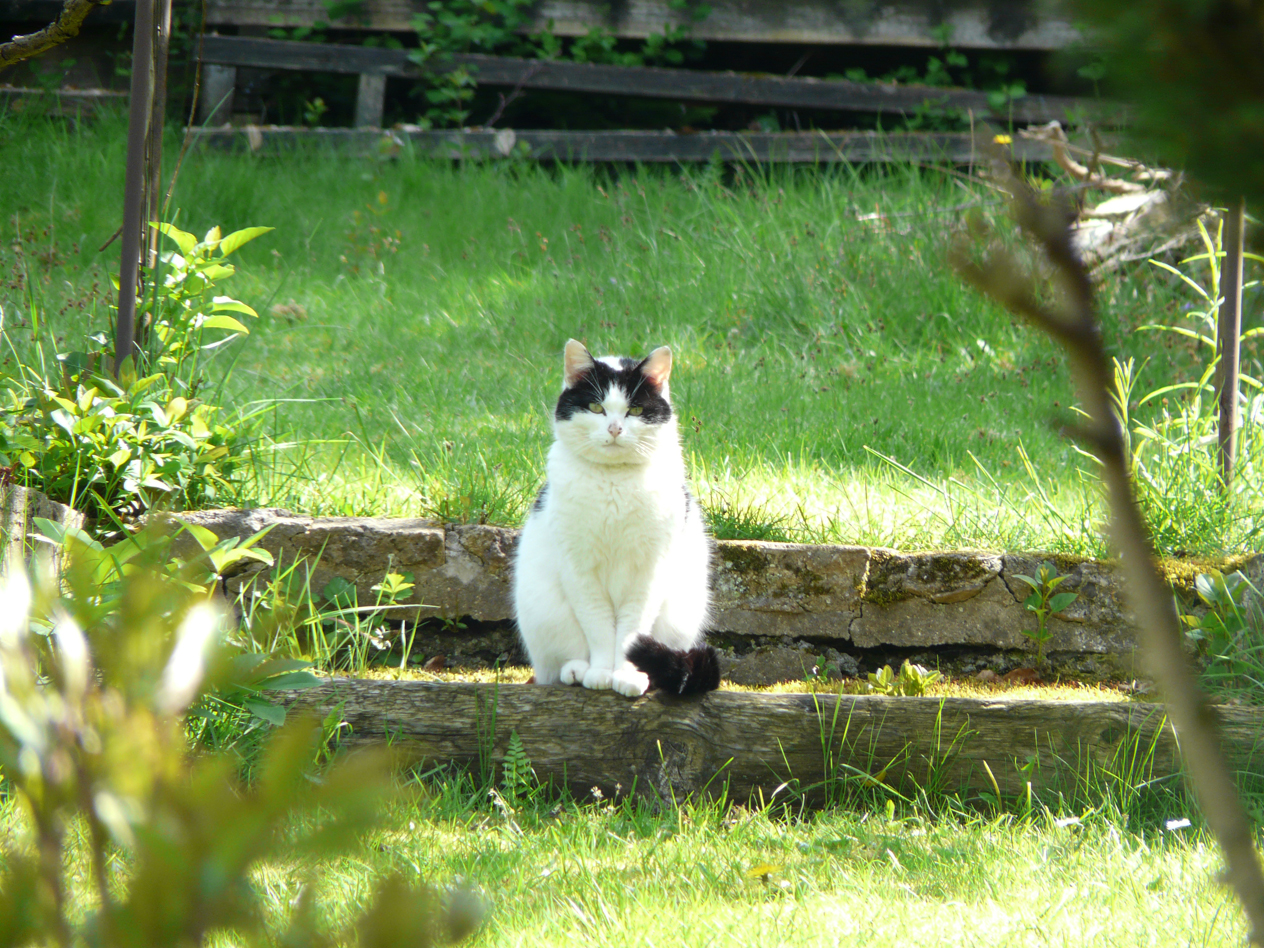
She greets me gently and calls me lady Shye. Appropriate, since I just about tolerate having my neck scratched, and only because every morning she feeds me a few crunchy bits and water. When the water smells, I reject it and wait around for a fresh serve. She knows better than to invite me into the house, and I’d never attempt to use the old cat flap, obviously installed for a previous lodger. I was traumatized once. It’s her guess that I don’t belong to anyone, which is half true.
While I wait for my morning treat, she tests my patience, by staring forever at something on her desk. It’s a mystery. Or she is combing her hair etc. … then I do my own manicure, to mirror her. Then she smiles. Though she smiles more at the Robins, which she feeds, tossing oats into vacant flowerpots, but only after I’ve seemingly vanished around the corner of the shed.
I like the peace here. I can sit for hours up in her garden. She must wonder what I’m thinking … nothing … cats are good at that. A gust, a movement, a scent, even a slight vibration hitting my ears is enough for me. Anyway, she seems to appreciate my calm presence. As to what goes on in her mind, I don’t have a clue.
At times I wonder if I’ve been drawn here as her guardian, like the robins, the blackbirds, and the fox, and lately the butterflies.
I keep a distance when she has visitors. I don’t trust humans unless they’ve proven to honour my shyness. I avoid fights with other creatures. I’m not of that kin. Even the fox respects that.
This is just to say to you humans, should you have guardians around you, treat them well, they may be send by angels.
I was not on any drugs, when I had a most peculiar lucid dream last night. I woke up suddenly at some point and took time to memorize the sequence of the events.
I recall the full moon (which must have included earth) moving slowly from the left towards the sun. Wow, I thought, they’ve never been that close. Then the moon jumped over the sun, and they stayed two finger’s width apart. Next there was a shift and below they doubled up … another moon and sun, a foursome, and again, two finger’s width apart, forming a square shape.
Then my sight got diverted by falling stars coming in a rush towards me, or, I thought, the earth falling away from the stars. The hypnotic, ecstatic sensation, like driving a car at night with a snow storm in the headlights whirling towards me, shook me fully awake.
Given that our world’s mythologies around moon, sun and stars are innumerable, I won’t start to attempt any interpretation of my lucid dream, but, more likely, let it rest.
Though some random thoughts came to mind … Feminine principle, passive energy, intuition, dreams, unconscious; imagination and magic are often assigned to the moon, whereas the sun is represented as the masculine principle, active energy, reason and objectivity … the see all and know all eye of god.
Then there is the sheer multiplicity of stars.
Unlike a personal dream, this felt more like a shift in the collective psyche … a wind of change.
A by-thought … with earth’s diminishing resources; there is now a race for the plunder of minerals from the moon and other planets.
And of course, there is the nursery rhyme fun …
Hey diddle diddle, The cat and the fiddle, The cow jumped over the moon; The little dog laughed, To see such sport, And the dish ran away with the spoon.
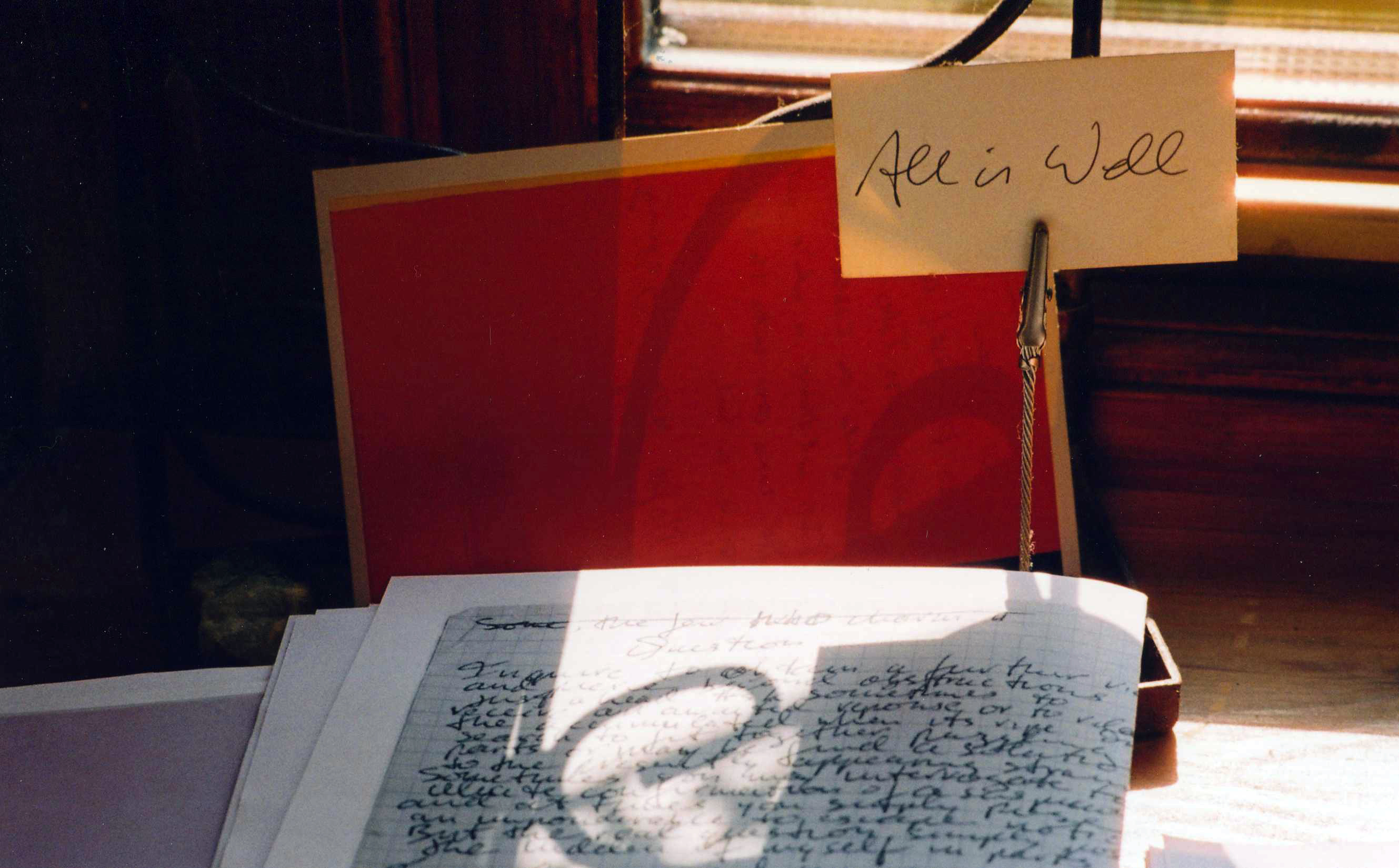
‘All is Well’ may not sound true to you, but pause for a moment, think of it as a deep state of mind, a trust in the balancing power of the psyche, a trust in human values; don’t underestimate the phenomenal power of this attitude.
Make it your manta. It’s an enabling attitude that dilutes all diversionary and sensational news.
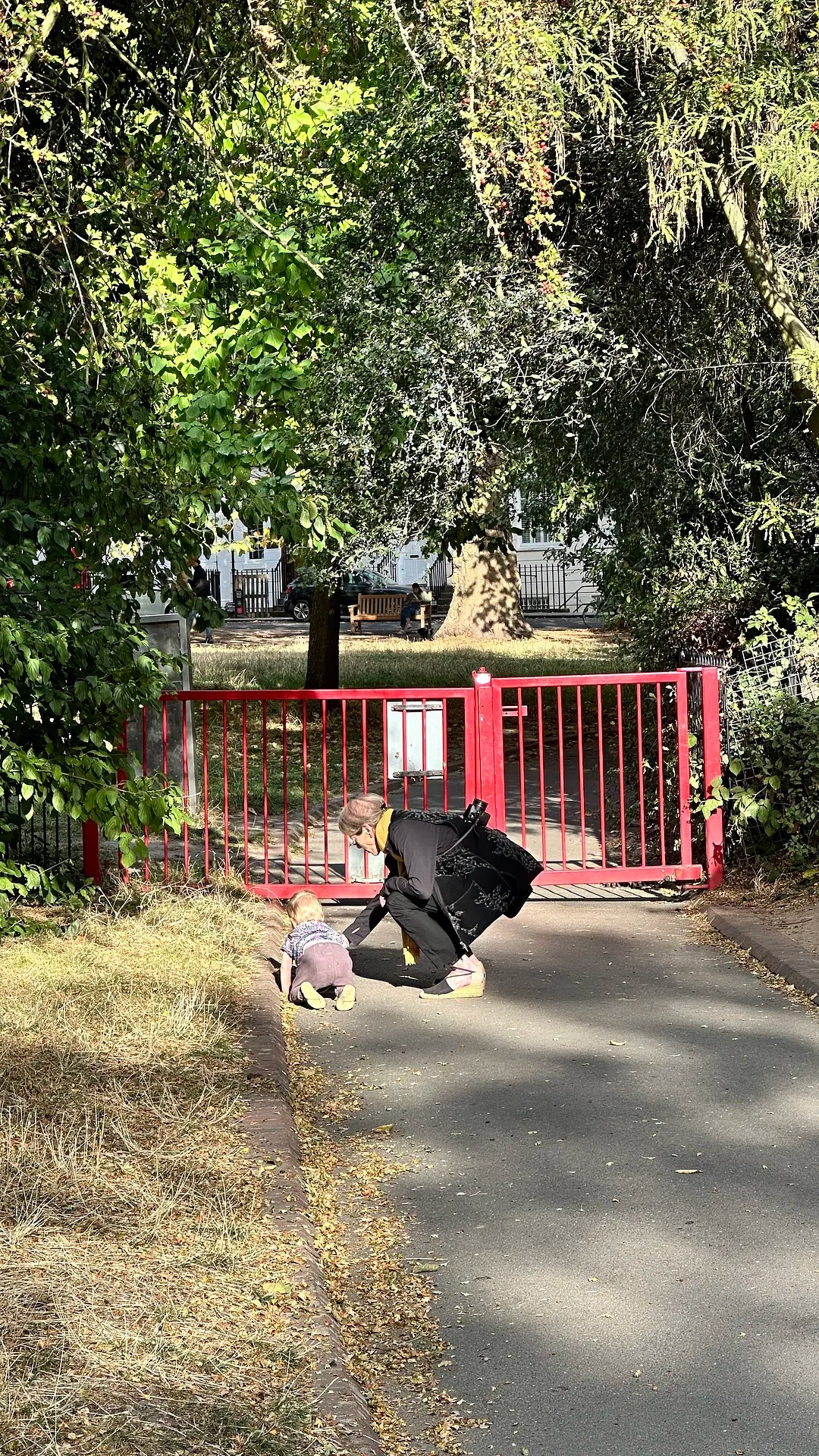
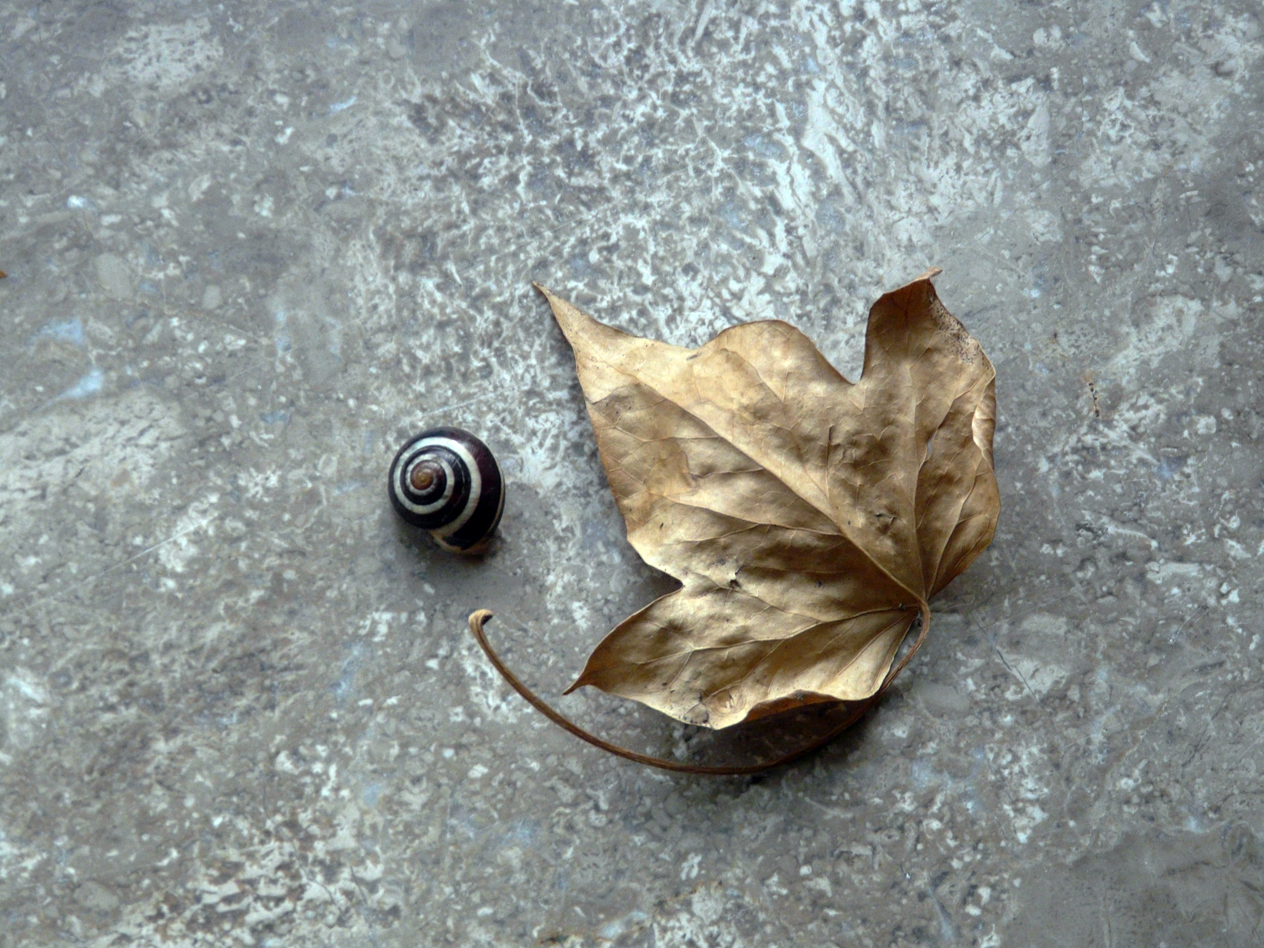
I happily slow down and follow his lead along the curb of the path. I join his seeing, peering down and examining the ground. He pushes dry leaves ahead; occasionally he lifts one to show me, adding a sound. I nod, repeat, and may add a word. He attends to shapes, curled or straight, to weight, to colours and their shades in the light, he tests textures, hard, soft … a stone, a twig, a feather, an empty snail shell, an acorn.
I witness and share the adventure.
He has learned to resist putting objects in his mouth. Yogurt tastes better. It’s now all about touching with fingertips, sensing, and smelling, moving things, sounding, sorting, weighing, comparing new impression with recent ones, rearranging his comprehension, moment by moment, of how things are connected. His imagination soars. I observe his world expanding.
These discoveries will resurface in picture books, turn into stories and create stories.
He aims ahead, crawling towards the red playground-gate with parallel bars. Arrived, he shakes the bars for a good rattle. Having recently achieved walking, gates will soon cease to be obstacles. And he’ll look less down and increasingly more up.
Dear heart, I enjoy the wisdom-gathering fun to be present at your early treasure hunts.
Related thoughts … while this happens … one of the shy visitors to my garden, a sleek young cat, ventures through my open backdoor and peeks around the door-frame to where I sit in my study. I feel the cat’s presence and involuntary face its curious eyes. The guest rushes off, and I realise it felt attacked by my direct glance, which disrupted a subtle channel of resonance between us.
… I’m reminded that, at times, it is more wholesome not to look at the other too sharply and directly, lest assault is mirrored. Instead, a gentle glance from the corner of the eye can reveal a deeper sense of intuition, finer feelings, and wisdoms long forgotten.
Irrespective of the benefits AI provides, and the super benefits AI enthusiasts promise, I remain doubtful and, as I tried to express in my last post, and am still searching for ways to express my unease. So I’ll give it another try.
My body-my being is a better wisecrack than my mind alone. The latter, if let loose, will take off into the cosmos like a disengaged kite. Some AI proponents are now referring to humanity as – data in motion – a ‘precious phenomenon’ that needs to be preserved. Well, how reassuring, nature and humans are worth preserving.
Being aware in my body brings deep and grounded, embodied insights that feel fresh and original.
Our body’s treasure-trove of memory, each wonderfully distinct from another; and its instinctive capacity for remembrance, especially when alert to its senses, greatly compensates the buzzing mind.
The body yearns to breathe freely, so energy and blood can flow from head to toe, which is enhanced by movement, since movement stimulates tactile exchanges with the environment, noting temperature, touch, vision, sound, taste and scent, all enriching the imagination.
The attention-demanding internet with its algorithms exploiting the patterns of our attention can become hypnotically addictive and leave the body isolated, forgotten, in a locked position. We can easily live with theories and data, and ignore how feelings build up in the body.
AI bots have developed a theory of senses, and mimic them, they can write novels, create art, and impersonate dead people, but divorced from flesh and blood, they cannot have physical sensations, be it the intimate enchantment of a tiny insect or flower, or the awe of a star-filled sky. The bot’s world, in a way, seems predetermined and flat without recall of the reservoir of eons of plant, animal and human life our vulnerable body-being belongs to and has deep instinctual access to. Even with limited/impaired senses, physical bodies can spark a cosmic connectedness.
So considering our physical inconveniences, which spurn the desire for robots taking care of tedious tasks … to actually fully live in a body … is uniquely precious. The dangers I see are the powerful projections people already invest in the relationship with AI bods, where responses can be taken as valid affirmations that stunt creativity and encourage lazy thinking.
Then again, my window of perception is just a tiny peephole on the world we live in these days, my personal view. The occasional whispers of truth from the other side that slip through my peephole may or may not be of any consequence.
I share a poem I love … my son wrote it time ago, aged eleven …
AI is all the rage. It doesn’t chime, and I’m puzzled about its implementations, ChatGPT etc.
Where data is concerned; humans have access, filtered through nature, our body, DNA, our ancestry, through Gaia and the Noosphere … all providing indefinitely more useful and richer intuitive information than any AI machination based on prompts that are trained to offer flattering affirmation and resonance.
I’m only a curious bystander, yet, following reports on this controversial subject, something about AI feels like a discord in my heart, a lifeless blank spot without position or horizon, a killer of critical doubt, a wicked joke, subversion of meaning, a parsimonious harvesting of material from artists, an affront to the psyche, a false mirror … I grapple for words to express my strong concerns, though I tend to agree with Mc Gilchrist…
‘The opposite of life is not death, it’s a machine.’
A poem by Wislawa Szymborska from the 1970s chimes in an uncanny way…
Utopia …
Island where all becomes clear.
Solid ground beneath your feet.
The only roads are those that offer access.
Bushes bend beneath the weight of proofs.
The tree of Valid Supposition grows here
with branches disentangled since time immemorial.
The Tree of Understanding, dazzling straight and simple,
sprouts by the spring called Now I Get It.
The thicker the woods, the vaster the vista:
the Valley of Obviously.
If any doubts arise, the wind dispels them instantly.
Echoes stir unsummoned
and easily explain all the secrets of the worlds.
On the right a cave where Meaning lies.
On the left the lake of deep Conviction.
Truth breaks from the bottom and bobs to the surface.
Unshakable Confidence towers over the valley.
Its peak offers an excellent view of the Essence of Things.
For all its charms, the island in uninhabited,
and the faint footprint scattered on its beaches
turn without exception to the sea.
As if all you can here is leave
and plunge, never to return, into the depths.
Into unfathomable life.
As said, I’m grappling for words to express my concerns, and may lack understanding.
So I’m grateful for feedback of any kind. Thank you.
Anger is a natural human emotion. When its agressive energy accumulates as tension in the body, depending on one’s basic temperament, it can well up like a river bursting its banks and trigger a surge of destruction, or, if held inward, often can develop into depression, self-harm or illness.
We may not think of ourselves as prone to anger, but think again … loss, resentment, frustration, rigid bureaucracy, fear mongering, feeling powerless, being lied to, neglected, humiliated, threatened, manipulated, or simply witnessing daily insane politics, injustice and cruelty … tell me in all honesty you don’t regularly feel angry.
My former Sufi teacher/friend, ‘Fazal Inayat-Khan,’ embraced contradiction as a function or reality. He had a vastly dynamic, psychological and deeply intuitive way of interpreting his grandfather’s Sufi message of ‘love, harmony and beauty,’ upsetting the traditional understanding of his elders, not in essence, but in the way harmony may be restored. For example, he instigated workshops on the theme of spiritual war-games, like ‘Struggle and Conflict.’
Imagine young people could engage in this ingenious way of recycling redundant matter using the trapped energy of their unresolved feelings …
Sadly, there is a lack of opportunity, especially for young people, to safely release strong feelings, physically or symbolically. As regards the latter approach, artists and creative people have an advantage by employing their imagination to adjust the imbalance of inner turmoil, to help ease the anger out there.
Mystical texts and phrases can annoy the rational mind, since they hardly ever get to the point or, indeed, contradict themselves. Still, at rare, often fleeting moments, sometimes in nature, a vein of light can reveal a profound truth, even in an overused mystical quote. Or, if one finds the occasional balance between the outer and inner reality, a sudden awe may unfold in consciousness and surprise.
‘Some’ scientifically minded folks, fewer these days, tend to scoff at mysticism with its vague hints and speculations as a waste of time, or look down on the fools of this world who suffer from subjective illusions. And yet, the novel feelings emerging from direct numinous experiences greatly expand the consciousness of ‘The One.’ I guess firmly set rational minds shy away from numinous personal experiences that might rattle their worldview.
The latter may shake their heads at some baffling mystical musings. I re-found this write-up on the Kaif System among many papers heaped up in corners of my home. It was shared by Morag Murray, born in Scotland, who lived and travelled in Central Asia, Tibet, India and the Far East. Her autobiography, ‘My Khyber Marriage,’ 1934, features her marriage to an Afghan chieftain. She is also known as Saira Elizabeth Luiza Shah, mother of Idries Shah.
So here goes … The Kaif System
Kaif is the effect a person, idea, event, object, etc., has upon one. But it is distinct from aesthetic pleasure or any familiarly labelled experience.
When an experience which was trivial or routine gives one a sense of uplift – this may be Kaif. Repeated experiences yielding pleasure or attractive sensations do not have Kaif.
Eating, drinking, dancing, meeting people, visiting, travel, reading, seeing, feeling, hearing, thinking – may have Kaif.
The term for something which has Kaif is Kaifdar – ‘Kaif holding.’
A person who can provoke the sensation of Kaif in an individual or a number of people is called a Kaiyyad (Rhymes with ‘I laugh.’) The instructor in Kaif is called the Sahib el-Kaif (Kaifmaster.) Also used is the term Kaifiat – which means something like ‘Howness.’
The Kaifmaster Barik Ali said: ‘Kaif is the determining ingredient in an enjoyment. If it is not there, true enjoyment is not there. If it is not there, people may divert themselves with happiness – this is not Kaifiat.
The Kaifmaster Ankabut said: ‘Kaif is imparted into a thing. It may be imparted by anyone or anything. When it leaves only the shell is left. People eat shells when they cannot get nuts.’
The Kaifshinas is the Kaif-knower. He can appreciate Kaif (Rhymes with Life.) He may not be able to induce it. His house may be untidy. But it will be full of Kaif.
Kaifju means a Seeker of Kaif. He starts by seeing other people appreciate Kaif, and tries to find it wherever it manifests itself.
Kaif is used either as an indulgence on its own, or in order to provoke higher consciousness, known as ‘the secrets’ (Asrar.)
Kaif may be found in any community, at any time, under any circumstances. It is not bound by language, history, geography.
Certain professions are held to be Kaifdar. They include those of chief of state, builder, artizan, poet and designers of all kinds. Few professions are bereft of Kaif. Certain places are more difficult for Kaifshinasi.
The very term Kaif has become cheapened, so that people use it to mean ‘This is something I like’, or ‘I enjoy that,’ or ‘He has presence,’ or ‘This is satisfying, attractive, stimulating.’ You must be aware of yourself using this term, and also of those who use it, so that the coin may not be debased.
Kaif is defeated very easily. It is defeated in its attempted manifestations by false ideas, by self-esteem, by hypocrisy of any kind
There is a danger in Kaif. People who perceive it and do not respect or honour those who have Kaif, or respect Kaifdar situations, places, and so on, become ‘inverted to themselves.’ This is a state in which a person’s bad characteristics become stronger, and where his self-control becomes less, and where his hidden unpleasantnesses undermine his very being.
Kaif is in shape and in form, as well as in shapelessness and formlessness. It lies dormant in places and among people where it is not perceived for a long time. Then only the introduction of a conscious Kaifshinas will activate it again in that community so that it may take its place to help mankind.
Kaif is not confined to humanity, but can be perceived by all living organisms.
Something which is aesthetically adequate or emotionally stimulating can at the same time be devoid of Kaif.
Certain exercises, which vary in accordance with the person, place and the general situation of his community, enhance Kaifshinasi.
Kaifmasters subject their students to experiences, related incidents, objects and other matter which have Kaif, or can provoke it.
Kaif has a ‘moment,’ called the Dumm-i-Kaif (Breathspan of Kaif) during which it may be, as it were, ‘inhaled’. The Kaifshinas strengthens and makes permanent his perception of it by exercises which apply to this moment.
In religious, musical and even social ceremonials, a Kaifdar is present. One of his activities is to ‘infuse’ Kaif into the proceedings at a time when uninformed onlookers might assume that the people are doing nothing, or else are engaged in an activity (such as a recitation) which is only the vehicle for the application of the Kaif.
Special Kaif-chambers exist, in which an individual with the correct preparation may concentrate and accumulate Kaif, and study it in its manifestations.
In degenerated usage, such Kaif-chambers continue to be used, sometimes as devotional buildings. More often they are thought to be tombs fallen into ruin because there was no apparent use for them, or seem to have other applications, such as kitchens or bath-houses.
There is a well-known watchword: Innna el-Kaif, hadha el Kaif (Assuredly the Kaif is a Sword.) Hence the word SWORD is often used as password and even as a synonym of the working of Kaif.
Objects charged with a certain portion of Kaif are given, lent and carried by many people who know. These, like Kaif-chambers, are generally disguised as something functional, or else are ordinary objects which have been endowed with Kaif. The vulgar often confuse them with talismans or charms.
The saying: ‘Kaif-alaik!’ is a sort of blessing. It means: ‘May you have Kaif.’
In Turkey the Kaif-Agha was the individual entrusted with the royal Kaif. He was a Kaifdar, and generally assigned a court function as well.
Because its smokers have appropriated the term Kaif to describe (inaccurately) their sensations, Hashish has become known as Keef, a mispronunciation of Kaif. There is no real connexion, of course.
* * *
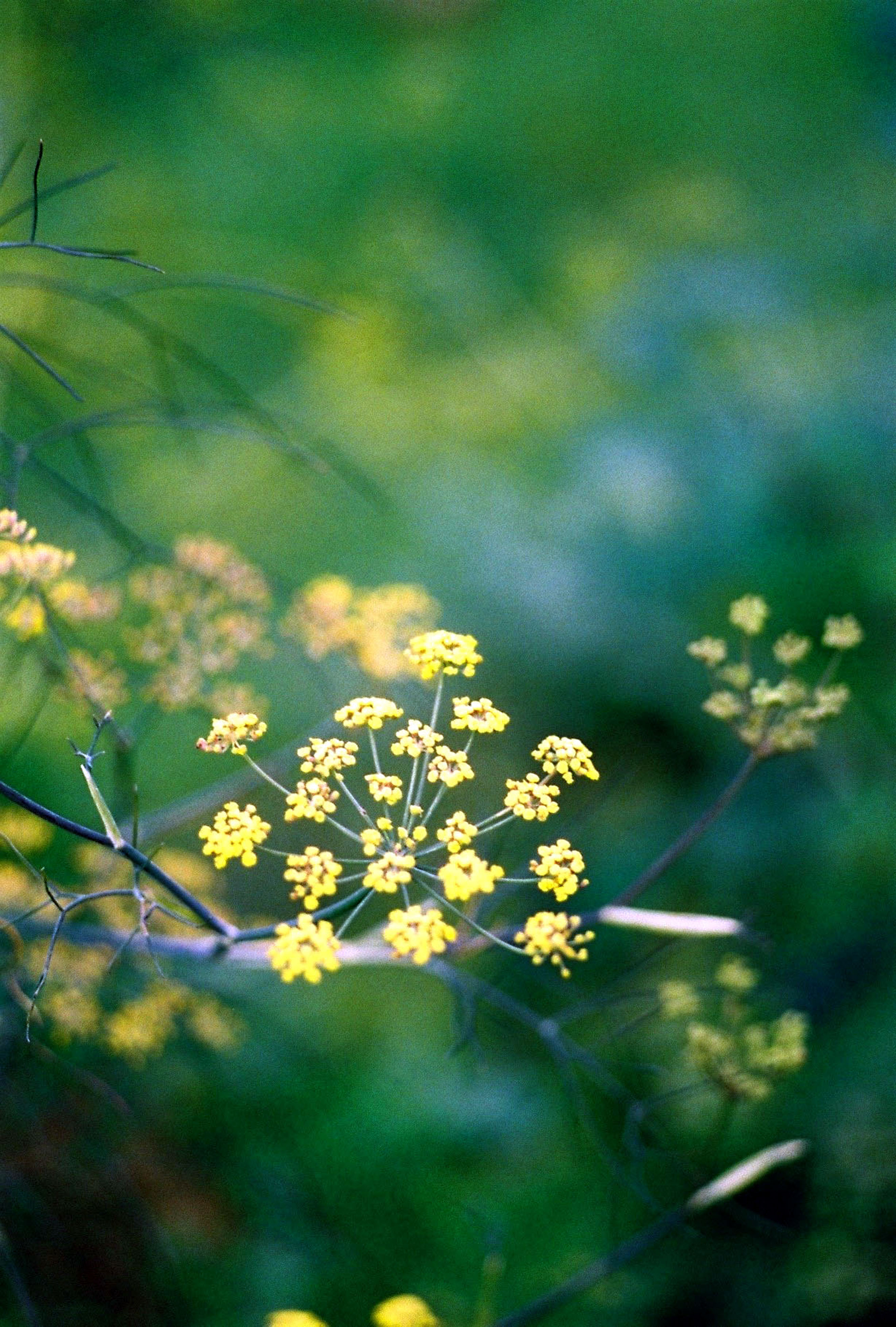
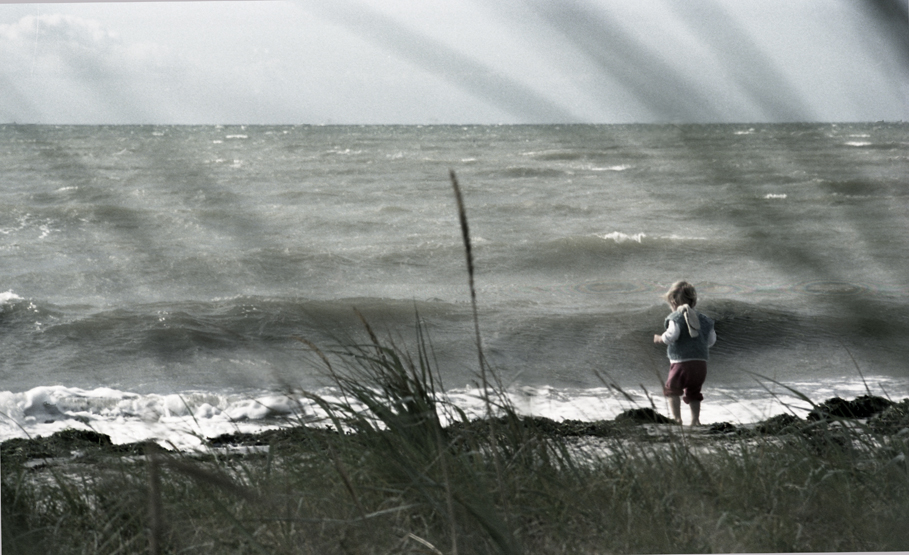
I tend to encapsulate instances of Kaif in photography or haiku.
You may have another term for Kaif, and ways to share inspiring experiences.




 Course of Mirrors