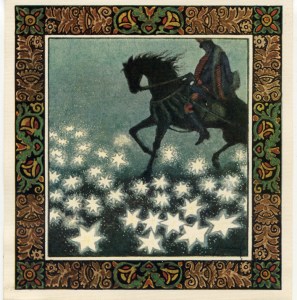
Image by Almos Jaschick
Today is one of those when I can only attend to bits of information, short sequences of writing, a paragraph maybe, while my eyes are drawn to ivy leaves moved by the breeze, a blackbird family feasting on apples left for them, a pair of woodpigeons landing and swaying in the branches of the huge beech at the top of my garden. Again and again I engage in pockets of attention beyond the window and shake off focus, ironically, in order to re-find the focus towards a coherent little blog post. A sudden rainfall is followed by the sun spinning through marbled clouds, while the heavenly voice of Kiri Te Kanawa streams through sound boxes linked to my computer. Eventually, my eyes return to the words I’m assembling here about the mystery of time, also relating to the emerging parallel worlds featuring in my two, coming to three, imaginative novels, where intentions create connections – from invisible realms beyond space and time.
Check out this and similar posts on YouTube, ha, ha, a few speculations. I haven’t been there for a long while. Don’t get lost.
‘The distinction between past, present and future is an illusion, although a convincing one …’ is what Einstein wrote in 2007 in a letter to friends. Time, he showed, has no universal constant and is relative. His famous equation E = mc2 – energy equals mass times the speed of light squared – had enormous implications, technologically, as well as socially.
This valued theory seems, at present, incompatible with the Quantum Physics that apply to tiny things. The chase for a unifying theory that includes quantum gravity is on. Moreover, physicists puzzle over the unseen pulling and pushing forces in our universe that elude detection.
We perceive time as proceeding steadily forward, although the laws of physics allow for time to equally run backwards. When it comes to our subjective inner experience we easily accept time as non-linear and relative. In therapy work, for example, a shift in attitude towards a person in one’s past can change a generational pattern.
We define time, create time, record it, hoard it, take it apart and re-frame it into fresh representations and stories. Stepping from one reality into another without losing coherence of mind is the province of individual adventurers of consciousness. Some artists like to dwell in liminal spaces where time shrinks and expands, like the twisting passage between one dream and another. Many devote their life to the re-framing of events in time. Imagine for a moment where we would be without people who create novel perspectives on entrenched realities. To call such expressions mere fantasy demeans the symbolic understanding found in the vast dimensions of the psyche.
Try and compare the creation of our cosmos with the conception, cell divisions and the birth of a human infant. The procreations and expanding consciousness of humans make for multitudes, while each of us inhabits our own self-constructed world. A psychic universe held together, it seems, by forces not unlike the unseen tides our visible galaxies swim in, the ocean of dark matter and energy that exists symbiotically within us.
Dark matter is assumed to collide with oxygen and hydrogen nuclei in our body, speculated to happen at the rate of up to 100 000 times a year. There, you may be hit right now. To my knowledge, no idea has been proposed as to what might be sparked or exchanged in these collisions.
In any case, at this, another year’s ending, quite a few of us spark flames and kindle candles in dark nights to celebrate the cosmic dance, the birth of light.
I’m wishing you, my readers, wherever you are, a time of peace and reflection.
* * *
From Little Gidding by T. S Elliot …
We shall not cease from exploration
And the end of all our exploring
Will be to arrive where we started
And know the place for the first time.
When the last of earth left to discover
Is that which was the beginning;
At the source of the longest river
The voice of the hidden waterfall
Not known, because not looked for
But heard, half-heard, in the stillness
Between two waves of the sea.
Quick now, here, now, always –
A condition of completed simplicity
(Costing not less than everything)
And all shall be well and
All manner of things shall be well
When the tongues of flame are in-folded
Into the crowned knot of fire
And the fire and the rose are one.
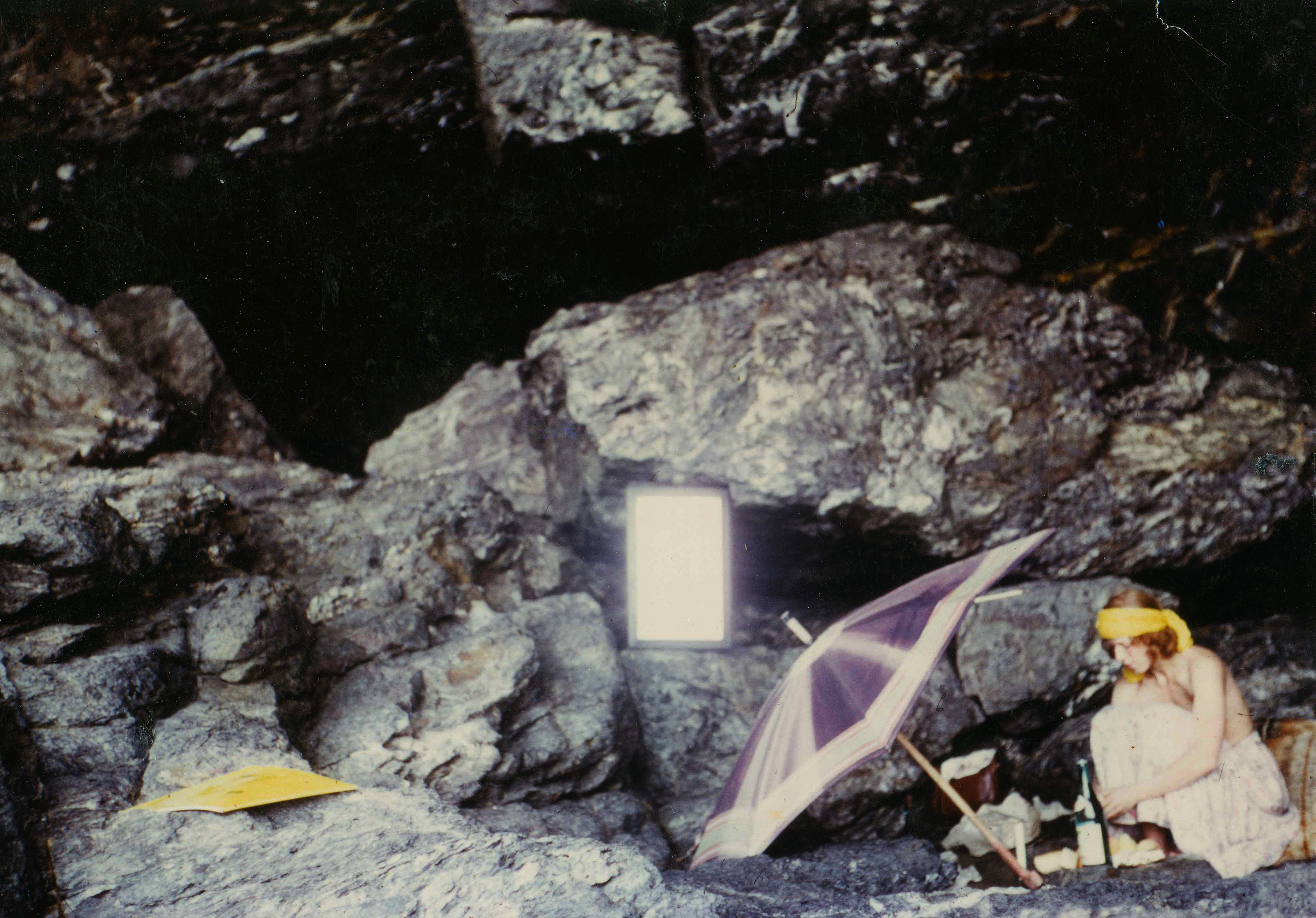
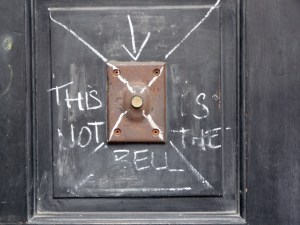 The morose question of whether to be or not to be has moved on to whether to appear or not to appear. Appearances can deceive according to context. Or as my spiritual friend, Fazal Inayat Khan used to say, ‘Form is a relic of eternal potential.’ Things that have lost their former function have joined the archive of icons, metaphors.
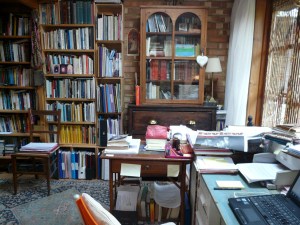 Those involved in research, students, scientist, and writes, know the challenges of filing and stacking information. My own filing mirrors the ad hoc workings of my brain. To find stuff again is a matter of focus, luck and intuition. While occasionally frustrating, I trust my larger self and the collective unconscious. It is my oracular method, circumventing any too strict measurements promoted as our new saviour, algorithms. I value rationality, just not when it discounts spontaneous human creativity, heart felt compassion, and the inspiring moods of nature.
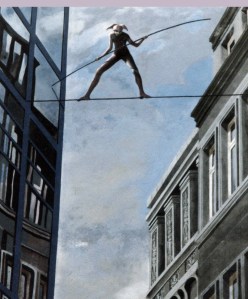 Always keen to bridge and connect seemingly unrelated intellectual territories, I tend to dip into essays of poet-philosophers and cultural theorists stacked near my bed.
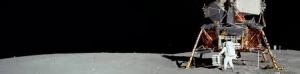 ‘The light is also weird. Since there’s no atmosphere, the phenomenon of refraction disappears, so much so that you go directly from total shadow into sunlight, without any transition. When I hold my hand out to stick it in the light, you’d think I was crossing the barrier to another dimension.’
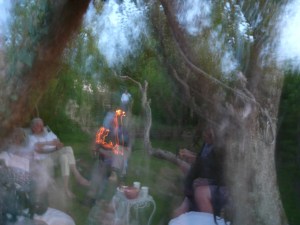 as this wet August
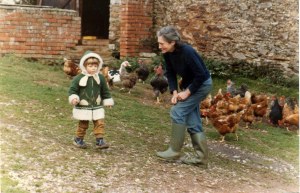 Our selfless neighbours left an indelible impression on my son. They made him a valued and loved part of a small community. Our farmer friend, Hope, was hungry for knowledge, though never realised her dream of travelling as a journalist. She had however the most vivid visions of Tibet; a place neither of us had visited but felt strong emotional connection with. Not the first time, I had a shock of appreciation for the unremembered sparking instant rapport slipping through time.
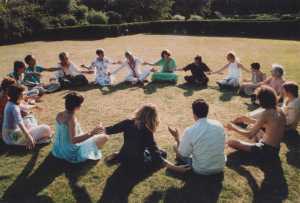 I was thirty then, had travelled much and been involved with innumerable internationally composed groupings, circles upon circles – this was to continue for decades to come. Among the groups were people who felt strangely familiar, like Hope. We would guard out solitude, cry together, or laugh hilariously about silly things. Equally there were those wary of me, often for reasons unknown to themselves, which made me wary of them. You may know this treading-on-eggshells feeling.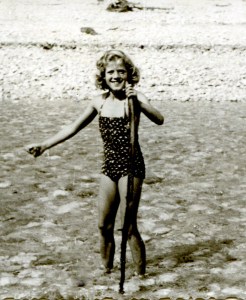
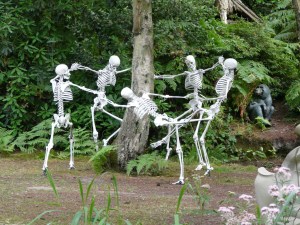
 Records state our ships were launched towards Proxima Centauri – programmed to complete an assignment, after which our android system was to be made redundant. The assignment to find carbon conditions and water to sustain organic life has not been completed. The seeds stored in our vaults remain dry. Are we avoiding redundancy? Our current analysis of the Wikipedia sub-scripts focuses on the vast structure of human language. Here are some pointers: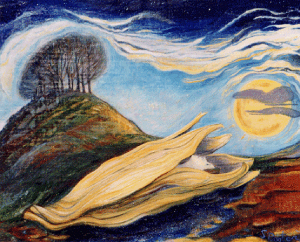
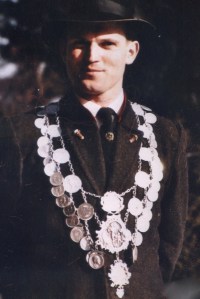 In frequent transit between countries, I’m also travelling through malleable realities with my dying 98 year old father. Experiencing past, present and future flowing into each other makes me realise, more than ever, that time is an invented concept.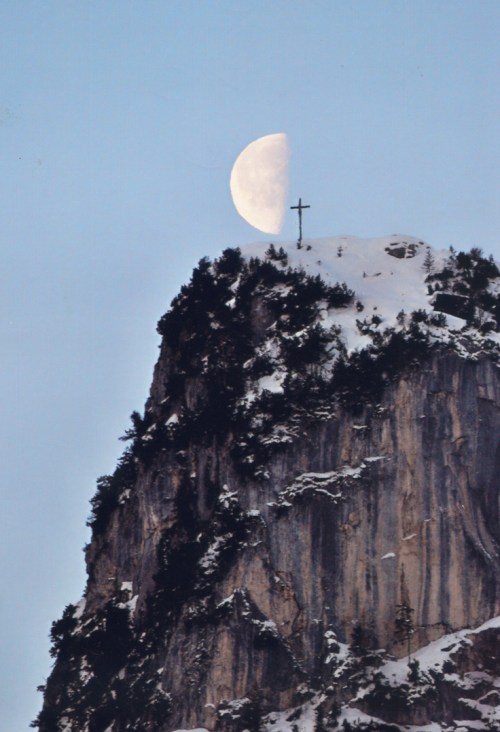
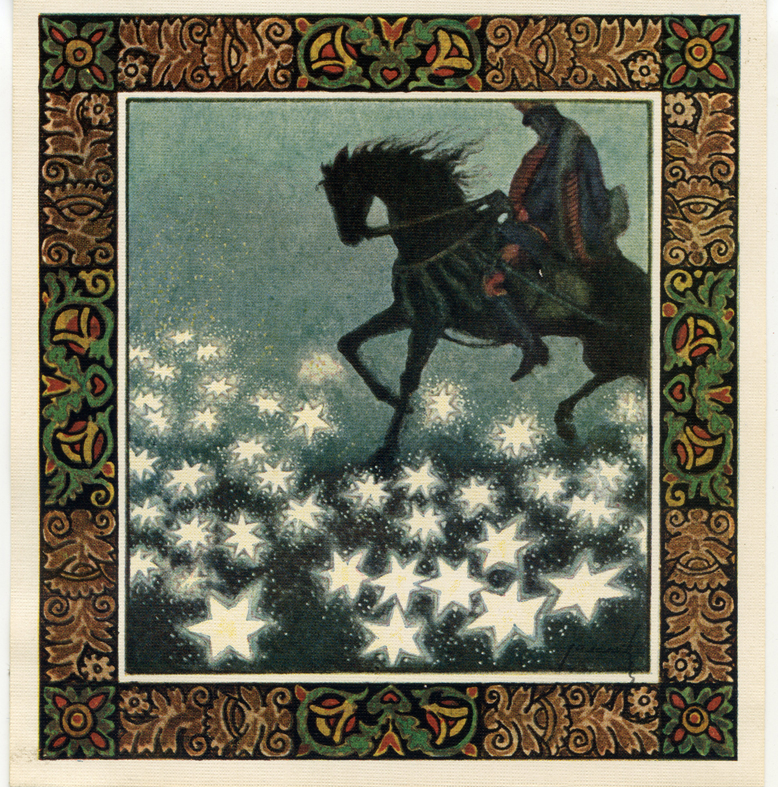


 Course of Mirrors