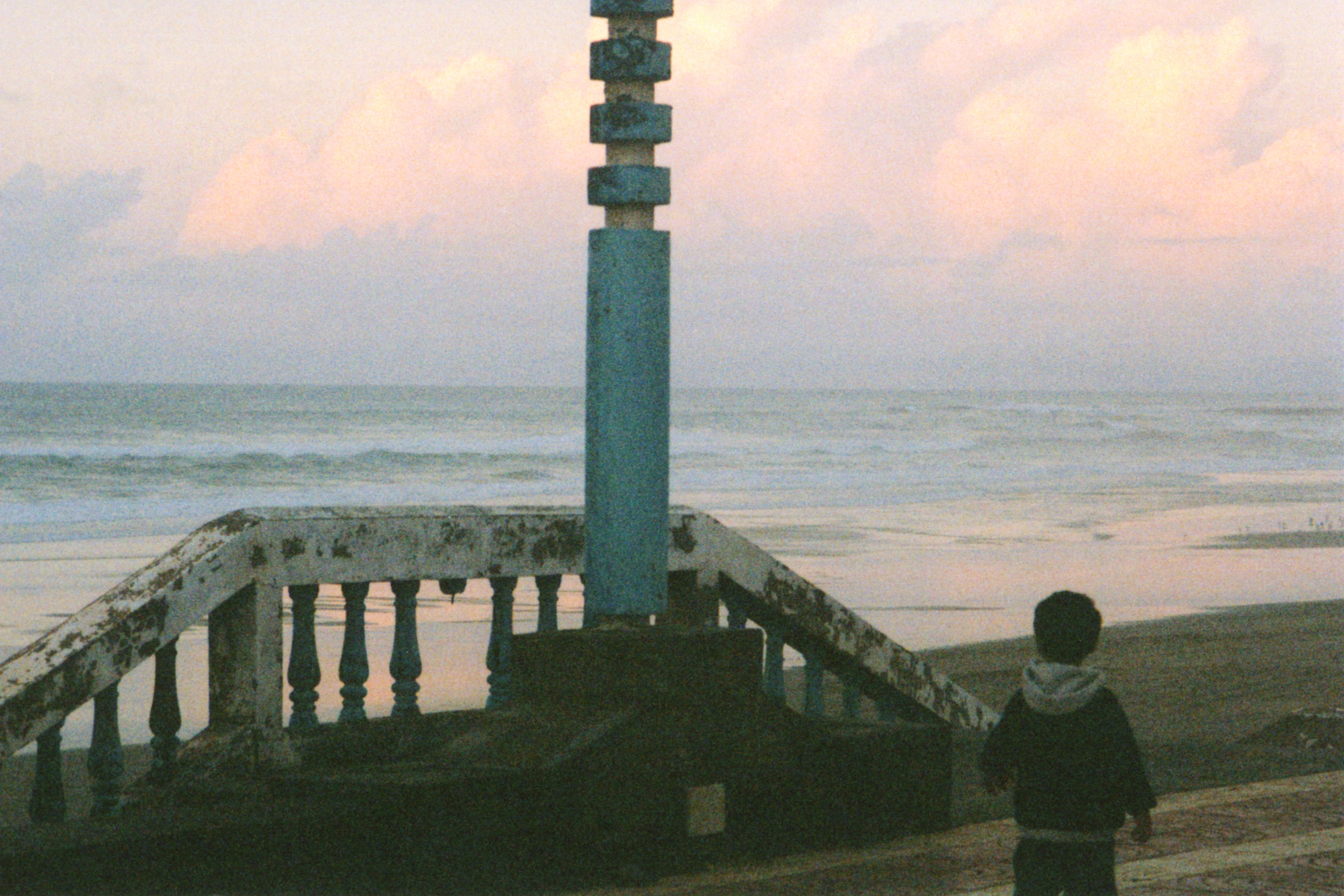
… what do we expect? …

And what do we project?

It has become a trend to encourage positive thinking, like: we can achieve anything we want – we are what we think … yes … but … trouble is, we need to first accept were we actually stand in the physical world. Without analysing and accepting ‘what is’ the magic cannot take root.

Example: Russell Brand writes in the Guardian, 11th August, ‘Big Brother  isn’t watching you … dismissing rioters as mindless is futile rhetoric. However unacceptable the UK riots, we need to ask why they are happening.’

 I quote one sentence I can totally relate to:

 …  ‘If we don’t want our young people to tear apart our communities then don’t let people in power tear apart the values that hold our communities together …’’

In recent years the following happened in my immediate surrounding:  A spiritual community centre which offered inspiration and healing to hundreds of people and which I supported and worked from half my lifetime was sold. I witnessed schools selling their football fields, a great number of small shops folding up, three post offices dismantled within a radius of 10 miles, local people mortgaging their houses to buy their own community centre or their only village shop, funding cuts to charities, bus services, train-travel becoming unaffordable … and so on.

Places in my environment where people can meet, relate, share, collaborate, reciprocate services and practice values are disappearing faster than I can blink. So this is happening, and seen in this light, the scum (as the young rioters are called) are actually making a collective statement, a statement that is immature, unsavoury and mainly unconscious, but which the government cannot afford to ignore. Because it highlights a truth:

We are living in fantasy land.

Even gods don’t have the power humans have, to act as the bridge between the physical and the spiritual worlds. Why? Because we are psychological beings, we can potentially create the future from where we stand congruently, by accepting and engaging with what is.

Sadly, when fear of losing face clouds reason, any analysis of self and society, of what is really needed, becomes biased – and what is attracted across the bridge of the psyche is more fantasy.

Listening is vital, to self and others. What are the real needs I have, you have, young people have, our planet has – today? A variety of perspectives will allow the bridge to be swept clean of fantasy – and allow insight, inspiration and synchronicity across from the spiritual sphere.

If our projections into the future, personally and collectively, are grounded and embodied in actual situations, then real imagination can unfold.

*    *    *    *

Incidentally, the bridge features in my novel.

*    *    *    *

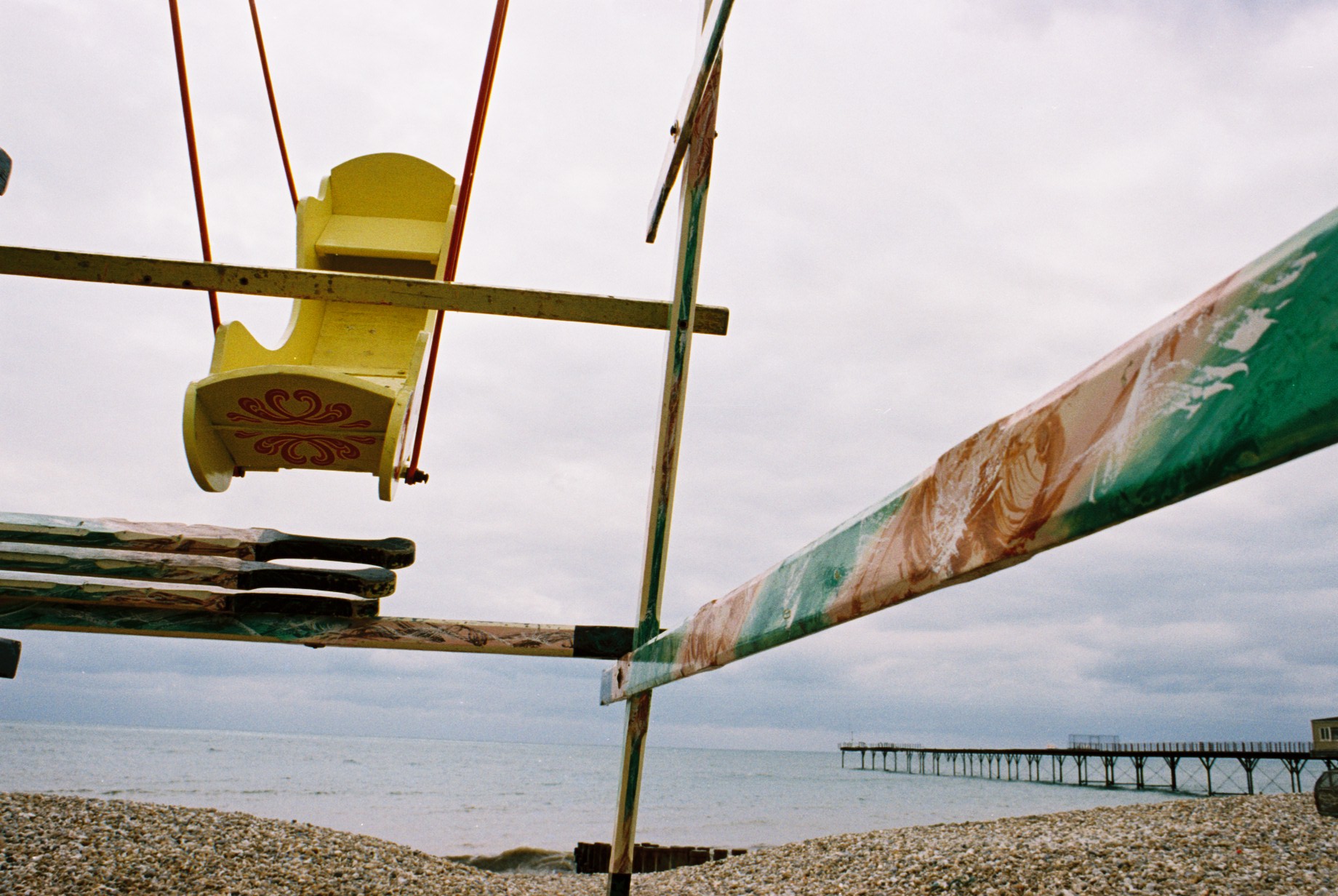
The image here was taken in Cambodia by Yeshen Venema. I supplied the clouds, taken in Rhonda, Spain.

4 Comments

Filed under Blog

… riots – no hope – nothing to lose …

It’s easy to blame without thinking deeper, there’s a shadow-side to affluence which must be acknowledged and brought out into the open.

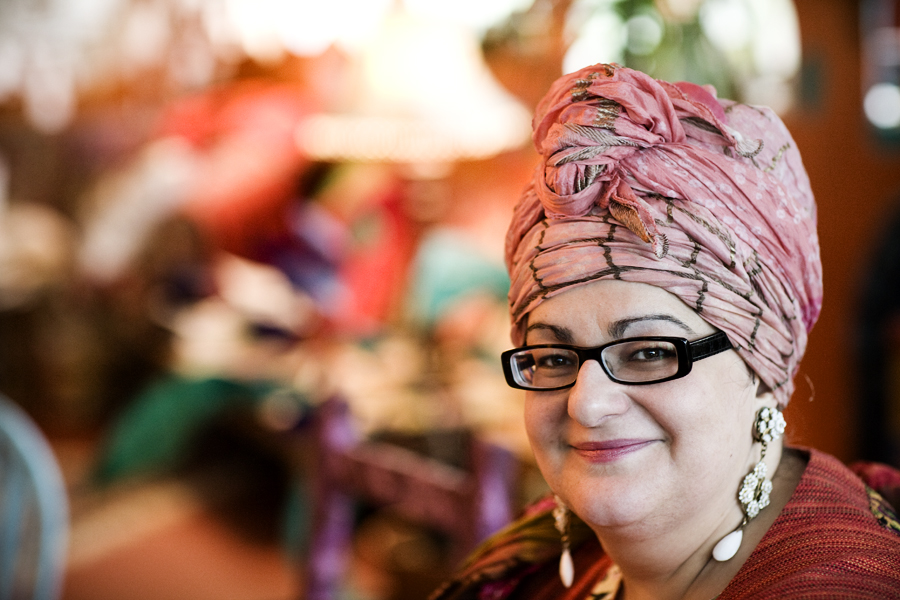
This is a relevant interview on radio 5 by Richard Bacon of the admirable Camila  Batmanghelidjh who founded the Charity Kids Company … ‘These kids have got no hope. They’ve got nothing to lose.’

http://www.bbc.co.uk/programmes/p00jpw1j

I tried to create a link to this interview on my face book page and it was taken off instantly, so I try via wordpress, indirectly.

It’s voices like Camila’s that social engineers would do well listening to.

2 Comments

Filed under Blog

… crazy life …


My birthday coming up -micro/macro scales of the expansive mind, can’t help being born into that matrix. New links abound, one brought back the magnificent … KOYAANISQATSI – CRAZY LIFE

http://video.google.com/videoplay?docid=5539613947839465921

*    patterns of movement that reflect our mind

*    the grand illusion

*    weird and wonderful

In case you haven’t seen this before, prepare yourself for an 80 minutes’ trance.

2 Comments

Filed under Blog

… symbolic understanding …

The star that guides us is not meant to be reached concretely, or, as Hazrat Inayat Khan expressed it:

‘The ideal is the means – its breaking is the goal.’

Aged twenty-seven it struck me that I was not my own person, but a clone of my first gods, my parents. I realised I was not special. I was like everyone else, a slave to habits formed in my early environment, which I then unconsciously ritualised. The shocking insight put an end to my pretending I was a foundling (my joke at the time.) For better or worse I had to reconcile myself to my given mould, accept my parents’ imperfections, and my own.

Having reached an impasse re: a series of romantic relationships that bruised my heart, I was disillusioned. My ideal of love had lost its meaning and I yearned for a new horizon.

Fortunately I met a mentor who re-framed conflict for me, because in my flight towards spirituality I had come to avoid conflict like a plague. The trouble with rejecting conflicting thoughts and feelings is that we create taboo boxes in our psyche, boxes where we hide stuff we don’t want to think and feel. The accumulated rejects trip us up and actually energise conflict around us. Childish feelings may pop up to embarrass us where they don’t fit circumstances. Best welcome them, unless you want to fuel the addiction to war.

Driven by unconscious refrains our lives unfold from crisis to impasse to transcendence – like a drama with all its obligatory heroes and villains. Ignoring our inner conflicts and projecting them onto others and the world at large serves a purpose – in that it (hopefully) makes us aware that the way we go about fulfilling our needs is not particularly elegant, and has a price. The price is awareness, which can be painful, but it brings choice. Feelings that ‘have us’ don’t ‘have to’ be acted out, they can be expressed symbolically – one way is through writing things off one’s chest and releasing the outpour to the elements. Tear up and bury your unsavoury confessions, drown them in a river, or burn them. Release all association, free and purify the energy.

What is hidden from consciousness nevertheless affects us deeply.  In an archetypal sense, for example, a person who identifies with the masculine principle (animus) will be drawn to a person who identifies with the feminine principle (anima.) I don’t use the terms man and woman because physical gender does not necessarily equal psychological identification.

Generally, the hidden gender is actualised by the way the opposite principles are experienced through a parent.  Behind the attraction towards opposites is a desire for wholeness, a need to integrate our unrealised nature. This growth happens through relationships.

Plato put it like this …

… the dry desires the moist, the cold the hot, the bitter the sweet, the sharp the blunt, the void the full, the full the void, and of all other things; for the opposite is the food of the opposite, whereas like receives nothing from like …

Plato also emphasised that wholeness does not equal goodness.

As an example: too much goodness in a parent can make a child fearful of negative emotions and constellate a demand for goodness impossible to live up to. If human frailty is lacking in a father or mother, that is, if they are too perfect – or absent – then the expectations father or mother figures are invested with throughout one’s life become inflated, difficult to achieve, and no actual person can satisfy such expectation.

I’m not a practicing Christian, but I appreciate the powerful symbolic significance of the cross. The story of Jesus shows us that in the process of becoming human we are stretched between earth and heaven, matter and spirit, crucified by the dichotomy. Conflict has meaning if we allow it into consciousness. The challenge is to endure opposing forces, identify with neither good nor bad, but instead suffer the deadlock of contradiction, be crucified, because – there are conflicts we cannot resolve.

Yet by accepting what is we invite grace. We ready ourselves to be initiated into a reconciling symbolic experience of transcendence that is personally meaningful to us. The reconciling symbol cannot be grasped. It will emerge from the unconscious in its own time, through an event, or through a dream – if we can be receptive and master humility and the patience.

Symbol, a definition …. Taken from ‘The Creative Imagination in the Sufism of Ibn ‘Arabi’ by Henry Corbin, translated by Ralph Manheim, Bollingen Series XCI, Princeton University

The symbol announces a plane of consciousness distinct from that of rational evidence; it is a ‘cipher’ of a mystery, the only means of expressing something that cannot be apprehended in any other way; a symbol is never ‘explained’ once and for all, but must be deciphered over and over again, just as a musical score is never deciphered once and for all, but calls for ever new execution.

4 Comments

Filed under Blog

My latest blog-entry did not appear on my home page, where planned. Then again – muddles make us see all sorts of things (Bateson said so, I think.)

You’ll find the report of an inspirational weekend with young people if you click in the top bar here – on the page called … inspiration … or use the link below.

https://courseofmirrors.wordpress.com/inspiration/

Leave a comment

Filed under Blog

update on the drama in my garden …

If you read my June 3d entry here you will remember my crime.

The grey and fluffy young blackbird I toppled from her nest and managed to bring home again, is now out and about. The little one is so-so at locating worms but not a great flyer, yet.  And she comes very close to my door, peeking in from time to time, remembering, not doubt, my pitiful attempts to feed it grubs. And here is why I think I traumatised the little one. She is now capricious about food.

Shiny, black dad does his utter best to introduce Morello cherries to his offspring. An acquired taste, a little tart, I admit, but considered a great delicacy among blackbirds. The tree provides me with wonderful jam each year and I always leave plenty of fruit for birds.

Picture the teen fluffing about on the head of my little stone Buddha waiting for her dad. There he comes, with a bright-red cherry in his beak, already de-stoned. The young one takes one taste and spits it out. Dad picks up the morsel and tries again, repeat. This goes on for several rounds until the cycle is broken by the firm consistency of dad and the cherry is swallowed.

Watching the scene every morning on top of my stone Buddha’s head cracks me up; it’s so entertaining I keep forgetting to fetch my camera – maybe next time.

Later addition …

Just got this delightful drawing as an early birthday present from my son’s partner, Tasha. It encapsulates my little friend’s bliss, which is worms after all.

7 Comments

Filed under Blog

coffee – crocodiles and snakes

Occasion: St Martin’s graduation ceremony at London’s Southbank Festival Hall. Tasha, my son’s girlfriend, received merits for her post-grad animation course, an event sprinkled with celebrities and a few rousing speeches. With no rain for once, we went on to roam in Covent Garden.

Delicious Thai food at Busaba in Floral Street, eye-bright tincture for my computer-stressed eyes from Neil’s Yard, and – I can’t just keep this for myself – the best coffee in London is to be had at the Monmouth Coffee Company in Monmouth Street. All in all a memorable day.

Tasha grew up in Darwin. Her adventurous mum satisfied my curiosity about Western Australia’s wildlife today. Here’s what sticks in my mind. Crocodiles are happiest in rivers where they find plenty of delicate morsels, including humans -such tragic accidents can happen after torrential rains when crocs stray to places where people don’t expect them. An occasional old croc appears in salt water at the coast. It would be a pensioned-off one, chased away by younger males. Crocs found in wrong places are put into croc-sanctuaries. They are also eaten, crocodile meat tastes like a cross between chicken and duck meat.

I wanted to know about snakes, too. The black ones are fatal, the brown ones less so, and then there are the beautiful ones, sparkling and colourful, that live in trees. They’re harmless.

On reflection, Darwin’s wildlife is no different to the wildlife found in the underbelly of UK’s cities. Common sense and well-tuned intuition apply. And Western Australia has a few advantages, vast open spaces, and no fragile Euro currency.

On-line again, befriending my new laptop and getting back into the swing of writing and editing. A heavenly scent ascends from a cup of freshly ground Guatemalan coffee brought home from the Monmouth Coffee Company.

2 Comments

Filed under Blog

brain re-wiring in progress

Laptop crashed – and now – from XP to horrid, horrid window 7

I’m in the process of re-wiring my brain. Why can’t they keep things simple. I know the madness will pass, and I’m beginning to appreciate some of the new features of the software. Programmers, the unsung hero’s, eh?

Here’s a little how things feel for now … sample from chapter 3 …

Click on the excerpt page in the bar above.

*    *    *    *

…. Into the calm of night burst the incoherent chatter of voices. From the dark glared countless pairs of bright saucer eyes. The stone in my hand gave off a light, and in its radiance I made out dwarf-like shapes. They jiggled between trees like entangled marionettes, awkwardly limbed, clad in distasteful rags …

Enjoy

6 Comments

Filed under Blog

the trance of rhythm

I tend to wake with a keyword or an image, nothing new, just reshuffled ideas that emerge, as it were, from the darkroom. Today the keyword was ‘rhythm.’

I hope it makes you wonder.

*    *    *    *

Order unfolds from chaos through rhythm in all dimensions.

Stick your fingers in your ears and hear the blood-river …

Press your fingers on your wrist and feel the rhythm of your pulse …

Hold your hand to your face, and know what travels on the breath returns …


The beat and rhythm of the heart begins within weeks of conception in the womb, and invites the spirit into a trance-dance. Why would spirit otherwise get itself trapped in the constraining form of a body, with limited access to the universal mind, attracting only certain frequencies, all depending on the contents of the available gene bank, the energy of the planet constellations at the time, and the quality of stimulation the environment happens to provide.

Repetition is the trance. We learn by repetition, we relax into its familiar beat, habits of belief, feeling, thought and behaviour. The quickly established repetitive patterns comprise the cards we are dealt to play with.

The deck of cards is universal, and the game has laws, physical laws, psychological laws, spiritual laws, and random laws. When we make an effort to learn the blueprint of our cards and acknowledge the player in us who holds the hand, the game has meaning, whether we win this round or not.

He who cannot see himself within the context of at least 2000 years expanse of history is all his life shackled to days and weeks.

Rilke

… anyone noticed how irrational our rational culture behaves?

1 Comment

Filed under Blog

reflections on loss

Yesterday, on Face Book, in a moment of daring madness, I invited a challenge – to write on my blog on any theme proposed. The challenge arrived – OK Ashen! How about the theme of loss, and how to come to terms with it? –  this from a friend who experienced severe losses in her life, one that cost her the full use of her legs, and another that took her only child, a teenager who died in the belief that a cheesecake did not contain nuts. Wrong. As it turned out, the death of my friend’s daughter saved innumerable lives since, in that rules for exact food ingredients were introduced. Yet bereavement remains. and it is immensely personal, as well as universal.

Life itself is conditioned by loss, which brings change, often traumatic change, of which death is the most final. It reminds us that our body and personalities are mortal. When I was a child, death seemed fascinating, and unreal. What most affected me were the reactions of people around me. As a young woman, I witnessed the violent death of a friend at a party. What helped at the time was a hallucinatory dialogue with that person. They were dreamlike meetings, enabling my farewell. Frequently, the stress of a sudden change produces prolonged suffering. Studies are being done of brain activities during grief, and certain neuron connections are blocked in people who cannot accept the loss. There is evidence that physical exercise, and touch, eases stress, shown in the cyclically stuck neural pathways in the brain being loosened. Coming to terms with loss is in the end about accepting life, the whole of life.

It is said in every loss there is a gain and in every gain there is a loss … wisdom difficult to fathom when something we have been attached to is taken from us. Metaphorically speaking, the loss could be the cornerstone we had built our future on, or the pole that held our tent upright. It could be the loss of status, home, a relative, our health, a life-time job, the loss of a loved pet, a belief that kept us sane, coherence, freedom, a promise, or simply a handbag.

Once, I remember the sharp jerk in my stomach when I turned round in a supermarket and saw my trolley empty of my handbag. In a flash, the full consequences overwhelmed. My bag is my survival kit, something my grandmother impressed on me, another story. Moreover, I carry every required proof of my identity with me whenever I leave the house. Heart beating wildly, I looked for a store person, when I realised my mistake. In a short moment of absence I had mistaken the trolley. The poignant questions this shock sparked, and the relief, was my gain then. When a handbag serves as container of one’s identity it can symbolise the archetypal mother.

I had a dream the year before my mother fell ill and died shortly after. In the dream she was an image in a mirror. I walked through the mirror to find her, and stepped into her bedroom, sorting her wardrobe, while my father looked on. Soon I was a motherless, which was the beginning of more losses, the death of people very dear to me, and each time it seemed as if a part of me died along. Each time emotions wrecked havoc, from guilt and anger, to melancholy. The most truly debilitating reaction, which I tend to witness in my work, is denial, because what is denied is life itself.

In essence, my losses were qualities I had projected onto a person, a place, an object. Qualities I then had to find inside myself. When this developmental process is engaged with, it could be considered a gain. If I accept change, I can never be the same again. Each loss changed me.

There is simply nothing we can depend on in life  And there continue to be new mirrors that reflect yet another bit of us, another object we desire, be it in this life or the next … where your treasure is, there will you heart be also …

Opening to the theme of loss, I could go on – it is also the most pervasive theme in literature, and the most spiritual. Writing has helped me to accept loss in the past. Here is a poem I wrote after miscarrying a child:

To my Unborn Daughter

All is well my child,

when you come next time

transport will be provided,

you’ll be elevated,

and your light touch alone

will make things happen.

Remember –

there are many ways towards the One,

not all seekers have tender feelings

or sit cross-legged;

some do the sword-dance

or hold a scrap of ice in their hearts.

Like sugar and salt they seem,

different, yet each yearns to dissolve

into the flavour of divine breath.

Love is the message,

but reckon with the power

of fear that hides under love’s habit.

Best imagine the future

whilst you’re off-stage,

but also fully participate,

embody your play, and delight

with your presence.

Learn from fools to be unpredictable,

and move as often as you can

from the middle of each moment.

Empty your heart – nothing matters,

not what you carry, nor what you leave.

Know what this means – you are free,

free to make everything matter.

Ashen


“Give sorrow words: the grief that does not speak

Whispers the o’er-fraught heart and bids it break.” 

—William Shakespeare, Macbeth

6 Comments

Filed under Blog