Tag Archives: young people

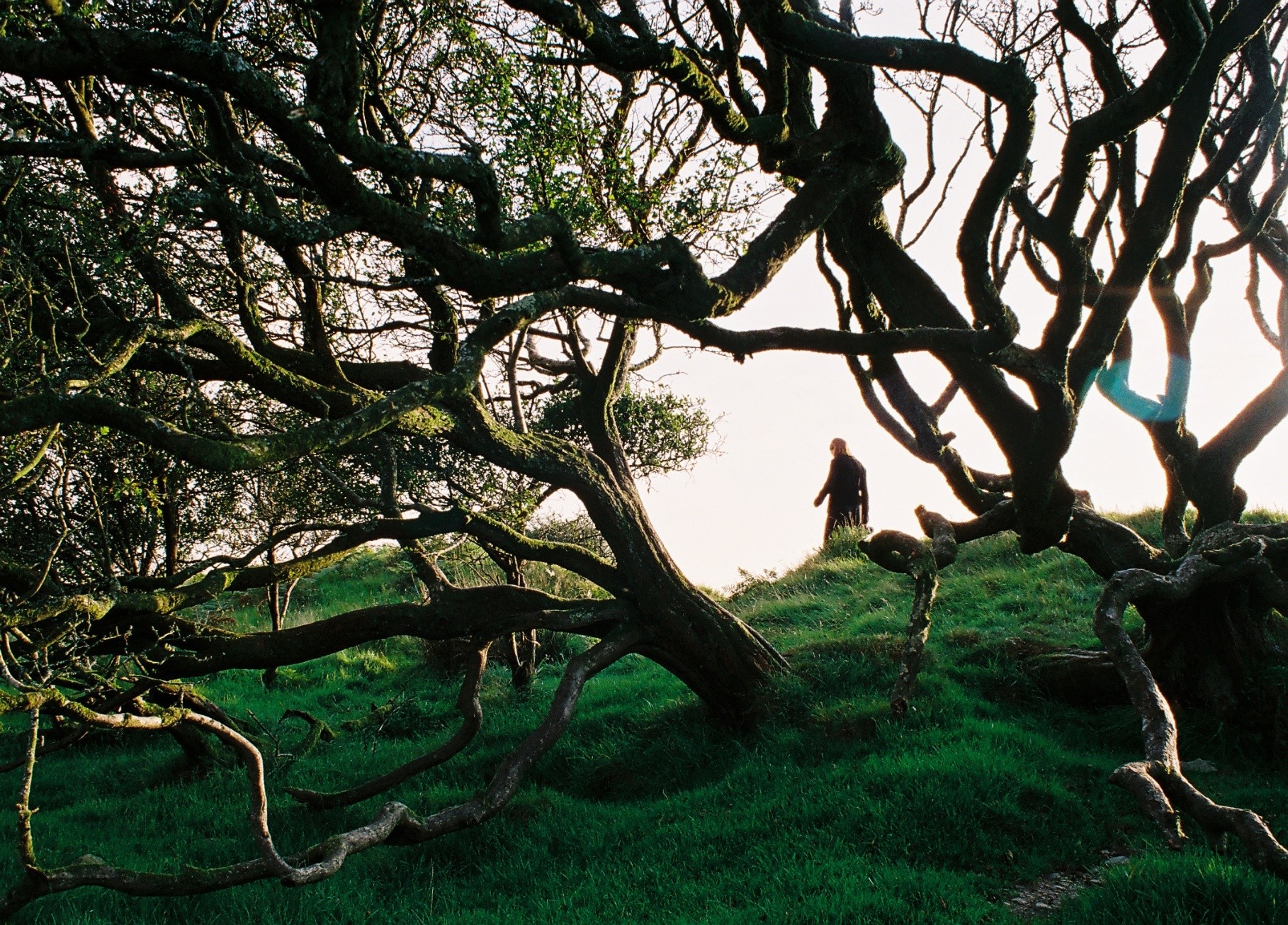
… the cast in the shadows …

Perhaps all the dragons of our lives
are princesses who are only waiting to
see us once, beautiful and brave.
Perhaps everything terrible is in
Its deepest being something
that needs our love.                — Rainer Maria Rilke

Last week I volunteered a short session in the context of a variety of monthly events organised by a group of friends under the umbrella of Archventures.

… the cast in the shadows …  …

We have inside us a cast of players for every imaginable scene. Occasionally banned and hidden characters pop up. Excluded from our script, they emerge inadvertently through surprise encounters, act irrational and appear cartoon-like. Unacknowledged, a wild player roams in the unconscious unconnected, until an emotional trigger hits a sensitive node. We are not amused when an unsophisticated trait breaks to the surface with behaviour that will embarrass and shame us, belying our self-image.

We learn as children to shield ourselves from rejection and injustice. Our strategies are endless and contrary …  like being compliant and withholding or defensive and angry. Think of a natural and well-meaning quality persons in your early environment disapproved of in the name of moral perfection. Your trust may have been betrayed, manipulated and taken advantage of. We adjust as best we can. Rules are needed for societies to function.

We spend our life until we’re twenty deciding what parts of ourselves to put in the bag, and we spend the rest of our lives trying to get them out again. – Bly

In relation to our genuine nature, the sacrifices we make in order to belong can be as disproportionate as the sacrifices we make to defy authority. Feelings we edit out of our lives gather a strange luminosity and succumb to an archetypal force beyond our command. Yet a closer look at the rawness and imperfections of disowned players may surprise. They invariably hold a gift, often the very essence of our creativity.

A way to re-own the locked up energy is to honour our battle scars and weaknesses. We don’t have to agree with inner and outer adversaries, only accept their existence in us. This acceptance opens the heart to tolerance, rapport, understanding, empathy – and insight.

‘Our friends show us what we can do – our enemies teach us what we must do.’ – Goethe

We make room for imperfection … 25th Feb 2012

What is uplifting about our monthly Archventures gatherings are the hugs … yup … never underestimate the invigorating power of hugs. What I also appreciate – and this applies to many groups whose core members meet regularly – is that we form a different entity each time, enriched by everyone’s fresh constellation of experience and insight. Newcomers feel welcome and at ease in this irreverent group that does not follow any one creed, ideology or person.

The most powerful player this afternoon was the seven-year-old son of a participant. The boy was fascinated by the boxes of miniature world-objects I had brought along.
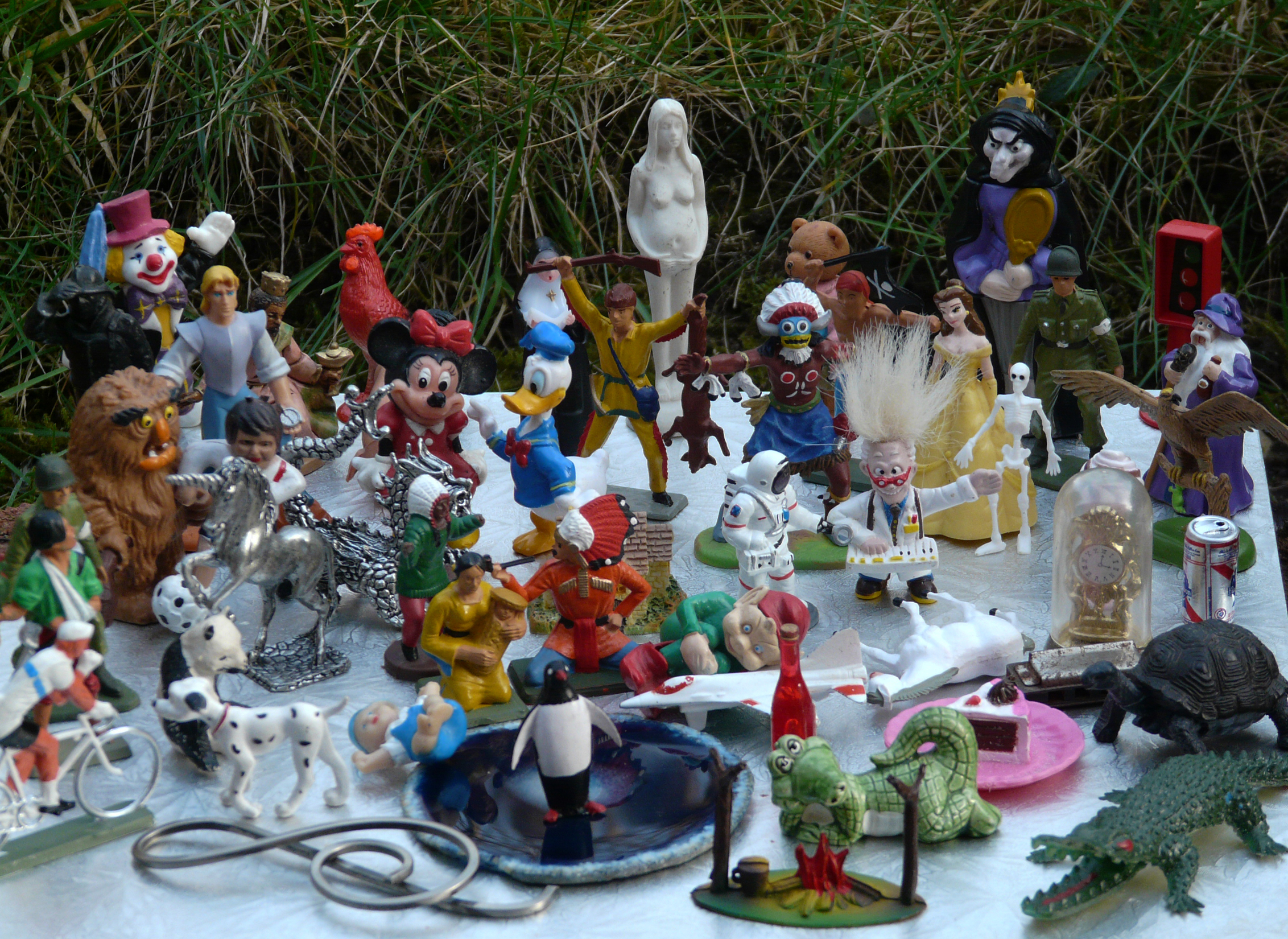
He outplayed us all, instantly creating a legion of his world.

The young will be forever potent in their ability to play and invent …

We adults shared unique and moving stories about early misdeeds, raising questions to be explored individually. (The photo is of a  different occasion)

Some shadows we drag along are not of our own making, a dilemma that also applies to families and nations.

‘The best political, social, and spiritual work we can do is to withdraw the projection of our shadow onto others.’  ― C. G. Jung

Understanding the origins of shadow-projections softens the compelling affect they have in defining us, and our reactions to being fitted into a frame. Observing politics, it is obvious that negotiations are not enough to solve longstanding conflicts. It takes the awareness and inner work of individuals to let go of resentment, release the spark of creativity that enables lateral thinking, and the flow of compassion tied up in the entanglement of righteousness.

And there remains the unknowable, luminous black hole, and a sixth sense of something that evades us. What is mysterious, not accessible emotionally or through analysis, drives us on to dig deeper, expand our consciousness, and re-discover the link to our innermost self.

‘We are born at a given moment, in a given place, and like vintage years of wine, we have the qualities of the year and of the season in which we are born.’ ― C. G. Jung

With only three hours’ time available, the session at least inspired us to remember what is in our power to do. There remains the ever impelling potential of greater intensity and more poise between safety and risk on the tightrope of our life.

Our dear friend Rahima outlined the shadow theme as C. G. Jung defined it. If you have not heard of the term ‘shadow’ in this context you might want to investigate: http://en.wikipedia.org/wiki/Shadow_(psychology)

And in relation to the activity of writing – here a dream image in the eye of its beholder  http://www.youtube.com/watch?v=M19S89UcaKQ&feature=related

If we could read the secret history of our enemies, we should find in each man’s life sorrow and suffering enough to disarm all hostility. Henry Wadsworth Longfellow


*    *    *

4 Comments

Filed under Blog

… sculpture park …

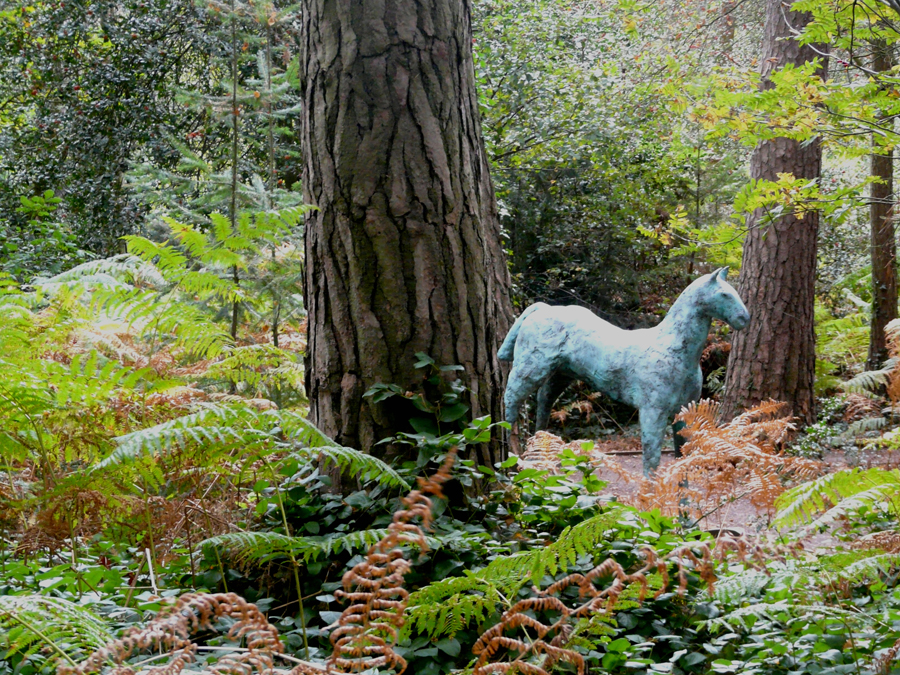
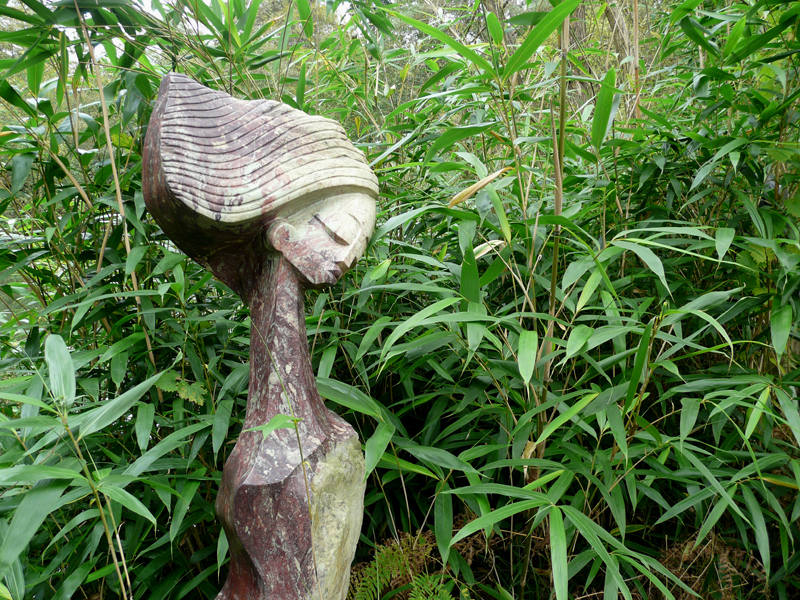
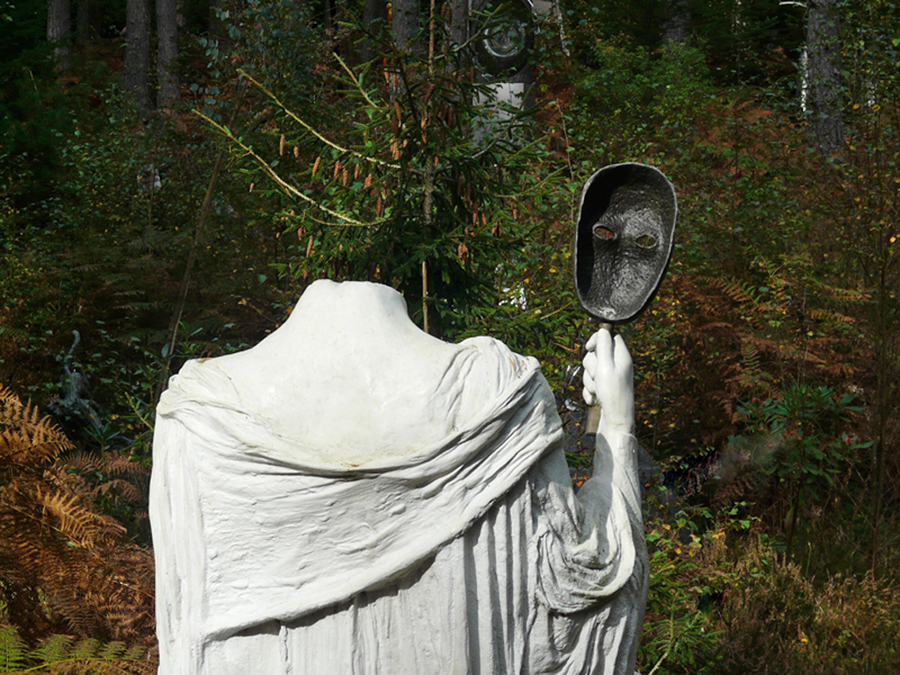
Dreams in stone, fairy horses, quills that use earth as ink, see-through elephants, surprises in the ponds, ghosts, flowing stone, water magic and mysterious circles …

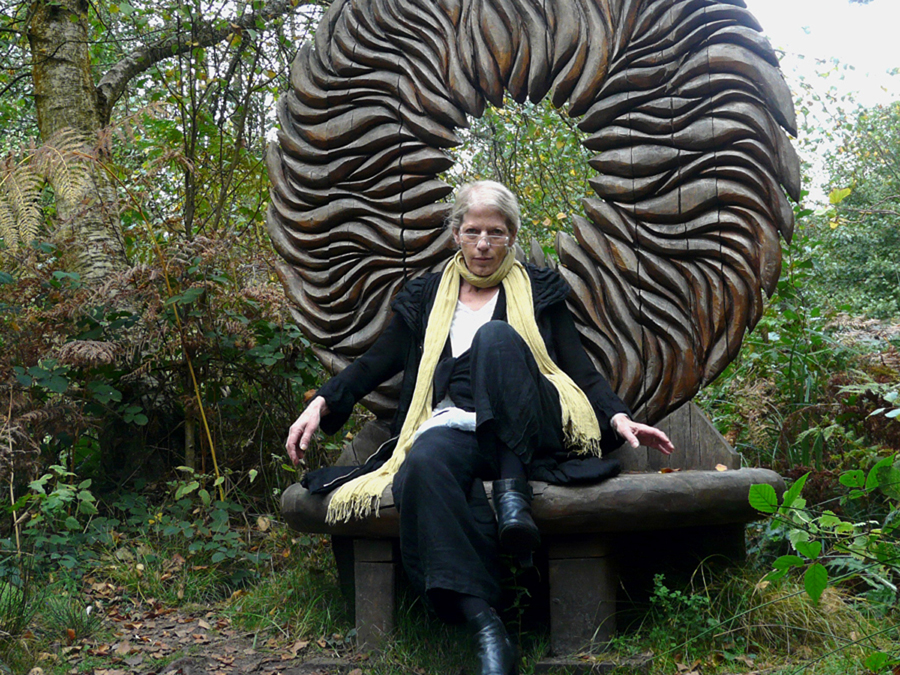
Inspirational hours with my son and his partner at the ‘Sculpture Park’ in Surrey, near Churt.  So  close – and yet I had never visited the place. Like the man behind the bar in the pub opposite, who worked there for many years and not once stepped through the gate across the road. Makes me think of worlds we miss by the blink of an eye.

Here are some images of the place …

magic circles to other worlds …  

If you’re in the area, don’t miss it: http://www.thesculpturepark.com

9 Comments

Filed under Blog

… put parents on the payroll …

Traditional family structures are falling apart for a variety of reasons. No use blaming parents for their inability to cope, or romanticising the past. When we look at the whole picture, we must also acknowledge that the sacred family unit was often a torture chamber of abuse. Affected individuals (predominantly women and children) suffered in silence. The shocking narratives that keep emerging from across all sections of society show ignorance perpetuated over generations about what a child needs to thrive.

On the positive side, there are new forms of families emerging, families of heart and mind. Housing policies seem blind to this new phenomenon. The trend is still to build little boxes rather than independent units around a communal space that would allow socialising and sharing.

On the negative side, why is the psychological knowledge that has been available for decades not disseminated to parents? Corporations offer courses on motivation and people skills to their employees, because they realise these skills improve business.

There were attempts. During the 80’s and 90s, I was involved with Parent Link, a non-profit scheme that offered a playful and empowering set of twelve experiential sessions transmitting people skills. The resulting emotional self-awareness reduced stress and frequently turned lives around. The charity, set up by I. Sokolov and J. Pearson, offered subsidised training to parents who had benefitted from what they learned, and unlearned. Consequently hundreds of parents went on to facilitate more courses, drawing in more parents. Teachers were keen to bring the programme into schools. Sadly, without government support, the brilliant scheme did not survive its popular success.

Since stay-home parents pay no tax, they are considered a drain on government resources, unless they get a job and perk up the employment statistics. The status of parents has been gradually eroded, and, to top it, they are blamed for the ills of society.

Ten years ago I hatched the following idea and was laughed at:

Offer an appropriate part-time wage (taxed) to those who choose to be vocational parents or carers and are willing to learn, since the wage would be tied to basic obligations, like involvement in the community and the attendance of courses to develop relevant skills and knowledge. A reward for the most vital of all contributions to society would shift the status of a parent or carer – lessen social segregation – defuse the destructive acrimonious fights over property and maintenance where relationships break up –  raise self-esteem and build a stronger community spirit through networking and sharing of responsibilities, while still allowing part time work outside the home.

A parent or carer who has financial security will not be perceived as a burden to the state. No more would he/she be diminished by cliché projections and judgements.

It makes also financial sense – some benefits could be scrapped and the funds re-applied to wages, skills training and creative community projects.

And here is why any idea that proposes a shift in the social structure will be regarded as naïve, and not convince politicians:

Our social system thrives on unsustainability. Problems have become a growth industry. In the social sphere it is poverty, unemployment, sickness and criminality that have turned into the most profitable enterprises.

Present social policies are irresponsible, like building a high-rise in an earthquake zone disregarding safety regulations. They are based on blame, the lowest of all public denominators. They are an insult to the intelligence of ordinary people, who, with heightened awareness, tenacity, creativity and sacrifice, struggle to stay sane.

Ashen Venema

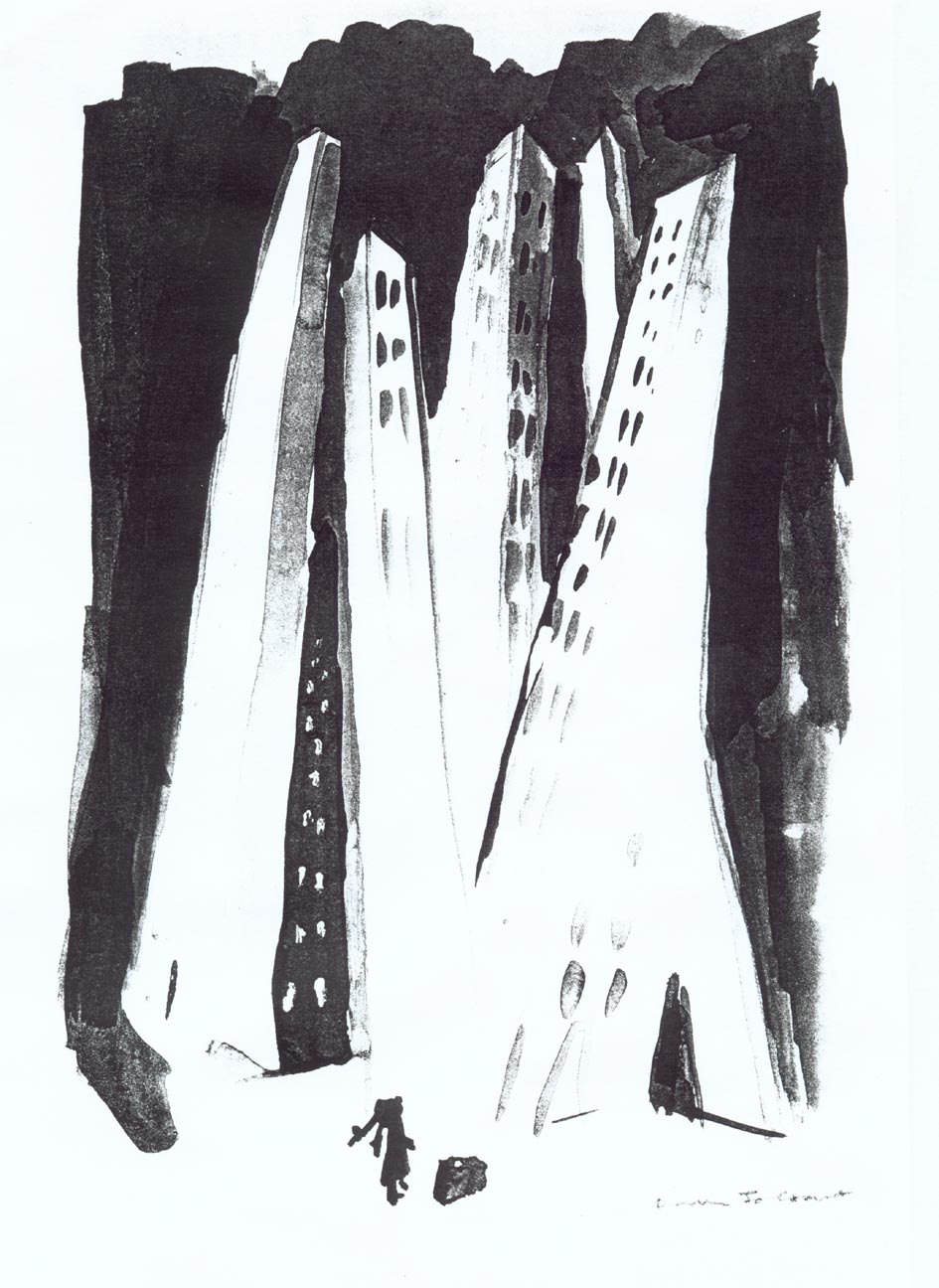
The above illustration is by Daphne Jo Grant, and was  kindly provided for my 1993 poetry collection ‘Gapsy Truth.’

2 Comments

Filed under Blog

… what do we expect? …

And what do we project?

It has become a trend to encourage positive thinking, like: we can achieve anything we want – we are what we think … yes … but … trouble is, we need to first accept were we actually stand in the physical world. Without analysing and accepting ‘what is’ the magic cannot take root.

Example: Russell Brand writes in the Guardian, 11th August, ‘Big Brother  isn’t watching you … dismissing rioters as mindless is futile rhetoric. However unacceptable the UK riots, we need to ask why they are happening.’

 I quote one sentence I can totally relate to:

 …  ‘If we don’t want our young people to tear apart our communities then don’t let people in power tear apart the values that hold our communities together …’’

In recent years the following happened in my immediate surrounding:  A spiritual community centre which offered inspiration and healing to hundreds of people and which I supported and worked from half my lifetime was sold. I witnessed schools selling their football fields, a great number of small shops folding up, three post offices dismantled within a radius of 10 miles, local people mortgaging their houses to buy their own community centre or their only village shop, funding cuts to charities, bus services, train-travel becoming unaffordable … and so on.

Places in my environment where people can meet, relate, share, collaborate, reciprocate services and practice values are disappearing faster than I can blink. So this is happening, and seen in this light, the scum (as the young rioters are called) are actually making a collective statement, a statement that is immature, unsavoury and mainly unconscious, but which the government cannot afford to ignore. Because it highlights a truth:

We are living in fantasy land.

Even gods don’t have the power humans have, to act as the bridge between the physical and the spiritual worlds. Why? Because we are psychological beings, we can potentially create the future from where we stand congruently, by accepting and engaging with what is.

Sadly, when fear of losing face clouds reason, any analysis of self and society, of what is really needed, becomes biased – and what is attracted across the bridge of the psyche is more fantasy.

Listening is vital, to self and others. What are the real needs I have, you have, young people have, our planet has – today? A variety of perspectives will allow the bridge to be swept clean of fantasy – and allow insight, inspiration and synchronicity across from the spiritual sphere.

If our projections into the future, personally and collectively, are grounded and embodied in actual situations, then real imagination can unfold.

*    *    *    *

Incidentally, the bridge features in my novel.

*    *    *    *

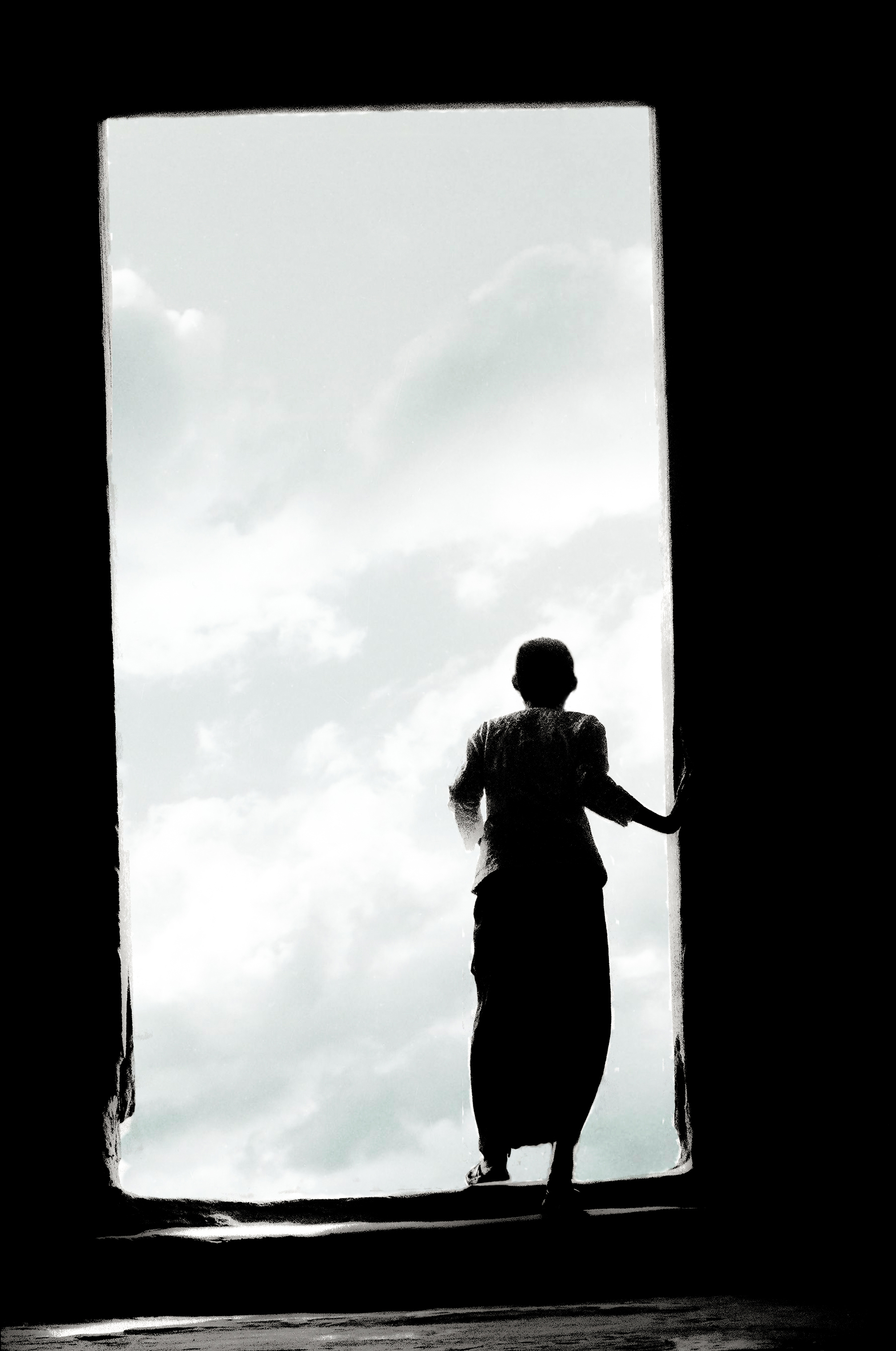
The image here was taken in Cambodia by Yeshen Venema. I supplied the clouds, taken in Rhonda, Spain.

4 Comments

Filed under Blog

My latest blog-entry did not appear on my home page, where planned. Then again – muddles make us see all sorts of things (Bateson said so, I think.)

You’ll find the report of an inspirational weekend with young people if you click in the top bar here – on the page called … inspiration … or use the link below.

https://courseofmirrors.wordpress.com/inspiration/

Leave a comment

Filed under Blog

how my dad was attacked by a tree

Here some random thoughts, interspersed with more random thoughts as well as random quotes and random links, all to do with ideas about TRUTH and REALITY …

To start with – a piece written by my son when he was, huh, quite young, describing a true experience. He gave me permission to share it.

*    *    *    *

On Tuesday the 3d of May 1989, at eleven o’clock, me and my dad set off to Driebergen, about 20 miles from Amsterdam. It took us 45 minutes to get there. We went to see dad’s old house and it looked still the same as when he had lived there 16 years ago. Then we drove to a tennis club, called Manger Cot’s (Cat?). Dad went to the club house to meet some of his old friends, like his tennis trainer, Bill, and his father, can’t remember the name. Then we had a look if the squash club was still there, but it wasn’t, so we had some lunch. After that we went to a music shop, and I mucked about on the drums while dad talked business with the shop keepers. Later we went into the woods and walked about.

On the way back, dad was brutally attacked by a TREEbrandishing a knife stained with blood from its previous victim. Dad fell over and when he got up he looked like Frankenstein with a massive cut down his forehead and blood dripping all over the place.

Dad said it didn’t hurt, but we still went to Peter’s house (a friend of my dad) to wash off the blood. But Peter wasn’t there, and neither was his wife. So we had to walk back to the car and drive to the music shop to clean up the wound. Then the shopkeeper said he knew where there was a surgery, so we went there. When we got there, dad went in to see the doctor, and I waited outside in the lobby. Dad came out with three stitches in his forehead and a big plaster over it.

By Yeshen

*    *    *    *

The etymology of the word TRUTH indicates – good faith, fidelity, sincerity, veracity – and agreement of fact or reality. TRUTH has been subjected to many theories and definitions, here are some of them:

1        Correspondence Theory: In the words of Thomas Aquinas, ‘Truth is the equation of things and intellect.’

2        Coherence Theory: Truth is only what is coherent with the whole system.

3        Constructive Theory: Perceptions of truth are viewed as contingent to convention, human perception and social experience, in other words, every truth is socially constructed.

4        Consensus Theory: Whatever is agreed upon …

5        Pragmatic Theory: Truth is verified and confirmed by the results of putting one’s     concept into practice. It is self-corrective over time.

6        Kierkegaard says – ‘Objective truths are final and static. Subjective truths are continuing and dynamic.’

7        Nietzsche thought untruth is better than truth if it has life-enhancement as consequence.

8        Fromm held Truth to be a functional approximation of reality.

9        Foucault refers to ‘Regimes of Truth’ that shift constantly throughout history.

10    Baudrillard: The simulacrum is true because it conceals that there is no truth.

11    Lao Tzu: Words of truth are always paradoxical.

12   A mystic, Hazrat Inayat Khan, expressed TRUTH like this: Those who see the truth uncovered, abandon reason and logic, good and bad, high and low, new and old … As water in a fountain flows in one stream but falls in many drops, divided by time and space, so are the revelations of the one stream of truth. Not everyone can comprehend the idea of different truths being derived from one truth. Common sense has been so narrowly trained in this world of variety that it naturally fails to realize the breadth and subtlety of a spiritual fact so far beyond the reach of its limited reasoning.

*    *    *    *

2 Comments

Filed under Blog