Tag Archives: spirit

… storytelling and the primary world …

Knowledge is not the rare gem it used to be. Then again, without recording, analysing, sorting, summarising, calculating and disseminating mega quantities of data we’d have none of our ingenious toys to play with. Without statistics our systems would grind to a halt, and, yes, it’s annoying that almost daily yet another quantitative study announces what’s good, or detrimental, for our well-being. Thankfully, none of the churned out evidenced facts can make a claim on meaning. Humans remain idiosyncratic. We apply messy values to our life-choices, and we frequently ignore the logical road signs of scientific landscapes, or blank out the hassle of linear time.
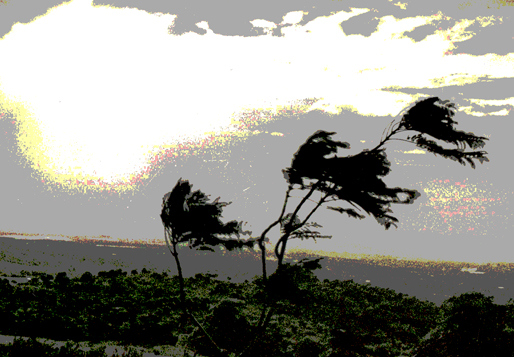
Wind


Instead, we are tossed along by emotional encounters, the unexpected, are awestruck after a quantum leap of intuition, and are generally guided by what appeals to a body/mind that likes the stimulation of nature, her moods, seasons, the phases of day and night suggesting action or repose, like the in-and-out-breath, between which we may catch a glimpse of a dream, a relevant truth, an eternity even. Hardly anyone I know is without this conflict: liking order and control, as well as yearning for rapport with the dance and rhythm of nature.

Over 300 years ago G W von Leibnitz, who could’ve been a poet, was gripped by an emerging idea, to collate all human knowledge and to systematize it via a common language. Computers would have been his bliss. He loved to correspond with most scholars in Europe during this baroque era. And he might have gone some way to explain the whole universe in the hope to solve every conceivable problem. Paradoxically, he also stated … the universe had to be imperfect otherwise it would not be distinct from God. Near the end of his life, Leibniz wrote in a letter that combining metaphysics with mathematics and science through universal characters would require creating what he called:

a kind of general algebra in which all truths of reason would be reduced to a kind of calculus. At the same time, this would be a kind of universal language or writing, though infinitely different from all such languages which have thus far been proposed; for the characters and the words themselves would direct the mind, and the errors — excepting those of fact — would only be calculation mistakes. It would be very difficult to form or invent this language or characteristic, but very easy to learn it without any dictionaries …

Source:  http://en.wikipedia.org/wiki/Characteristica_universalis

I’m not doing honour to this remarkable man, so here is a sketch of a biography … http://www-history.mcs.st-andrews.ac.uk/Biographies/Leibniz.html … should you have the patience to read this, note the time it took for letters between Leibniz and Newton to be delivered, which makes me admire the tenacity of these scientists.

The notion of a calculus for a universal language intrigues and troubles me. Nature speaks a language everyone understands. Key-terms of my mother tongue (see my last blog post) easily bring back the plot of land my toddler feet bounced across. The stories I most enjoy writing grow organically, with tendrils of their roots nourished by the alpine woods and hills of my childhood.

But things change. Data collation is now available to authors, promising control, over marketing, though formulas and blueprints are now offered for the creative process, like how to write a novel in four week. Imagination serves many masters and is not easily controlled – its life-sap flows through all forms. Totempole 4
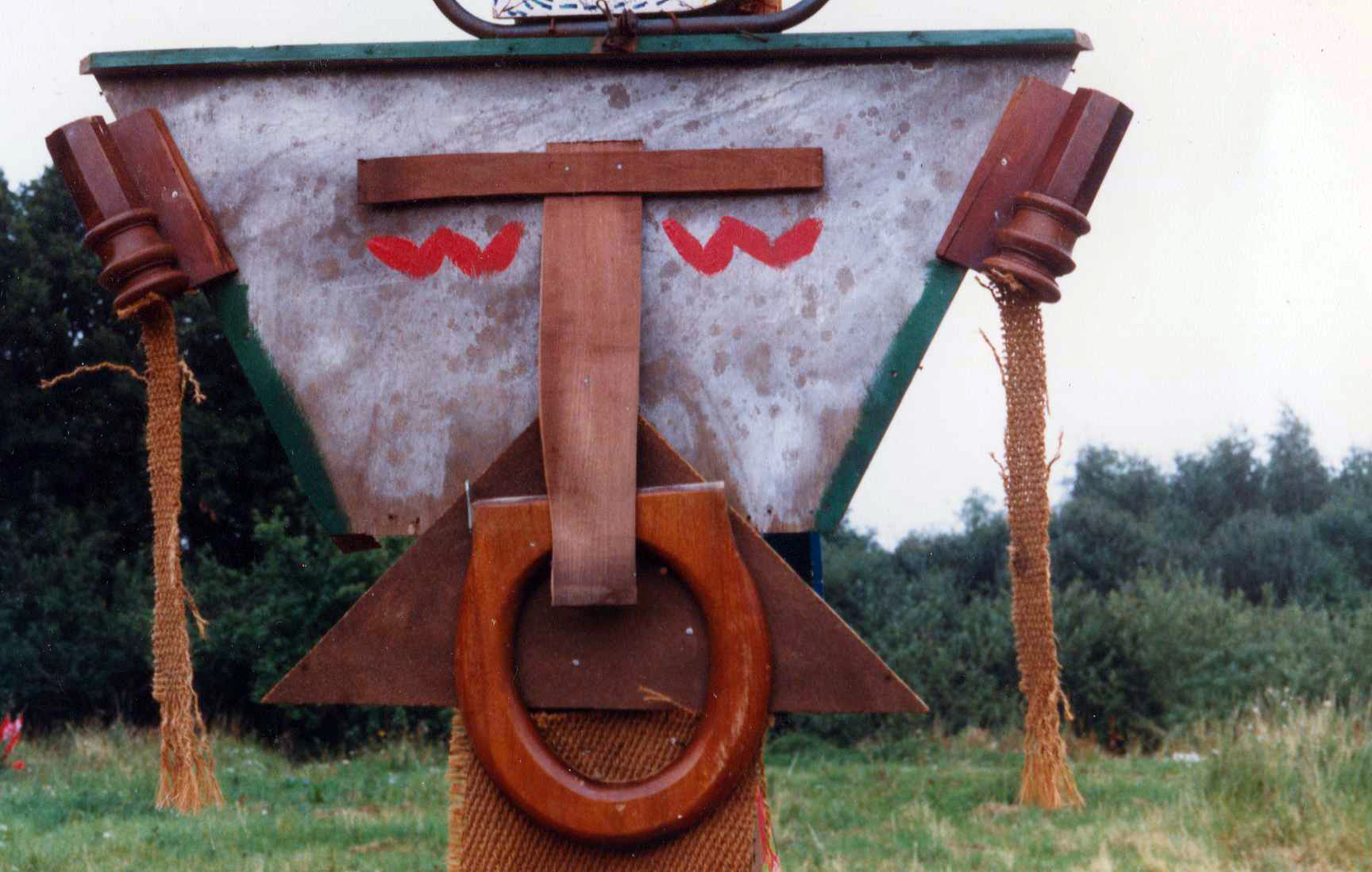
We can only explore everything known continuously in fresh situations and move on, in the way that children and creative people place a familiar object into a new context. The play of imagination destroys and creates, and has the power to shift the meaning of our past, present and future.

‘There is the truth of truth as well as the truth of fact.’                   D.H. Lawrence

Being part of the dynamic process of evolution (which Philippa Rees ingeniously terms ‘Involution’ in her book of that title) we are walked by the tightrope of ecstasy and pain, of dependencies on environments and people, for better or worse, dependencies on beliefs too, mostly not by choice, but driven by binding needs.

Couple shadow series, 3a small

We face exploitation, conflict, sudden change, harmony alternating with phases of chaos – the story of life, a record marked in DNA and every tree trunk. Instigating control, or preaching harmony while shading off the dark, the chaos, the collective psyche of humanity, will only repeat the distortions of otherwise genuine messages from enlightened thinkers, sages and prophets.

It would serve us as well to teach our children how to accept the dark and how to deal with conflict. Reading the collected folk tales of the Grimm Brothers to children would be a start.
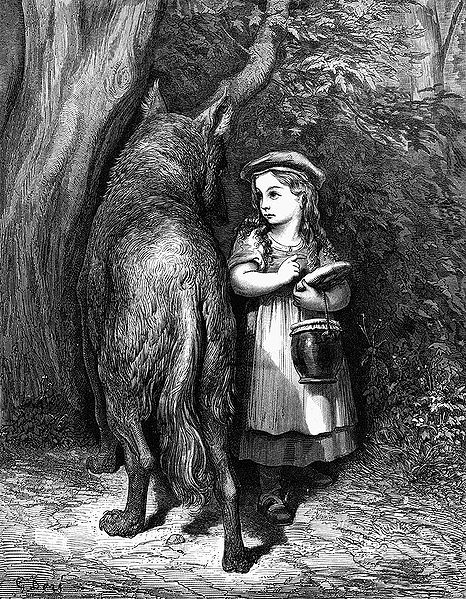
Dore - public-domain-image

Dore – public-domain-image

The inspired P L Travers, author of Mary Poppins, had a talent for highlighting the vital function of myth, symbol and story. She shared her reflections in a collection of essays that appeared in Parabola Magazine. The essays were later published in a book, titled: ‘What the Bee Knows.’

She wrote … The Primary World, in order to go on living, needs the things man cannot create – the earth with all its composted dead, the rain that raineth every day, the seasons, nightfall, silence – and the ear free of all pulsation but that of its own blood.

… The Primary World is that which has never been invented but came into being, along with the blood stream, as a legacy from the Authors who, according to Blake, are in Eternity. All the rest is manmade, or as Tolkien has it – sub-created.

As a writer I sub-create and grow stories from within, using images and words that resonate with personal experiences, myths and visions that provide an ever-changing way of relating to myself, to others and the worlds we share. So when Travers says … nothing is truly known until it is known organically … this chimes for me.

We forget – a happy fault – imagine there was no pause between one dream and another, no night. We forget so we can re-member creatively, which takes practice. We walk on star dust and ancestral bones that inform our bloodstream, as much as the stories of this world nourish our imagination, continuously re-shuffling our psyche, which explains our function as being the bridge between matter and spirit. Every bee knows this.

Image by Yeshen Venema

Image by Yeshen Venema

What the Bee Knows, by P L Travers http://www.amazon.co.uk/What-Bee-Knows-Arkana-Travers/dp/0140194665/ref=sr_1_3?s=books&ie=UTF8&qid=1376737128&sr=1-3&keywords=what+the+bee+knows   Wow, no reviews

Parabola Magazine: http://www.parabola.org/

‘Involution’ by Philippa Rees: http://www.goodreads.com/author/show/30171.Philippa_Rees


Images are mine unless the captures say otherwise.
6 Comments

Filed under Blog

… consciousness – the mystery …

People who engage in therapeutic work with me often ask – why dig up my past, it holds pain, why look at attachment patterns, why explore the theme (myth) of my life? What a waste of time. I only want to get rid of my symptoms.

We all, without exception, suffered injuries. The creative question to ask is – how has the injury shaped my life, and what purpose does it serve? Many years ago, during a group dialogue following the inspirational talk of my Sufi teacher, we discussed three basic kinds of injuries. I connect my own experience to the third injury.

1        Having experienced physical injury can result in fight and flight behaviour – it brings a heightened sensitivity and develops a sharpening of the senses.

2        Having experienced sexual, sensual and emotional injury can result in escape from one’s self into others, estrangement from self, lack of differentiation and boundaries – the great challenge is to accept one’s self, differentiate as an individual from the tribe and take responsibility for one’s unique potential.

3        Having experienced injury on a cognitive level accelerates individuation – the escape is into deeper realities, a search for authenticity and truth and the development of symbolic reality – universal reality.

My novel, Course of Mirrors, is the fictionalised account of an aspect of my personal myth made universal – in the sense that memories of events don’t have to be real for a story to be true.

@ Natasha Tonkin

@ Natasha Tonkin

Even the most die-hard materialists among us grok that life is animated and guided by an all-pervading spirit? We are vessels, psychic switchboards for the spirit that animates and records all life.

An ungraspable phenomenon we try to name in vain.

Mental states pass through us. We call in and then process thoughts and feelings, seeking coherence, and – given we assign meaning to what happens to us – are gaining wider perspectives and deeper insights. With every new connection made and every little light brought to what is forgotten and unknown – collective consciousness grows.

Our body knows, if we care to notice, what stirs in our psyche, what wants to unfold and emerge. When energy flows freely through us our essential nature is uplifted, and our desire is aligned with the potential in us that seeks actualisation – in the way a cocoon reveals the butterfly. Our life has many cocoon and wing stages. The proverbial flutter that causes a stir in all spheres of the universe is like yet another love-transcended aspect of us emerging from yet another cocoon.

Presence, responding to situations, accepting differences and contradictions, frees energy that is ghosted and stagnant. While blocked energy creates frustrations and often painful symptoms, it is totally inevitable, since every organism evolves through condensed experiences. Life enhancing and life destroying events subject us to a pattern of repetition in time until we embrace change.

‘A truth outgrown crushes you under its weight.’   Fazal Inayat-Khan

To bring a repeating pattern to a higher level of flow requires a kind of quantum leap of consciousness. Small leaps occur frequently, especially when we befriend the unconscious and allow fresh symbols into awareness. The released light/energy brings new meaning and allows the self-actualisation of new potential.

‘It is obvious that the percolation of a timeless NOW is penetrating everything!’  –  Philippa Rees

*      *      *

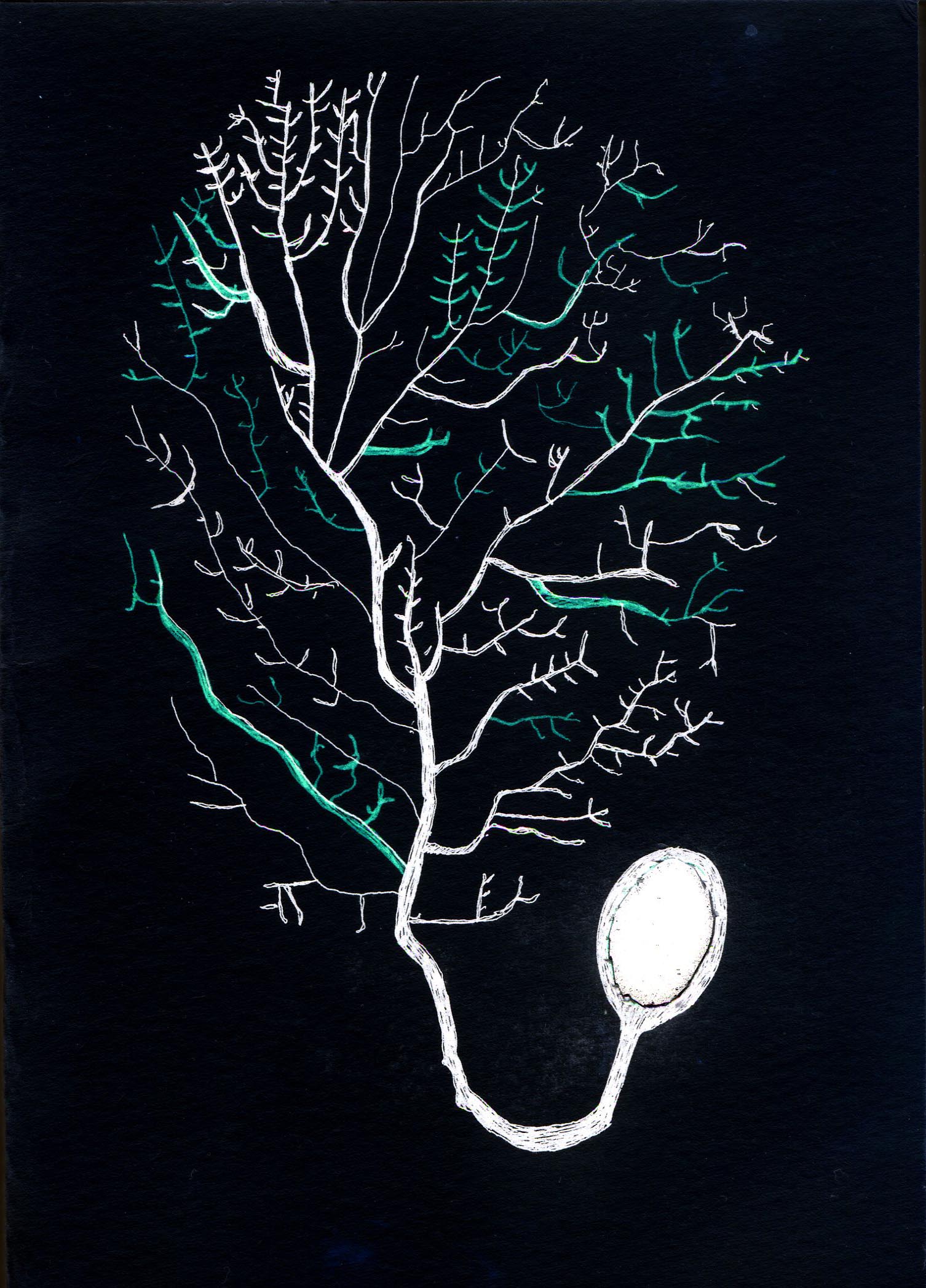
The image above is by Natasha Tonkin, my son’s partner. It was done two years ago as Christmas card and gift idea towards illustrating my novel, to help bring it to life. I scanned and inversed the image for the mirror to appear light. Natasha’s animation website: http://pandahorse.com/

Link to a book I co-edited about the Sufi teacher I mentioned above, Fazal Inayat-Khan. http://www.amazon.co.uk/Heart-Sufi-Inayat-Khan-Reflections-ebook/dp/B00BFUO0T6/ref=sr_1_1?s=books&ie=UTF8&qid=1369084226&sr=1-1&keywords=heart+of+a+sufi

Link to ‘Involution,’ an exceptional book by a kindred spirit, Philippa Rees.                                         http://involution-odyssey.com/  her book will soon hit the market. Her site is being developed.

6 Comments

Filed under Blog

… global vision & synchronicity …

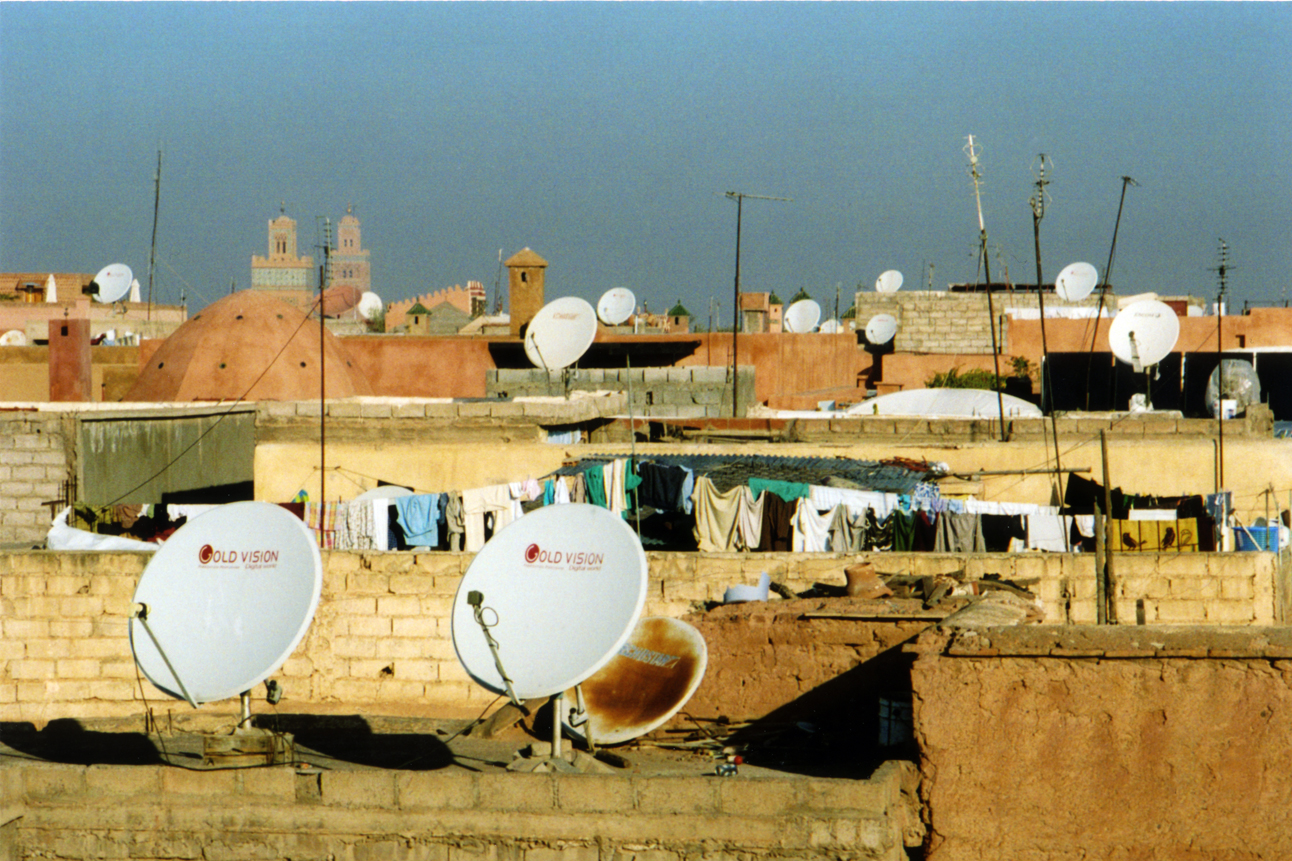
Moroc, Marrakech Riad roof, golden vision - low     Less than 80 years ago, across the world, only about 200 televisions sets were in use. Today, a simulated reality confronts us with our collective mind. A click away, we sample the zeitgeist and witness some disturbing trends, like the continuous robbery of world resources.

How do we filter the mass of information? Do we shout treason when we see the failure of economic systems that allow 1 % of the population to own 40 % of global wealth, or when we discover that certain corporations privatise water –  even rainwater  –  in underdeveloped countries? Traversing from one patch of light to another, do we make connections that apply to our scope of action? Or, lacking a meaningful context, are we hypnotised by this enlarged mega-screen, the global vision of a world that can mirror our inner fragmented states  –  a world where every viewpoint exists simultaneously, that over-exposes so-called reality and blinds us? Are we ourselves living inside the screen-myth, as extras, freed into bits, a reservoir of data?

As writers, what in-forms us, what material do we disseminate? And what is it that makes choices, switches from one networks of influence to another? What guides us through the data jungle? Are there perceptions beyond our wilful personalities that determine, agencies that operate through us from beyond time and space? I’m weary of the term God. For me this agency is a consciousness composed of past, present and future intelligences, a light-wave that echoes different signals according to the receptivity and needs of each animated vessel. Humans can be dense, but a calm mind recognises clear signals of this wave, since they chime with a joyous feeling of connectedness, a larger symphony, maybe even the sense of a destined purpose.

In my experience, this consciousness operates through synchronicity. There exist conceptual similarities between the behaviour of sub-atomic particles and archetypal images, (C G Jung and Wolfgang Pauli discussed such similarities in the context of synchronicity), a striking link between mind and matter that has been largely ignored. It implies that mind and matter connect, relate, mirror each other, and reciprocate. The process is given life in the realm of the psyche as imagination, not structured by time and space, but through layers of meaning illuminated by consciousness. Psyche is the changing room between cosmos and pneuma.

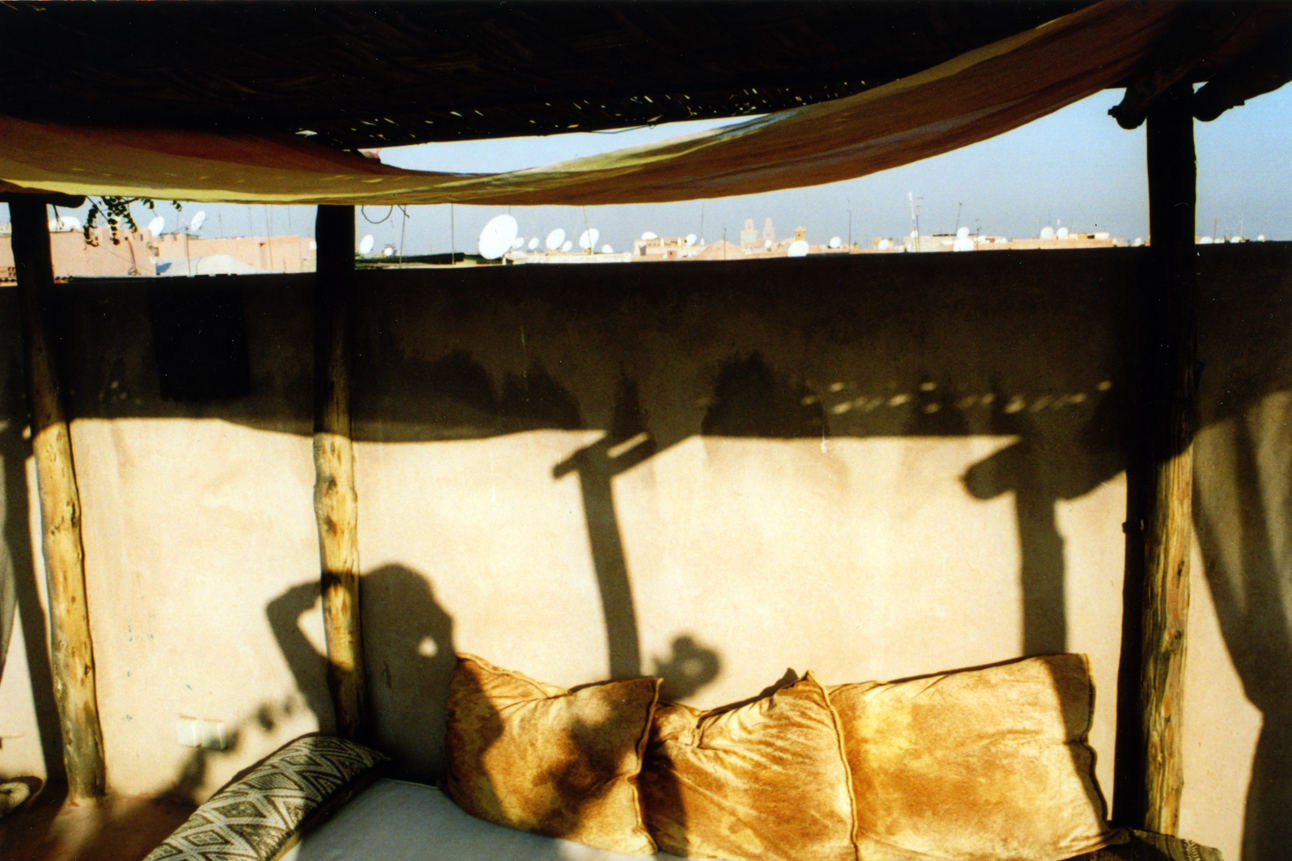
Moroc, Marrakech, Riad roof, shadow - lowJung thought of archetypes not as fixed, but as changing predispositions, universal patterns inherent in the human psyche, images that comprise our collective past and future unconscious. A pattern stirred into activity by an emotionally charged event in our lives, brings home related experiences, often through meaningful coincidences in a non-linear and a-causal way.

Such synchronicities draw on a deeper life-sap, as if an eternal intelligence were at work.

David Bohm proposed that subatomic particles remain in contact with one another regardless of the distance separating them, and that their separateness is an illusion. Here a facet of his thinking – a short first part of a 5 part series  http://www.youtube.com/watch?v=oGyDVF8GrLk                                                                                              A great and humble man I greatly admire. He has beautiful hands  🙂

A dream, for example, can attract an outer event, a meaningful coincidence, that powerfully substantiates a message from the unconscious, often accompanied by a numinous quality. In my own life, synchronistic events have challenged my narrow reasoning at certain crossroads towards seemingly irrational decisions. Exploring a hunch, while not attaching to the outcome, often clarifies a situation for me. Consequently, I respect the unconscious, and heed my intuitions.

‘The universe does not exist, out there, independent of all acts of observation. Instead, it is in some strange sense a participatory universe.’ – John Wheeler

Just as scientist are branching out from traditional imperatives that divide the world into subjects and objects, so we all, presented with a global vision, must modify some of the archetypal imperatives, images and ideas that have outlived their use, and look for symbols that carry a fresh mystery.

Moroc, Plage Blanche sunset - low

While sun and moon are forever formative and feed our imagination, they are no more our only lights.

With new associations from science come fresh symbols and exciting probabilities, in that we can question assumptions about time and progress, about the relationship between matter and mind, about our view of social units, and even the meaning we give to gender.

‘It’s a poor sort of memory that only works backwards’. The White Queen says to Alice.

*    *    *

Many of my posts here touch upon similar themes, but maybe pattern-which-connect in particular: https://courseofmirrors.wordpress.com/2012/05/25/pattern-which-connects/

6 Comments

Filed under Blog