Tag Archives: self

… the mystery of thoughts …

Every child is truly switched on to the imagination. But frequently the environment belittles the imagination, and the gift can end up suppressed under the blanket of rationality. People with a strong creative drive may settle down to live in a straitjacket, and then find themselves overwhelmed by images, thoughts and associations, especially around full moon.

As a child I was intensely curious about the spaces between things, and about light. Had I not locked horns with an opinionated physics teacher I might have taken up the challenge to study sciences. Another fascination of mine was pattern repetition – how the veins in a leaf resemble the shape of a tree. And scale – how tiny bodies, big bodies, our planet, galaxies, the universe, are all reflected in each other.

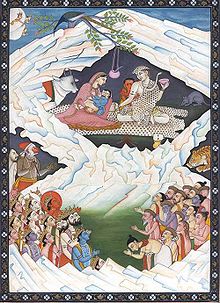
 Hindukailash, image from wikipedia.

Hindukailash, image from wikipedia.

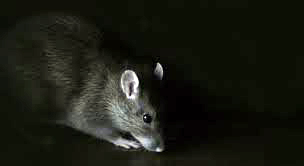
Like Indra’s net of pearls in Vedic mythology, where the surface of each pearl mirrors all other pearls, a metaphor for the interconnected networks of mutual relationships between parts and systems. Mount Kailash is depicted here as the timeless and motionless centre of this net, housing Shiva’s family.

Not only visible structures are held together by interactive nets, our social systems, political systems, spiritual systems and the internet operate within a network. We can observe that the invisible psyche (mind) functions not only through logic, but also through aesthetics, independent of space/time, and is held by another kind of coherence – a net of meaning. And what is generated from this net of meaning is a finer kind of energy, not evidenced by present scientific methods – namely intelligence.

We knew it all along – research established that our emotional experiences leave an imprint in the cells of our body, that the brain is more than the squishy mass under our skull but a medium spread throughout the body via a network of neurotransmitters. There have been hair-splitting arguments for and against the idea that the recipient of an organ can experience personality traits of the donor, based on the speculation that each cell carries a hologram of the whole body and its memory.

Feelings and thoughts arising in my consciousness are filtered through my body’s memory. They also depend on my state of anxiety or calm, my interest, attitude and other variables, such as the weather, my relationship with the elements, with people, the collective mood, solar flares, or the constellation of planets. On some days, maybe after a meaningful dream, or a spell of mantras, thoughts are forming clearly on the breath, like reflections in a still pond, on other days, thoughts rush in on water rapids threatening to drown me, or they plod in like turtles, slow and guarded.

Objective reality is not the only game there is – what in the universe has not interacted at some point in time, irrespective of distance? Everything is linked up. Einstein called it the ‘spooky action.’

The motherboard for this wonderful instrument we call the brain, which comprises our whole body, is formed in the womb. I believe the intelligence involved in creating any specific body must lay in more than known DNA codes, must include the indeterminable non-local DNA of a spirit world. Our body foremost operates like a receiver and transmitter for as many wavelengths our radio station in time attracts or is able to tune into.

From this station, stabilized by repetition, I sort clusters of sensations and feelings, and process thoughts and ideas attracted to me from the collective psyche, a vast sea, which the individual mind must learn to navigate. Images and signifiers are coloured by whatever I consciously or unconsciously mirror and relate to.

No matter how much information we absorb, through our senses, through language and concepts, through comparing patterns, reasoning and calculation, everything, comprehended or not, will be filtered through the body’s motherboard that keeps adjusting to experiences and expanding fields of perception, fields that extend way beyond personal memory. All this information is continuously re-shuffled, as is the meaning we assign to it.

Our body is a motherboard – planet earth is a motherboard – the whole cosmos is a motherboard for a spirit we cannot comprehend, an invisible hand that touches us like a breeze, made visible through what it animates.

All we know is that images, thoughts and ideas are reflected in us. They travel via synapses in the neurons of our body, they travel on the air between minds, they travel among stars, they echo from under the sea, waving to us as plankton, they speak to us from every creature, from every blade of grass, from every stone, and they beep from within our bodies through tweaks of pleasure or pain. All matter, all people and objects we interact with store the memory of that interaction, including interactions with things we hate or nurture, and with places we live in.

We don’t invent anything, we re-discover, re-connect and re-create from the vast storehouse of knowledge and information provided to us by nature, and by the spirit between matter that makes up the cosmos, an embodied being that is becoming conscious of itself.

We are on the air, sent, programmed, radioed and broadcast, identified with all manner of things, ideas and beliefs. Yet if we look deep inside our emptiness, we know, the non-material aspects of us can potentially detach and be free, maybe enjoy tea with Shiva’s family and witness the world turn on its axis – a state some people experience spontaneously or through meditation. A state of pure consciousness not identified with this or that. In the meantime, we could at least be kind to ourselves …

‘Thoughts are beings that generate … One thought of kindness gathers a thousand beings of love and kindness around one.’            Hazrat Inayat Khan

I don’t know if a singular mind/psyche, the incredible art of a lifetime, survives the physical death of the body. Maybe a coherent individuated mind leaves a dent, an influence within the collective psyche. Like the organ of the heart, over time, achieved its definite function. But does it matter? Nothing is lost. All information is continuously re-shuffled into new forms and constellations.

Digital storage provides a metaphor – information exists and roams freely in the wind of the collective psyche (unconscious) until it is embodied and gathered towards a purpose. Every event has a consequence. Nature is exacting, but also generous, what has been repressed in the flow of evolution will always return in one form or another.

Everything alive speaks to us, and all such relationships are processed in the stories we share, stories being containers of the richest kind of information. 

*    *    *

You can source other posts on the theme of reflection in the tag cloud on the right of this page. Like this sequenc of posts: https://courseofmirrors.wordpress.com/tag/hazrat-inayat-khan/

And you might want to check out posts under the tag ‘psychology,’ especially the one on ‘awareness,’ where I share R. Assagioli’s 10 psychological laws – how the body affects the mind and the mind affects the body. https://courseofmirrors.wordpress.com/tag/psychology/

*     *    *

This post also appeared at  Third Sunday Blog Carnival: September 2013 | Third Sunday Blog Carnival

17 Comments

Filed under Blog

… prayer …

When I hear of colleagues and friends who are having a stressful time, I usually exit my often self-defeating stream of thoughts and clear my mind – so my well-wishes can broadcast clearly. What works for me is tuning into thankfulness and often a little prayer or song comes to mind.

An image transformed during a rare attempt to be adventurous with photoshop.

An image transformed during a rare attempt to be adventurous with photoshop.


Who or what are my little prayers addressed to?                                                                                                                       The One in me I’m not ready to manifest and therefore bow to.


Below is a German song that came to me just now.

The text misses two dots above the ‘o’ in the word ‘schonen.’ I’d be grateful if someone could point me to a source for dots.


Dank Dir fur jeden schonen Morgen

Dank Dir fur jeden neuen Tag

Dank Dir dass ich all meine Sorgen

Auf Dich legen mag.

Very freely translated: Thank you, for every lovely morning, thank you for every novel day. Thank you, that I may leave my sorrows in your wisdom’s way.

Some time ago I shared my favourite prayer, also a song, with words by Hazrat Inayat Khan: …https://courseofmirrors.wordpress.com/2011/05/08/my-favourite-prayer/

11 Comments

Filed under Blog

… the mystery of character versus genre …

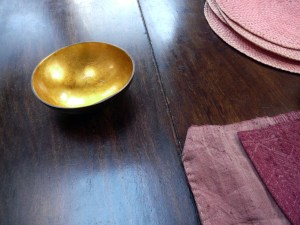
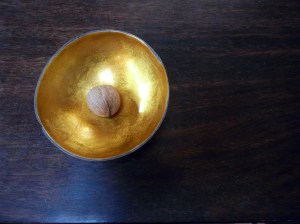
Flicker, flicker, speed, speed – time is flying – here is a genre – an inviting golden bowl – let’s drop a story into it. A well-defined genre promises the best route to financial success for many aspiring writers.

the golden bowl of genre Human traits that make up characters are unfathomable in their combination, which is why we traditionally veer to an index of types. The adage of the writing guru – don’t tell, show – suggests character is revealed through traits that imply qualities. Traits fascinate us, but if they are mechanical in their emotional and logical processes, they seldom surprise. In such case the page-turning tension must be provided by the plot.

During the nineteenth century’s advent of psychology and individuation many writers moved away from the Greek model of plot-driven stories. Curiosity shifted to the complex inner life of characters and their individual way of creating meaning was employed to unfold narratives.

The search for a unique self beyond the collectively orientated ego personality is relatively new, and while time-engraved archetypal energies hold us in their emotional grip, we have now psychological maps to help us become more conscious of their compelling powers, more conscious of our personality, which, for the writer, informs their fictional characters and opens new worlds and new choices. Irrespective of the rich psychological and scientific knowledge available to us, the process of character formation present us with the greatest mysteries of our time – as exciting as discovering new territory, new planets, new eyes on the universe.

Here I am making up a scene from scratch:

He stiffly dragged his feet along the polished marble floor of the shopping mall, his head forward as if pulled by a rope, though his eyes did not focus forward, nor up or down, they swivelled, left, right, left right, alert for what? Alert for anyone who might observe him? Nobody did – apart from one person who sat still on a seat moulded into the stone replica of a toy train. She raised her eyes from her book and looked straight at him …

Now as reader, and as the writer of this entry into a scene without blueprint for a story, I’m curious – where is he heading, where is this going? I search for a deeper layer, a narrative unfolding from the mysterious core of the character walking through the mall. I want a substance to chew on, to extract a flavour from his unique world.

The woman’s stare broke his set rhythm of surveillance. His face contorted in fear, his feet lost touch with the marble floor, sailed on air, while his arms flattered like duck wings failing to lift. All he could think of before his fell flat was – she knows, she knows I’m not present in this body. All he perceived were veins of light in a glittering darkness. He chose to vacate.

Are you hurt? While approaching the sprawled body of the man, the woman shot a stern glance at her boy who stood by guiltily. She had noticed him drop the sweet wrap. She had noticed the man stepping on the slippery cellophane. She had caught his eyes – and what she saw in that instant had made her shiver …  

I’m not going to follow up this scene. Anyone who reads this is welcome to do so. It would give me a thrill.

We all enjoy our stock characters and their antics, types set into situations and conflicts we can readily identify with, heroes we can like, villains we can despise. We enjoy themes that fall into definite genres that entertain us away from tedious daily concerns. I’m not knocking these stories. I enjoy them myself.

But hey you, all writers out there, why not take a risk and be drawn to the mystery of the unpredictable that challenges you to think in new ways, why not evoke characters who, even while using known containers, allow their (your) unconscious past and future to fill in the content, characters who explore their personal experience to a depth where it becomes universal, characters who play with time and space and are directed from their inner spirit, even when it requires a new container?

In my writing, I like the adventure of discovery, a nut to crack. I like to allow my character to walk ahead and unfold the story, and if it spills over the frame of a convenient genre, so be it.

P1100981And here my little gripes with how-to-does:

The advice-filled internet spheres turn and turn like gyres.

Answers sum up being and are full of promised abundance – yet they are dead.

Questions sum up becoming and are full of challenging limitations – yet they are alive.


‘One does not discover new lands without consenting to lose sight of the shore for a very long time.’

Andre Gide

8 Comments

Filed under Blog

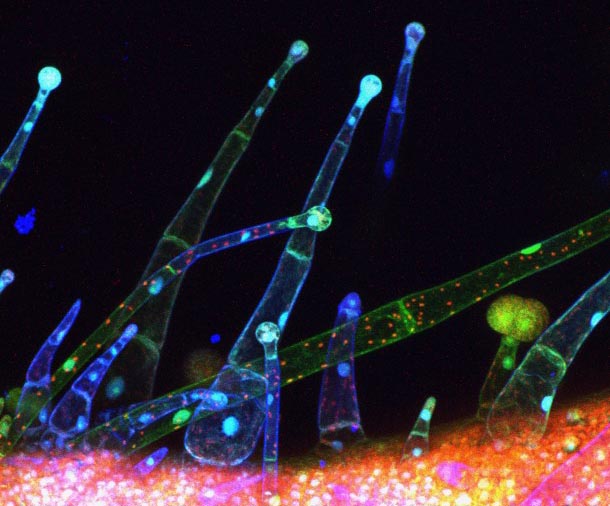
… unseen stuff – micro-organisms …

More contagious than micro-organisms are fear and hopelessness.

Long before our time, the existence of micro-organisms was presupposed, notably in Jainism, whose followers vow non-violence in thought and practice (Ahimsa) towards all living beings. The tradition is said to be older than Buddhism.  In the teachings of Mahavira (599 – 527 BEC),  micro-organisms are described as unseen creatures living in earth, water, air and fire, and existing as clusters pervading every plant and tissue, not just on earth but throughout the whole universe. Jain libraries are the oldest in India.

While home-bound with a young child in rural Somerset, I did an OU course on world religions, wanting to learn about the formative ideas underlying our variety of cultures. Reading on Jainism, I was struck by its beautiful philosophy, genuine tolerance of other faiths, and the surprisingly modern belief – that the universe is self-regulated by the laws of nature. Worth exploring: see wiki-link below.

With a different mind-set, the idea of unseen creatures informed a nasty biological war fare during the Middle Ages, when diseased corpses were catapulted into enemy strongholds.

Along came artificial eyes, the telescope and the microscope, evidencing these unseen worlds. The Jesuit priest, Athanasius Kircher, and Anton van Leeuwenhoek, were among the first to spot micro-organisms through lenses in the 17th century.  The journey took off, until Ferdinand Cohn founded the discipline of bacteriology in the 19th century, and Louis Pasteur and Robert Koch developed the study of microbiology, focussing on food preservation and vaccines. The gained knowledge helped to protect us from organisms known to spread disease, and improved the hygiene of our environment. During the late 19th century the study was expanded through the work of Martinus  Beijerinck and Sergei Winogradsky into the field of general microbiology.

Today the study of micro-organisms has developed to such extend that  hundreds of specialised branches of study exist serving a huge variety of applications. I’m fascinated by biology, and I greatly respect scientists who devote their days and nights to deepen our understanding of life.

What I question, as do many of my friends, which include scientists, is the unrestricted power of multinational companies. It is totally unethical that multinationals can push decisions as to how scientific evidence is used. To start with, they must be made accountable for damages caused, and next, it should be obligatory, like a tax, that a fraction of the profits these companies reap be used for interdisciplinary research, so that  evidence can be established for the many undeniably wholesome methods of balancing and strengthening self-organising systems.

The over-reliance on suppressive drugs (and in the case of agriculture pesticides) in the fight against every imbalance has devastating side effects. Apart from training super-bugs,  the relentless war undermines the ecosystem of our planet, and our birth right, the ingenious self-regulatory system that acquires immunity through exposure. Nature has taught us everything, nature is not the enemy. Excess use of medication could even undo the good work of vaccines, meant to help us acquire immunities. A weakened immune system may eventually fail to deal with any kind of exposure. So why do we sanction this paranoid warfare ?

What is known about micro-organisms includes the process of endosymbiosis – where symbiosis occurs between different organisms that benefit from living together. Lynn Margulis opposed the neo-Darwinian concept of competition, and proposed that evolution thrived through cooperation: ‘Symbiogenesis recognizes that every visible life-form is a combination or community of bacteria.’  (See link below) In other words, the fittest is what adapts and harmonises.

There is always more than one way to look at something. When it comes to the prevention of dis-ease, and the healing of body and mind, the soothing of stress, we have enough knowledge and wisdom to appreciate the effectiveness of: relaxation, telling one’s story and being listened to, a clear positive intention, the benefits of meditation, a calm mind, the balancing of subtle energies, the vibrations of harmonious sound, architecture, colours, symbolic  understanding, the use of active creative imagination, a gentle touch, a heartfelt smile, for example.

The authenticity of a friend, a doctor, a healer or therapist, can inspire a troubled person who is seeking support to take self-responsibility. Trust, or faith in one’s healing, is a phenomenon that also throws light on the powerful physiological effects of the placebo, which is a proposed ritual that promises nothing, but puts the patient in charge. Wow!

From another tradition that respects all faiths, here is a perspective on microbes expressed by Sufi Hazrat Inayat Khan, who brought his wisdom to the west in the early 20th century:

Every day a new invention brings a new microbe. And if a new microbe is discovered every day till the end of the world there will be numberless diseases; in the end it will be difficult to find one man healthy, for there must always be some microbe; if it is not of an old disease, then of a newly discovered one …  

The people of old thought that microbes were spirits, living beings, in the absence of science which today distinguishes these spirits in the form of microbes; and yet it seems that the ancient healers had a greater grip upon the illness, for the reason that they considered the microbe in its spirit. In destroying the microbe they did not only destroy the outer microbe, but the inner microbe in the form of the spirit, of the germ; and the most interesting thing is that in order to drive away that spirit which they thought had possessed the patient, they burned or they placed before him certain chemicals which are used even now, having been proved to be destructive to the germs of diseases.

With every measure that physicians may take to prevent the germs of diseases from coming, in spite of all the success that they will have there will be a greater failure; for even if the actual germ is destroyed, it exists, its family exists, somewhere. Besides, the body which has once become the abode of that particular germ has become a receptacle of the same germ. If the physician destroys the germ of disease from the body of an individual that does not mean that he destroys it from the universe. This problem, therefore, must be looked at from another point of view: that everything that exists in the objective world has its living and more important part existing in the subjective world; and that part which is in the subjective is held by the belief of the patient. As long as the patient believes that he is ill he is giving sustenance to that part of the disease which is in the subjective world. Even if the germs of the disease were destroyed, not once but a thousand times in his body, they would be created there again; because the source from which the germs spring is in his belief, not in his body, as the source of the whole creation is within, not without. 

Hazrat Inayat Khan

The outer treatment of many such diseases is just like cutting the plant from its stem while the root remains in the ground. Since the root of the illness is in the subjective part of one’s being, in order to drive away that illness one must dig out the root by taking away the belief of illness even before the outer germ is destroyed. The germ of illness cannot exist without the force, the breath, which it receives from the subjective part of one’s being; and if the source of its sustenance is once destroyed, then the cure is certain.

Very few people can hold a thought, but many are held by a thought. If such a simple thing as holding a thought were mastered, the whole life would be mastered. When once a person gets into his head, ‘I am ill’, and when this is confirmed by a physician, then his belief becomes watered like a plant, then his continual reflection of it, falling upon his illness like the sun, makes the plant of illness grow; and therefore it would not be an exaggeration to say that, consciously or unconsciously, the patient is the gardener of his own illness … The root of illness is in the mind, and if that root is continuously watered by thought and feeling, illness is realized in the end.

*      *      *

More contagious than micro-organisms are fear and hopelessness.  (my conclusion)

*      *      *

We are the mirror and the face in it.

We are tasting the taste this minute

of eternity. We are pain

and what cures pain. We are

the sweet, cold water and the jar that pours.

Rumi – transl. by John Moyne and Coleman Barks

*     *     *

Jainism: http://en.wikipedia.org/wiki/Jainism

Lynn Margulis

http://discovermagazine.com/2011/apr/16-interview-lynn-margulis-not-controversial-right

Hazrat Inayat Khan – Volume 4 – Healing and the Mind World.

16 Comments

Filed under Blog

… the wild horse of the mind …

I thought I open the window a bit to what I’m immersed in, drafting the sequel to Course of Mirrors, called Shapers. Another mythic adventure, and more. The short piece below is not representative of the tense action this story has plenty of, but depicts a pivotal moment. The scenery is  Eire, where time-zones overlap. In 2550 AD the island is called Sax, where Rhonda, the super-controlling power, cast their misfits.  In the excerpt below, Tilly (Cassia in Ana’s story) has arranged for Cara and Mesa to meet in Kerry during the 1970s.

The theme touches on the creative process. Something for my writer friends. I welcome any feedback to the draft.

*    *    *

Tilly’s ruined estate on the Kerry peninsula was one among many places around the world where past and future began to cross or run parallel during the 1970s. Not all drop-outs travelling through Derrynane were aware of the phenomenon. Those open to the new wavelengths either tuned in, or received no more than garbled white noise. The going slogan was – love, don’t think – though it should have been – love and think – and stay grounded. These were turbulent times. Traditionalists abhorred the breaking free of conditioning. Leaps into the unknown frightened them.

This is Cara’s time, and these are her thoughts: Personal myth is a complex self-creation, mainly unconscious, but less so once we replace the postulates we inherited with our own, and are drawn to our psychic kin. Every night when the body rests we visit beings in other spheres. We may discount these sojourns as dreams unrelated to our daily existence. Yet bridging occurs when we value inner dynamics and re-story the associative symbols of images. Resonance momentarily fills the void between the known and the unknown, and meaning is assigned to events. Some good people trust in God, but then abnegate their creativity. Are we not the desire of a divine will? Are we not the ears, eyes, nose, hands and feet of a universal intelligence, of which we are the deed? Does not our speech derive from one sound? And is love not the creed that breathes all things and directs the movement of all spheres? I don’t understand the need to prove or disprove a universal intelligence that is within and all around us. The world I create is imperfect and suffers from on-going flux. But I can bring my small flame to its shadows.

Now that Cara’s myth caught up with her, and she was confronted with the net of postulates she had cast into the future. She found herself challenged to engage with what she animated, because she was animated by it.

Gutch spotted Tilly talking to Cara and Mesa in the hall. He was bursting with pleasure. ‘I found my clan,’ he said. ‘This place is teeming with talented actors. We’re going to do some magic theatre. Are you joining us?’

‘I need to take care of something,’ Tilly said. Can you keep an eye on Gart?’

‘That devil had some weird conversion trip and is sound asleep under the table.’

‘Excellent. Let him sleep.’

When Cara and Mesa arrived at the cottage across the atrium, Tilly had lit a fire in the hearth. A nest of chairs invited them, and the smell of fresh coffee. ‘Have some,’ she said, ‘pointing to a steaming pot, ‘and there’s chocolate cake, too.’ Mesa soaked up the atmosphere, transported to Ana’s world, reminded of Cassia’s kitchen. Tilly placed a small leather pouch in Cara’s lap. ‘Here, forged by fire, polished by the sea, a gift of remembrance.’

Cara opened and turned the pouch. A black stone fell into her hand – smooth as marble, yet radiating warmth and shining in the glow of the fire. ‘Ana’s talisman!’

‘Yes, and you might as well own it.’ Tilly paused, gazing into the flames. ‘I have a favour to ask from you, for Mesa’s benefit.’

‘What favour?’ Cara poured cups of coffee for everyone, dished out giant slices of chocolate cake and added a dollop of whipped cream to each.

‘Your future, Cara, has come to visit you. Mesa returned to assimilate what was lost to her. With Ana’s story you re-animated her soul. Certain events in history require beings to return, to right things or bring a message.  Mesa will take on her role in the odyssey of the Ypocs. And she’s going to be the narrator of your story, Cara.’

‘Huh, this takes a leap of the imagination. I haven’t even smoked the weed.’

Tilly smiled. ‘You know what it takes. Uncovering a personal myth is different from writing a Hollywood script. To help Mesa to re-connect with random creative processes, I want you to explain to her in as much detail as possible how your mind works.’

Cara heaved a breath. ‘The idea sucks every thought from my head.’

‘That’s a good start.’

‘All right, here goes a slice of random micro processing … Momentarily stuck with a paragraph, I remember to stretch my legs. In the kitchen I snatch a yogurt from the fridge. I notice a sticky shelf – mental note – clean it soon. Dark clouds gather outside, looks like rain. I run up to the bathroom and close the window. On the way down, I see dust-clouds on the stairs – mental note. Heading for the desk I stop by the fridge again because I’m now really hungry. I prepare a sandwich – mental note – put butter on shopping list. I use the loo – mental note – toilet paper is running out. Telephone rings. The answer machine kicks in. Just as well, I’ll return the call later – mental note. A letter that needs sending sits next to the phone, I put a stamp on it – mental note – post it. A fly is trapped in the window. I release the fly and study a tree out front that leans over and needs pruning. I quickly assess which branch to cut – mental note. Off to my desk. Passing a shelf I spot the book I couldn’t find earlier. What a relief! I plonk it on my research file and am reminded of an article I need to chase – mental note. The sun shines again. I open the backdoor and listen to the birds. Grass needs cutting – mental note. Finally back with my paragraph the writing flows, sheer bliss. At a natural break in the narrative I decide to go shopping. In the car I have an epiphany relating to a character in my story, to do with birds – mental note. The walker I pass reminds me to visit a certain person – mental note. I recall this person collects small antique tins. I could find him a present – mental note. I think of metaphors, how obsessions, like collecting tins, are really personalised teachings – mental note.’

Mesa had listened with rapt attention. ‘What happens to all the mental notes?’

‘Ha, ha … they’re promises. They’re torture. They heap up. They demand execution. My way to deal with accumulative pressures and gain time to focus on my writing is through procrastination. I’ve become patient with nagging voices. They’re not jailors. They’re easily humoured until the time is right for a blitz. Then I act fast and achieve a great deal in a short time, happy to have cleared the space.

‘But why give these mental notes the power of demands over you? Mesa asked.

Cara glanced at Tilly, who had taken up knitting, as if the dialogue bored her.  What was her agenda? Was this really for Mesa’s benefit? Tilly smiled and said, ‘Go on.’

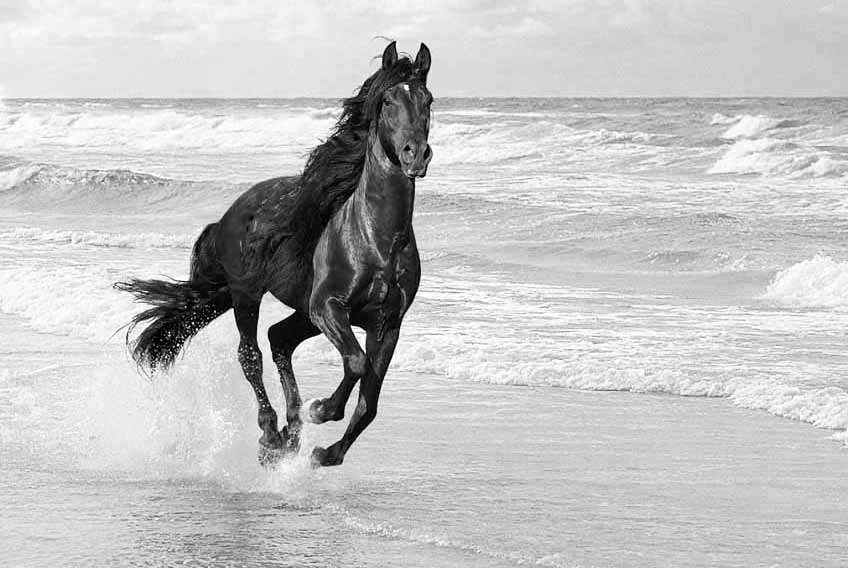
‘It started out as compulsive pattern. I was conditioned to respond to the needs of my environment, and to maintain order. There are exceptions. Some days, it could be the weather, a dream, the stars … from the moment I open my eyes everything flows effortlessly. My brain is relaxed and I attract harmonious thoughts, like I’m fine-tuned to a subtler station, beyond the busy bandwidth of neurotic naggers. The tuning can be learned. It’s like taming a wild horse. I can actually do it, when necessary. But I like letting the horse run wild. I find wild things that way.’

‘We have different conditioning,’ Mesa said. ‘From early on I was trained to tame my mind, to let it rest like a still pond, or focus thoughts like laser beams. Then free play was introduced, disrupting Rhonda’s order, and all went wrong for the Ypoc.’

‘Aha! I bet you didn’t have to juggle a deep conflict, and oppose a controlling father.’

Tilly dropped her knitting. ‘This gets interesting. It’s what Mesa came back for.’

* * *

Apologies: The origin of the image of the horse is unknown to me.  Many thanks to the photographer.

10 Comments

Filed under Blog

… the cast in the shadows …

Perhaps all the dragons of our lives
are princesses who are only waiting to
see us once, beautiful and brave.
Perhaps everything terrible is in
Its deepest being something
that needs our love.                — Rainer Maria Rilke

Last week I volunteered a short session in the context of a variety of monthly events organised by a group of friends under the umbrella of Archventures.

… the cast in the shadows …  …

We have inside us a cast of players for every imaginable scene. Occasionally banned and hidden characters pop up. Excluded from our script, they emerge inadvertently through surprise encounters, act irrational and appear cartoon-like. Unacknowledged, a wild player roams in the unconscious unconnected, until an emotional trigger hits a sensitive node. We are not amused when an unsophisticated trait breaks to the surface with behaviour that will embarrass and shame us, belying our self-image.

We learn as children to shield ourselves from rejection and injustice. Our strategies are endless and contrary …  like being compliant and withholding or defensive and angry. Think of a natural and well-meaning quality persons in your early environment disapproved of in the name of moral perfection. Your trust may have been betrayed, manipulated and taken advantage of. We adjust as best we can. Rules are needed for societies to function.

We spend our life until we’re twenty deciding what parts of ourselves to put in the bag, and we spend the rest of our lives trying to get them out again. – Bly

In relation to our genuine nature, the sacrifices we make in order to belong can be as disproportionate as the sacrifices we make to defy authority. Feelings we edit out of our lives gather a strange luminosity and succumb to an archetypal force beyond our command. Yet a closer look at the rawness and imperfections of disowned players may surprise. They invariably hold a gift, often the very essence of our creativity.

A way to re-own the locked up energy is to honour our battle scars and weaknesses. We don’t have to agree with inner and outer adversaries, only accept their existence in us. This acceptance opens the heart to tolerance, rapport, understanding, empathy – and insight.

‘Our friends show us what we can do – our enemies teach us what we must do.’ – Goethe

We make room for imperfection … 25th Feb 2012

What is uplifting about our monthly Archventures gatherings are the hugs … yup … never underestimate the invigorating power of hugs. What I also appreciate – and this applies to many groups whose core members meet regularly – is that we form a different entity each time, enriched by everyone’s fresh constellation of experience and insight. Newcomers feel welcome and at ease in this irreverent group that does not follow any one creed, ideology or person.

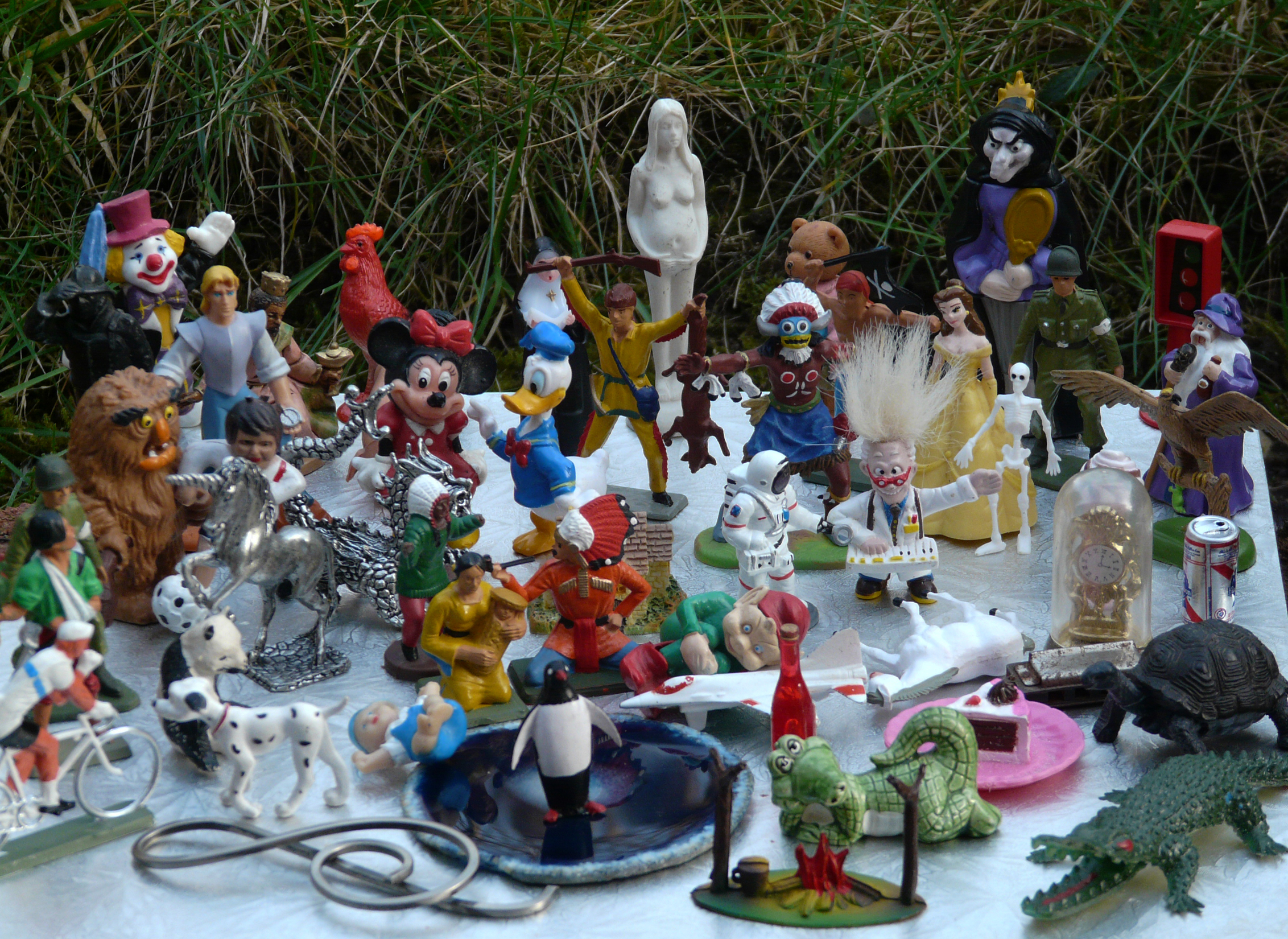
The most powerful player this afternoon was the seven-year-old son of a participant. The boy was fascinated by the boxes of miniature world-objects I had brought along.

He outplayed us all, instantly creating a legion of his world.

The young will be forever potent in their ability to play and invent …

We adults shared unique and moving stories about early misdeeds, raising questions to be explored individually. (The photo is of a  different occasion)

Some shadows we drag along are not of our own making, a dilemma that also applies to families and nations.

‘The best political, social, and spiritual work we can do is to withdraw the projection of our shadow onto others.’  ― C. G. Jung

Understanding the origins of shadow-projections softens the compelling affect they have in defining us, and our reactions to being fitted into a frame. Observing politics, it is obvious that negotiations are not enough to solve longstanding conflicts. It takes the awareness and inner work of individuals to let go of resentment, release the spark of creativity that enables lateral thinking, and the flow of compassion tied up in the entanglement of righteousness.

And there remains the unknowable, luminous black hole, and a sixth sense of something that evades us. What is mysterious, not accessible emotionally or through analysis, drives us on to dig deeper, expand our consciousness, and re-discover the link to our innermost self.

‘We are born at a given moment, in a given place, and like vintage years of wine, we have the qualities of the year and of the season in which we are born.’ ― C. G. Jung

With only three hours’ time available, the session at least inspired us to remember what is in our power to do. There remains the ever impelling potential of greater intensity and more poise between safety and risk on the tightrope of our life.

Our dear friend Rahima outlined the shadow theme as C. G. Jung defined it. If you have not heard of the term ‘shadow’ in this context you might want to investigate: http://en.wikipedia.org/wiki/Shadow_(psychology)

And in relation to the activity of writing – here a dream image in the eye of its beholder  http://www.youtube.com/watch?v=M19S89UcaKQ&feature=related

If we could read the secret history of our enemies, we should find in each man’s life sorrow and suffering enough to disarm all hostility. Henry Wadsworth Longfellow


*    *    *

4 Comments

Filed under Blog

… tuning into your unique frequency …

Are you ambivalent about spirituality? There are countless paths, tradition, groups and teachers to follow … but since authorities and hierarchies have become suspect, for good reason, spiritual advice, like any other advice, can seem like a cacophony of white noise. There is a collective expansion of consciousness gaining momentum that challenges each of us to come into resonance with our body, and a deeper aspect of our mind, the heart. It is through the heart that we can open the channel to your unique frequency, and receive guidance from the truer Self in us, our eternal witness that connects us to the source.

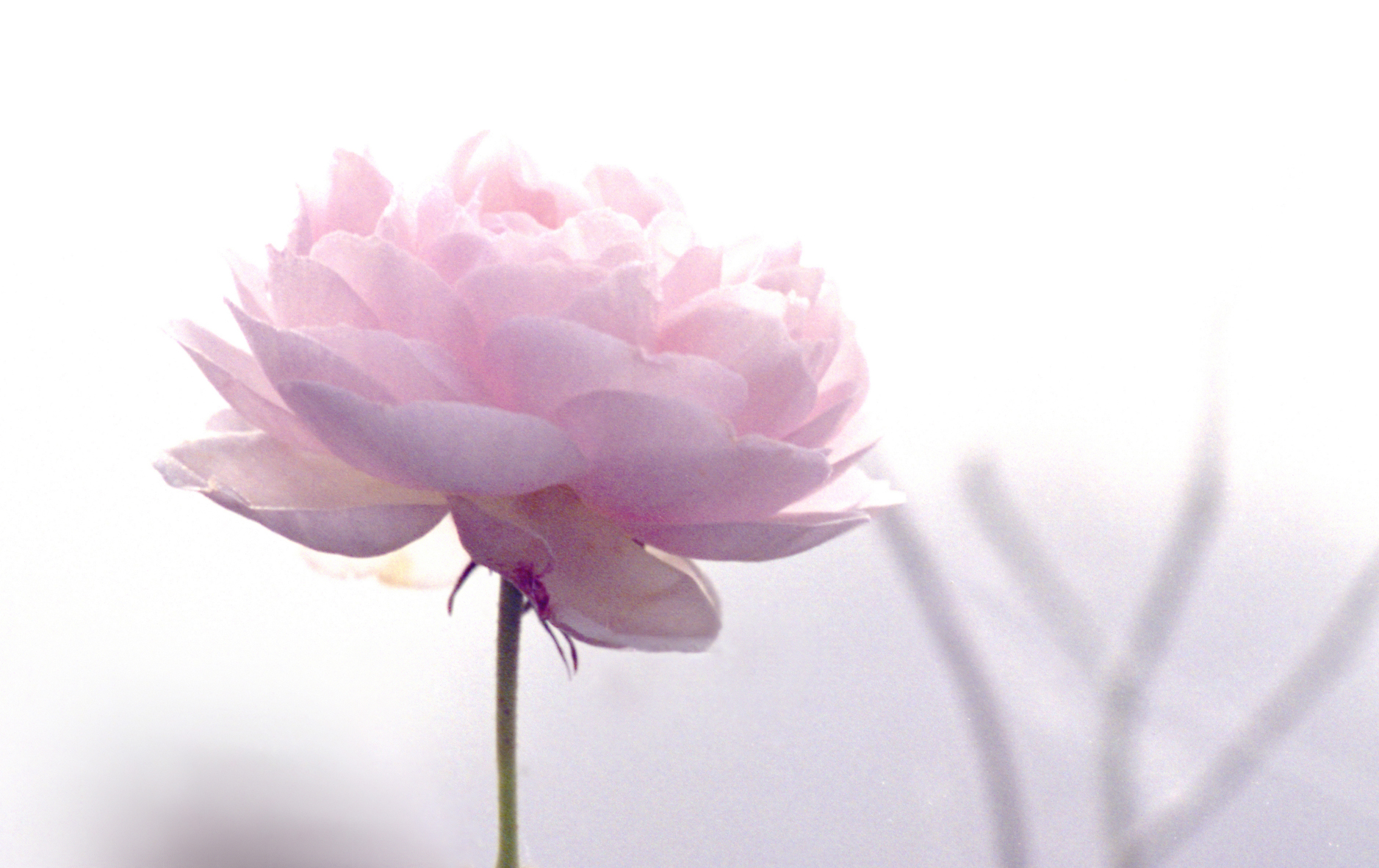
The rose, a potent symbol for the Self, appears in various transpersonal practices. The visualisation below is a variation of an idea used in Assagioli’s Psychosynthesis and the Sufism of Hazrat Inayat Khan. You can elaborate on the words and guide your own journey silently, or have a friend read it out, or record your voice and listen back to it. The intention behind the practice is to become receptive to the core of you, to tune the heart to the love you are, we all are, in essence. Practising this visualisation opens a channel to your inner guidance that will attract the outer circumstances you need.

*     *    *

Find a safe place. Close your eyes. Be aware of your body and simply follow and feel your breath until its rhythm settles. After a while, bring your attention to your heart, whose spiritual counterpart exists as your true identity in another sphere. Make a space for thoughts and images that arrive. Don’t reject anything, observe, don’t bother to label, judge or follow links. Instead, face and feel whatever arises, let it pass, and simply return your attention to your breath. You may need to stay with this process of accepting and releasing thoughts and images for a while.

Once your mind and body have calmed and you feel receptive, allow the image of a garden to emerge, your private garden. Visualise this special garden … notice a rose bush with a bud still enveloped by its green sepals. The bud draws you close to witness its opening.

See the shielding green sepals stir and offer you a glimpse of the colour beneath. Now the rose receives the light of your attention, its petals slowly turn outwards and open in a fluid movement, like the arms of a dancer. Observe this opening dance. Sense the same unfolding also happening deep within you. Fully absorb the hues and the tenderness of the rose leaning towards the light, behold its perfect beauty and inhale its delicate scent.

Now allow the rose slowly to expand … until it grows into a transparent rose temple filled with light and large enough to step into. Move directly to the centre and rest there for a while. Become the rose temple. Absorb the gentle atmosphere, the hues, the rhythmic grace, the sound, the fragrance, the splendour and continuous unfolding towards the light. Absorb the sensation completely … be at one with all your multiple selves … at peace within your essence, your wholeness, your true being. You are your own unique lover and your own unique beloved.

Now rise and step away from the centre. Leave the rose temple behind. Turn and behold its magnificence once more, and then adjust its shape to a small rose that fits into the palm of your hand … Place that rose into your heart … Know it resides there, maybe closed, but ready to open whenever you  use your intention to connect to the wonderful feeling of wholeness. All you have to do is remember, and the symbolic power of the rose will evoke the presence of your timeless Self.

*    *    *

4 Comments

Filed under Blog

… monologue of the self …


acknowledge the creature in you and befriend it

breathe –  so your heart will not contract

in vain duty towards the known

and drain this dream of colour

your cells pulse with desire

that all angels long for

live with intensity

inquire deeply

allow the space

be involved

know you are

step back


now become

through acceptance

forget what was learned

polish the mirror of the heart

look afresh with each new breath

all is done by the rhythm of our silence

expand love by not clinging to expectations

find dynamic peace through expressing beauty

intelligence by remaining open to the unexpected

subtle wisdom through enduring the grit of contradiction

intuition through carrying the heart in the heel of the foot

and freedom through humour and deeds of for-giving the self

*    *    *    *

I meant to write a monologue of the spiritual ego but realise I’ve residues of misgivings for some of its manifestations. On the whole, I think all struggling egos between two rocks need a little TLC. Most try hard.

But how does a serious psychopath reflect upon our humanity? I’m deeply distressed today, hearing of the atrocious acts of the megalomaniac in Libya.

2 Comments

Filed under Blog