Tag Archives: loss

… the wild horse of the mind …

I thought I open the window a bit to what I’m immersed in, drafting the sequel to Course of Mirrors, called Shapers. Another mythic adventure, and more. The short piece below is not representative of the tense action this story has plenty of, but depicts a pivotal moment. The scenery is  Eire, where time-zones overlap. In 2550 AD the island is called Sax, where Rhonda, the super-controlling power, cast their misfits.  In the excerpt below, Tilly (Cassia in Ana’s story) has arranged for Cara and Mesa to meet in Kerry during the 1970s.

The theme touches on the creative process. Something for my writer friends. I welcome any feedback to the draft.

*    *    *

Tilly’s ruined estate on the Kerry peninsula was one among many places around the world where past and future began to cross or run parallel during the 1970s. Not all drop-outs travelling through Derrynane were aware of the phenomenon. Those open to the new wavelengths either tuned in, or received no more than garbled white noise. The going slogan was – love, don’t think – though it should have been – love and think – and stay grounded. These were turbulent times. Traditionalists abhorred the breaking free of conditioning. Leaps into the unknown frightened them.

This is Cara’s time, and these are her thoughts: Personal myth is a complex self-creation, mainly unconscious, but less so once we replace the postulates we inherited with our own, and are drawn to our psychic kin. Every night when the body rests we visit beings in other spheres. We may discount these sojourns as dreams unrelated to our daily existence. Yet bridging occurs when we value inner dynamics and re-story the associative symbols of images. Resonance momentarily fills the void between the known and the unknown, and meaning is assigned to events. Some good people trust in God, but then abnegate their creativity. Are we not the desire of a divine will? Are we not the ears, eyes, nose, hands and feet of a universal intelligence, of which we are the deed? Does not our speech derive from one sound? And is love not the creed that breathes all things and directs the movement of all spheres? I don’t understand the need to prove or disprove a universal intelligence that is within and all around us. The world I create is imperfect and suffers from on-going flux. But I can bring my small flame to its shadows.

Now that Cara’s myth caught up with her, and she was confronted with the net of postulates she had cast into the future. She found herself challenged to engage with what she animated, because she was animated by it.

Gutch spotted Tilly talking to Cara and Mesa in the hall. He was bursting with pleasure. ‘I found my clan,’ he said. ‘This place is teeming with talented actors. We’re going to do some magic theatre. Are you joining us?’

‘I need to take care of something,’ Tilly said. Can you keep an eye on Gart?’

‘That devil had some weird conversion trip and is sound asleep under the table.’

‘Excellent. Let him sleep.’

When Cara and Mesa arrived at the cottage across the atrium, Tilly had lit a fire in the hearth. A nest of chairs invited them, and the smell of fresh coffee. ‘Have some,’ she said, ‘pointing to a steaming pot, ‘and there’s chocolate cake, too.’ Mesa soaked up the atmosphere, transported to Ana’s world, reminded of Cassia’s kitchen. Tilly placed a small leather pouch in Cara’s lap. ‘Here, forged by fire, polished by the sea, a gift of remembrance.’

Cara opened and turned the pouch. A black stone fell into her hand – smooth as marble, yet radiating warmth and shining in the glow of the fire. ‘Ana’s talisman!’

‘Yes, and you might as well own it.’ Tilly paused, gazing into the flames. ‘I have a favour to ask from you, for Mesa’s benefit.’

‘What favour?’ Cara poured cups of coffee for everyone, dished out giant slices of chocolate cake and added a dollop of whipped cream to each.

‘Your future, Cara, has come to visit you. Mesa returned to assimilate what was lost to her. With Ana’s story you re-animated her soul. Certain events in history require beings to return, to right things or bring a message.  Mesa will take on her role in the odyssey of the Ypocs. And she’s going to be the narrator of your story, Cara.’

‘Huh, this takes a leap of the imagination. I haven’t even smoked the weed.’

Tilly smiled. ‘You know what it takes. Uncovering a personal myth is different from writing a Hollywood script. To help Mesa to re-connect with random creative processes, I want you to explain to her in as much detail as possible how your mind works.’

Cara heaved a breath. ‘The idea sucks every thought from my head.’

‘That’s a good start.’

‘All right, here goes a slice of random micro processing … Momentarily stuck with a paragraph, I remember to stretch my legs. In the kitchen I snatch a yogurt from the fridge. I notice a sticky shelf – mental note – clean it soon. Dark clouds gather outside, looks like rain. I run up to the bathroom and close the window. On the way down, I see dust-clouds on the stairs – mental note. Heading for the desk I stop by the fridge again because I’m now really hungry. I prepare a sandwich – mental note – put butter on shopping list. I use the loo – mental note – toilet paper is running out. Telephone rings. The answer machine kicks in. Just as well, I’ll return the call later – mental note. A letter that needs sending sits next to the phone, I put a stamp on it – mental note – post it. A fly is trapped in the window. I release the fly and study a tree out front that leans over and needs pruning. I quickly assess which branch to cut – mental note. Off to my desk. Passing a shelf I spot the book I couldn’t find earlier. What a relief! I plonk it on my research file and am reminded of an article I need to chase – mental note. The sun shines again. I open the backdoor and listen to the birds. Grass needs cutting – mental note. Finally back with my paragraph the writing flows, sheer bliss. At a natural break in the narrative I decide to go shopping. In the car I have an epiphany relating to a character in my story, to do with birds – mental note. The walker I pass reminds me to visit a certain person – mental note. I recall this person collects small antique tins. I could find him a present – mental note. I think of metaphors, how obsessions, like collecting tins, are really personalised teachings – mental note.’

Mesa had listened with rapt attention. ‘What happens to all the mental notes?’

‘Ha, ha … they’re promises. They’re torture. They heap up. They demand execution. My way to deal with accumulative pressures and gain time to focus on my writing is through procrastination. I’ve become patient with nagging voices. They’re not jailors. They’re easily humoured until the time is right for a blitz. Then I act fast and achieve a great deal in a short time, happy to have cleared the space.

‘But why give these mental notes the power of demands over you? Mesa asked.

Cara glanced at Tilly, who had taken up knitting, as if the dialogue bored her.  What was her agenda? Was this really for Mesa’s benefit? Tilly smiled and said, ‘Go on.’
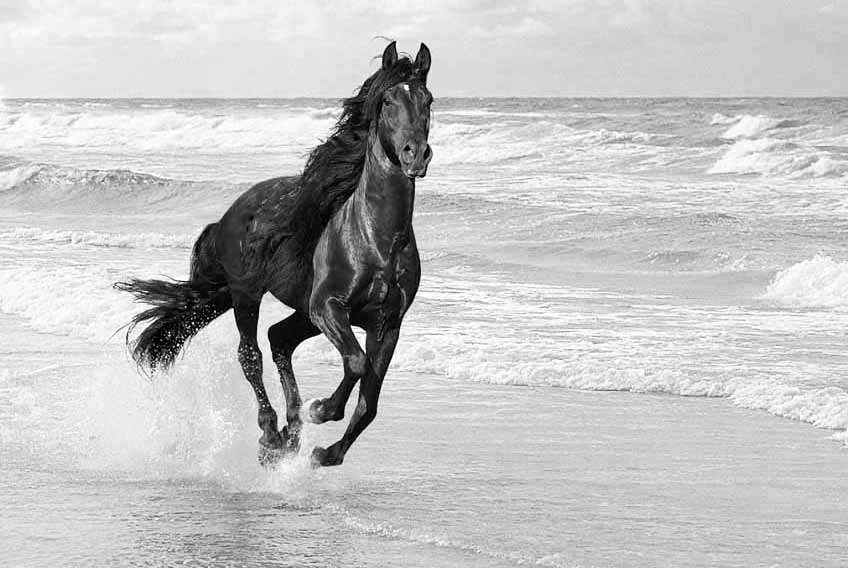
‘It started out as compulsive pattern. I was conditioned to respond to the needs of my environment, and to maintain order. There are exceptions. Some days, it could be the weather, a dream, the stars … from the moment I open my eyes everything flows effortlessly. My brain is relaxed and I attract harmonious thoughts, like I’m fine-tuned to a subtler station, beyond the busy bandwidth of neurotic naggers. The tuning can be learned. It’s like taming a wild horse. I can actually do it, when necessary. But I like letting the horse run wild. I find wild things that way.’

‘We have different conditioning,’ Mesa said. ‘From early on I was trained to tame my mind, to let it rest like a still pond, or focus thoughts like laser beams. Then free play was introduced, disrupting Rhonda’s order, and all went wrong for the Ypoc.’

‘Aha! I bet you didn’t have to juggle a deep conflict, and oppose a controlling father.’

Tilly dropped her knitting. ‘This gets interesting. It’s what Mesa came back for.’

* * *

Apologies: The origin of the image of the horse is unknown to me.  Many thanks to the photographer.
10 Comments

Filed under Blog

… here is everywhere …

Nationalism is the pathology of modern developmental history as inevitable as neurosis in the individual.   – Tom Nairn, The Break-Up of Britain

The growth dynamics of nations and those of individuals have striking parallels, especially when it comes to the forming of an identity in relation to the other, and the ongoing struggle to maintain or adjust set habits to changing circumstances. For instance, when religious authority declines, the blame for the ills of a nation can no longer be projected onto the omnipotent godhead. People find themselves challenged to reflect on how they contributed towards the ills and become accountable for their actions.   The psychological development towards spiritual independence and interdependence – for individuals or nation states – is a humbling process in that it confronts us with our failures, imperfections, and the need to learn from our experience and cultivate human qualities.

I’m German-English, my official citizenship is Dutch. Though I live in England, I have felt at home in the Arabian deserts, along the Mediterranean coast, among friends wherever they are. But is there one location from where I look out onto the world, one place that is traditionally called home? To not betray all my loves it would have to be the bridge, in a metaphorical sense. The theme of my first novel starts out with a bridge across opposites. On that bridge my protagonist has an encounter with herself where here becomes everywhere.

I feel like an ancient being torturing language to express the simplicity of experience, digging through layers of false evidence, sifting through sediments of unreliable gossip for grains of truth. Words fall from my pen like dust settling after another hole dug, showing the trifle of an image that needs a night of dreaming to cohere into a sentence, and then more sentences, resonating with a universal narrative, re-arranged in time as if the story is yet to happen.

Germany – Before print was instrumented by Luther’s Reformation, the Latin language represented the voice of divine authority – the father. A lone human hero, Martin Luther (1483-1546), Doctor of Theology, not a prophet, disputed the church’s practice of selling indulgences, which urged him to write his 95 thesis, among them: Why does the pope, whose wealth today is greater than the wealth of the richest Crassus, build the basilica of St. Peter with the money of poor believers rather than with his own money?’ When Luther’s followers printed his 95 theses and displayed them in public places, their controversial contents spread like wildfire. The papal hegemony was rattled. Convinced that salvation was not gained by merit but by the grace of God alone, Luther went into hiding and translated the bible into the most spoken vernacular. Time seemed to call for a voice like his. In some historic records he is accused of hiding under the mantle of the princes rather than siding with the folk, of not grasping the opportunity towards the forming of a German nation. Luther’s theme of grace was limited. When his efforts of converting the Jews failed, his loathsome sentiments incited their persecution. Yet he was seen as encapsulating the struggle of the German people for an identity while living under the shadow of the slain father, the Roman Empire, which compelled the German psyche to emulate its glory.

A.J.P. Taylor writes in The Course of German History: ‘Since Charlemagne founded the Reich in 800, more political energy went into maintaining German states independent of the Reich, or even hostile to it, than into the Reich itself.’ By the fifteenth century, the Holy Roman Empire of the German Nations was divided against itself. Through the intense struggle for wholeness emerged some of the world’s finest philosophers, scientists, writers, musicians and mystics, as well as the most ignorant and corrupted leaders.

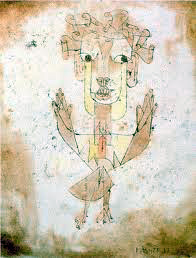
Walter Benjamin had a vision of Hope and Despair, inspired by a painting:

A Klee drawing named “Angelus Novus” shows an angel looking as though he is about to move away from something he is fixedly contemplating.  His eyes are staring, his mouth is open, his wings are spread.  This is how one pictures the angel of history. His face is turned toward the past. Where we perceive a chain of events, he sees one single catastrophe that keeps piling ruin upon ruin and hurls it in front of his feet.  The angel would like to stay, awaken the dead, and make whole what has been smashed.  But a storm is blowing from Paradise; it has got caught in his wings with such violence that the angel can no longer close them.  The storm irresistibly propels him into the future to which his back is turned, while the pile of debris before him grows skyward. This storm is what we call progress.    

                   – Walter Benjamin, Ninth Thesis on the Philosophy of History

The extremes of enlightened spirituality and regressive brutality happen wherever human fallibility seeks to reconcile itself with the divine ideal. A geographically hemmed in Germany was not relaxed about its identity, which was further knocked by the Versailles Peace Treaty. Debates about the effects of the treaty are ongoing. Germany was blamed for the First World War and had vindictive reparations imposed that aided hyperinflation. The crushed self-respect of its people called in a saviour, who tragically sublimated his oppressed childhood with vastly inflated ideals.

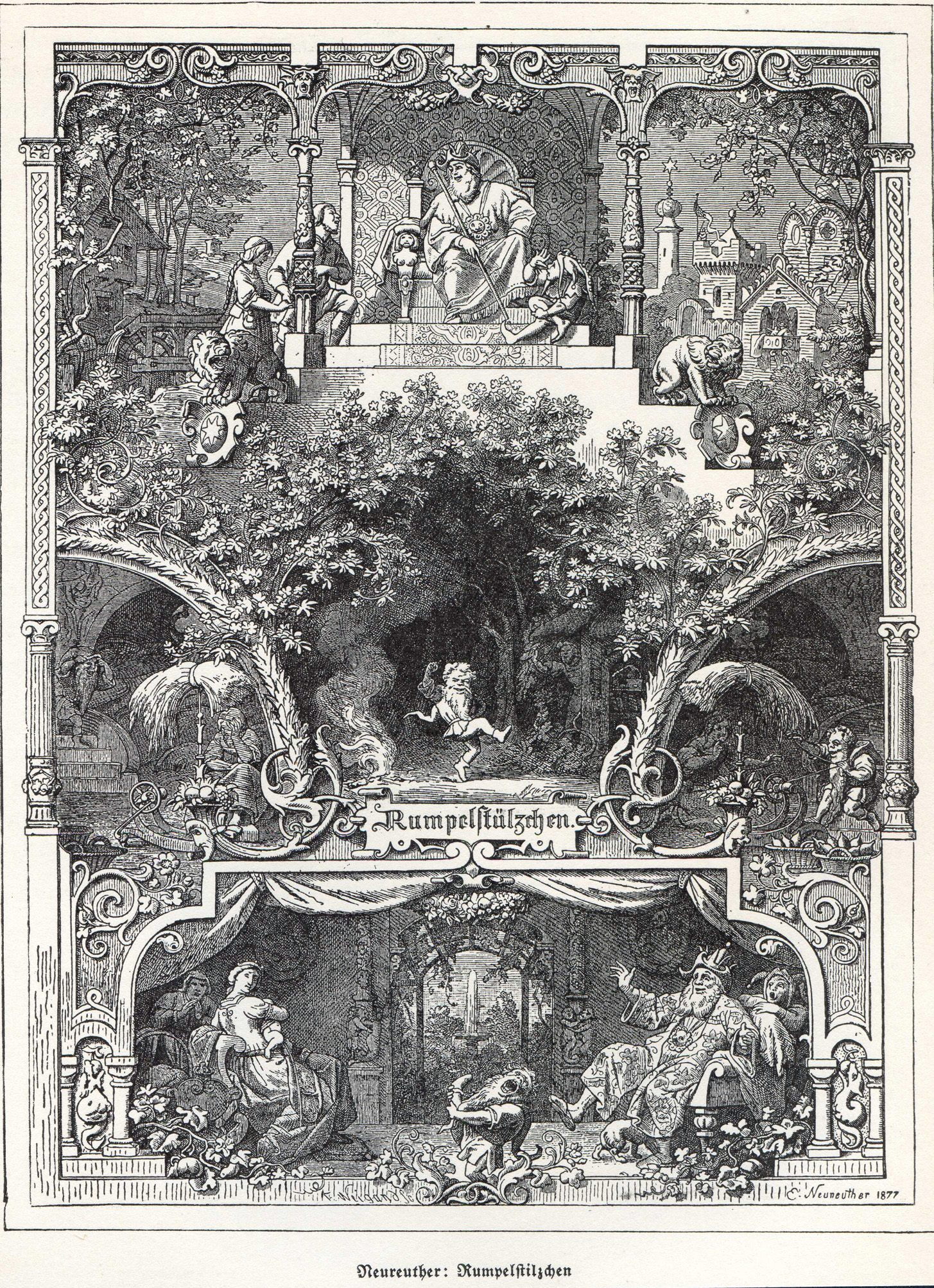
Sanity might have prevailed in the darkest hour had Germany given more value to its folk tales. They leave nothing of human nature untold. The secret mysteries of the heart are found in mythical tales all over the world, and while set in local landscapes, their themes are similarly transcending race. These coded treasures are basically the stuff of all yearning for the home or source, a human phenomenon riddled with the tensions of fixation and avoidance.

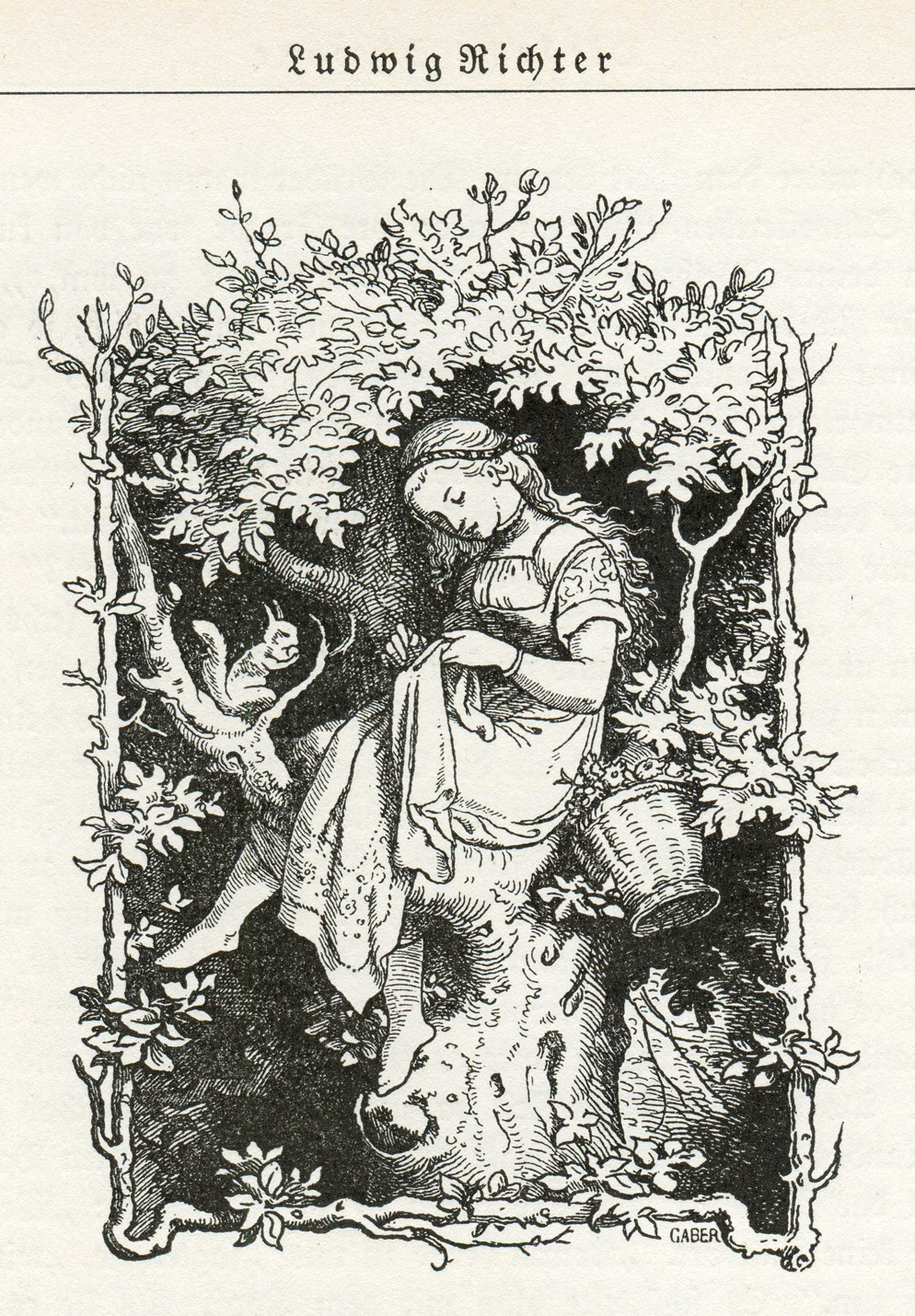
A hint of the tenacity available to the German people can be found in the tales collected by the Brothers Grimm when storytelling was still practised with the potency of embodied memory. Children growing up with the characters, animals and landscapes of these stories are absorbing timeless themes through symbols and metaphors. Censors protested, and still do, that these themes are cruel and unfit for the innocent child.

The Grimm brothers comment in the introduction to the second, updated 1819 edition of their collection: ‘The right usage discovers nothing bad is in these tales, but as a beautiful word has it – a testimony in our heart. Children point without fear into the stars while others, as popular belief has it, would insult the angels.’

Was the melancholy that gripped so many German people their nemesis or their salvation? Tales that contain symbols of mythic time need to be deciphered again and again within a temporal context. Yet because the emotive power of symbols defies rationality, the sentiments evoked are always in danger of being abused by myopic national concerns. When a nation loses balance by being overly defended or irrationally unleashed, differences of religion, race or politics are thought to explain the matter – yet we all know there is no pure race.

England, like Germany, struggled through internal conflicts but achieved a sense of unity by conquering the world. Felling forests to build boats which sailed under the banner of the Royal Navy, explorers and missionaries spreading across the waters formed a Colonial Empire that brought great wealth and influence. The Commonwealth still lingers like a halo and gives Britain a sense of sovereign pride. Cultural Imperialism, natural to nations with access to the sea, had created the other at a safe distance rather than at home. Yet spoils of victory, too, come at a cost.

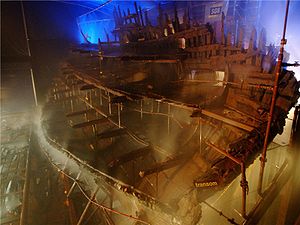
When the flagship of King Henry VIII was lifted from the depth of the Solent Estuary into the twentieth century on 11 Oct 1982, the Mary Rose flared back into view and boosted national confidence, adding a powerful impetus to Mrs Thatcher’s resolution to win back the Falklands. It worked – just. Yet now it seems conflicting images of the past, informed by freed-up information providing more and more varied perspectives, are testing every nation’s conscience.

In the twenty-first century, with migration being a global reality, nations are obliged to open their doors to the other. Given changing policies, foreign individuals are often able to acquire legal membership. Since the Schengen agreement, European borders, apart from Britain’s, can be crossed freely, though the agreement is regularly challenged by exceptional circumstances. http://www.migrationinformation.org/Feature/display.cfm?ID=859 

Migrants – who are we?  If there are tendrils resembling roots, they connect to the deep impressions left by parental figures and childhood landscapes, and to the layers of national symbolic themes, ancient, historic and contemporary. Social and ethnic codes ricochet among children in every school-playground, even between neighbours like Germany and Britain. We use icons to sum each other up. At times they move us to tears, at times to laughter, often they serve humorous self-reflection, but mostly they envelope us in a ritualistic trance:

Bratwurst with Sauerkraut, Fish & Chips, Schubert and Kurt Weil songs, God save the Queen, the first four notes of Beethoven’s 5th symphony, a blinking eye of Shakespeare in a hologram,   Goethe’s Faust, the Thatched Cottage, das Edelweiss, The Royal Jewels, der Adler, Jack and Jill, King Ludwig’s Castles, Stonehenge, Rapunzel, Big Ben, Karl Valentin, Spike Mulligan, Lorelei, or the Mary Rose:

In order to preserve them, we gave the Mary Rose Trust a chemical solution called polyethylene glycol. Once these items (such as wooden bowl and leather shoes) have been soaked in this solution, they undergo a freeze-drying process that will preserve them for posterity … ‘You can be sure of Shell.’     (Shell advertisement  1985)

Patrick Wright in his book ‘On Living in the Old Country,’ recounts the findings of a young journalist, Charles Moore. He was commissioned in 1982, after Lord Scarman’s report on the Brixton disorders, to interview the really oppressed people in the area, defined as the elderly white people of Lambeth. The findings expose a national sentiment which, in essence, could equally apply to other nations and individuals: it remembers the state of grace and laments the fall which is said to occur when ‘the blacks’ and the welfare state arrive:

In the beginning there was order, friendliness, dignity, sharing and mutual respect: ‘Everyone mucked in and was properly neighbourly.’

A betrayal of the idea of paradise – in the absence of divine certainty someone or something other needs to become bad, in order to preserve the good.

Seeking fault with the other is meant to shield paradise. An oversight – truth stagnates in the fenced gardens of eternity. Enduring human vitality flows from change and is born of vulnerability. The trance of blame sucks us into its gravitational slow time. Unawares, we perpetuate the shielding in the collective psyche, leaving it for the next generation to absolve.

Recorded history is like a rope broken in many places and knotted together again and again. In the light of new truths these knots are strained and made brittle until they snap. Tribes, nations and ideas are strung along this rope. But new concepts of time are changing our perceptions; many individuals struggle to free themselves of knotted history. The desire to make things solid is an automatic reaction to the fear of losing the familiar we nurture – people, environments, passions and beliefs we bond with, that are mirroring us and allow us to discover ourselves. The problem is not loss, but the manner in which we deal with loss, as if it is destroying our identity. Inevitably, if not death, someone or something will be the agent of change in our lives.  Something dear is wrenched from us, a way of life is gone, those around us and the rest of the world may care for a moment, but our identity, the sum of all our embodied experiences, is ours to keep or lose. The valid anger in the face of change is not lifted by words of wisdom, only plastered up. The heart has to suffer and soften before the conscious decision of an individual can unplug resentment and embrace the enduring presence that truly connects us within. Only individuals can release blame and lift the veil of ignorance.

Dich im Unendlichen zu finden, must du unterscheiden und dann verbinden.

To find yourself in the infinite, you must first distinguish then combine.

–  Johann Wolfgang von Goethe

A truly global citizenship must be composed of enough individuals brave enough to explore their own psyche, brave enough to think for themselves and realise that our collective identity unfolds beyond the existence of individual transitory lifespans. We know that, given respect, tolerance and stimulation, a child will engage with life creatively and trusts in the future. Applying this insight to how we educate our children nourishes the collective intelligence of humanity.

The German filmmaker Edgar Reitz has with great sensitivity restored a balanced meaning of the German Heimat in his TV series of the same name, spanning from 1919 to the fall of the Berlin Wall. The series follows three ordinary families and comprises 52 hours of film. The yearning to belong, so distorted by the idealism of the Third Reich, is shown in localised context and conveys the human aspects of the war story. The impetus for the creation of this document was an American Holocaust series on TV in 1978. Reitz was horrified that German intellectuals seemed to accept the sentimental spin as treatment for national guilt.

The knots in the rope of time we constructed are brittle with guilt, the burdening guilt of not loving humanity enough to fully take on its pain, the way Christ did. He said, ‘Thy will be done.’ Does such surrender of will, even if taken symbolically, really release us of using our own will to effect change?    The concept of surrender is more subtle than giving up the power to will. I see surrender as an alignment of our conscious will to the dynamic flow of change, the universal will, enabling evolution to happen and work freely through us, so that here is everywhere. In instances when this shift happens inside, we are.

*    *     *

References other than mentioned in the text:

The Angel of History: Walter Benjamin’s Vision of Hope and Despair – by Raymond Barglow, published in ‘Tikkun Magazine,’ November 1998

Recently 500 more tales, collected by a contemporary of the Grimm Brothers, were uncovered:

http://apps.facebook.com/theguardian/books/2012/mar/05/five-hundred-fairytales-discovered-germany


5 Comments

Filed under Blog

… Haiku – recalling Japan’s tsunami …

Next Sunday, March 11, one year will have passed since Japan’s people experienced a wave of change through a devastating tsunami. Reflective times, especially for the many families who lost dear ones, friends, homes, livelihoods, and all those who were touched in one way or another by the traumatic events of the day, and all of us around the world who hold the images indelibly etched in our heart’s memory. May the healing presence of the divine illuminate our future …


hawthorn flowers white

among a debris of homes

families vanished

*    *    *    *

a field of rubble

faded snapshot of a child

splashing in a wave


*    *    *

sunlight in a puddle

a bird dowses its feathers

no other sound

*    *    *

emerald seedlings

loosen the concrete highway

soft patter of feet

*   *   *

http://facts.randomhistory.com/tsunami-facts.html

4 Comments

Filed under Blog

… lap of fate … part five

This is the fifth and final part of a short story inspired during a recent visit to Spain. If you enjoyed the read, and are so inspired, please leave me some much needed feedback in the comment section. I’m happy to return the favour, and will soon do reviews again. If you have come here for the first time, you might want to scroll down the home page to get to ‘part one’ of the short story, posted on April 30th. Thanks you dear readers who followed the evolving narrative, and those of you who left comments and/or pressed the ‘like’ button.

I’m still learning how to operate this site, but this is post no 80 since I started this blog last April … hurrah! And I have another reason to celebrate. A dear friend helped me today clean up the first three chapters of my novel, Course of Mirrors, a final leap towards sending out queries. No more excuses.

*    *    *

Here then the final instalment of … Lap of Fate

… The weight of my revelation receded like a wave sucked back into the sea. Confused by the señora’s flat response, I latched onto the distraction of soft paws resounding from the spiral stairs. Abu, the dog, poked his head through the opening to sample the mood. Neck tilted, he sneaked towards me and pushed his wet snout into my lap. Touched by his show of affection, I stroked his pelt, at which he burst into a whirling dance, trying to catch his own tail. Abu’s antics dispersed the static air around my chest. I cried and laughed in one.

The senora’s worried face softened to a smile. ‘What a pretty dog.’

Straightening her back, she regarded me as if seeing me for the first time. ‘My dear child,’ she said. ‘You released a ghost I created. Antonio may or may not have believed my story. The truth is, I miscarried at four months, there was no Juanita, but I had so strongly wanted her to exist in the world, like a fresh and blameless me, I made her up.’

I flinched, recalling my own painful miscarriage, when a river of hormones came to a drastic halt and left a dark hole in my body, like a consuming abyss. I had other children, who thrived. Though my past held secrets, it never detained me from living, unlike the señora, whose child was held captive in the tabernacle of this studio.

‘Antonio cherished me. He was intuitive. He sought to restore my creative spirit by painting me expectant.’ Her shoulders dropped. ‘He died. I was desolate and clung to my old story, imagining Juanita out there in the world having a better chance at life. I must have dreamed you into being.’

The synchronicity of our longing astounded. ‘When I learned of my adoption, I started daydreaming too, convinced my birthmother was out there somewhere regretting her decision to abandon me. I imagined her looking for me, wanting me back.’

Her eyes shone as she took my hands. ‘Does it matter – mi angel?’ she said. ‘All children, born from mind or body, are wanted by life. They deserve to be loved.’

A car horn sounded.

‘Oh dear, we must apologise to the agent,’ she said.

I begged her to stay on, offering a lift to her hotel later in the day. The senora accepted, which freed the agent to drive back to town. His wide grin showed he was happy my break-in had been absolved, and I had made friends with his client.

Alma was her name. Alma Ruiz Gonzales. First, we opened all shutters of the studio to let the sun in and more – a peculiar hint from heaven. Light coming from a far window hit a round mirror standing at an angle on the wall. The reflection in the glass rebounded to cast a circular sunspot on one of the paintings, framing the cardinal with the girl sitting on his lap.

Alma shrieked – with excitement, struck by a sudden idea. With her dazzling crown of hair she looked like a crazed woman as she rummaged in a toolbox. In triumph, she held up a Stanley knife. I thought for a moment she was going to lash out and slash the painting. Instead she found a sharp pen, marked the lit area on the canvas, cautiously inserted the knife, and began to cut with small sawing movements round the curved line. It may have been poor eyesight, but it seemed as if  she put her ear to the cleaving sound of the blade. Her lean and leathery hands nudged along with amazing precision, until the severed circular shape could be lifted from the canvas. Her dedication was riveting. Moving on to the second painting, of the cardinal with the snake in his lap, she cleanly sliced out another circle. Both canvases now had a hole large enough to crawl through, edged only by the backdrop of lavish chandeliers, a facet of the cardinal’s scarlet skull-cap and his polished shoes.

‘Why waste good frames?’ she said.

I shook with laughter, bringing Alma to the edge of hysterics. She slumped on a chair to clutch her belly. Our unrestrained mirth thoroughly cleared the air of any lingering ghosts.

I suggested we eat something. Alma opened the backdoor to an enclosed courtyard adjoining the semi. She wiped clean a bench and table, while I fed Abu more of my chocolate and prepared a snack for Alma and me. We had our meal in the yard and chatted about mundane things, like the weather, and neighbours.

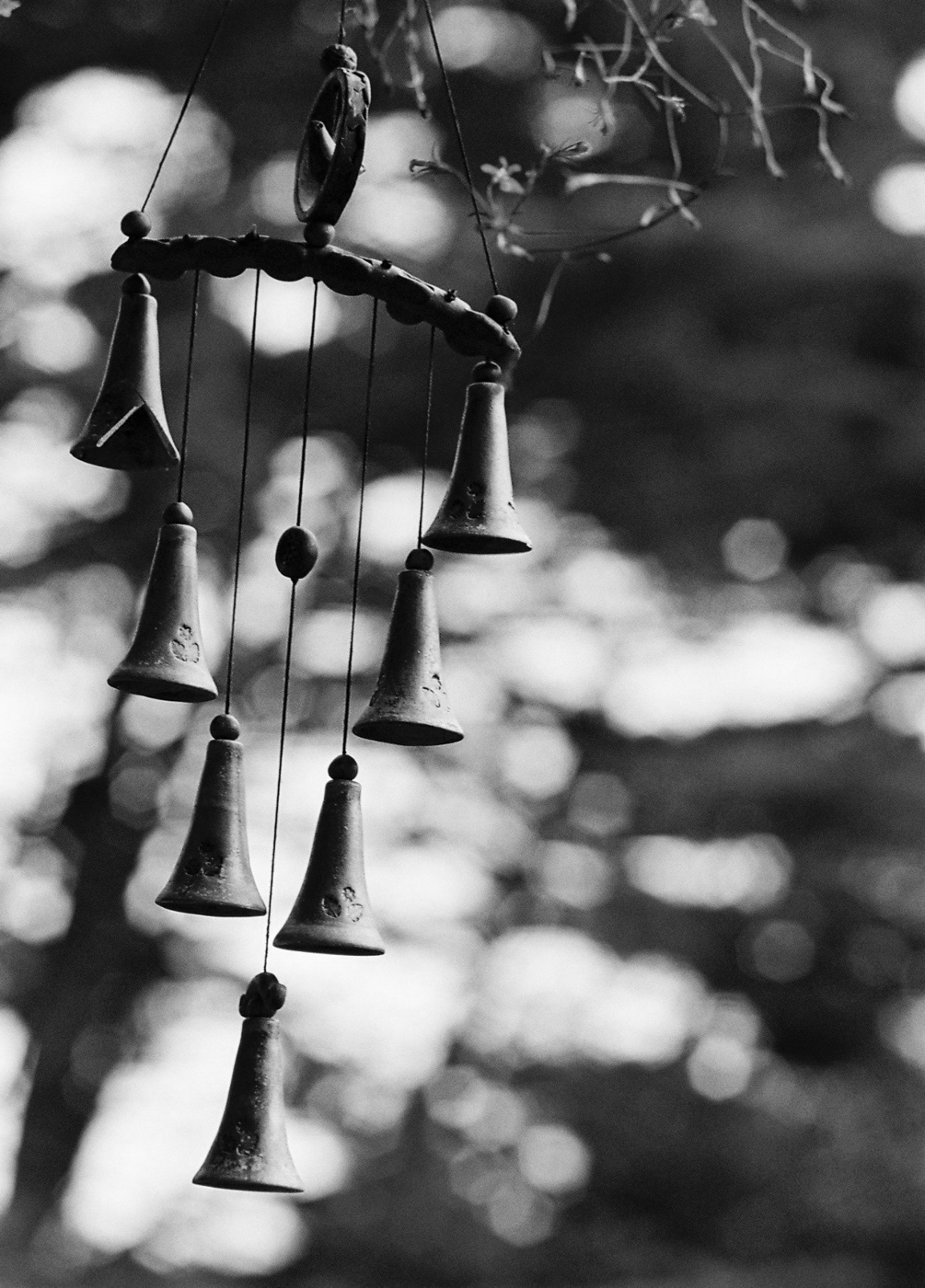
I poured us some Merlot. During an isle of silence, the chime bells in a nearby branch moved to a breeze. The melodious ring unsealed more tragedy. Alma shared she had given birth to an actual child, from Antonio, a son, who was stillborn.

‘It’s odd, but at the time I thought of the cardinal’s fixation on me,’ she said, ‘it could have been him … trying to return. Maybe his soul feared I would make his life a misery.’

Mother, Son and a not-so Holy Ghost, I thought. There is no end to the novel ways we make sense of what happens to us. And until we mourn our losses and move on, the meaning we give to what life throws at us could be right, or wrong.

After our meal we went to work. During sunset, the art world was impiously deprived.  The cut-out centrepieces of two magnificent paintings, depicting a cardinal’s obsession, were released into the ether. The fire was moderate, and held in check by a bed of stones. Leaning on her cane, Alma watched the flames lick at the snake and gnaw at the flawed beatitude of her abuser. ‘May his soul find peace,’ she said.

The historic aura of the paintings mingled with the cooling air in the hills of Granada and rearranged the past. Brilliant purple, white and scarlet paint simmered and charred, turning canvas into a crumbly leaden tablet with white markings that looked very much like a snake eating its own tail.

*    *    *

11 Comments

Filed under Blog

… lap of fate … part three

Anticipated by some, here is another instalment of Lap of Fate The short story is under construction and open to changes. I am grateful, well, hungry for feedback. Thanks.

*    *    *

I recited a short prayer and pushed the wall section until the opening was big enough to step through. The staircase! … I rushed to get a candle. Bracing myself, I climbed up the spiral, shielding the wavering candle-flame with my hand. Sunlight needled through the shutters and revealed a lofty space with a further staircase leading to galleried sections under the roof.

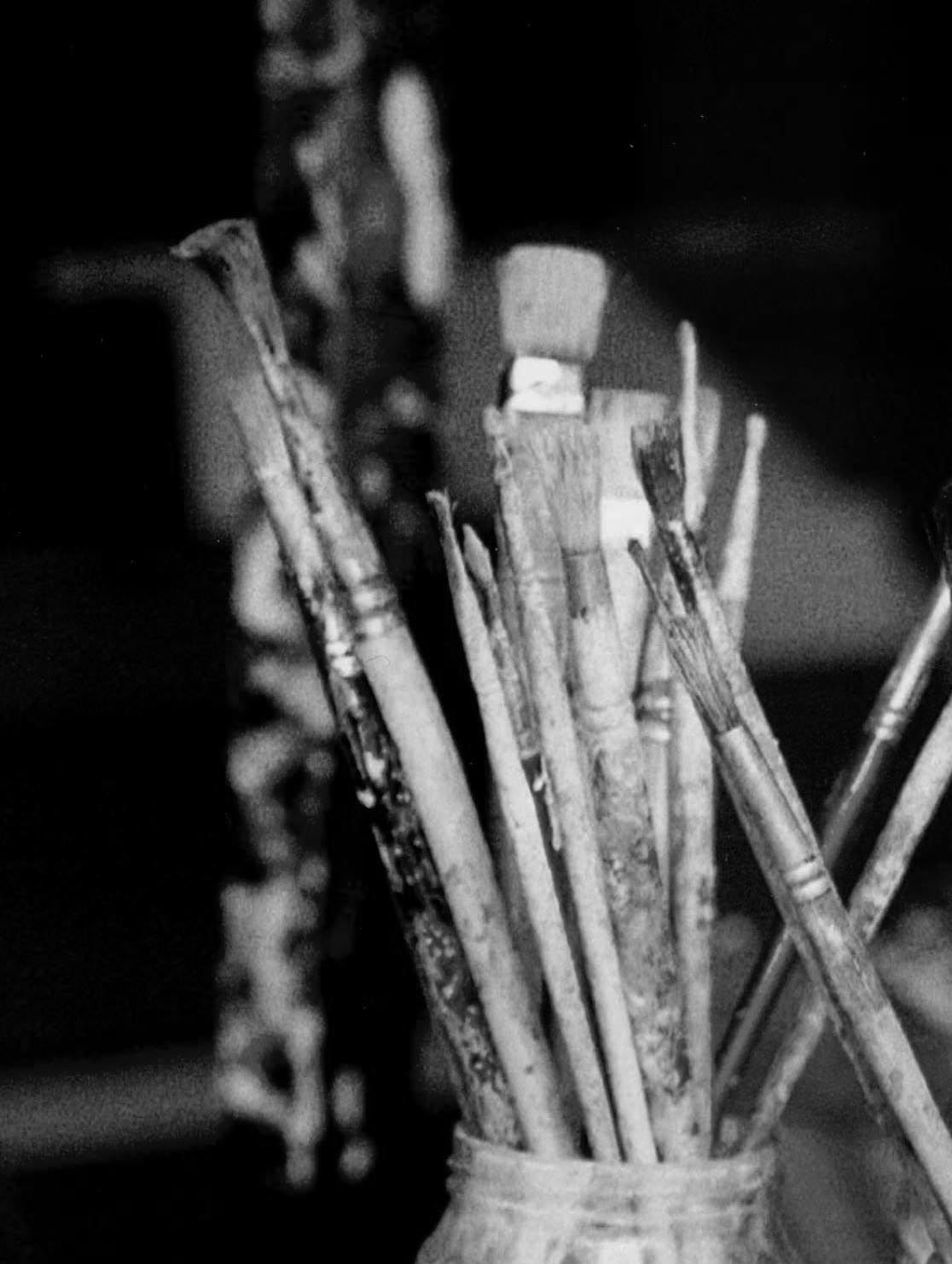
I noticed a scattering of shrivelled oil-paints tubes, brushes in jars and an array of structures. Three easels held frames shrouded by dust-sheets. I removed the first covering. An exquisite oil painting of a beautiful woman standing naked and serene, eyes closed, in a pit of snakes –  so lifelike I expected them to slip from the canvas and drop to the floor.

Absurd, how slithery creatures scare and repulse me. My feet itched to run. Instead, I warmed to the composed calm of the woman and had the sensation of a déjà vu that felt strangely like coming home.

Feeling brave, I pulled away the cloth from the second frame. Clergy never appealed to me, though this seated, scarlet-clad cardinal beguiled me with a beatific smile … until I noticed his hands caressing a snake coiled in his lap.

I drew back, not from the snake, whose singularity had a stylised quality,  but from the allusion that piety and sexuality might energise each other, and the underlying desire for unity could be seen to satisfy the same end. An idea my adopted mother might have called blasphemous. The painting would cause a scandal in this still deeply-religious country. I stretched my imagination towards a symbolic interpretation, the lore of circular time, but dismissed it as an excuse to silence lingering doubts. I began to grasp the ambiguity behind keeping this space in darkness. Yet there was a sincerity. The depiction of sexuality, intimacy, devotion and parody showed no attempt to glorify or vilify.

Contents aside, I was awed by the genius of the artist and anticipated another masterpiece, being fairly snug about my capacity for tolerance. The third painting made me flinch – the same clergyman in the same chair, rapt by the same exalted smile. His frock parted, he held a young girl to his lap. What made the image truly disturbing were the hands of the man, fine hands, bunching the girl’s lifted nightdress round her waist ….

Abu was barking outside. I had been too captivated to hear the car. ‘Oh Madre de dios … me ayude!’ A woman sounded hysterical as she dragged herself up the narrow stairway, causing the metal structure to judder with the clanging prod of her cane.

‘La senora!’ called the familiar voice of the agent, anxious for his client.

‘Su estancia alli abajo, el Sr Lopez Diaz.’ The harsh command warned him to stay out of this.

I stuck my candle to the last easel and faced the inevitable showdown. A shock of white hair surfaced from the stair-hole. Fragile, much older than I had expected, she gave the impression of a china doll, dressed with meticulous care. Her gaunt body was dominated by intense blue eyes. Like mine – a fleeting thought. She was the woman in the first painting, and the girl whose trust and dependency for love was exploited by the cardinal. I reached out – afraid she might fall, but remained rooted to the spot, petrified. The exposed paintings seemed to claim her, pull at her with invisible tentacles. Finally she gasped for breath and shuffled to a table for support. She shot me an anxious glance, weighed my reaction to the appalling image, and stepped towards it, leaning forward on her cane. I sensed a struggle, as if she tried to borrow my eyes, while hers misted, veiling infinite sadness.

Candlelight caught on the cardinal’s scarlet skull-cap, the pale legs of the girl, and the angelic face, raised adoringly towards her abuser’s smile …

Continued at … https://courseofmirrors.wordpress.com/2012/02/12/lap-of-fate-part-four/

8 Comments

Filed under Blog

reflections on loss

Yesterday, on Face Book, in a moment of daring madness, I invited a challenge – to write on my blog on any theme proposed. The challenge arrived – OK Ashen! How about the theme of loss, and how to come to terms with it? –  this from a friend who experienced severe losses in her life, one that cost her the full use of her legs, and another that took her only child, a teenager who died in the belief that a cheesecake did not contain nuts. Wrong. As it turned out, the death of my friend’s daughter saved innumerable lives since, in that rules for exact food ingredients were introduced. Yet bereavement remains. and it is immensely personal, as well as universal.

Life itself is conditioned by loss, which brings change, often traumatic change, of which death is the most final. It reminds us that our body and personalities are mortal. When I was a child, death seemed fascinating, and unreal. What most affected me were the reactions of people around me. As a young woman, I witnessed the violent death of a friend at a party. What helped at the time was a hallucinatory dialogue with that person. They were dreamlike meetings, enabling my farewell. Frequently, the stress of a sudden change produces prolonged suffering. Studies are being done of brain activities during grief, and certain neuron connections are blocked in people who cannot accept the loss. There is evidence that physical exercise, and touch, eases stress, shown in the cyclically stuck neural pathways in the brain being loosened. Coming to terms with loss is in the end about accepting life, the whole of life.

It is said in every loss there is a gain and in every gain there is a loss … wisdom difficult to fathom when something we have been attached to is taken from us. Metaphorically speaking, the loss could be the cornerstone we had built our future on, or the pole that held our tent upright. It could be the loss of status, home, a relative, our health, a life-time job, the loss of a loved pet, a belief that kept us sane, coherence, freedom, a promise, or simply a handbag.

Once, I remember the sharp jerk in my stomach when I turned round in a supermarket and saw my trolley empty of my handbag. In a flash, the full consequences overwhelmed. My bag is my survival kit, something my grandmother impressed on me, another story. Moreover, I carry every required proof of my identity with me whenever I leave the house. Heart beating wildly, I looked for a store person, when I realised my mistake. In a short moment of absence I had mistaken the trolley. The poignant questions this shock sparked, and the relief, was my gain then. When a handbag serves as container of one’s identity it can symbolise the archetypal mother.

I had a dream the year before my mother fell ill and died shortly after. In the dream she was an image in a mirror. I walked through the mirror to find her, and stepped into her bedroom, sorting her wardrobe, while my father looked on. Soon I was a motherless, which was the beginning of more losses, the death of people very dear to me, and each time it seemed as if a part of me died along. Each time emotions wrecked havoc, from guilt and anger, to melancholy. The most truly debilitating reaction, which I tend to witness in my work, is denial, because what is denied is life itself.

In essence, my losses were qualities I had projected onto a person, a place, an object. Qualities I then had to find inside myself. When this developmental process is engaged with, it could be considered a gain. If I accept change, I can never be the same again. Each loss changed me.

There is simply nothing we can depend on in life  And there continue to be new mirrors that reflect yet another bit of us, another object we desire, be it in this life or the next … where your treasure is, there will you heart be also …

Opening to the theme of loss, I could go on – it is also the most pervasive theme in literature, and the most spiritual. Writing has helped me to accept loss in the past. Here is a poem I wrote after miscarrying a child:

To my Unborn Daughter

All is well my child,

when you come next time

transport will be provided,

you’ll be elevated,

and your light touch alone

will make things happen.

Remember –

there are many ways towards the One,

not all seekers have tender feelings

or sit cross-legged;

some do the sword-dance

or hold a scrap of ice in their hearts.

Like sugar and salt they seem,

different, yet each yearns to dissolve

into the flavour of divine breath.

Love is the message,

but reckon with the power

of fear that hides under love’s habit.

Best imagine the future

whilst you’re off-stage,

but also fully participate,

embody your play, and delight

with your presence.

Learn from fools to be unpredictable,

and move as often as you can

from the middle of each moment.

Empty your heart – nothing matters,

not what you carry, nor what you leave.

Know what this means – you are free,

free to make everything matter.

Ashen


“Give sorrow words: the grief that does not speak

Whispers the o’er-fraught heart and bids it break.” 

—William Shakespeare, Macbeth

6 Comments

Filed under Blog