Tag Archives: inspiration

… apples, flu, altered states, wedding plans …

This autumn is drunk with colours and fruit. Red-blushed, in their own sweet time, apples have been falling with soft thuds onto the dewy lawn for weeks. Each morning they blink at me, and shout – help, pick me up, the slugs are coming. They’re good for something, but did you know that slugs and snails are hermaphrodite, and lay up to 500 eggs a season? Re: fruit, after last year’s poor crop, this year’s harvest is a tad overwhelming. The scale by which nature balances excesses evades rational comprehension.
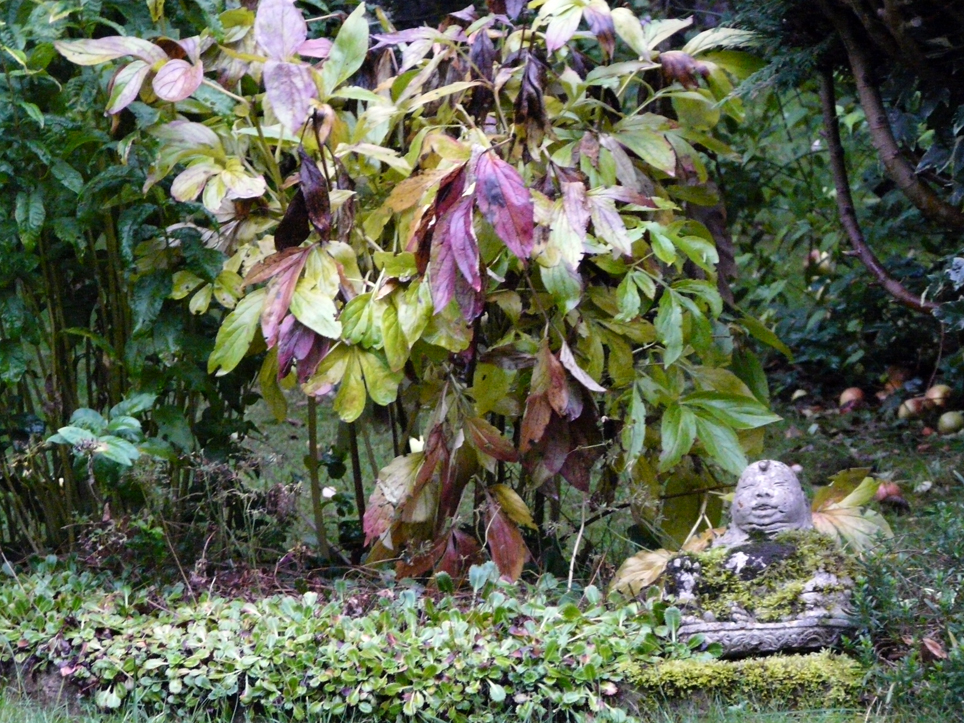
autumn colours

autumn colours

Too much of a good thing brings obligations. Eaters taste best when fresh, so I’m urged to act fast. Slug-nibbled and bruised fruit lands on the compost heap. The bulk of apples, several kilos a day, I wash, dry, box and put out on the road for passers-by, mainly kids on their way home from school. This time-consuming and noble deed has left me exhausted, and with numerous bumps on my head. Here’s the apple saint, drop now. For lack of a resident family to boss into cider-making, I’m left with ‘waste not’ ringing in my ears. If you remember scarcity, you’ll co-suffer the enforced hypocrisy of a  twenty-first-century system that thrives on waste.

I could blame the nagging ‘waste-not‘ guilt for frustrating the flow of my writing. I could blame three early morning trips to London on crowded trains, or  alien dust settling on my skin … whatever …  my body succumbed to the annual purge of flu. So a week ago I sneezed and coughed through fever and chills. Sweaty nights occasioned surreal dreams and visions, and there were days when I lost faith in my invulnerability, reminded that I need to clarify some matters in my Will. I survived – with tons of lemons. You’ve guessed by now that I’m shy of conventional medics, a story I won’t regale you with. The last official need for a doctor’s visit to my home was benign, and over three decades ago,  after I’d given birth to a healthy baby in deepest rural Somerset.

So last Sunday, following a week of altered states, I ventured out to put petrol in my car. I support small enterprises for their human idiosyncrasies. The cashier gazed absent-mindedly over the forecourt and across the street towards a line of taxies, while automatically debiting my Visa and, at my want, pressing another button to produce a tax receipt. Sensing a process at work, I said, ‘You’re bored.’

His head moved independently from his neck. You may remember the craze of bubble-head mascots:  http://en.wikipedia.org/wiki/Bobblehead that’s exactly how his head moved while his eyes rolled in their sockets to take note of my witnessing. His mouth then rounded and huffed before emitting a speech he must have rehearsed all morning. Slow, precise thoughts poured out, including snippets of existential dialogues he had had with taxi drivers from across the road. Written down, it could have edged itself towards some literary prize. His exposition ended with : ‘Nothing to be done. I’m bored stiff.’ Reminiscent of Beckett. Promises, waiting … in tune with my dull-witted flu-states. Missing most words, I was captivated by the man’s brilliant and spooky slaying of meaning. Another customer entered the cubicle. On leaving, some wise-crack in me I’ve no control over, said, ‘You’re reading …’ thinking, you’re observing life  from a distance, co-creating  its absurdities and joys. It’s what writers do.

 ‘Boredom is the dream bird that hatches the egg of experience. A rustling in the leaves drives him away.’   –  Walter Benjamin. 

*    *    *

This post was meant to be short and about my son and his partner, to brag a little.
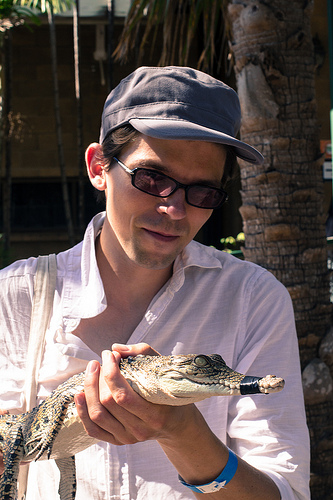
Yeshen with baby croc, photo by Natasha, Aug. 2013

Yeshen with baby croc – there’s a story

Yeshen and Natasha

Yeshen and Natasha

They were engaged this year and their August journey to Australia had been a reconnaissance for their wedding plans next July, organised by Natasha’s family, who live in Darwin and Perth.

I asked if I could share a few images from their trip. Yesh and Tash have featured on my blog before, indirectly. You’ll find them, for example, under ‘Inspiration’ or ‘Story of an Animation.’ They’re self-employed and work extremely hard, like many young people in super-expensive London, to make a living. They’re lucky being able to do creative and fulfilling work.


I’ve not been to Australia, and am now looking forward to this journey – you can see why.  

Australia's west coast

Australia’s west coast
17 Comments

Filed under Blog

… patterns of eternity humbly opens your mind …

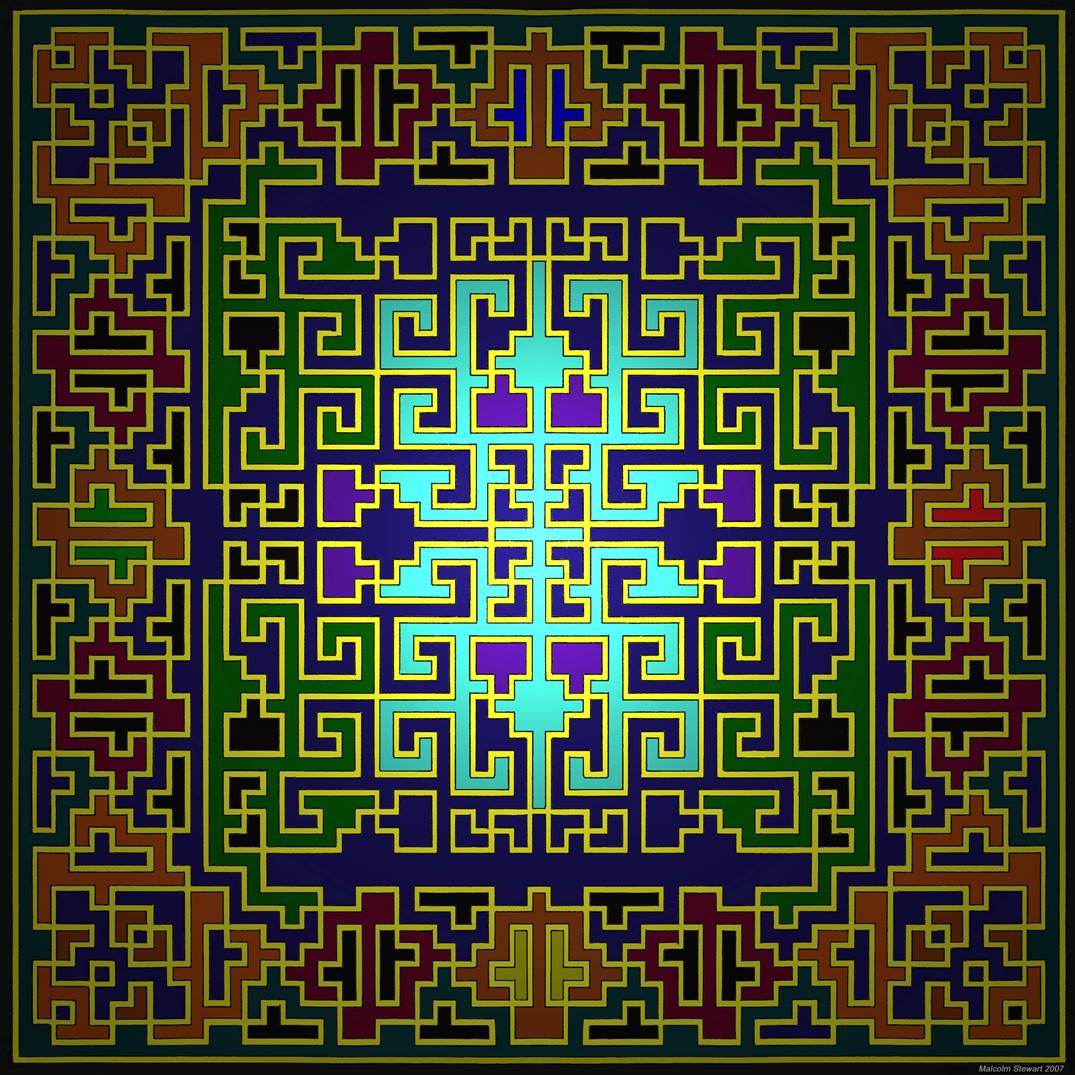
I want to tell you about a friend and writer – Malcolm Stewart – Initially a priest, Malcolm’s life sparkles with many roles – poet, singer-songwriter, editor, book jacket designer, cartoonist, BBC and ITV producer, UN project coordinator, NGO relief-aid and refugee organiser, artist, stained glass designer, lecturer and writer, friend, husband and father to 5 children … He is now in his 70s and lives with his wife, Nora, in Surrey. The Maze below is one of his many designs waiting to be collated and shared.

Maze design by Malcolm Stewart

Maze design by Malcolm Stewart

Having published Patterns of Eternity, of which more later, Malcolm wrote a second book, Symbols of Eternity. In the process of delivering the manuscript to his publisher, Floris Books, in March 2011, Malcolm suffered a stroke, which deeply shocked his family and friends.

He consequently lingered in a coma – drifting in and out of consciousness over a period of 5 weeks. Helped by the extraordinary determination of his wife, Nora, intense rehabilitation, the healing skills of friends, and the prayers of many, Malcolm gradually recovered speech and movement. During 2012/13 he improved in leaps and bounds. He now walks several miles a day, is his old delightful conversationalist, and has made friends with his computer again. He is working on another book, Light of Eternity (landmarks of a soul’s journey) and, in addition, is completing a novel he had kept hidden in drawers for years – Dictionary of Amazement.

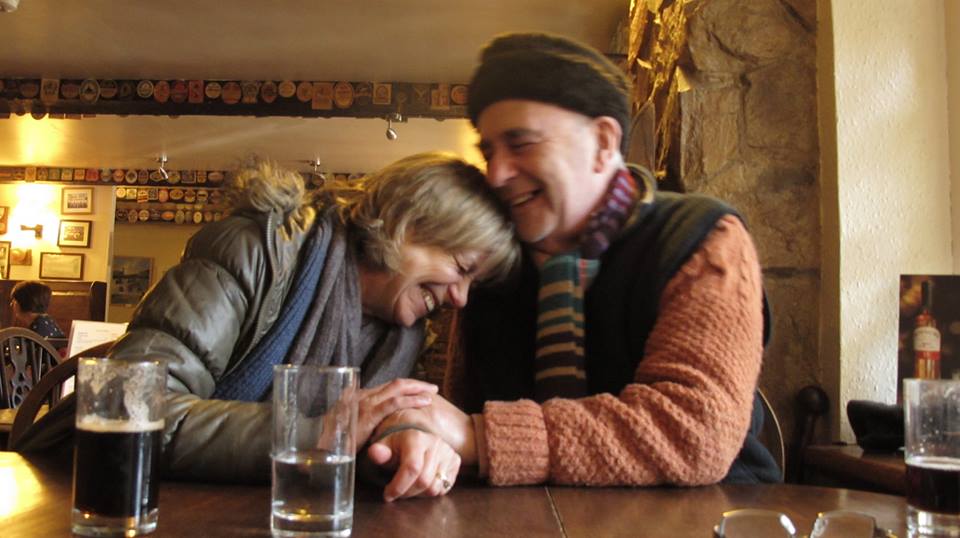
Malcolm and Nora Stewart, photo by Peter Langford

Malcolm and Nora Stewart, photo by Peter Langford

We met up last week, and I asked him to sum up Dictionary of Amazement in a single sentence (a question I dread when it comes to my own novels.) His face lit up – A Tall Story – he said. It was one of those moments when you can hear the angels clapping. He read me the first chapter from the screen of his computer, and I can’t wait to read more.
Malcolm’s work inspires me. Even as a child I was in awe of music, forms and patterns in nature, proportions in art and architecture, the cosmos … and though I remained shy of mathematics, I recall my joy on discovering that all these manifestations could be based on mathematical principles of numbers made visible through geometric shapes, revealing a golden mean that pervades all systems. As I see it, evolution is the adventure of discovering the intersections from which new forms forever develop. Or, to re-appropriate the line of a poem by John Masefield I came across the other day (through Brain Pickings) … the mind re-members the beauty of fire from the beauty of embers

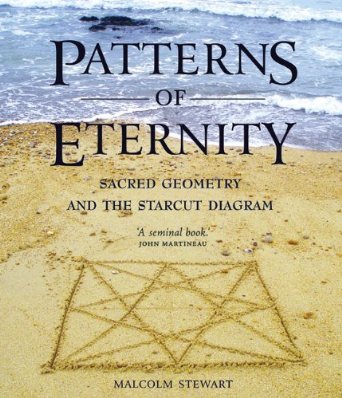
Patterns of Eternity - by Malcolm Stewart

At intervals to writing this, I was dashing into the kitchen to check on the setting point of my Damson jam, which requires a fine knack of proportions – fruit, sugar, lemon, a little water. We’re all born with a knack for proportions – though this tends to get obscured by an education that tips the scale of balance by valuing quantity over quality.

While much has been written on sacred geometry, Malcolm’s book is unusual. Not only does it welcome lay persons, like me, and entertain with rare, charming stories, and sumptuous illustrations, it also presents a simple device of great significance, the Starcut Diagram.

John Martineau writes in his review about Patterns of Eternity … the single most important addition to the body of sacred geometry to re-emerge in a decade …

Look up the book   Patters of Eternity (first time I try to do an ‘elegant’ link :)

An excerpt of my review: … The Star Cut Diagram introduced by Malcolm Stewart is an eye-opener in that it sheds light on one of the simplest and earliest geometric construction known, which he suspects pre-dates Euclid by thousands of years, a mnemonic device, and the template of many significant patterns throughout history and across the world … in architecture, art, rituals … a way of seeing and connecting things up.

Here a few themes from the book …

Chapter 8, The Hidden Geometry of The Divine Raphael. This chapter made me realise why Raphael’s paintings are so appealing. Malcolm first noticed the geometry in his painting The Transformation, which perfectly fitted the boundary rectangle of two circles interlocking as a Vesica Piscis, a ration that is also the perfect 5th harmony in music, like the notes C and G played together, or in sequence. The simple 2:3 ratio, root of all this, is as harmonious to the eye as to the ear or to the mind. What fascinates is how the directional gaze of the characters in the painting brings meaning to the theme.

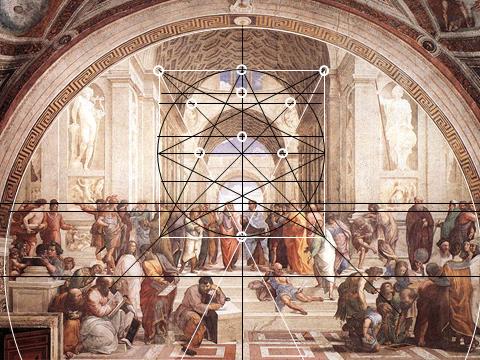
Raphael - The School of Athens

Raphael – The School of Athens

The chapter also explores Raphael’s fresco set in a semicircle, The School of Athens. In the ceiling medallion (not visible here) it says Causarum Cognito (Knowledge of Causes.) The female figure of philosophy in the medallion holds two books, one vertically, which is titled ‘Morals,’ the other horizontally, titled ‘Nature,’ resonating with the two central philosophers – where Plato points to heaven and Aristotle gestures to the earth. All the well-known philosophical figures in this stage-like painting also represent ideas, and Malcolm expands on their connections in detail, adding inspired meaning by overlaying the diagram of the Starcut.

Chapter 21, The Lyre of Apollo, applies the Starcut diagram to architectural spaces and relates to vibrations and resonances. Images show samples of standing waves created by sound within different elements. And the tonal vibrations of the human voice are discussed, like Psalm singing, the reciting of Indian puja, Sufi Zikhr, Buddhist sutra chanting or mantra. Practising this kind of tuning in groups (as I experienced) powerfully tunes mind and body. The chapter goes on to elaborate on the length, tension and ratio of musical strings, using once more the Starcut diagram to show the consistent harmony of numbers, and the hidden one that remains quiet.

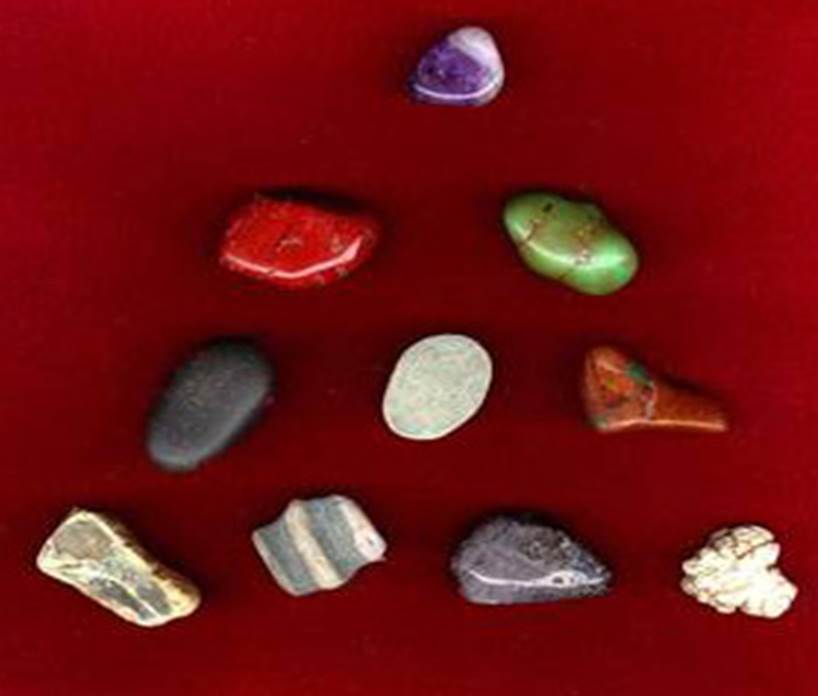
P. of Eternity, ten pebbles

By bringing light and clarity to simple forms, with beautiful illustrations, the materials presented throughout the 25 chapters convey a deep intuitive connectedness, which makes this book a joy to explore.

A surprise at the end of the book introduces 5 Starcut Glass Bead games, not featured here.

You can listen to Malcolm reading a little from Patterns of Eternity on yourtube http://www.youtube.com/watch?v=-N8QiyJU_SY

Dip into it at Amazon – PATTERNS OF ETERNITY  http://www.amazon.co.uk/Patterns-Eternity-Geometry-Starcut-Diagram/dp/0863157122/ref=cm_cr_pr_pb_i

And also look at SYMBOLS OF ETERNITY   http://www.amazon.co.uk/Symbols-Eternity-Landmarks-Soul-Journey/dp/0863158374/ref=pd_sim_b_2

19 Comments

Filed under Blog

… interludes – and poetry by W S Graham …

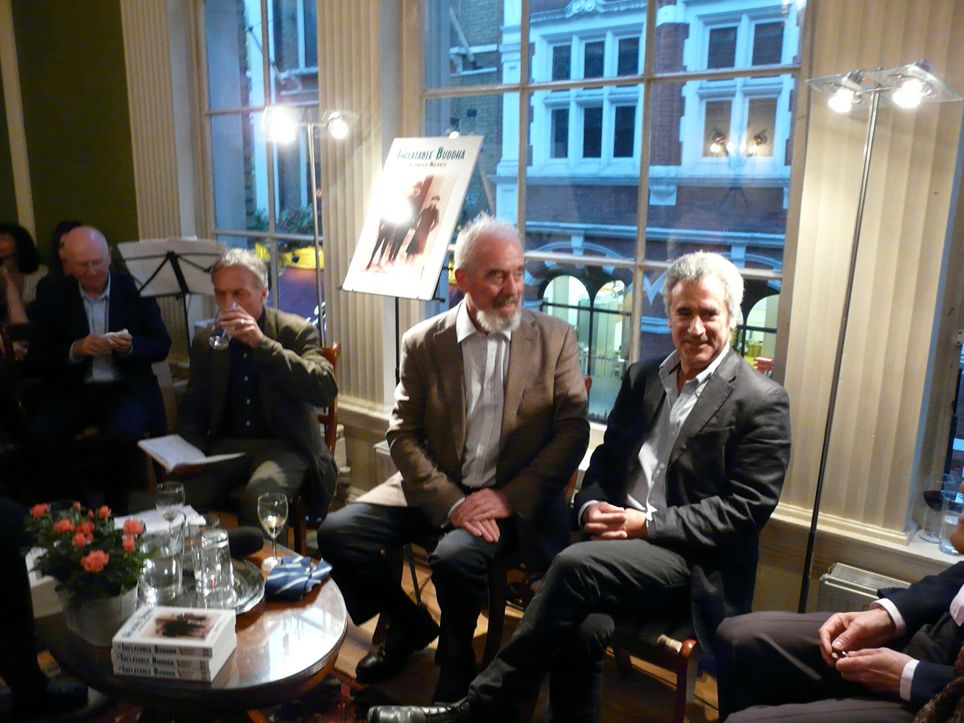
I’ve neglected you, my reader friends, immersed in writing the sequel to ‘Course of Mirrors’ and a few interludes. Like, my writing fixation was pleasantly disrupted last week through meeting my son at Covent Garden, and later attending the launch of ‘The Inflatable Buddha’ by András Kepes at the Hungarian Cultural Centre in London.

Armadillo Central launches 'The Inflatable Buddha.'

Armadillo Central launches ‘The Inflatable Buddha.’


It is the newest project of my to-be publisher http://www.armadillocentral.com/  András’s novel offers a more subtle perspective than officially recorded history, showing the fictional lives and wits of three ordinary, idiosyncratic Hungarians during the twentieth century. The sample readings enticed me, and I’m now looking  forward to reading the book. The well-attended, grand launch event also gave me a taste of what is to come – being exposed to questions about my own epic .


Then came a traumatic interlude to my writing …

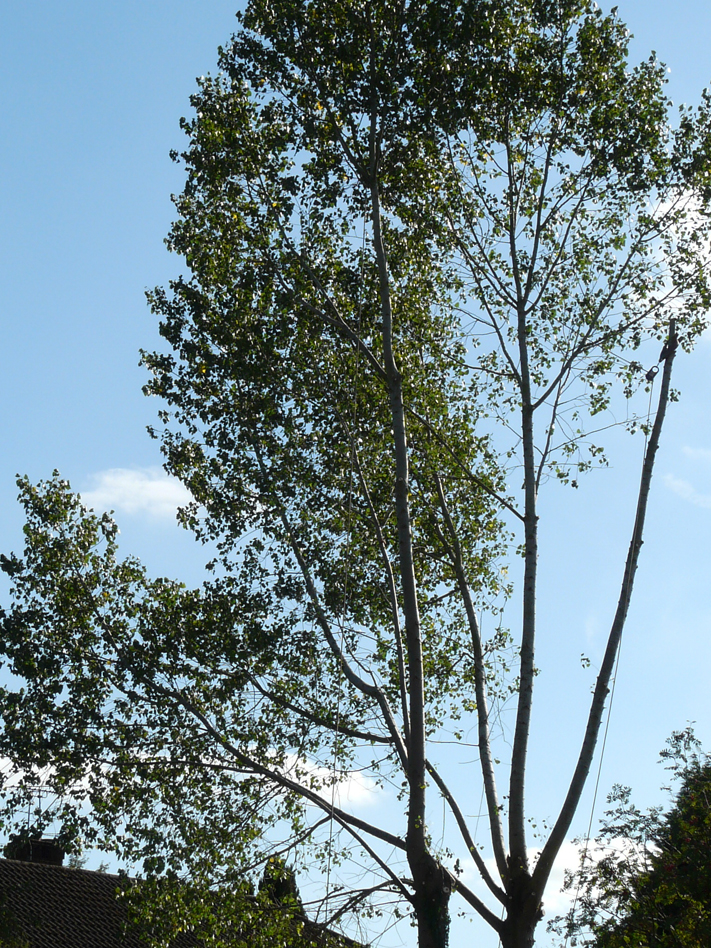
I mourn the shimmer and music of its leaves.

I mourn the shimmer and music of its leaves.

During the last two days, to the grinding noise of chainsaws and a shredder, I mourned the loss of a beautiful poplar/aspen tree in my neighbourhood, which has grown too high for its owner. The now mutilated tree (the image shows a third of its size) will be gone completely next week. I’ll miss the shimmer and the watery music of its leaves, produced by the slightest breeze, and the golden hearts trailing into my garden come autumn. I picked a few early leaves to treasure, pressed to dry in my dictionary.

Today a most pleasant surprise … a poetry book arrived unexpectedly in the post, sent by a Scottish friend/poet, who is at this moment working with a visual artist on a project about Tin-mining in St Ives. Due to blank spots in my education I rely on stumbling upon poets less publicised, and was delighted to receive this gift of an expertly edited ‘New Collected Poems’ by W S Graham. So I thought I’ll share excerpts from his poems – on themes that will chime with fellow writers .

W. S. Graham (1918-1986) grew up in Clydeside, Scotland, and initially followed the footsteps of his father, who was a structural engineer in the ship-building trade. However, a year studying philosophy and literature at an adult education centre outside Edinburgh set him on the path of writing poetry for the rest of his life, irrespective of meagre financial rewards. He travelled to London and New York City, but later lived with his wife in Cornwall.

W S Graham, image by Sally Fear

W S Graham, image by Sally Fear

I was delving into the book this morning. Here some facets, unconnected lines, the first from THE NIGHTFISHING    (1955) – a melodic composition, speaking to the seen and unseen,  from a night in a herring boat out on the North Sea.

… Gently the quay bell

Strikes the held air …

Strikes the held air like

Opening a door

So that all the dead

Brought to harmony

Speak out on silence …

I am befriended by

This sea which utters me …

… Far out calls

The continual sea.

Now within the dead

Of night and the dead

Of all my life I go.

I’m one ahead of them

Turned in below

I’m borne in their eyes

Through the staring world.

The present opens its arms …

… Each word is but a longing

Set out to break from a difficult home. Yet in

It’s meaning I am …

… The bow wakes hardly a spark at the black hull.

The night and day both change their flesh about

In merging levels …

The iron sea engraved to our faintest breath

The spray fretted and fixed at a high temper,

A script of light …

… The streaming morning in its tensile light

Leans to us and looks over on the sea.

It’s time to haul. The air stirs its faint pressures

A slat of wind …

… The white net flashing under the watched water,

The near net dragging back with the full belly

Of a good take certain …


Some of the last lines of – THE NIGHT CITY – a turning point … I found Eliot and he said yes … T S Eliot was then with Faber and Faber. He became Graham’s publisher.

… Midnight. I hear the moon

Light chiming on St Paul’s

The City is empty. Night

Watchmen are drinking their tea …

Between the big buildings

I sat like a flea crouched

In the stopped works of a watch.


From IMPLEMENTS IN THEIR PLACES (1977) I picked a refrain from WHAT IS LANGUAGE USING US FOR ?

… What is the language using us for?

It uses us all and in its dark

Of dark actions selections differ …


And last – AIMED AT NOBODY – Poems from Notebooks (1993)

PROEM

It does not matter who you are,

It does not matter who I am.

This book has not been purposely

made for any reason.

It has made itself by circumstances

It is aimed at nobody at all.

It is now left just as an object by me

to be encountered by somebody else.


*    *    *

This may well be how it feels for most writers who simply can’t help sculpting experiences into words. What do you think?

6 Comments

Filed under Blog

… how to re-frame the ‘click’ mantra …

Try saying ‘click’ aloud a few times in front of a mirror – you’ll look like a grinning monster. 

I’ve a love/hate relationship with the internet. To navigate the jungle for meaningful contact I repeatedly click to open or close doors, and the ‘clicking’ does something to my brain, it leaves a deep impression. 

click, click, click, click, click, click, click, click, click, click, click, click, click, click, click, click, click, click, click, click, click, click, click, click, click, click, click, click, click, click, click, click, click, click, click, click, click, click, click, click, click, click, click, click, click, click, click, click, click, click, click, click, click, click, click, click, click, click, click, click, click, click, click, click, click, click, click, click, click, click, click, click, click, click, click, click, click, click, click, click, click, click, click, click, click, click, click, click, click, click, click, click, click, click, click, click, click, click, click, click, click, click, click, click, click, click, click, click, click, click, click, click, click, click, click, click, click, click, click, click, click, click, click, click, click, click, click, click, click, click, click, click, click, click, click, click, click, click, click, click, click, click, click, click, click, click, click, click, click, click, click, click, click, click, click, click, click, click, click, click, click, click, click, click, click, click, click, click, click, click, click, click, click, click, click, click, click, click, click, click, click, click, click, click, click, click, click, click, click, click, click, click, click, click, click, click, click, click, click, click, click, click, click, click, click, click, click, click, click, click, click, click, click, click, click, click, click, click, click, click, click, click, click, click, click … 

From now on I’ll take charge of this repetitive action – with each click I’ll say or think ROSE – transforming the impression into my kind of mantra. It’s re-wiring the brain. NLP calls it re-framing. It’s an ancient technique.

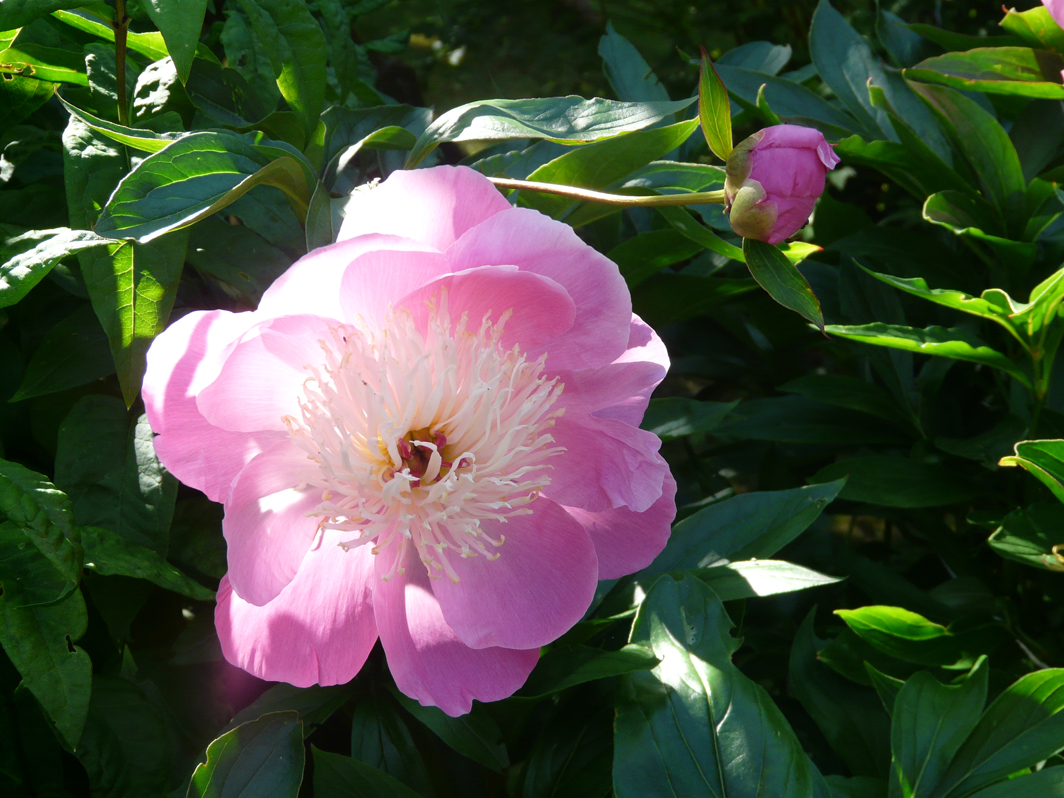
Autumn Rose

https://courseofmirrors.wordpress.com/2012/12/15/the-rose-trick/


11 Comments

Filed under Blog

… storytelling and the primary world …

Knowledge is not the rare gem it used to be. Then again, without recording, analysing, sorting, summarising, calculating and disseminating mega quantities of data we’d have none of our ingenious toys to play with. Without statistics our systems would grind to a halt, and, yes, it’s annoying that almost daily yet another quantitative study announces what’s good, or detrimental, for our well-being. Thankfully, none of the churned out evidenced facts can make a claim on meaning. Humans remain idiosyncratic. We apply messy values to our life-choices, and we frequently ignore the logical road signs of scientific landscapes, or blank out the hassle of linear time.

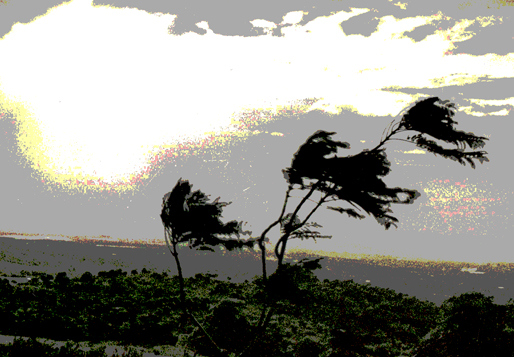
Wind


Instead, we are tossed along by emotional encounters, the unexpected, are awestruck after a quantum leap of intuition, and are generally guided by what appeals to a body/mind that likes the stimulation of nature, her moods, seasons, the phases of day and night suggesting action or repose, like the in-and-out-breath, between which we may catch a glimpse of a dream, a relevant truth, an eternity even. Hardly anyone I know is without this conflict: liking order and control, as well as yearning for rapport with the dance and rhythm of nature.

Over 300 years ago G W von Leibnitz, who could’ve been a poet, was gripped by an emerging idea, to collate all human knowledge and to systematize it via a common language. Computers would have been his bliss. He loved to correspond with most scholars in Europe during this baroque era. And he might have gone some way to explain the whole universe in the hope to solve every conceivable problem. Paradoxically, he also stated … the universe had to be imperfect otherwise it would not be distinct from God. Near the end of his life, Leibniz wrote in a letter that combining metaphysics with mathematics and science through universal characters would require creating what he called:

a kind of general algebra in which all truths of reason would be reduced to a kind of calculus. At the same time, this would be a kind of universal language or writing, though infinitely different from all such languages which have thus far been proposed; for the characters and the words themselves would direct the mind, and the errors — excepting those of fact — would only be calculation mistakes. It would be very difficult to form or invent this language or characteristic, but very easy to learn it without any dictionaries …

Source:  http://en.wikipedia.org/wiki/Characteristica_universalis

I’m not doing honour to this remarkable man, so here is a sketch of a biography … http://www-history.mcs.st-andrews.ac.uk/Biographies/Leibniz.html … should you have the patience to read this, note the time it took for letters between Leibniz and Newton to be delivered, which makes me admire the tenacity of these scientists.

The notion of a calculus for a universal language intrigues and troubles me. Nature speaks a language everyone understands. Key-terms of my mother tongue (see my last blog post) easily bring back the plot of land my toddler feet bounced across. The stories I most enjoy writing grow organically, with tendrils of their roots nourished by the alpine woods and hills of my childhood.

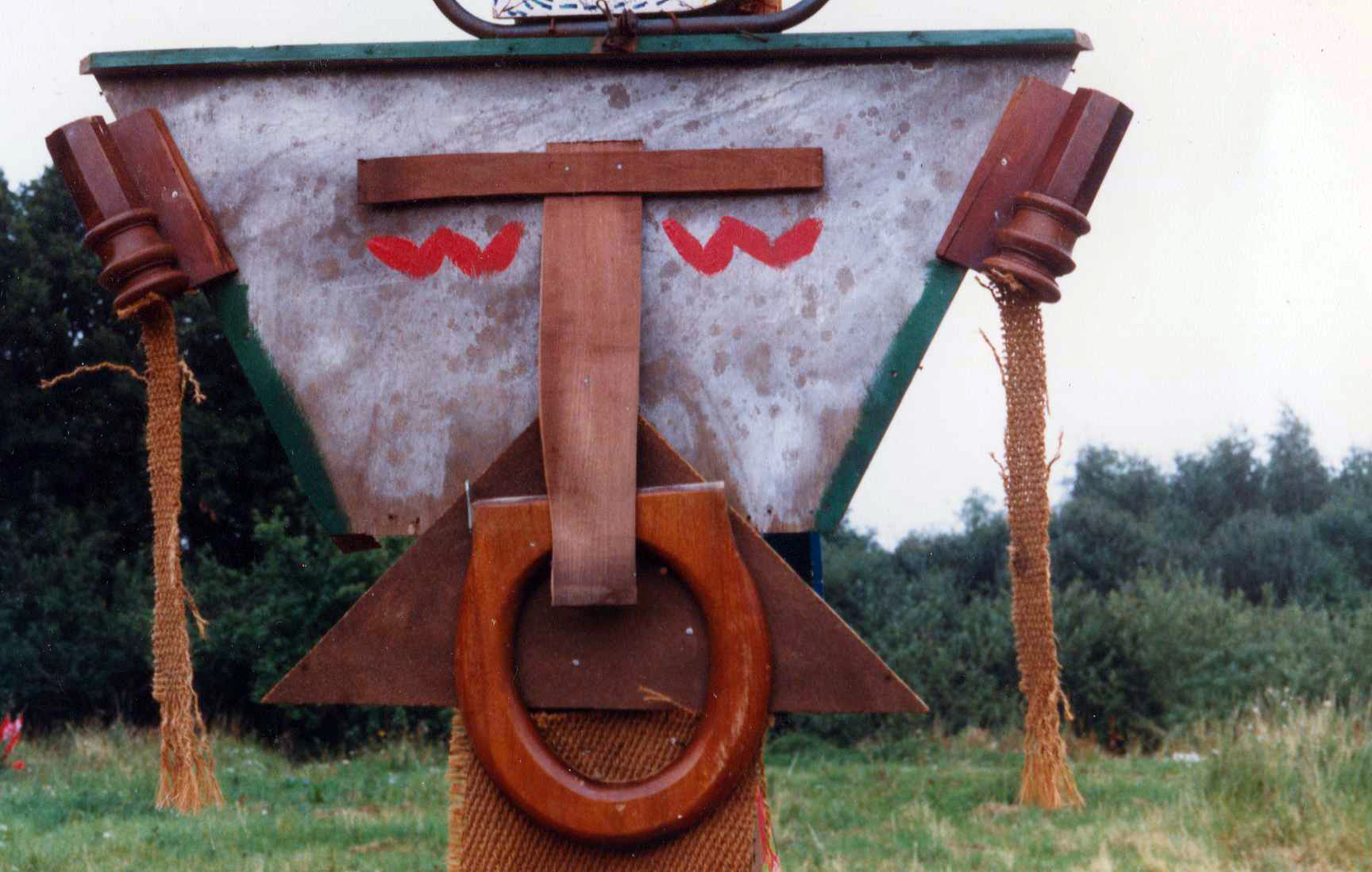
But things change. Data collation is now available to authors, promising control, over marketing, though formulas and blueprints are now offered for the creative process, like how to write a novel in four week. Imagination serves many masters and is not easily controlled – its life-sap flows through all forms. Totempole 4

We can only explore everything known continuously in fresh situations and move on, in the way that children and creative people place a familiar object into a new context. The play of imagination destroys and creates, and has the power to shift the meaning of our past, present and future.

‘There is the truth of truth as well as the truth of fact.’                   D.H. Lawrence

Being part of the dynamic process of evolution (which Philippa Rees ingeniously terms ‘Involution’ in her book of that title) we are walked by the tightrope of ecstasy and pain, of dependencies on environments and people, for better or worse, dependencies on beliefs too, mostly not by choice, but driven by binding needs.

Couple shadow series, 3a small

We face exploitation, conflict, sudden change, harmony alternating with phases of chaos – the story of life, a record marked in DNA and every tree trunk. Instigating control, or preaching harmony while shading off the dark, the chaos, the collective psyche of humanity, will only repeat the distortions of otherwise genuine messages from enlightened thinkers, sages and prophets.

It would serve us as well to teach our children how to accept the dark and how to deal with conflict. Reading the collected folk tales of the Grimm Brothers to children would be a start.

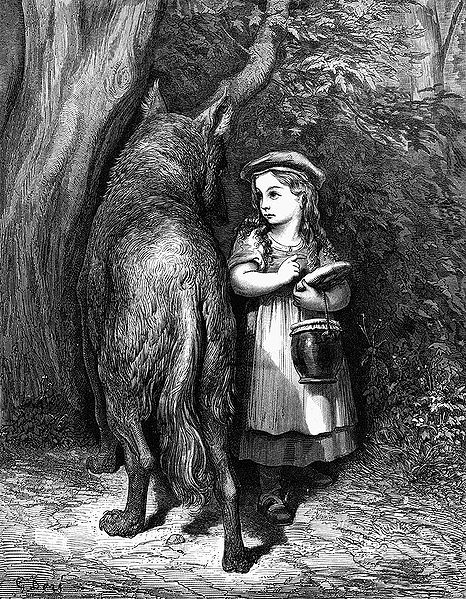
Dore - public-domain-image

Dore – public-domain-image

The inspired P L Travers, author of Mary Poppins, had a talent for highlighting the vital function of myth, symbol and story. She shared her reflections in a collection of essays that appeared in Parabola Magazine. The essays were later published in a book, titled: ‘What the Bee Knows.’

She wrote … The Primary World, in order to go on living, needs the things man cannot create – the earth with all its composted dead, the rain that raineth every day, the seasons, nightfall, silence – and the ear free of all pulsation but that of its own blood.

… The Primary World is that which has never been invented but came into being, along with the blood stream, as a legacy from the Authors who, according to Blake, are in Eternity. All the rest is manmade, or as Tolkien has it – sub-created.

As a writer I sub-create and grow stories from within, using images and words that resonate with personal experiences, myths and visions that provide an ever-changing way of relating to myself, to others and the worlds we share. So when Travers says … nothing is truly known until it is known organically … this chimes for me.

We forget – a happy fault – imagine there was no pause between one dream and another, no night. We forget so we can re-member creatively, which takes practice. We walk on star dust and ancestral bones that inform our bloodstream, as much as the stories of this world nourish our imagination, continuously re-shuffling our psyche, which explains our function as being the bridge between matter and spirit. Every bee knows this.

Image by Yeshen Venema

Image by Yeshen Venema

What the Bee Knows, by P L Travers http://www.amazon.co.uk/What-Bee-Knows-Arkana-Travers/dp/0140194665/ref=sr_1_3?s=books&ie=UTF8&qid=1376737128&sr=1-3&keywords=what+the+bee+knows   Wow, no reviews

Parabola Magazine: http://www.parabola.org/

‘Involution’ by Philippa Rees: http://www.goodreads.com/author/show/30171.Philippa_Rees


Images are mine unless the captures say otherwise.

6 Comments

Filed under Blog

… a Sunday in July …

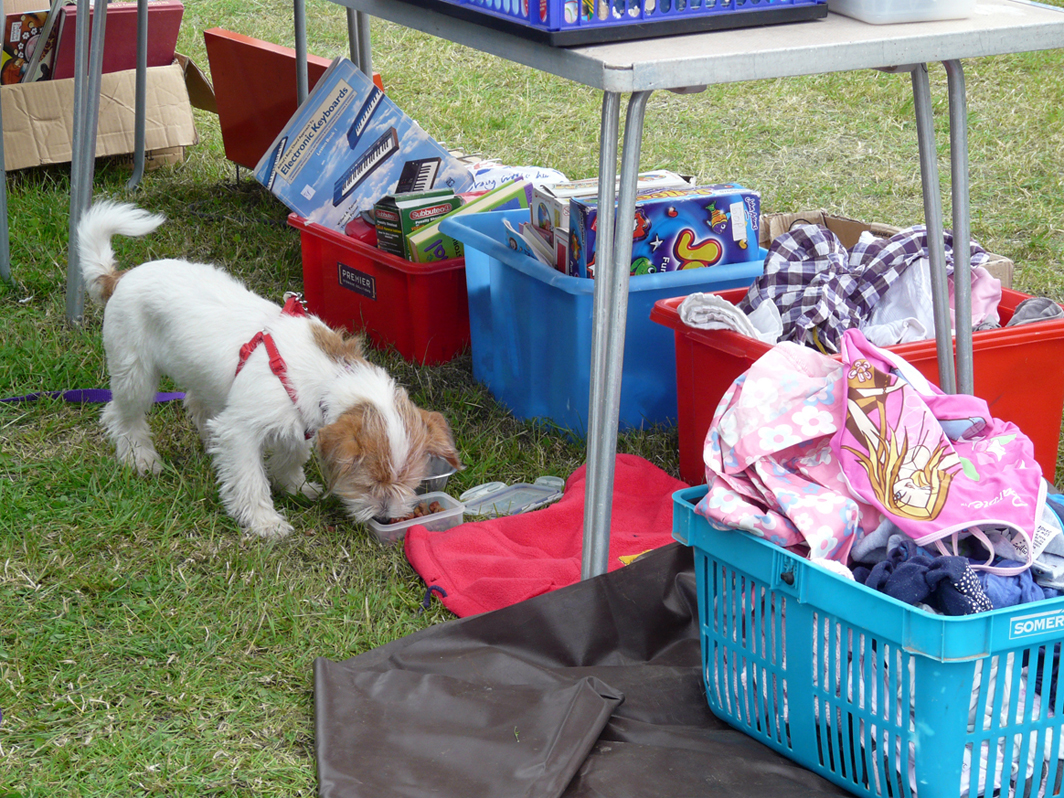
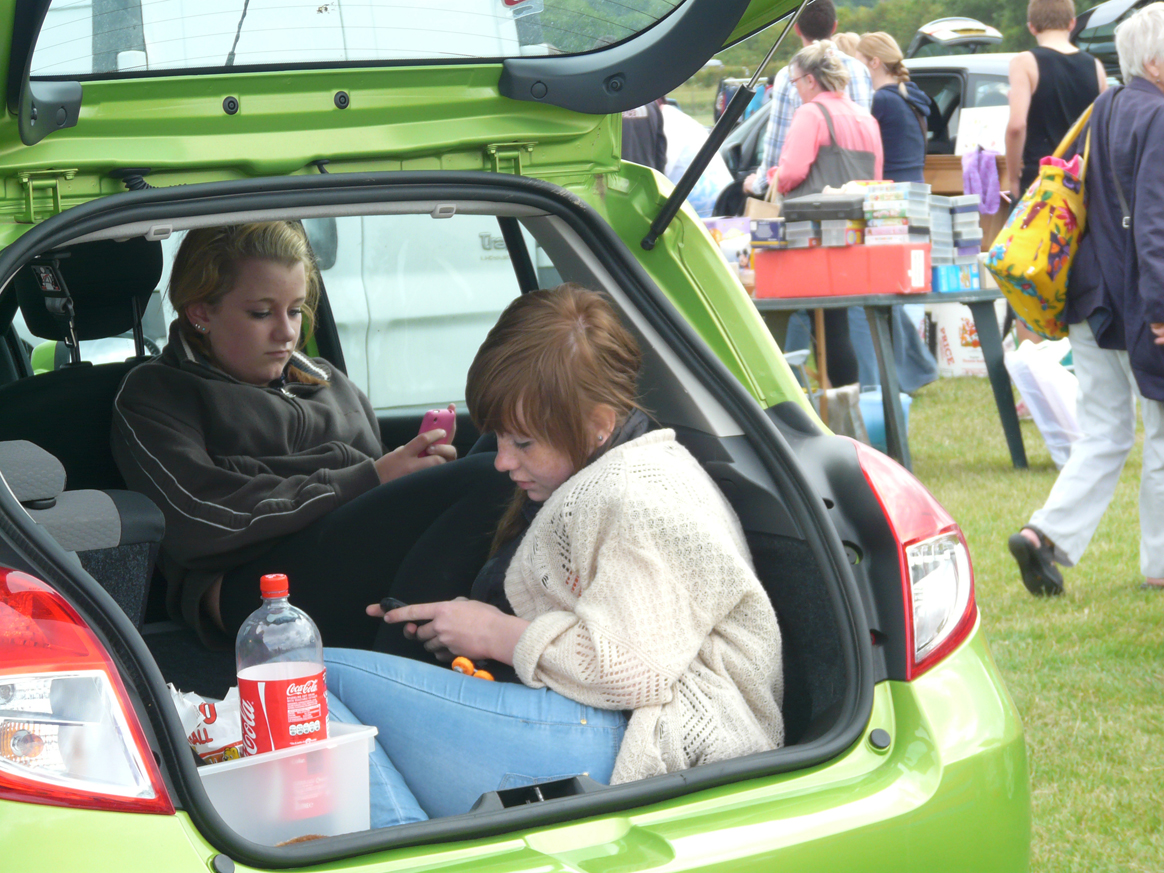
A Sunday car boot sale. Eyes swivel left, right, down, up, for value. People dream or stop to chat … how much for that? A fiver … three, two, one, or nearest offer … teddies, dolls and plastic swords, toys on wheels … she’ll love that … glasses, cables, plugs, unwanted gifts, mugs, pots, rags, shawls, jumpers, trousers, frocks, linen, shiny trinkets, books, mags, prints, discs, records, chairs, shelves, mirrors, bells, rugs, tools … objects of desire lure as metaphor … stuff … beautiful and ugly scraps, are carried off in plastic bags.

P1110274

Carboot 3


Carboot 1People, thin and fat observe each other, nod or shrug shoulders, roam … ladies walk stately in big hats, toddlers run off, sunburned babies sleep, bored kids tweet or text, dogs strain on a leash or are fed, men with tattoos strut, a batman rises from the neck, geometric arms, flowery legs, stars form a line down a spine …

Leaving the cross currents of the human aspirations, I retreat …

P1110278 - lowres

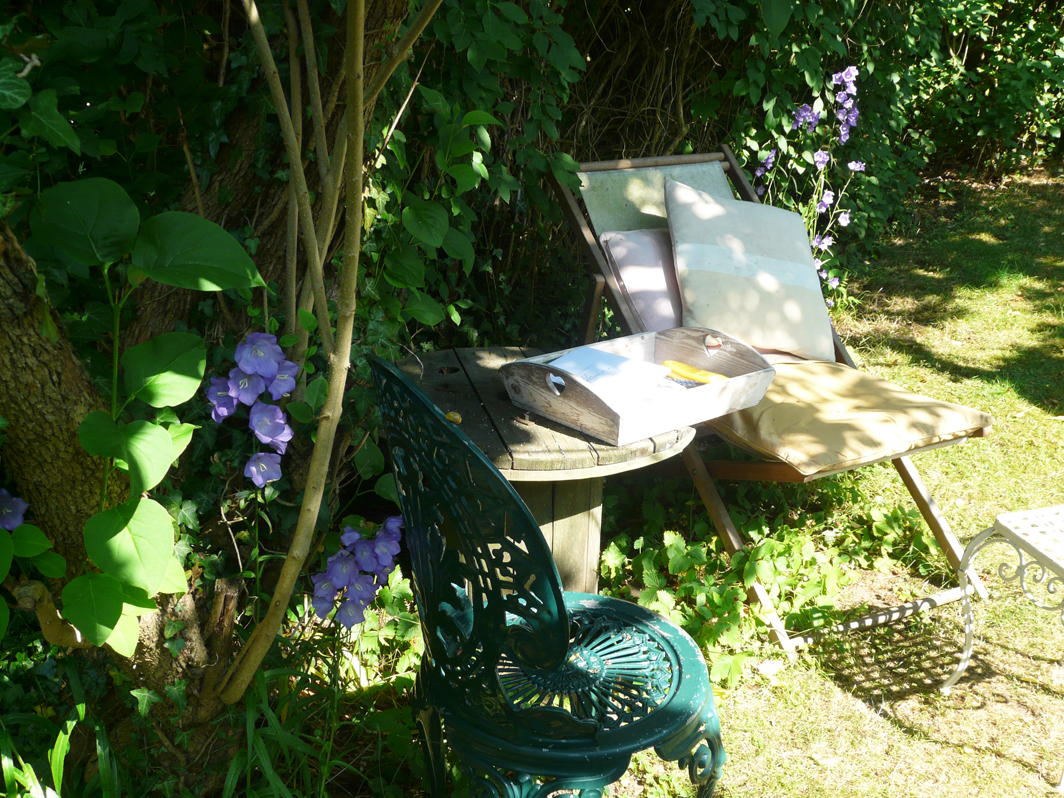
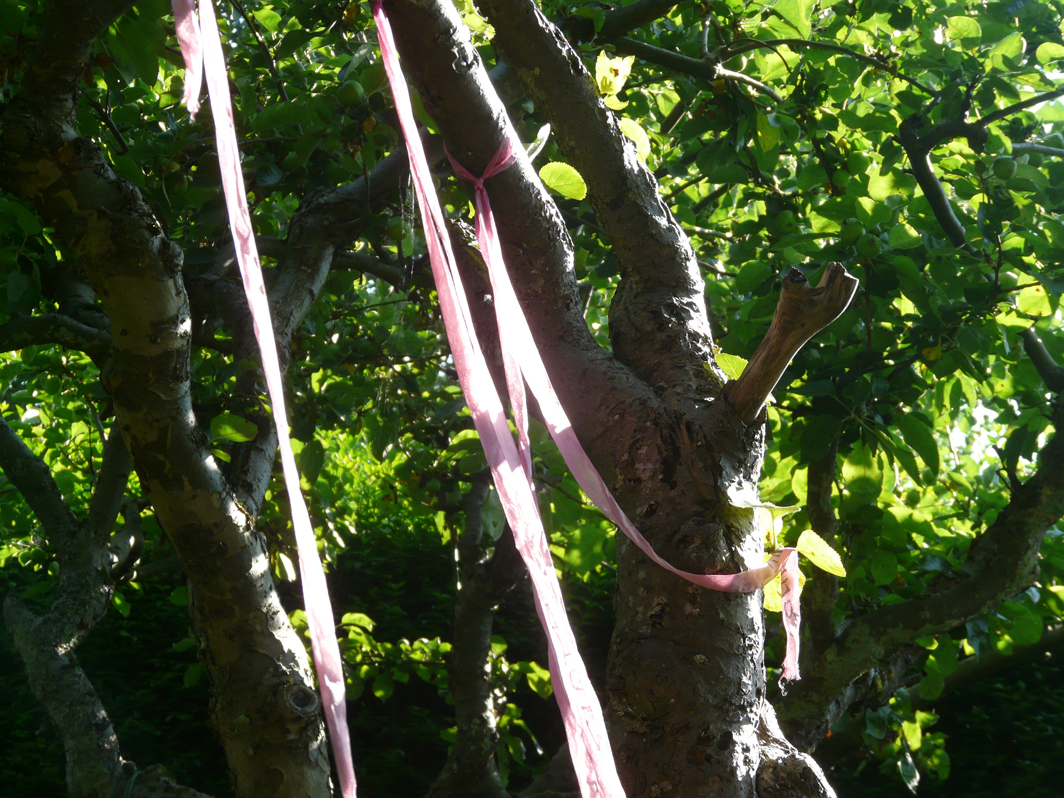
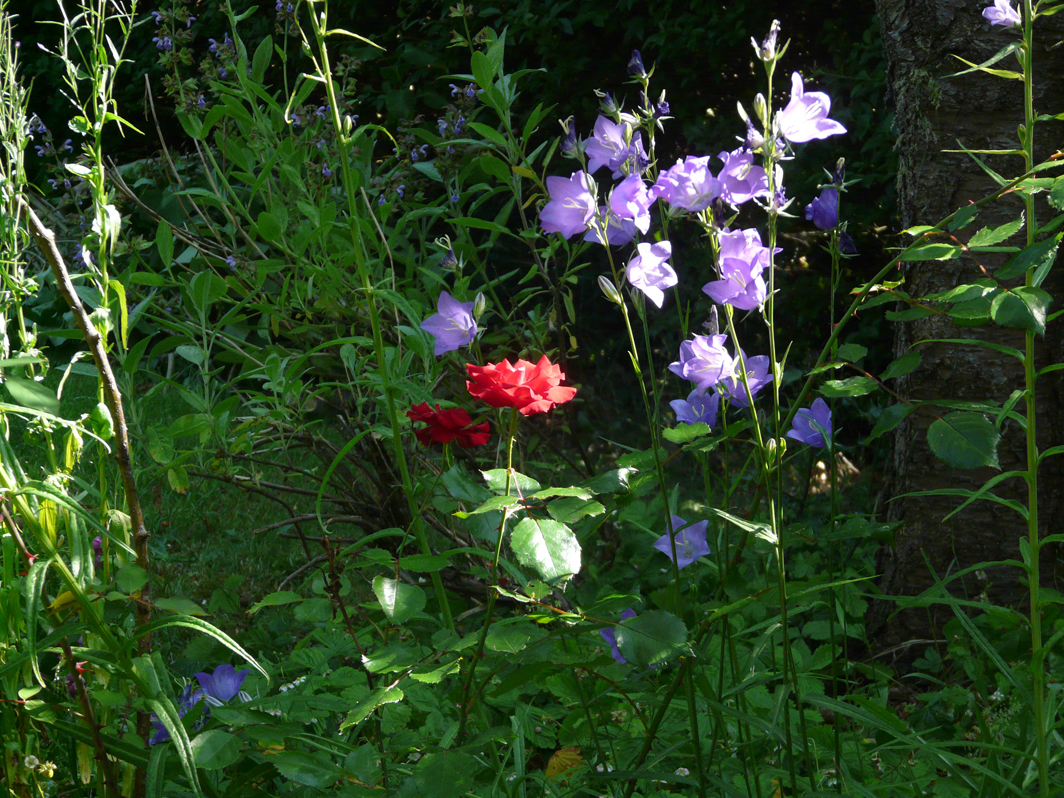
back to my peaceful patch, where ribbons flutter in the breeze, endowed with wishes. Colours glow with life, ever changing. And simplicity affords my gaze inside – through the gap of nature’s light and shade.

P1110284 lowres


P1110279 - lowres


P1110291 lowres


And later that night I watch the wide screen … tragic accidents, people fighting for what they presume right, trapped in beliefs, and, oh, Andy Murray wins a tennis match for the UK, and is glorified as UK’s knight.


20 Comments

Filed under Blog

… the house-guests of body electric …

SHE calls me body electric. SHE – incarnate as hu-wo-man – oh the mystery – and such hard problem for the scientists who establish evidence of truth via the elimination of untruths. Meanwhile they identify my parts, their functions and complexities …

I’m a miracle, my ears perk at the slightest sound – the little groan in the joints of wood and brick when the house moves a fraction as the weather swings about, soft tweet of a bird, the hum of fridge and its sudden shudder, a rumbling pipe, creak of loose floorboards, or the faint scrape on the stair in the middle of night, when the tip-toeing lodger sneaks to the kitchen to pinch a little honey. Not my concern, I only notice. Exquisitely attuned to my network of neurons, I pick up irregularities, tiny fluctuations of mood, unfamiliar smells, odd tastes, taut muscles … the chatter of Jego, but more of him later.

Magic-Leila's wings02Whoever I house, I prompt stretching exercises, crack joints to unblock energy, flex shoulder-blades that still mourn their wings, and shortly massage cold fingers-tips, my antenna for vibes. I rejoice in my multitasking, my handling of objects with skills no programmed AI creature could ever hope to achieve. With the unfailing accuracy of a spy, I pick up signals against the faint background buzz of the blood river and readily adjust to spheres beyond my skin palace.

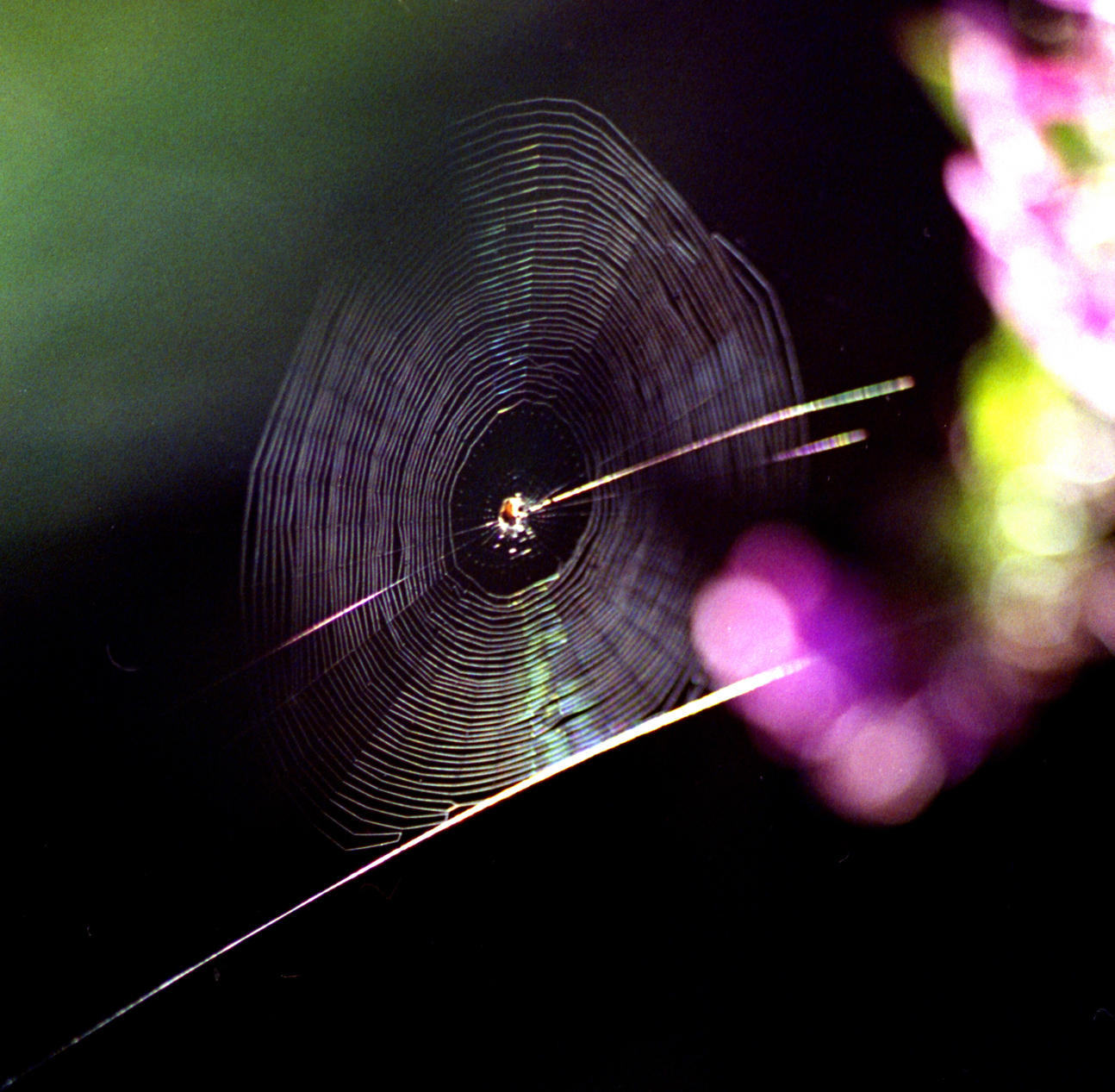
And SHE – my occupier – revels in the fleeting novelties of my gift, the senses – the paradox of pain and joy, where humour lurks between tears and laughter, moments with friends, bliss in a garden, like pruning branches for light to fall through foliage. SHE loves light. A breeze lifts the smoke of a roll-up, diaphanous shapes flow illuminated against a sunbeam until the shade swallows the spectacle, fluorescent spider webs, and blossoms fall.

Spider, 3

I have bouts of melancholy, made aware that my fine architecture is only a short, temporary abode for my occupier. It saddens me when SHE pays no attention to my signals, or is absent, travelling in abstract realms.

One day she’ll be gone altogether, leaving me behind. There’ll be no more breath and currents flowing through my organs, cells, brain — switchboards to her mind-spheres. Will she take along her impressions and associations?

I perceive phenomena in passing, pure and simple, with an artist’s sensibility. Semi permanence is the business of Jego, a sophisticated but battered and nervous entity that draws conclusions from what my senses transmit.

Example – SHE lets me drive a car to visit a friend. On instinctive pilot, I allow Jego to grab surplus energy. He elaborates on what he perceives through my senses.

That pub, why did the new owner paint it dark grey? A monstrosity, insulting the eye, aesthetically revolting, this must be someone’s idea of a cool concept, what a waste of paint!

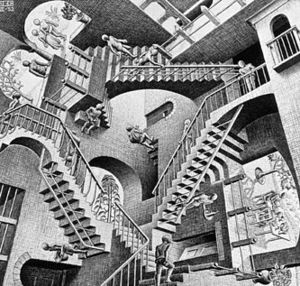
Escher's_RelativityThough amusing, his habit of sending spam into mind-clouds affect my equilibrium.

I draw attention to a stomach-cramp. Jego quickly analyses the cause before chasing another thought. It’s marvellous, and thoroughly compulsive, how he creates realities, juggles thoughts, day and night, unless SHE attempts a pause – counting breaths, reciting mantras to calm my overexcited synapses, or diligently monitoring Jego’s pranks to get him to focus on something coherent and creative.

On occasions he achieves concentration, calms, then we all relax into harmony, and for a short while a crystal-clear comprehension dawns …

Ah – we are dancers in a hologram – oh – who’s in charge?

Here Pomp makes an appearance, an intuitive entity, a messenger born of many traditions, with equally many names and disguises, a channel to the universal psyche. Though Pomp is not in charge, he knows stuff, and brings a tribute, the remembrance of an unfathomable awareness behind timeless intelligences every particle has contributed to, is essentially part of …

‘We are more than dust,’ SHE confesses, ‘and to fulfil our purpose I must embrace you, little body electric, and partake of your pain and joy.’

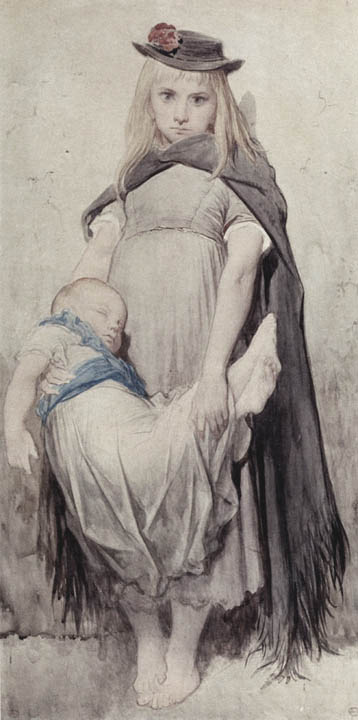
‘What about Jego?’ I ask.Dore - Jeune_Mendiant - desat

‘Poor chap, either he’s praised to heaven or cursed to hell. Some spiritual experts blame him for everything, and label him the greatest obstacle to higher evolution. It’s evidenced what happens to children we treat like that … we must be gentle with Jego.

His task is the hardest. In time, if we model tolerance and patience, he’ll learn to create more coherent realities.’

Her kind words calm me, and make me feel all warm and fuzzy.

Neti neti – not this, not this – no description suffices – what prevails is supreme consciousness, unidentified and unidentifiable, slipping in and out of embodied existence like a wind of light.

Though it gives us equal joy and pain, do you like your body electric?

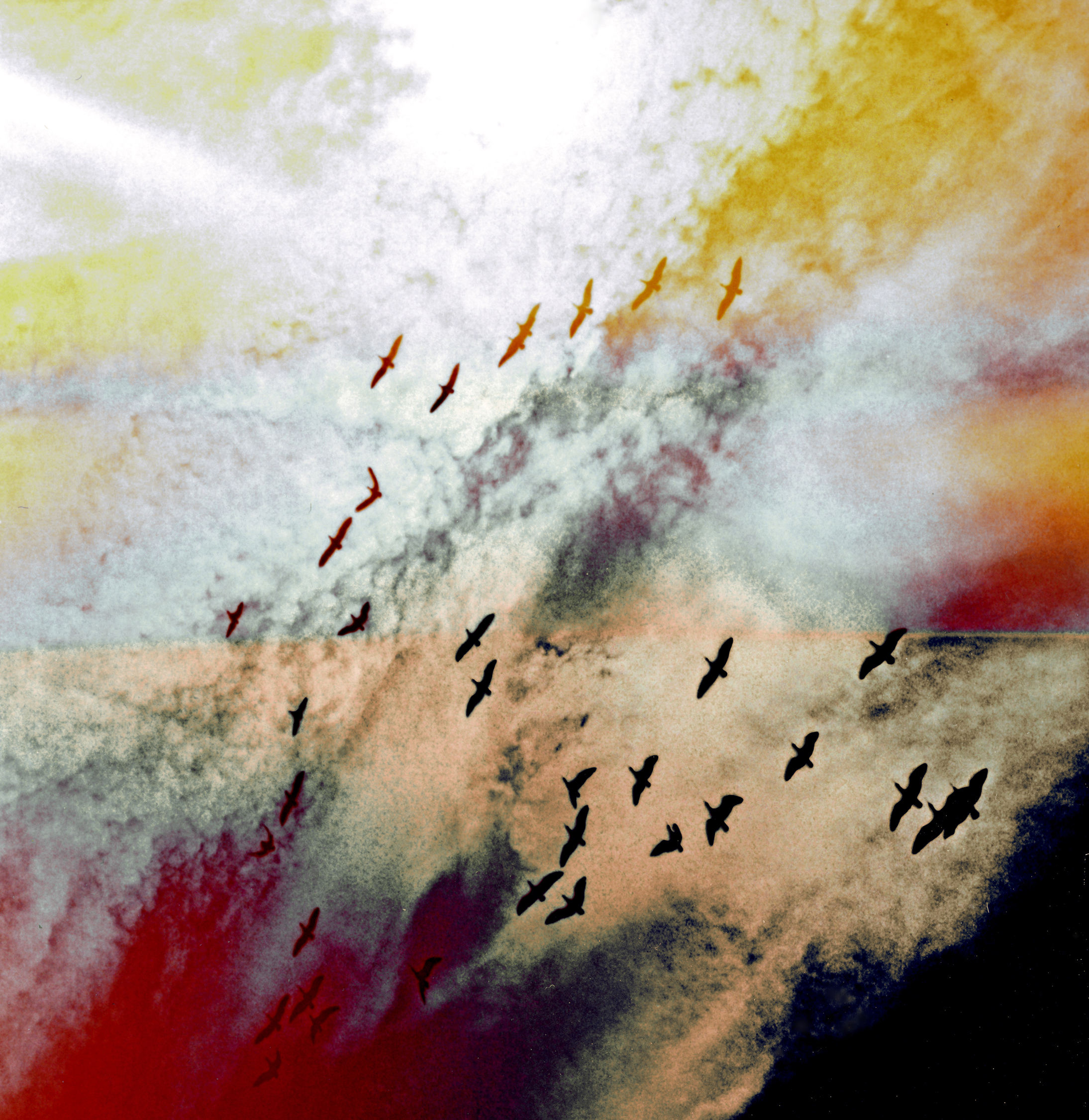
birds-1a.jpg

And are you on a warpath with your neurotic ego, or do you exercise patience?

‘There is a strange frenzy in my head, of birds flying, each particle circulating on its own. Is the one I love everywhere?’ 

~ Rumi ~ transl. Coleman Barks.

14 Comments

Filed under Blog

… story of an animation …

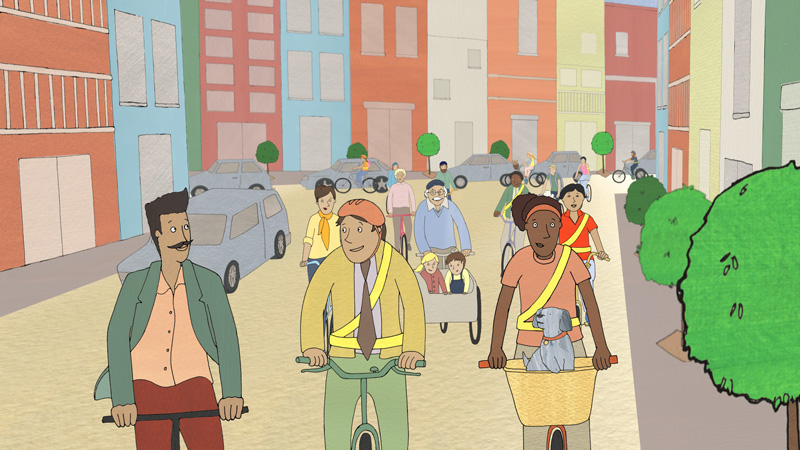
Cycle-off-Socialis-Close-Up_00039


You can find the inspiring story of an animation here …

https://courseofmirrors.wordpress.com/story-of-an-animation/

PandaHorseStudio-7


5 Comments

Filed under Blog

… precious hopes …

The buzz of web-traffic can be exhilarating, a universe of stimulation, stories, advice, facts and know-hows. We put our name out there, mingle with travellers, seek adventure, share our thoughts, fulfil a task, meet like minds, exchange or sell something, and hopefully find synchronicity, resonance – yet at times …

P1090901 - Copy

Nasrudin rode the train to work every day. One day, as usual, the train conductor came and asked him for his ticket. He begun fumbling around in his coat pockets, and his pant pockets, and then in other people’s pockets. He looked in his briefcase, in his bags, and then in other people’s bags.

Finally the train conductor said, ‘Nasrudin, I’m sure you have a ticket. Why don’t you look for it in your breast pocket? That is where most men keep it.’

‘Oh no,’ said Nadrudin, ‘I can’t look there. Why, if it wasn’t there, I would have no hope.’

*     *     *

‘Why, if it wasn’t there, I would have no hope.’ What spooked the legendary fool’s mind that day? What do you make of the story? What does the ticket symbolise/represent for you? A hope can be so deeply meaningful to us that we keep it hidden at times, even from ourselves. Then we look for affirmation elsewhere because we couldn’t stand having our faith dashed.

Yes, I have such days. Where is the ticket to your hopes and dreams to be found? Are you keeping it close to your heart, holding it there, to remind yourself of inspirational instances when grace happened in your life, so when grace visits again you can seize the moment?

pink rose - black&white

*    *    *

I chose the particular version of this wisdom tale from a lovely book edited by Elisa Davy Pearmain, Doorways to the Soul. She calls the story The Lost Ticket. You find a link to Elisa’s website in my blog roll.

A classic collection of wisdom tales I treasure is in Caravan of Dreams, by Idris Shah.

13 Comments

Filed under Blog

… a rare book – now on-line …

Following an eight-months labour of love, between my co-editors, the Archventures group, and contributing writers, a small edition of 250 beautiful copies of a book were published in 2011 – Heart of a Sufi – A prism of reflections on Fazal Inayat-Khan (1942 -1990.) As of now, the book is affordable on-line, see below.

img085

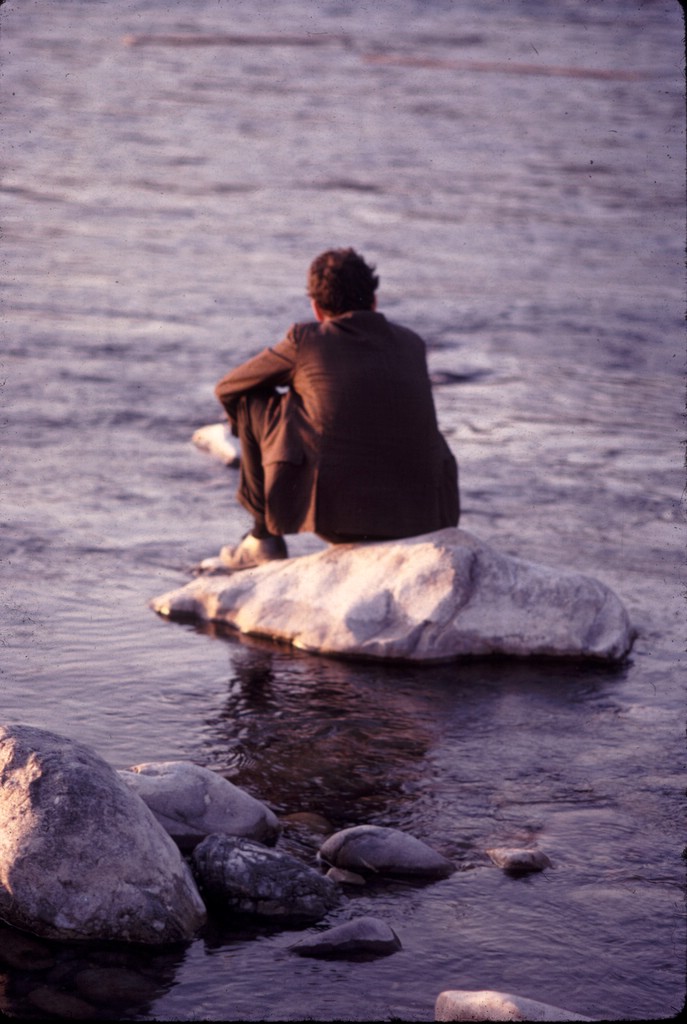
Fazal at Four Winds. 80s

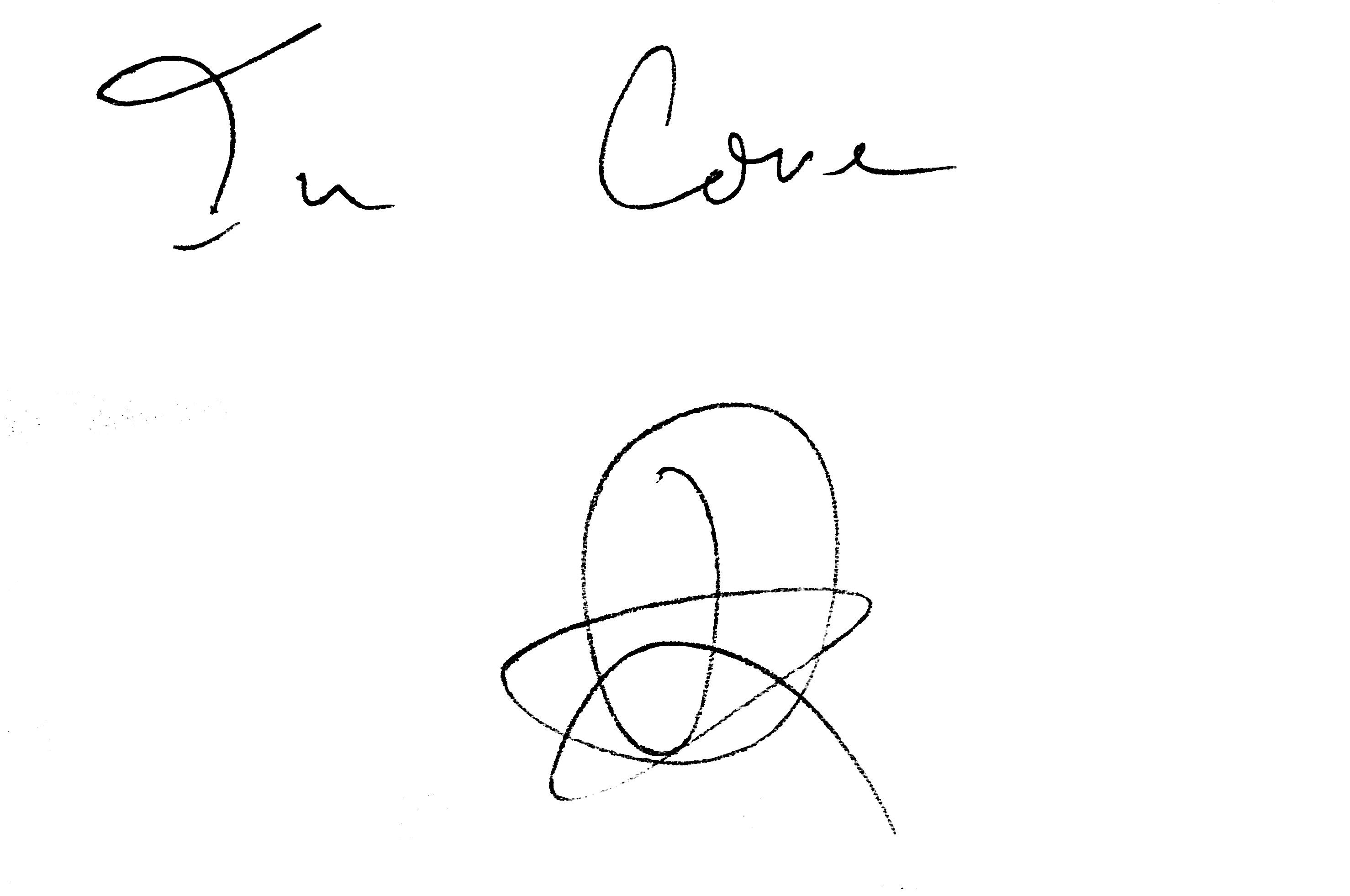
Hand printed wood engraving by Susanne Harding inspired by Fazal's signature.

Hand printed wood engraving by Susanne Harding inspired by Fazal’s signature.

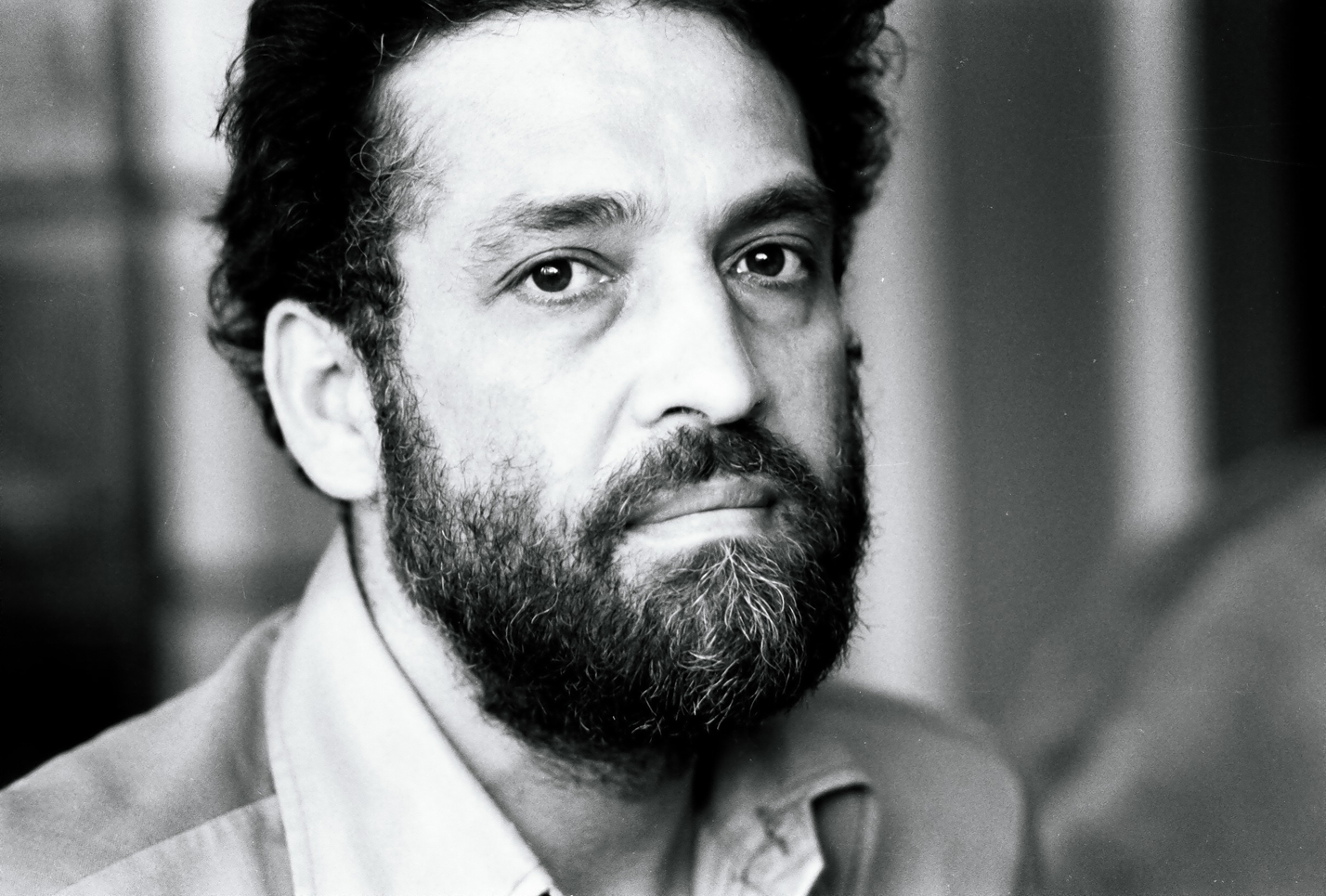
The book contains stories, essays and poems written by those who were inspired by the controversial and innovative nature of Fazal’s work, or by the creative spirit that pervaded the place and people he left behind.

Kaliani, singing

Isha, Elias, Aisha, Puran - lowres


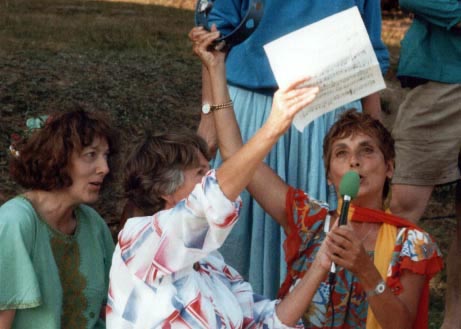
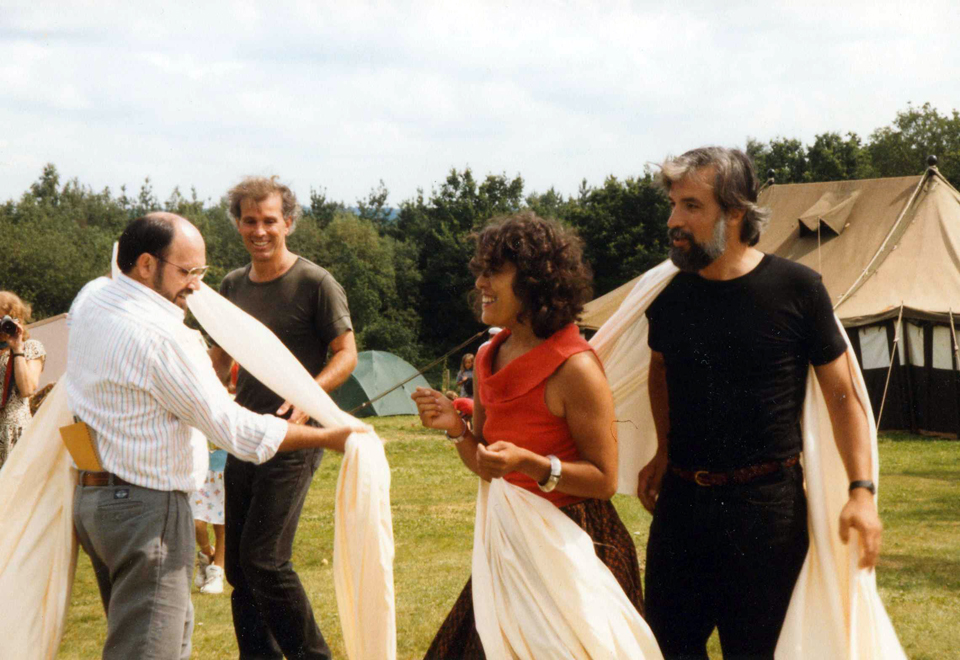
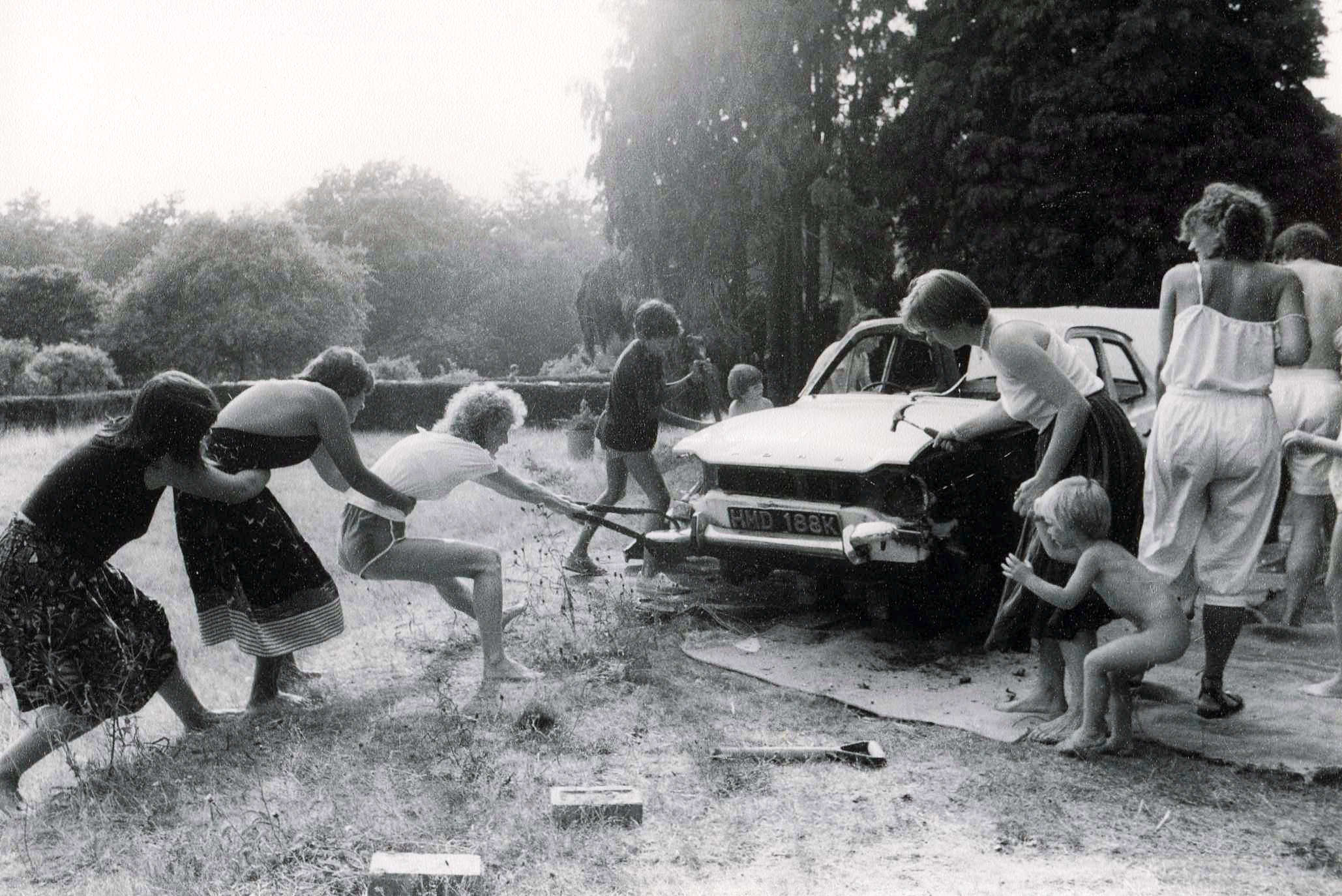
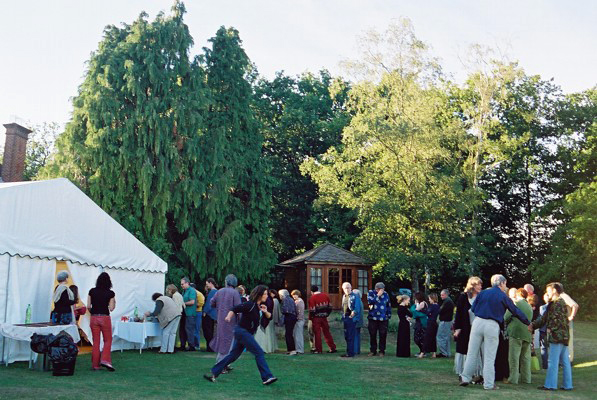
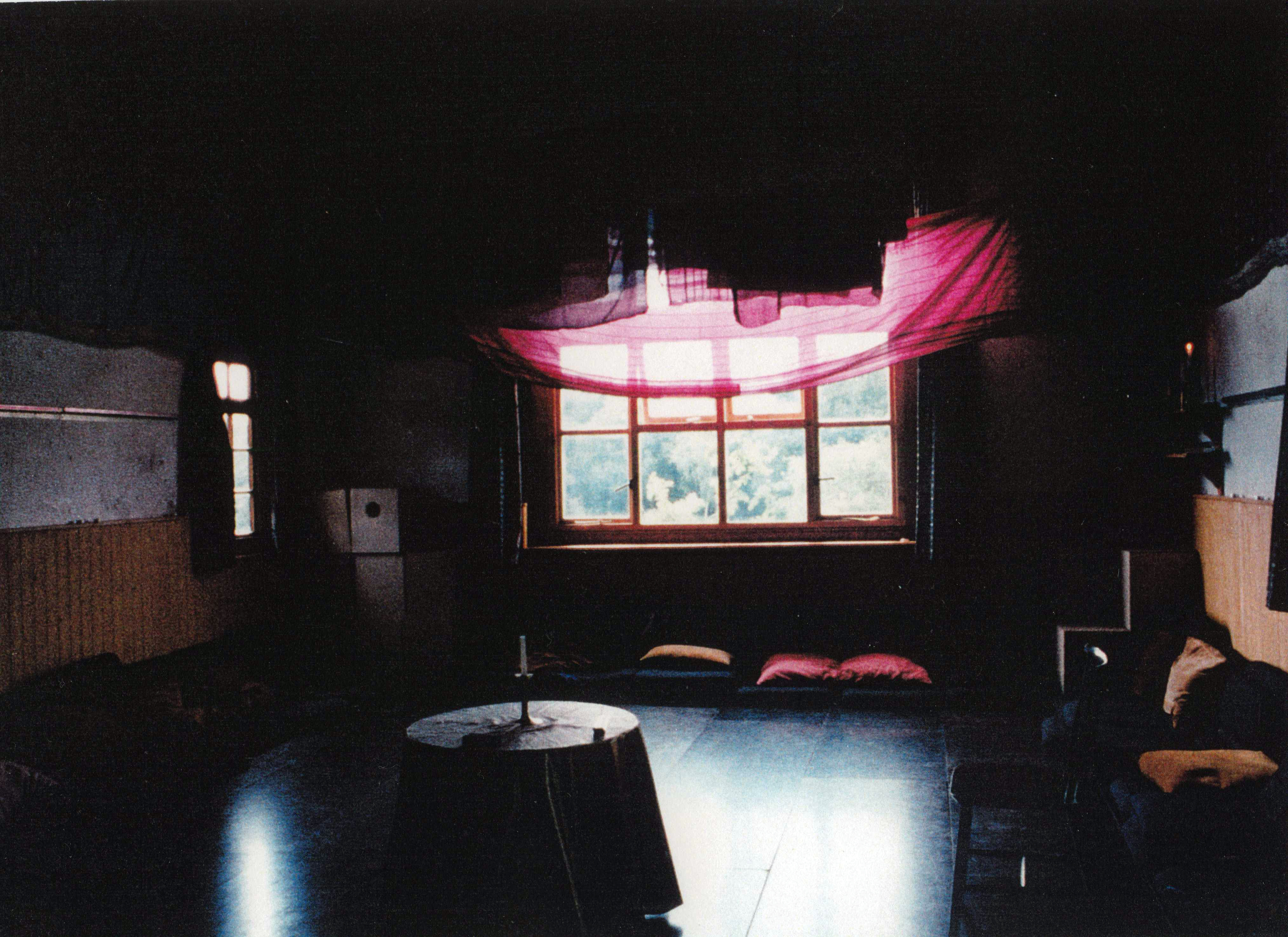
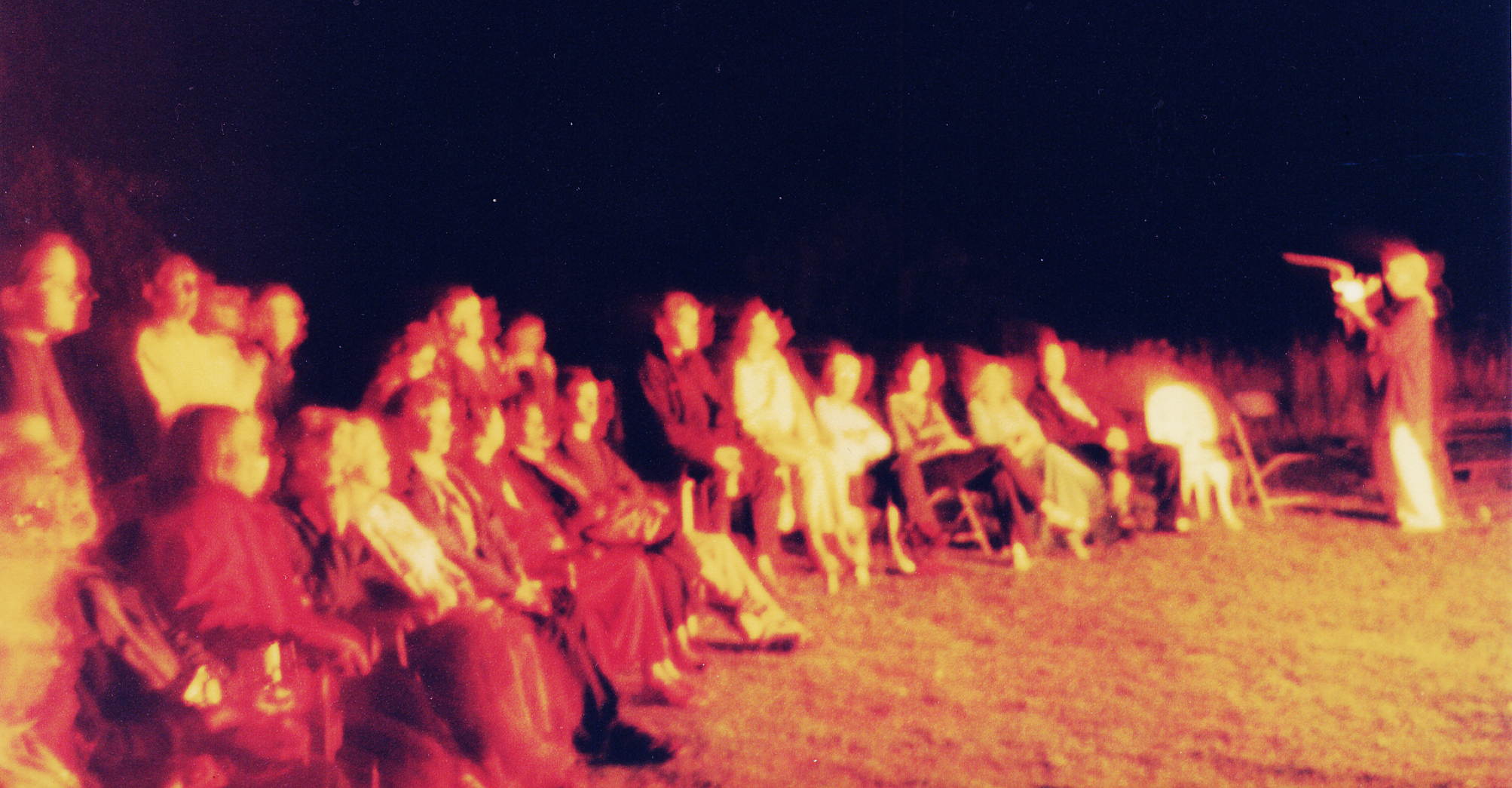
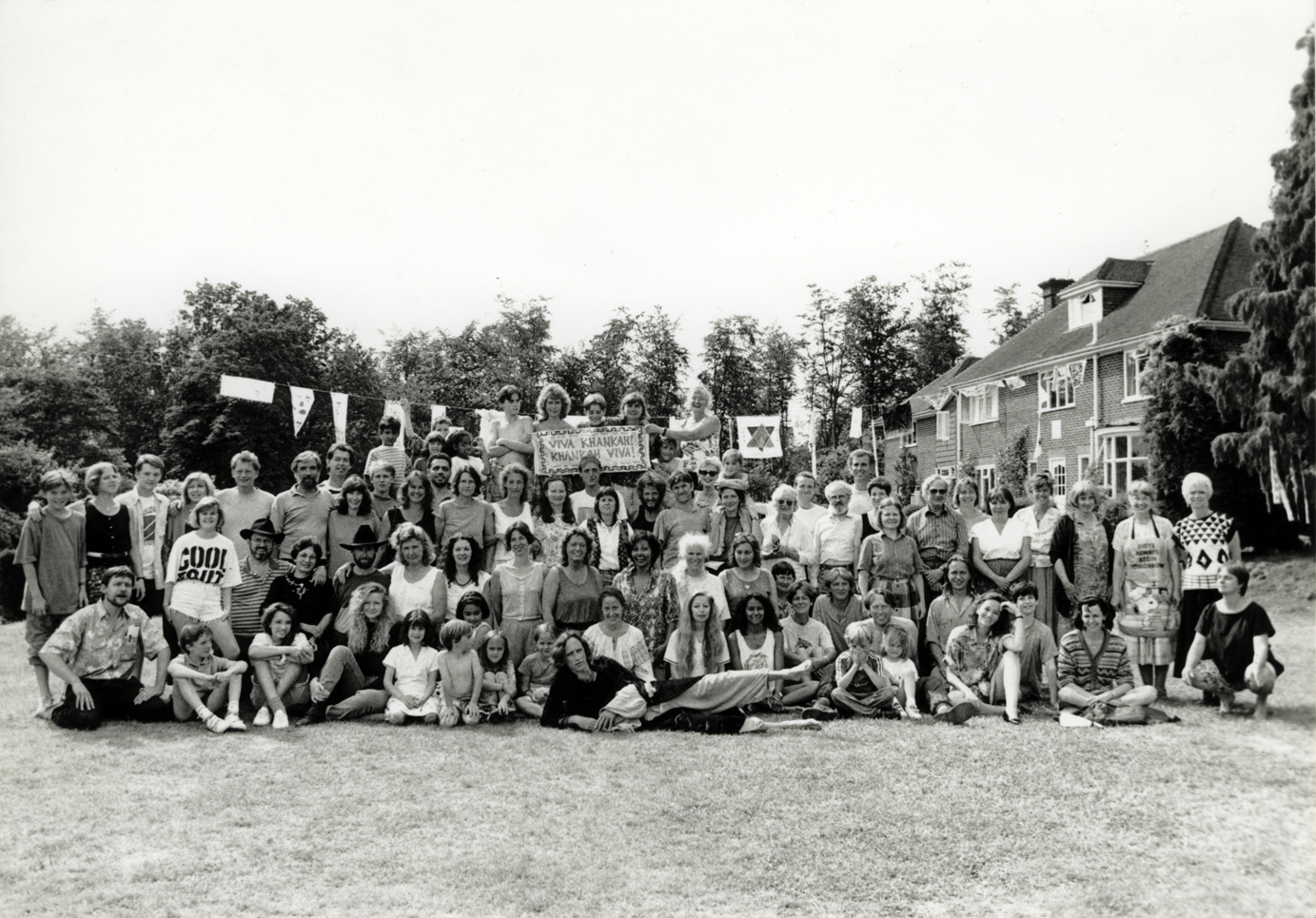
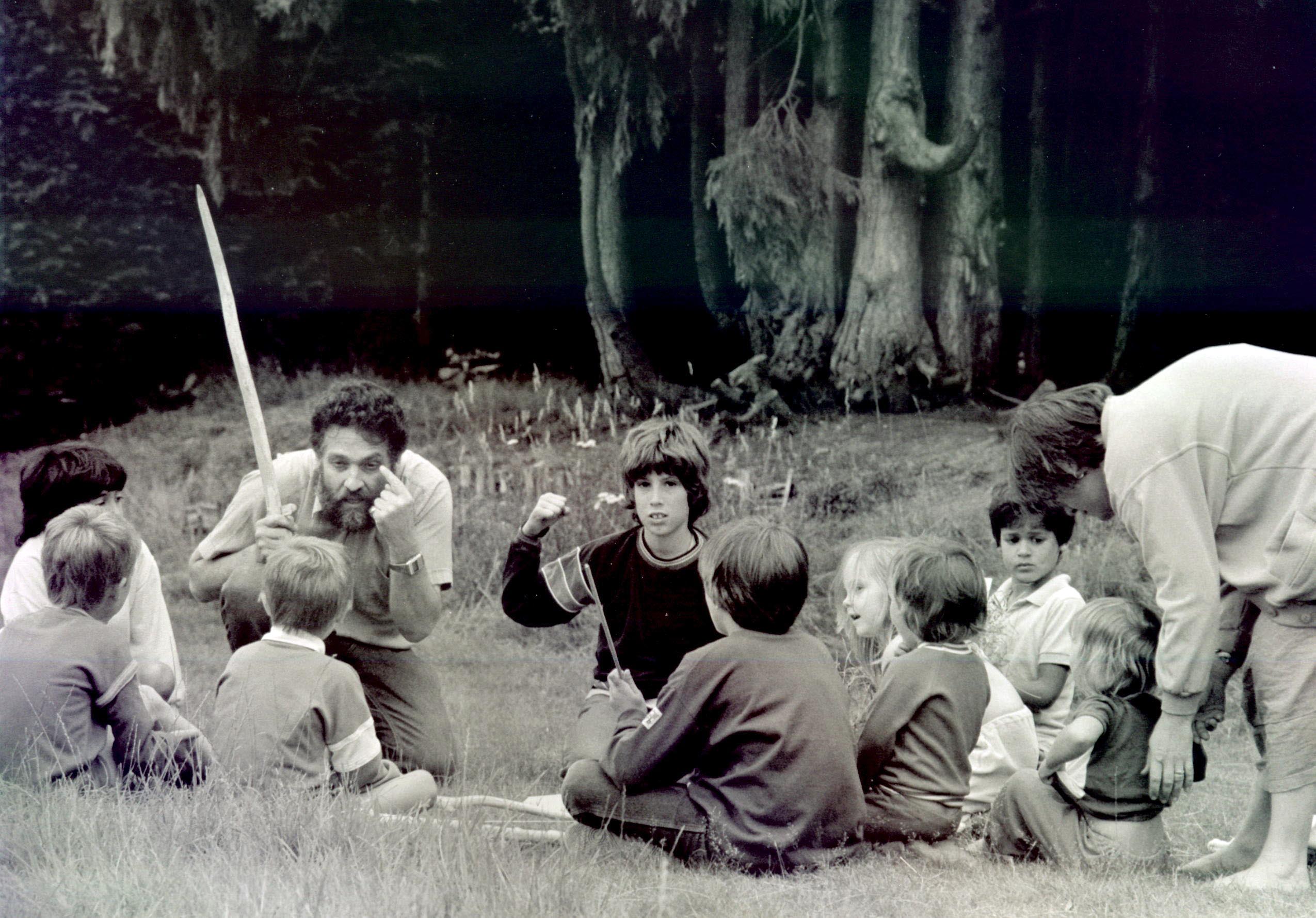
In the way mystics talk about the right time, place, and the right people, Fazal offered a timely and challenging spiritual education that embraced wit and the complexities of modern life. During the 1970s – 80s he attracted people from many backgrounds and countries who had very little in common, other than being exiles from tradition and hungry for truth. The book gives a flavour of encounters, stories charting the edge of learning and unlearning, relationships with one’s self, the groups, the world, intense experiences, affecting deep peace and change, often achieved after games of orchestrated struggle and conflict, peaking in performances on the stage of a magical theatre – live and experience first, then reflect. Debriefings after workshops were sobering, humorous and mind-blowing events. And something ineffable was transmitted in these transformative setting, through music, through silence or through a glance.

Fazal, 84 inside page for Heart of a Sufi

Signature


A short history:

In 1968, at the age of 26 Fazal Inayat-Khan became the head of the Sufi Movement founded by his grandfather, Hazrat Inayat Khan, accredited with introducing Sufism to the West. By 1982 Fazal embraced his personal style to honour his grandfather’s legacy of spiritual liberty by surrendered his leadership of the Movement and chart his own path. His approach to Sufism resembled Idris Shah’s, whose writings had perked my initial interest in Sufism as a timeless practice of wisdom pre-dating Islam, a teaching kept alive through adapting its essence to new times and people. Adaptation in many fields was called for during the 1960s – 80s. The psychological and scientific insights of that period were so radical their social assimilation has yet to happen.

Conceiving of a book that offered a window to Fazal’s work, the editors had wondered if anyone would be brave enough to come forward and share their interactions with this passionate man, the groups and the tumultuous conflicts worked out during that period. We thank again those who contributed. And there must be many more stories of regret, pain, delight, disillusionment, new found coherence, inspiration, and significant life-changes.

Sufi Way gathering - Four Winds 1991

Fazal, 80s with children at Four Winds

F.W. car- smashing 1


The rights for Fazal’s hundreds of talks, poetry and musical tunings rests with the present leadership of Sufi Way. Our book contains some of Fazal’s quotes and the extraordinary poem – Qalandar – but the purpose of Heart of a Sufi is to show the potent seeds of love this remarkable man placed into the hearts of people he touched, seeds now unfolding in new settings for generations to come.

the cook runs

img123179

4W2Bonfire

15n15m


Archventures are pleased to offer Heart of a Sufi as e-book, making it affordable:

http://www.troubador.co.uk/book_info.asp?bookid=2180

On amazon you can peek into some of its pages: http://www.amazon.co.uk/Heart-Sufi-InayatKhanReflectionsebook/dp/B00BFUO0T6/ref=sr_1_22?s=books&ie=UTF8&qid=1363426951&sr=1-2


*    *    *

Relevant links can be followed up from the e-book.

18 Comments

Filed under Blog