Tag Archives: dynamic balance

… delights of peek-a-boo …

In ways we project ourselves into our surroundings, as children we delight in the appearance, vanishing and re-appearance of a loved object or person.

Georgios Jakobides - 1895

Georgios Jakobides – 1895

To observe something reappear is as thrilling as green shoots returning in spring, as inexplicable as birth itself. Hide and seek or peek-a-boo are games said to adjust toddlers to ‘object permanence,’ an illusion we embrace, yet these games are also the prelude to a lifelong quest for the mystery of existence. Children, unless talked down to and belittled, ask deep questions – where do I come from, where did the candle-flame go, where has grandpa gone, how long is time, how come I see things with my eyes closed?  The same questions spurn lifelong passion in scientists.

Growing social, we slip into collective rituals of seeing, feeling, thinking and doing. We obey, ignore or defy rules meant to serve cultural cohesion, rules promising acceptance and success in life. We respond or react according to circumstance and temperament. Some of us have a need to belong, feel safe, protected, others may venture into the unknown, become spiritual warriors on a warpath with obstacles, often rituals, blocking individual potential.

I’m a warrior learning from obstacles, one of which I like to share.

You may recall commands, often subtle and inferred, by early significant persons, communicated via responses, to you, to life, based on generational ideals. These commands worm themselves into the psyche and settle around an inner critic. While well-meaning in aiding conscience and integrity, this critic can also become strident and counter-productive.

In my case – the critic periodically berates me for not keeping my own promises … stay on top of things, complete tasks,  respond to request without delay, call on friends, de-clutter, prepare accounts, fix the warped front-door, only so many roll-ups a day, only two glasses of wine … the tick-off list is … ah well … endless …

Good objectives aside – the more the opinionated critic berates my shortcomings, the more I need to release the tension by transgressing self-imposed rules – otherwise the noise of my inner battle drives away the bird of intuition, the unexpected and the wonder of each day.

I listen, but won’t bow to the critic, obey in fear and cage the bird. In my book, this sums up the making of tyrants.

More and more often I remember to soften the demands. Instead of berating I praise myself for small promises kept, for what has gone well, small steps in overcoming this stealthy ritual that does not benefit my aims. It’s my idiosyncratic strategy: no fighting, no surrendering. Try it – humour the critic into humanness and adjust your rules of engagement with the elegant phenomenon of now.

P1050813 - lowres You may ask – how does my strategy relate to hide and seek and peek-a-poo?

It’s the play with reality by the child in us – the delight in re-discovering being.

*    *    *

This little bird cheered me, it arrived flattened in a Christmas card. Instructions read: Stand me up on my feet.

Blessings to my friends for 2014 – may the bird of intuition frequently visit you.

19 Comments

Filed under Blog

… why spin tales? …

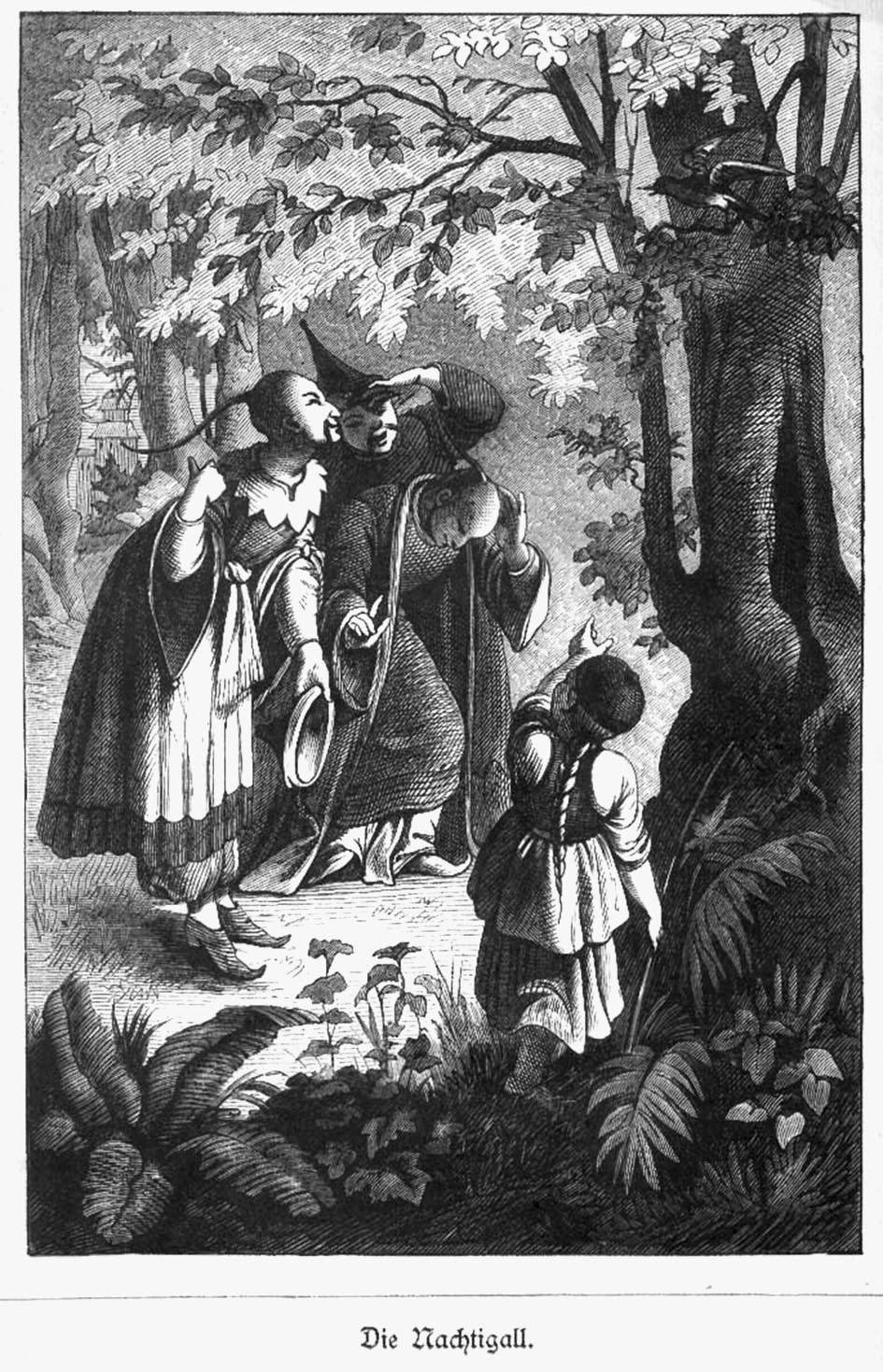
Die Nachtigall-02 Why spin tales, why listen to them, enact them on stage, dance them, ritualise them, read them, write them, re-write them?    We tell stories to ourselves and each other, to entertain, inspire, amplify events, or in search for meaning.

When it comes to stories, fact-finders tend to miss the point. Too many sequential facts can befuddle a truth that lingers in the higher or deeper layers of consciousness, from where vital symbolic insights shine through a narrative.

We owe much to Joseph Campbell, who with life-long passion explored the origins of myths and their functions throughout human history: http://en.wikipedia.org/wiki/Joseph_Campbell

And check out these fantastic documentaries: http://en.wikipedia.org/wiki/The_Power_of_Myth

A myth is a public dream – a dream is a private myth. – Joseph Campbell


In my psychotherapy practice, clients present their story in unique ways that occasionally include lucid dreams of past lives. I deeply respect the power of the imagination. In neutral mode, I listen. So it happens that a trauma set in thirteenth century Languedoc, when Cathars were branded as heretics and massacred by the Catholic Church, can deeply trouble a person’s psyche with visceral images. I travel along, and as the story is released, I may bridge the emotional resonance of a pattern to the present life of a client. In this process profound cognitions can soften a psychological complex.

Lasting examples of deeper truths are mirrored in Fairy-tales and myths, where basic patterns of our collective unconscious psyche are brought into relief. That is, if we can grasp the metaphors under the primary meaning of words. Fictional settings for heroic or anti-heroic characters are particularly suited to convey powerful emotional themes infused with archetypal elements.

… the spirit of an age is more essentially mirrored in its fairy-tales than in the most painstaking chronicle of a contemporary diarist … Raymond Chandler – Realism and Fairy-land

Some religions persist in the literal truths of their sacred texts. Scientists, too, get stuck in dogma, but I emphasize more with the frustration of the latter, since, with the courage of doubt, scientists have pushed the horizon of knowledge outwards by painstakingly reading the book of nature through the language of data, evidencing processes poets and mystics before them intuited, but physical eyes cannot perceive – like radiations other than light. I’m trying to overcome the conflict of the scientist and poet in me. They interpret the world in different but equally significant ways. There is a need to read nature in both languages, so greater understanding and tolerance can develop.

‘With faith one attains and realises peace and harmony. With doubt one destroys and gains freedom to move ontowards.’    – Fazal Inayat-Khan

Memory, objectively true, or false, affects our lives every day. Stories lodged in the heart endure in a timeless dimension of the imagination. We can however alter their interpretation by exploring our perspective, be it from a pit of fatalism, a sense of insecurity, a belief in magic, faith in divine guidance, or the certitude of natural laws. Even the simple acceptance of life’s continuous dynamic change can shift the meaning of our stories, and, of course, it helps to overcome literal mindedness and make an effort to decipher the metaphors.

‘The mystical warrior is trying to reduce the obstruction in the doorway, and the worshipper is attempting to reach the construction behind the doorway, almost out of sight. There is a gap between the two … the vague band between the known and the unknown. In that band rapture is possible.’   – Fazal Inayat-Khan

Stories are the sap of life nourishing the roots and branches of humanity. We spin stories because during the birth of this universe the symmetry between matter and antimatter was broken, kicked out of balance, which resulted in a slight predominance of matter, the stuff we bump into. It’s a poignant thought that this little quirk caused the dynamic asymmetry that evolved into the universe we live in. Without this asymmetry between matter and antimatter our world would be empty, there would be light only – sans elements, sans plants, sans animals, sans night, sans saints, fools, villains – sans consciousness – no story.

*     *     *

For those interested in nuclear physics:

http://www.slac.stanford.edu/pubs/beamline/26/1/26-1-sather.pdf


5 Comments

Filed under Blog

… snow and silence …

Snow is a miracle that touches a deep silence in me, a silence I cannot speak of well – words seem wanting. And still I try, as many of us continue doing in various ways.

We may share the banter of our lives, our witty observations, our advice, our humour, our existential pain, or we may reach out with a warm hand of reconciliation. I do all these things, at times, but underlying my often competing voices, I tend to channel my experiences into the roaming eye of future becoming. If friends misread me, I like to console myself with this Ralph Waldo Emerson’s quote –

Nothing is at last sacred but the integrity of your own mind.’ 

Each one of us has unique perceptions, and there is enormous inspiration and joy in our differences.

P1110081

So much for the still sphere snow touches in me. The other miracle about snow is that it draws my attention to the surreal nature of reality, highly sensuous, yet stripped of  bright colours and removed from habitual seeing – to the bones of shapes, to deeper gestures and essences. For me, a snow-covered scene is a metaphor of restraint that slows down or speeds up time to alien levels of dimension. It occasions one of those time-independent spheres, where I make pattern-connections and create new meaning.

A simple poem follows my thoughts on the miracle of snow.  I tried to limit myself to  5/7/5  Haiku count, and hope it delights:

in silvery vaults

an angel ruffles her wings –

a leisurely shrug –

Grass and snow, low

the sparkle begins –

slipping from her hand as a

powdery shower

of crystalline downs –

feathery light on the silence

hidden between breaths –

fine gauze swirls and drifts

across the tired features

of a dreaming land

to drape every

plane and angular slope in

white geometry

Snow-tracks, 2 low

My appreciation for the geometry of life resonates with my love for black & white photography, see two posts back:

https://courseofmirrors.wordpress.com/2012/12/31/the-inner-silence-of-henri-cartier-bresson/

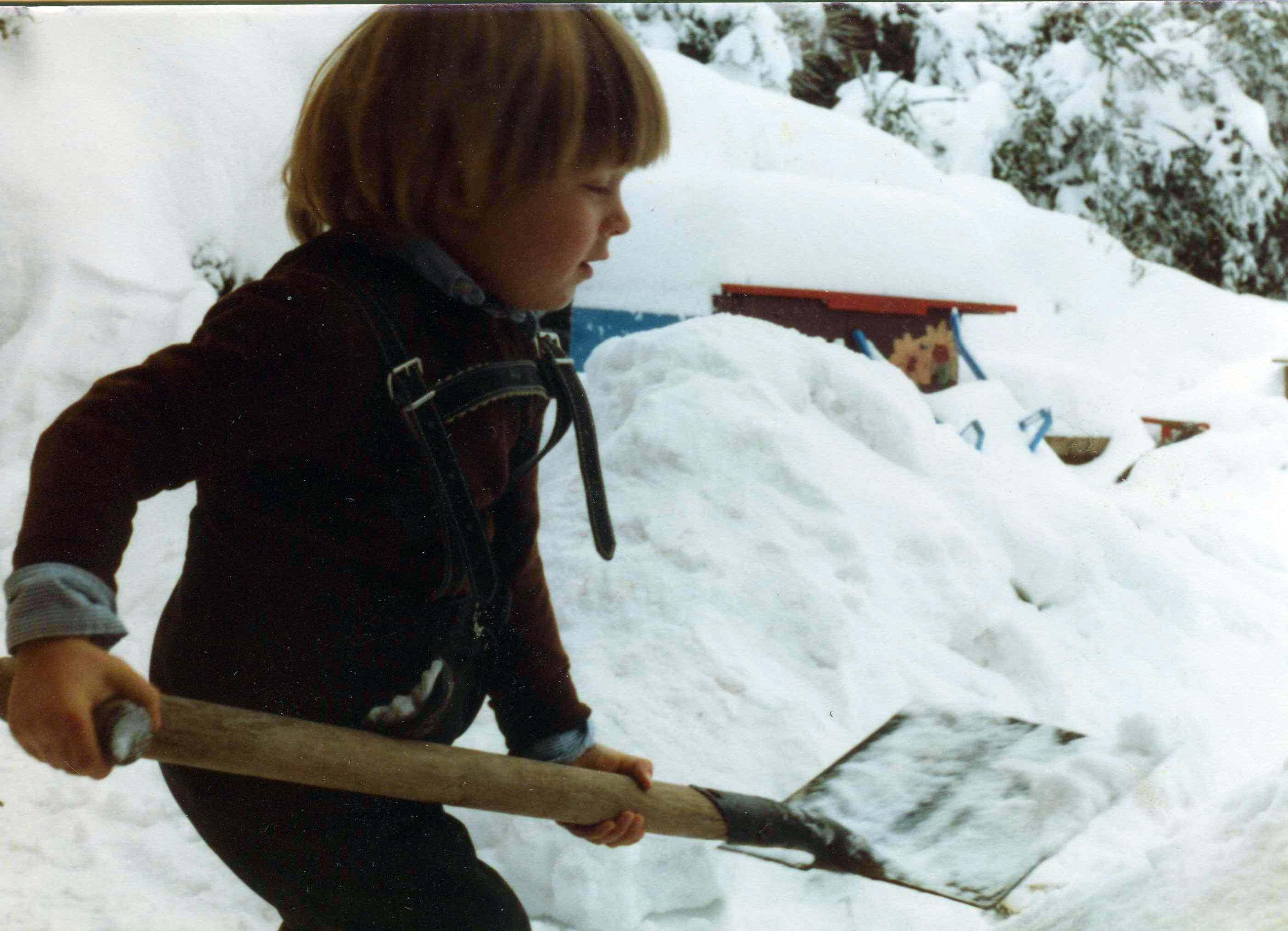
There are other pleasures to be had from snow, as my enthusiastic and capable son demonstrated in 1982 Somerset, and as the adorable puppy of a friend of mine discovered in Dorset yesterday.

Yeshen shovelling snow, 82

Susanne's puppy

16 Comments

Filed under Blog

… erotic charge of flawed characters …

Literature thrives on flawed characters. With the sinister Heathcliff in Wuthering Heights, for example, Emily Bronte tapped into the shadowy aspect of masculinity.

C G Jung calls the latent masculine within women the Animus. Both in its light and dark aspects, this archetypal blueprint can put women under a spell.

I can see Jonny play the disparate twins in my novels :)

I can see Jonny play the disparate twins in my novels 🙂

Equally, the latent feminine potential within men, the Anima, can evoke both, the guiding wisdom of Sophia or the dark erotic charge of Medusa, causing tremendous fear of nature and its awesome power.

Rather than using the image of a femme fatal, I choose to show what  fear of the feminine inspires in some cultures.

Rather than using the image of a femme fatal, I choose to show what fear of the feminine inspires in some cultures.

Our irrational attractions can be sparked and coloured by the parent of the opposite sex. Like a woman with a brooding and unapproachable father may have to kiss many frogs before she discovers the prince inside, while an idealising father can trap his girl in vacuous fantasies. And the boy of a manipulative mother may develop resentment or idealisation for women, or both in a toxic mix. What we tend to project onto the opposite sex is however deeply sculpted by a collective archetypal storehouse of experiences with dual aspects. Paradoxically, this storehouse is also the source of our most powerful experiences and innovations. Whether in a life-giving shape or a dark and petrifying shape, either way, the Animus and Anima hold a numinous fascination until their autonomous grip on us emerges into awareness, becomes conscious, is redeemed, turns creative and makes us truly human.

In my first novel, Course of Mirrors, my protagonist, Ananda, is torn between two disparate men, twins. The theme continues into the sequel – Shapers – with higher stakes in another time zone. In the excerpt below, Gart is rescued from a dangerous impasse by a trickster and transported into the twentieth century, where he meets the story teller and myth-maker, Cara.

*     *     *

Short excerpt from chapter 12, Shapers

Back in Derrynane

Five hundred years back, at the Kerry peninsula, Gart pondered how he came to sit at this familiar coast, under a dull sky that matched his mood, the sea before him rolling and spitting at his soiled boots. It was the trickster’s doing, of course. He did not thank Zap for transporting him back here, where an old crone had hexed him and a group of weird artisans had made him look like a fool. Yet it was here that he first met Mesa, who he now pined for in his bones. He must get back to Rhonda and outdo Crim. And Leo must be terminated, since he had obviously gone mad, and courted disaster if he planned to control Rhonda’s army. The Governor of Guardians, ha, they despised the fat man. It was him, Gart they followed.

‘I messed up,’ Zap acknowledged, stretching on the wet sand nearby and cracking his joints. ‘Forgot, I can’t activate coordinates for the hub, and this happens to be the only other place we’ve been in together before. I had little choice. ’

‘You’re not so bright after all, are you?’ Gart grunted.

‘At least we’re not consumed by noxious fumes of our own making. Best not dwell on the past.’

‘We are in the past, eejit.’

‘Local slang, eh? You’re a fast learner. You score a point. Zap jumped up and ran a circle of cartwheels. ’Let’s go up to the estate, see who’s there.’

Derrynane estate looked deserted. ‘Nippy air on the plateau,’ Zap said, ‘you would’ve thought they’d light a fire, but not a whisk of smoke from the chimneys.’ The men slipped through the narrow gap between green-smothered walls, the two dragons, Zap recalled, though now their shape was lost under rampant ivy. The yard, empty of dogs, cats, geese or horses, had a silver car parked near the main entrance. Zap whistled, ‘Flashy design, time’s moved on since we’ve been here last.’

Gart’s heart lurched at the sight of the woman appearing in the porch.

‘Hi,’ she said, ‘do I know you? You’ve been here before, haven’t you?’

Zap, in Shaper style, put a hand to his heart. He too recognised her, though she had turned into a mature woman. ‘You’re Cara, I remember. Where’s everybody?  Saki, Anke, Mushki …’

‘Oh the troupe, goodness, that was years ago. When Gutch and Craig joined them they hit the road together. I think they operate from a place at the English coast.’

‘And that witch?’ Gart wanted to know.

Cara gave him a piercing look. ‘You mean the oracle of my mentor, Tilly. She has sent me here, for a retreat. I only just arrived. I plan to spend some time writing on my story of Mesa.’

‘I hope the story includes us,’ Zap said, we’re friends of Mesa.’ He shot a glance at Gart, whose mouth opened and shut in confusion.

‘You better come in.’ Cara’s scalp tingled. This must have been what Tilly had had in mind, to process the strange occurrences from so many years ago. ‘Zap and Gart, is it?’ Like Tilly, they hadn’t aged at all, while she herself had gained ten years. To mask her excitement she whizzed around the kitchen. She stacked kindling in the cooker, emptied her shopping into the fridge, plonked bread and cheese on the table, put a kettle on, fetched plates and cups and cutlery, all the while feeling Gart’s eyes on her. She told her guest about her life, her journeys, and studies. Zap helped with arranging the table and kept nodding, eager to hear all she had to say. Cara only tried to gain time to collect herself before she was ready to ask the questions pressing on her mind, about Sax, about Rhonda, about Mesa.

‘Shall I get logs?’ Zap asked sweetly.

‘Oh yes, please. I was planning to camp in the cottage, but we might as well get rid of the chill in the big house. The cooker is attached to a central heating.’ She watched Zap walking out with a basket, charmed by the ease of his manner.  Gart made way for Zap but did not offer any help. Rooted to one place since entering the kitchen, he resumed his position, leaning casually against the door frame  Now they were alone Cara couldn’t avoid him. Their eyes met. She blushed. He had followed her every movement with an air of aloofness. A hint of curiosity sneaked into his eyes.

‘I look like her. Is that it?’ Cara said.

‘In a way.’ Gart moved towards the table and pulled out a chair to sit on. ‘What happened to your lover, Dillon?’

‘We split, went our different ways. He had his quest.’

‘What quest?’ Gart asked. The term perked his interest since Oruba had called his underground journey a quest.

‘Not my tale to tell. He may have found whatever he was looking for.’

Zap returned, groaning under the heavy basket of wood on his shoulders. He piled logs over kindling in the cooker and neatly stacked the rest against the wall before he went to get another load. Cara lit the fire. Gart, intrigued about her remark regarding Dillon’s quest, struggled to grasp what precisely intrigued him. He scratched his ear, as if hoping for a message. He resented how confusion undermined his confidence. The kettle whistled. To snap out of his dazed state, Gart got up to pour the boiling water over the coffee in the percolator Cara had prepared. ‘Thank you,’ she said, surprised. When Zap returned they settled to a meal. It was Cara’s turn to ask questions. Intermittently Zap fed the fire and they moved from coffee to drinking wine. The story Cara was so eager to hear unfolding was punctured by heated disagreements between Zap and Gart.

‘Some names have changed, but I recognise the characters.’ Cara said, jotting down notes, pen hot in her hand. ‘I thought they’d outlawed weapons in Rhonda. Where did the laser guns come from?’

Gart said. ‘Leo must have raided the Archives. Everything from ancient pasts is stored in the pyramids surrounding the archives – and there maybe catacombs under them. I know this because Leo let it slip once. ‘The man’s a danger to Rhonda. I’ll put an end to him.’

Zap shook his head. ‘Killing Leo, and start a war! Use your imagination. He turned to Cara. ‘If you’ve a say in this story, keep this man away from Mesa. He’s murdered in the past, he can do it again. Mesa deserves better.’

Gart pushed back his chair and sent it cluttering to the tiled floor. He stormed from the kitchen. Cara felt the hurt pride under Gart’s rage. Zap crunched his fist and stared into space. Fiercely protective of Mesa, he had clean anger under his pain. ‘Please keep the fire going, Zap, there may be frost tonight. I’ll talk to Gart,’ Cara said. And she knew where to find him.

The sky had cleared towards the horizon. Beyond the yard, the autumn breeze picked up, biting through Cara’s light coat. She saw him standing at the cliff, looking towards the faint silver band that now divided sea and sky. A diaphanous layer of cloud screened the late sun, against which Gart’s lean body looked delicate, like a feather drawing. Why had she invested her story with two lovers, men who did not see eye to eye, men as different as Assisi and Caligula?  He did not turn to look at her as she stepped close to him. He did not move at all, his mind had wandered off through time’s veil, searching for Mesa, no doubt. ‘You see,’ Cara said, ‘once we have given life to something we can’t control it, we can only try to influence an outcome with truth, which is not always in tune with our wants.’

‘I don’t understand.’ Gart finally met her eyes. ‘You created this damn story. Whose side are you on?’

‘Truth is hard to discern, its meaning is held in another reality, where on-going myths are spun. You became part of my story because you walked into it, in a most brutal and controlling manner, though it wasn’t entirely your fault. Does the name Batin mean anything to you?’

Gart felt a stab of fear, but quickly shrugged it off. ‘I think I met a ghost of that name.’

‘How your path unfolds depends on your engagement with what you attract. It’s the same for me, but in addition I’m recording fates, yours, Leo’s, Zap’s, Mirre’s, Oruba’s, Mesa’s, Crim’s… ‘

He cut in. ‘Crim’s one too many.’

Cara sighed. ‘I care for all of your fates, they affect me deeply.  My feelings swing about, gyrate like a weathervane does when it storms, which should kind of answer your question. Right now, as I stand here next to you, sensing the pain you can’t quite admit, I’m on your side, but my alliance can change, from moment to moment, from day to day, from chapter to chapter, since like you, I’m compelled by this quest for truth.’

‘Truth again …’ Gart’s lips curled and broke into a devastating smile. ‘Tell me this then – why does Mesa look like you?’

Cara swallowed her shock. He had touched on her core identification, revealing her disparate affections, the turmoil she experienced between the two types of men she was enmeshed with across time, of whom one now exploited her vulnerability, took complete possession of her with his eyes. And faithful to his nature, he relished in the conquest. Cara’s heart quickened. From deep inside her body she felt his pull, as if by a rope. His seductive power made her tremble. Yet she knew he cared only about himself. And coerced by her divided nature, her concern instantly switched to Crim.

*    *    *

If you’re not familiar with the concepts of the Shadow, Animus or Anima, the Wikipedia pages can serve as introduction.

http://en.wikipedia.org/wiki/Shadow_(psychology)

http://en.wikipedia.org/wiki/Anima_and_animus

And anyone who has never heard of Joseph Campbell – this book is a must for writers.

http://www.amazon.com/Thousand-Faces-Collected-Joseph-Campbell/dp/1577315936

2 Comments

Filed under Blog

… the inner silence of Henri Cartier-Bresson …

The Mind’s Eye – writings on Photography and Photographers, by Henri Cartier-Bresson, is a lovely book I received for Christmas from a dear friend. I was reminded how H C B inspired my photographic work with its poetry and Golden Mean, and still inspires other creative areas, including my writing.

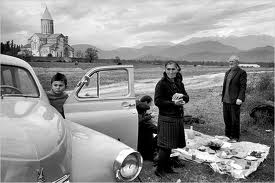
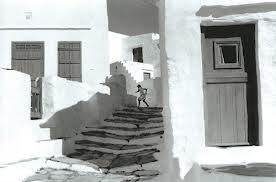
Henri Cartier-Bresson - 1972 photo of a Georgian familyFor H C B photography led on to include painting & drawing. For me photography led on to include writing, in the way H C B said: ‘The writer has time to reflect. He can accept and reject, accept again; and before committing his thoughts to paper he is able to tie the several relevant elements together. There is also a period when his brain ‘forgets,’ and his subconscious works on classifying his thoughts. But for the photographer, what has gone is gone forever.’

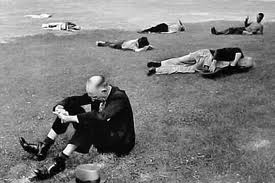
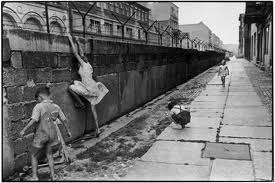
The impact of H C B’s images is hard to define. They exemplify what many photographers aspire to but can’t name. Not only do most of his shots surprise by capturing the essence of a fugitive moment, a magical decisive one, they are framed in a way that touches all the elements of motion in a dynamic balance.

H C B - rest‘My passion has never been for photography ‘in itself,’ but for the possibility – through forgetting yourself – of recording in a fraction of a second the emotion of the subject, and the beauty of the form; that is, a geometry awakened by what’s offered.’

‘I hope I’ll never see the day when photo shops sell little schema grills to clamp onto our viewfinder; the Golden Rule will never be found etched on our ground glass.’

Henri Cartier-Bresson, girl running


I let Henry Cartier-Bresson talk for himself:  http://www.youtube.com/watch?v=MW7I3GBdsBw

Henri Cartier-Bresson, the wallInner Silence

H C B speaks in relation to portrait-photography of looking for the silence in the person. I guess he was looking for the silence behind everything. This silence was most likely what he was attentive to. I conjure that this silence lies between each breath, from which all phenomena emerge from second to second – from that timeless soul-garden within us – which we can tune into.

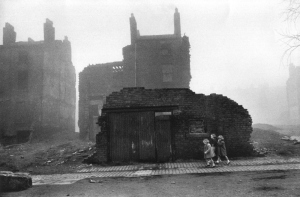
henri-cartier-bresson-liverpool-1963-c2a9-henri-cartier-bresson-magnum2

What I am saying is – H C B could not have captured these decisive moments without having experienced the silence within him. From this timeless state we glimpse the joie de vivre with its awesome sense of wonder generated and re-generated from eternity that makes life worthwhile and meaningful. It’s probably this glimpse, the ethic of this silent sphere that drives all anarchist artists.

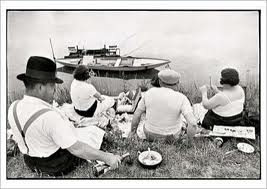
Henri Cartier-Bresson, Sur les bords de la Marne 1938Why Black and White and not Colour?

In 1952 colour film emulsion was not well developed. H C B said then: ‘I am half afraid that this complex new element may tend to prejudice the achievement of the life and movement which is often caught by black and white.’

He was concerned that  composition would suffer and be overpowered by colour. I remember when colour TV was first introduced, I intensely disliked the busy business cramped into a small frame. Colour can however be used as a language, and I am certain H C B would have cottoned on to this had he lived on.

Here a sample of my own to illustrate colour’s use.  http://500px.com/photo/6913693?from=set/266780

In 1974, together with other freelance photographers, Henri Cartier-Bresson founded Magnum Photos. See also: http://www.henricartierbresson.org/pres/home_en.htm

H C B’s second wife, the Belgian-born Martine Franck, was an inspired photographer in her own right: http://www.theworld.org/2012/08/remembering-celebrated-photographer-martine-franck/

I am wishing all my readers and visitors a wonderful creative New Year …. 

12 Comments

Filed under Blog

… unseen stuff – micro-organisms …

More contagious than micro-organisms are fear and hopelessness.

Long before our time, the existence of micro-organisms was presupposed, notably in Jainism, whose followers vow non-violence in thought and practice (Ahimsa) towards all living beings. The tradition is said to be older than Buddhism.  In the teachings of Mahavira (599 – 527 BEC),  micro-organisms are described as unseen creatures living in earth, water, air and fire, and existing as clusters pervading every plant and tissue, not just on earth but throughout the whole universe. Jain libraries are the oldest in India.

While home-bound with a young child in rural Somerset, I did an OU course on world religions, wanting to learn about the formative ideas underlying our variety of cultures. Reading on Jainism, I was struck by its beautiful philosophy, genuine tolerance of other faiths, and the surprisingly modern belief – that the universe is self-regulated by the laws of nature. Worth exploring: see wiki-link below.

With a different mind-set, the idea of unseen creatures informed a nasty biological war fare during the Middle Ages, when diseased corpses were catapulted into enemy strongholds.

Along came artificial eyes, the telescope and the microscope, evidencing these unseen worlds. The Jesuit priest, Athanasius Kircher, and Anton van Leeuwenhoek, were among the first to spot micro-organisms through lenses in the 17th century.  The journey took off, until Ferdinand Cohn founded the discipline of bacteriology in the 19th century, and Louis Pasteur and Robert Koch developed the study of microbiology, focussing on food preservation and vaccines. The gained knowledge helped to protect us from organisms known to spread disease, and improved the hygiene of our environment. During the late 19th century the study was expanded through the work of Martinus  Beijerinck and Sergei Winogradsky into the field of general microbiology.

Today the study of micro-organisms has developed to such extend that  hundreds of specialised branches of study exist serving a huge variety of applications. I’m fascinated by biology, and I greatly respect scientists who devote their days and nights to deepen our understanding of life.

What I question, as do many of my friends, which include scientists, is the unrestricted power of multinational companies. It is totally unethical that multinationals can push decisions as to how scientific evidence is used. To start with, they must be made accountable for damages caused, and next, it should be obligatory, like a tax, that a fraction of the profits these companies reap be used for interdisciplinary research, so that  evidence can be established for the many undeniably wholesome methods of balancing and strengthening self-organising systems.

The over-reliance on suppressive drugs (and in the case of agriculture pesticides) in the fight against every imbalance has devastating side effects. Apart from training super-bugs,  the relentless war undermines the ecosystem of our planet, and our birth right, the ingenious self-regulatory system that acquires immunity through exposure. Nature has taught us everything, nature is not the enemy. Excess use of medication could even undo the good work of vaccines, meant to help us acquire immunities. A weakened immune system may eventually fail to deal with any kind of exposure. So why do we sanction this paranoid warfare ?

What is known about micro-organisms includes the process of endosymbiosis – where symbiosis occurs between different organisms that benefit from living together. Lynn Margulis opposed the neo-Darwinian concept of competition, and proposed that evolution thrived through cooperation: ‘Symbiogenesis recognizes that every visible life-form is a combination or community of bacteria.’  (See link below) In other words, the fittest is what adapts and harmonises.

There is always more than one way to look at something. When it comes to the prevention of dis-ease, and the healing of body and mind, the soothing of stress, we have enough knowledge and wisdom to appreciate the effectiveness of: relaxation, telling one’s story and being listened to, a clear positive intention, the benefits of meditation, a calm mind, the balancing of subtle energies, the vibrations of harmonious sound, architecture, colours, symbolic  understanding, the use of active creative imagination, a gentle touch, a heartfelt smile, for example.

The authenticity of a friend, a doctor, a healer or therapist, can inspire a troubled person who is seeking support to take self-responsibility. Trust, or faith in one’s healing, is a phenomenon that also throws light on the powerful physiological effects of the placebo, which is a proposed ritual that promises nothing, but puts the patient in charge. Wow!

From another tradition that respects all faiths, here is a perspective on microbes expressed by Sufi Hazrat Inayat Khan, who brought his wisdom to the west in the early 20th century:

Every day a new invention brings a new microbe. And if a new microbe is discovered every day till the end of the world there will be numberless diseases; in the end it will be difficult to find one man healthy, for there must always be some microbe; if it is not of an old disease, then of a newly discovered one …  

The people of old thought that microbes were spirits, living beings, in the absence of science which today distinguishes these spirits in the form of microbes; and yet it seems that the ancient healers had a greater grip upon the illness, for the reason that they considered the microbe in its spirit. In destroying the microbe they did not only destroy the outer microbe, but the inner microbe in the form of the spirit, of the germ; and the most interesting thing is that in order to drive away that spirit which they thought had possessed the patient, they burned or they placed before him certain chemicals which are used even now, having been proved to be destructive to the germs of diseases.

With every measure that physicians may take to prevent the germs of diseases from coming, in spite of all the success that they will have there will be a greater failure; for even if the actual germ is destroyed, it exists, its family exists, somewhere. Besides, the body which has once become the abode of that particular germ has become a receptacle of the same germ. If the physician destroys the germ of disease from the body of an individual that does not mean that he destroys it from the universe. This problem, therefore, must be looked at from another point of view: that everything that exists in the objective world has its living and more important part existing in the subjective world; and that part which is in the subjective is held by the belief of the patient. As long as the patient believes that he is ill he is giving sustenance to that part of the disease which is in the subjective world. Even if the germs of the disease were destroyed, not once but a thousand times in his body, they would be created there again; because the source from which the germs spring is in his belief, not in his body, as the source of the whole creation is within, not without. 

Hazrat Inayat Khan

The outer treatment of many such diseases is just like cutting the plant from its stem while the root remains in the ground. Since the root of the illness is in the subjective part of one’s being, in order to drive away that illness one must dig out the root by taking away the belief of illness even before the outer germ is destroyed. The germ of illness cannot exist without the force, the breath, which it receives from the subjective part of one’s being; and if the source of its sustenance is once destroyed, then the cure is certain.

Very few people can hold a thought, but many are held by a thought. If such a simple thing as holding a thought were mastered, the whole life would be mastered. When once a person gets into his head, ‘I am ill’, and when this is confirmed by a physician, then his belief becomes watered like a plant, then his continual reflection of it, falling upon his illness like the sun, makes the plant of illness grow; and therefore it would not be an exaggeration to say that, consciously or unconsciously, the patient is the gardener of his own illness … The root of illness is in the mind, and if that root is continuously watered by thought and feeling, illness is realized in the end.

*      *      *

More contagious than micro-organisms are fear and hopelessness.  (my conclusion)

*      *      *

We are the mirror and the face in it.

We are tasting the taste this minute

of eternity. We are pain

and what cures pain. We are

the sweet, cold water and the jar that pours.

Rumi – transl. by John Moyne and Coleman Barks

*     *     *

Jainism: http://en.wikipedia.org/wiki/Jainism

Lynn Margulis

http://discovermagazine.com/2011/apr/16-interview-lynn-margulis-not-controversial-right

Hazrat Inayat Khan – Volume 4 – Healing and the Mind World.

16 Comments

Filed under Blog

… pattern which connects …

For a recent book-sharing with a group of irreverent friends (archventures), I had the wish to share so many books that I instinctively reached more or less blindly into one of my shelves. Books in my home, I must add, are in a muddle. The only order to speak of is their relationship to each other through time. I picked Alice in Wonderland and Mind and Nature. During our afternoon of reading there was not enough time to do honour to the latter, Gregory Bateson’s work. So I said I’d write up something. Oh dear. After pages and pages, I finally recalled this was supposed to be a blog-post, not a novel .

I first came upon Gregory Bateson books, ‘Steps to an Ecology of Mind’ and ‘Mind and Nature,’ during the early 1980’s, after his death. The clarity of his notion that biological forms arrange themselves through relationships struck a deep chord. What totally resonated with me was his thought that the structure of nature and the structure of mind are reflections of each other.  He had a broad perspective for a Biologist, and wanted to build a bridge between the facts of life and behaviour, and what we know of the nature of pattern and order. He was active in, and connected up many different fields of study – anthropology, psychiatry, biological evolution and genetics and the new epistemology which comes out of system-theory and ecology. He challenged basic assumptions and methods of scientific investigations, pointing to the processes beneath structures. He quoted Goethe …

A stem is what bears leaves

A leaf is that which has a bud in its angle

A stem is what was once a bud in that position …

And he provoked new thinking: ‘What pattern connects the crab to the lobster and the orchid to the primrose and all four of them to me. And me to you?’ 

His interest in morphology, the study of structure and form of organisms, involved context, meaning and communication. He distrusted reductive models of cause and effect, the scientific approach that lines up parts and classifies them, focussing on quantity.

Comparing systems, one to another, he perceived the mind as an ecological system. And he used the analogy that ideas, like seeds, can only take root and flourish according to the nature of the system receiving them. This thought alone deserves deep contemplation.

He had a way with stories … ‘There was a man who had a powerful computer, and he wanted to know whether computers could ever think. So he asked it – Will you ever be able to think like a human being? – The computer clicked and rattled and blinked, and finally it printed out its answer on a piece of paper, as these machines do. The man ran to pick up the printout, and there, neatly typed, read the following words: ‘That reminds me of a story.’ 

Concerned about the decimation of aboriginal populations (he did field-work with Margaret Mead), the degradation of ecological systems, economic oppression, and senseless wars and arms races, he took these ominous signs of contemporary life to be manifestations of deeper disorders, which he defined in terms of cybernetic systems of communication and meaning that comprise life, mind, and society. In his view, consciousness dominated by purposeful thought has a linear structure that establishes goals and ways for attaining them without being necessarily sensitive to the circular network of cause and effect that orders the systems.

Looking at human consciousness as an adaptive system, he thought the cure for its inadequacies, evidenced by the negative side-effects of purposive rationality, was not to reject it in favour of a passionate non- rationality, as in the extreme romantic position, but to augment and complete it by engaging with non-discursive, pattern-comprehending and emotional processes. He advocated the befriending of the unconscious aspects of the mind through utilising images and metaphors.

In a civilization which separates mind from body, mythologies about the survival of a transcendent mind are often meant to soften the idea of death, or even deny death as part of life. For Bateson, who saw the mind as being immanent not only in pathways of information which are located inside the body but also in external pathways, death took on a different aspect. ‘The individual nexus of pathways which I call ‘me’ is no longer so precious because that nexus is only part of a larger mind. The ideas which seemed to be me can also become immanent in you. May they survive, if true.’  (Afterword to a collection of celebratory essays, 1972)

Yet there are scientists that can no more perceive the language of nature, and politicians who feel beleaguered by sections of society that seek balance and a fresh context towards ‘an ecology of mind.’  The extreme factions of believers, for what else are they, should look again at the bridge  Bateson prepared.


This lovely video gives a taste of what it is all about :

Update … I discovered recently, in 2019, that some the links in this post don’t seem to work anymore. Here , however, is his daughter’s great documentary on Vimeo, unfortunately not free, apart from the trailer.  https://vimeo.com/ondemand/bateson

Looking at the structure of nature and the structure of mind being reflections of each other, it becomes obvious that not only does nature mirror our habit of thinking, but our thinking also mirrors the state of nature. Ecology and psychology must therefore both engage in listening, and seeing, and working ceaselessly towards the integration of knowledge and the re-adjustment of a dynamic balance.

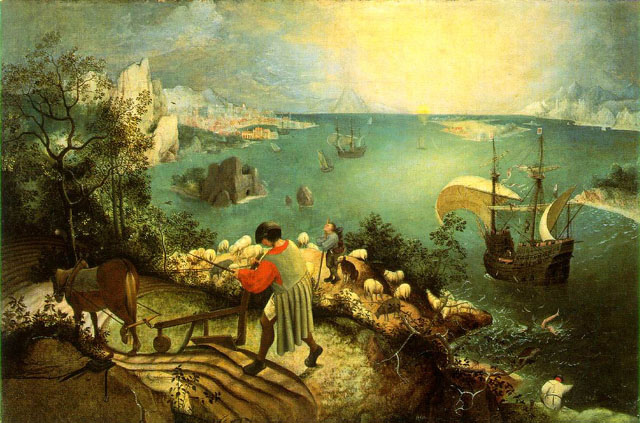
I could go on, but want to bring in a famous painting of Icarus by Brueghel.                                                             Anthony Stevens, a brilliant expositor of Jung’s thought, used the painting as cover for the first hard-cover edition (1995) of his book Private Myths.

http://www.anthonystevens.co.uk/index.html


Stevens quotes from a poem by Wystan Auden:

In Brueghel’s Icarus, for instance: how everything turns away

Quite leisurely from the disaster; the ploughman may

Have heard the splash, the forsaken cry,

But for him it was not an important failure; the sun shone

As it had to on the white legs disappearing into the green

Water; and the expensive delicate ship that must have seen

Something amazing, a boy falling out of the sky,

Had somewhere to get to and sailed calmly on.

What goes up must come down. Who knows how many Big Bangs there were before the one we so ardently explore? There is an organising intelligence behind life’s cycles, while consciousness forever expands. Thinking in metaphors we can perceive similar patterns, forms in nature and mind, cosmos and psyche, mirroring each other across scale and time. In other words, life teems with realities we can tune into, as long as we assign context and meaning.

Check out Gregory Bateson’s books ‘Steps to an Ecology of Mind’ and ‘Mind and Nature.

His family continue his work: His daughter Nora and his wife – Mary Catherine Bateson:   http://www.interculturalstudies.org/main.html

Peripheral Vision

 http://www.amazon.com/exec/obidos/tg/detail/-/0060926309/mead2001centenni

Free chapters of Angels Fear:  http://www.oikos.org/angelsfear.htm

Nora Bateson, recently created a film:

http://www.anecologyofmind.com/

Last not least, the themes:  pattern which connects, mirroring and bridging, are subjects of my novels.

25 Comments

Filed under Blog

… the wild horse of the mind …

I thought I open the window a bit to what I’m immersed in, drafting the sequel to Course of Mirrors, called Shapers. Another mythic adventure, and more. The short piece below is not representative of the tense action this story has plenty of, but depicts a pivotal moment. The scenery is  Eire, where time-zones overlap. In 2550 AD the island is called Sax, where Rhonda, the super-controlling power, cast their misfits.  In the excerpt below, Tilly (Cassia in Ana’s story) has arranged for Cara and Mesa to meet in Kerry during the 1970s.

The theme touches on the creative process. Something for my writer friends. I welcome any feedback to the draft.

*    *    *

Tilly’s ruined estate on the Kerry peninsula was one among many places around the world where past and future began to cross or run parallel during the 1970s. Not all drop-outs travelling through Derrynane were aware of the phenomenon. Those open to the new wavelengths either tuned in, or received no more than garbled white noise. The going slogan was – love, don’t think – though it should have been – love and think – and stay grounded. These were turbulent times. Traditionalists abhorred the breaking free of conditioning. Leaps into the unknown frightened them.

This is Cara’s time, and these are her thoughts: Personal myth is a complex self-creation, mainly unconscious, but less so once we replace the postulates we inherited with our own, and are drawn to our psychic kin. Every night when the body rests we visit beings in other spheres. We may discount these sojourns as dreams unrelated to our daily existence. Yet bridging occurs when we value inner dynamics and re-story the associative symbols of images. Resonance momentarily fills the void between the known and the unknown, and meaning is assigned to events. Some good people trust in God, but then abnegate their creativity. Are we not the desire of a divine will? Are we not the ears, eyes, nose, hands and feet of a universal intelligence, of which we are the deed? Does not our speech derive from one sound? And is love not the creed that breathes all things and directs the movement of all spheres? I don’t understand the need to prove or disprove a universal intelligence that is within and all around us. The world I create is imperfect and suffers from on-going flux. But I can bring my small flame to its shadows.

Now that Cara’s myth caught up with her, and she was confronted with the net of postulates she had cast into the future. She found herself challenged to engage with what she animated, because she was animated by it.

Gutch spotted Tilly talking to Cara and Mesa in the hall. He was bursting with pleasure. ‘I found my clan,’ he said. ‘This place is teeming with talented actors. We’re going to do some magic theatre. Are you joining us?’

‘I need to take care of something,’ Tilly said. Can you keep an eye on Gart?’

‘That devil had some weird conversion trip and is sound asleep under the table.’

‘Excellent. Let him sleep.’

When Cara and Mesa arrived at the cottage across the atrium, Tilly had lit a fire in the hearth. A nest of chairs invited them, and the smell of fresh coffee. ‘Have some,’ she said, ‘pointing to a steaming pot, ‘and there’s chocolate cake, too.’ Mesa soaked up the atmosphere, transported to Ana’s world, reminded of Cassia’s kitchen. Tilly placed a small leather pouch in Cara’s lap. ‘Here, forged by fire, polished by the sea, a gift of remembrance.’

Cara opened and turned the pouch. A black stone fell into her hand – smooth as marble, yet radiating warmth and shining in the glow of the fire. ‘Ana’s talisman!’

‘Yes, and you might as well own it.’ Tilly paused, gazing into the flames. ‘I have a favour to ask from you, for Mesa’s benefit.’

‘What favour?’ Cara poured cups of coffee for everyone, dished out giant slices of chocolate cake and added a dollop of whipped cream to each.

‘Your future, Cara, has come to visit you. Mesa returned to assimilate what was lost to her. With Ana’s story you re-animated her soul. Certain events in history require beings to return, to right things or bring a message.  Mesa will take on her role in the odyssey of the Ypocs. And she’s going to be the narrator of your story, Cara.’

‘Huh, this takes a leap of the imagination. I haven’t even smoked the weed.’

Tilly smiled. ‘You know what it takes. Uncovering a personal myth is different from writing a Hollywood script. To help Mesa to re-connect with random creative processes, I want you to explain to her in as much detail as possible how your mind works.’

Cara heaved a breath. ‘The idea sucks every thought from my head.’

‘That’s a good start.’

‘All right, here goes a slice of random micro processing … Momentarily stuck with a paragraph, I remember to stretch my legs. In the kitchen I snatch a yogurt from the fridge. I notice a sticky shelf – mental note – clean it soon. Dark clouds gather outside, looks like rain. I run up to the bathroom and close the window. On the way down, I see dust-clouds on the stairs – mental note. Heading for the desk I stop by the fridge again because I’m now really hungry. I prepare a sandwich – mental note – put butter on shopping list. I use the loo – mental note – toilet paper is running out. Telephone rings. The answer machine kicks in. Just as well, I’ll return the call later – mental note. A letter that needs sending sits next to the phone, I put a stamp on it – mental note – post it. A fly is trapped in the window. I release the fly and study a tree out front that leans over and needs pruning. I quickly assess which branch to cut – mental note. Off to my desk. Passing a shelf I spot the book I couldn’t find earlier. What a relief! I plonk it on my research file and am reminded of an article I need to chase – mental note. The sun shines again. I open the backdoor and listen to the birds. Grass needs cutting – mental note. Finally back with my paragraph the writing flows, sheer bliss. At a natural break in the narrative I decide to go shopping. In the car I have an epiphany relating to a character in my story, to do with birds – mental note. The walker I pass reminds me to visit a certain person – mental note. I recall this person collects small antique tins. I could find him a present – mental note. I think of metaphors, how obsessions, like collecting tins, are really personalised teachings – mental note.’

Mesa had listened with rapt attention. ‘What happens to all the mental notes?’

‘Ha, ha … they’re promises. They’re torture. They heap up. They demand execution. My way to deal with accumulative pressures and gain time to focus on my writing is through procrastination. I’ve become patient with nagging voices. They’re not jailors. They’re easily humoured until the time is right for a blitz. Then I act fast and achieve a great deal in a short time, happy to have cleared the space.

‘But why give these mental notes the power of demands over you? Mesa asked.

Cara glanced at Tilly, who had taken up knitting, as if the dialogue bored her.  What was her agenda? Was this really for Mesa’s benefit? Tilly smiled and said, ‘Go on.’

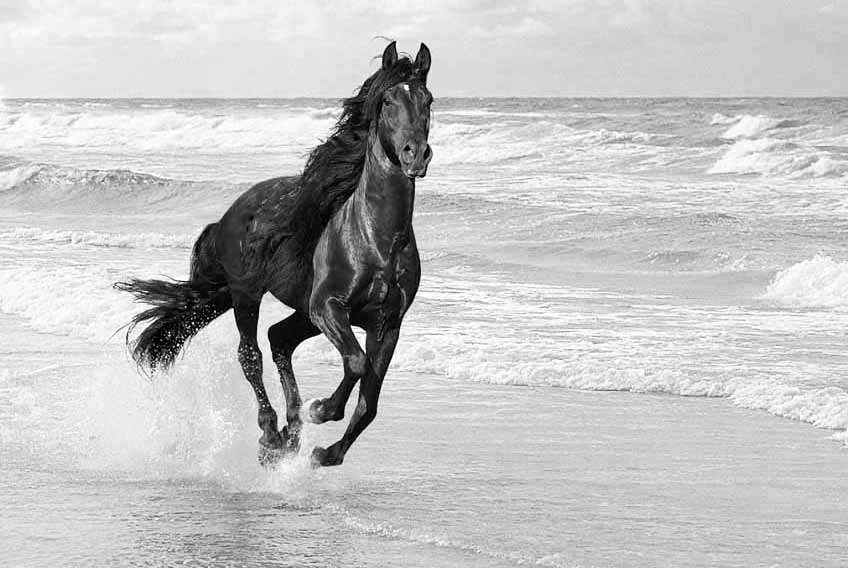
‘It started out as compulsive pattern. I was conditioned to respond to the needs of my environment, and to maintain order. There are exceptions. Some days, it could be the weather, a dream, the stars … from the moment I open my eyes everything flows effortlessly. My brain is relaxed and I attract harmonious thoughts, like I’m fine-tuned to a subtler station, beyond the busy bandwidth of neurotic naggers. The tuning can be learned. It’s like taming a wild horse. I can actually do it, when necessary. But I like letting the horse run wild. I find wild things that way.’

‘We have different conditioning,’ Mesa said. ‘From early on I was trained to tame my mind, to let it rest like a still pond, or focus thoughts like laser beams. Then free play was introduced, disrupting Rhonda’s order, and all went wrong for the Ypoc.’

‘Aha! I bet you didn’t have to juggle a deep conflict, and oppose a controlling father.’

Tilly dropped her knitting. ‘This gets interesting. It’s what Mesa came back for.’

* * *

Apologies: The origin of the image of the horse is unknown to me.  Many thanks to the photographer.

10 Comments

Filed under Blog

… immortal strawberries …

Last week I bought my first strawberries of the year. Not having guests, I used one berry every morning in my muesli for the last seven days. The one in the photo is seven days old – an immortal batch. I suspect irradiation …

Generally, would immortality solve all out problems? I hear you laughing. Think again. The battle is on to eliminate decay, any quirk of nature, and of course the insurance claims in the waiting when technologies go wrong, and equally when what is known is not applied. (I wished the latter held true in education.) Objectors to the seemingly elegant solution of irradiation from fruit, grain, herbs, eggs, meat, hamburgers, letters,  blood, and what next …  have their say:  http://www.centerforfoodsafety.org/campaign/food-irradiation/

But hold your gun, nothing is simple these days. Since financial concerns in a free market drive research and decision-making, food industries must also evaluate liability risks. This article on the legal perspective of irradiation by Denis W. Stearns makes interesting reading: http://www.marlerblog.com/uploads/file/DOC065(1).pdf  The book itself is a ‘little’ expensive: http://eu.wiley.com/WileyCDA/WileyTitle/productCd-0813808820.html

Daring a leap, here’s a unique take on the freedom of corporations and the accepted risk of going into the future: http://www.documentairenet.nl/review/the-yes-men-fix-the-world/

It seems the age of reason has reached its fill and is superseded by another ‘Oracle of Delphi’ phase – called – ‘The Miracle of the Free Market,’ which may be just another periodical quirk of the natural up-and-down learning-spiral in the human experiment. What do you think?

17 Comments

Filed under Blog

… here is everywhere …

Nationalism is the pathology of modern developmental history as inevitable as neurosis in the individual.   – Tom Nairn, The Break-Up of Britain

The growth dynamics of nations and those of individuals have striking parallels, especially when it comes to the forming of an identity in relation to the other, and the ongoing struggle to maintain or adjust set habits to changing circumstances. For instance, when religious authority declines, the blame for the ills of a nation can no longer be projected onto the omnipotent godhead. People find themselves challenged to reflect on how they contributed towards the ills and become accountable for their actions.   The psychological development towards spiritual independence and interdependence – for individuals or nation states – is a humbling process in that it confronts us with our failures, imperfections, and the need to learn from our experience and cultivate human qualities.

I’m German-English, my official citizenship is Dutch. Though I live in England, I have felt at home in the Arabian deserts, along the Mediterranean coast, among friends wherever they are. But is there one location from where I look out onto the world, one place that is traditionally called home? To not betray all my loves it would have to be the bridge, in a metaphorical sense. The theme of my first novel starts out with a bridge across opposites. On that bridge my protagonist has an encounter with herself where here becomes everywhere.

I feel like an ancient being torturing language to express the simplicity of experience, digging through layers of false evidence, sifting through sediments of unreliable gossip for grains of truth. Words fall from my pen like dust settling after another hole dug, showing the trifle of an image that needs a night of dreaming to cohere into a sentence, and then more sentences, resonating with a universal narrative, re-arranged in time as if the story is yet to happen.

Germany – Before print was instrumented by Luther’s Reformation, the Latin language represented the voice of divine authority – the father. A lone human hero, Martin Luther (1483-1546), Doctor of Theology, not a prophet, disputed the church’s practice of selling indulgences, which urged him to write his 95 thesis, among them: Why does the pope, whose wealth today is greater than the wealth of the richest Crassus, build the basilica of St. Peter with the money of poor believers rather than with his own money?’ When Luther’s followers printed his 95 theses and displayed them in public places, their controversial contents spread like wildfire. The papal hegemony was rattled. Convinced that salvation was not gained by merit but by the grace of God alone, Luther went into hiding and translated the bible into the most spoken vernacular. Time seemed to call for a voice like his. In some historic records he is accused of hiding under the mantle of the princes rather than siding with the folk, of not grasping the opportunity towards the forming of a German nation. Luther’s theme of grace was limited. When his efforts of converting the Jews failed, his loathsome sentiments incited their persecution. Yet he was seen as encapsulating the struggle of the German people for an identity while living under the shadow of the slain father, the Roman Empire, which compelled the German psyche to emulate its glory.

A.J.P. Taylor writes in The Course of German History: ‘Since Charlemagne founded the Reich in 800, more political energy went into maintaining German states independent of the Reich, or even hostile to it, than into the Reich itself.’ By the fifteenth century, the Holy Roman Empire of the German Nations was divided against itself. Through the intense struggle for wholeness emerged some of the world’s finest philosophers, scientists, writers, musicians and mystics, as well as the most ignorant and corrupted leaders.

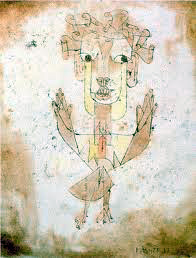
Walter Benjamin had a vision of Hope and Despair, inspired by a painting:

A Klee drawing named “Angelus Novus” shows an angel looking as though he is about to move away from something he is fixedly contemplating.  His eyes are staring, his mouth is open, his wings are spread.  This is how one pictures the angel of history. His face is turned toward the past. Where we perceive a chain of events, he sees one single catastrophe that keeps piling ruin upon ruin and hurls it in front of his feet.  The angel would like to stay, awaken the dead, and make whole what has been smashed.  But a storm is blowing from Paradise; it has got caught in his wings with such violence that the angel can no longer close them.  The storm irresistibly propels him into the future to which his back is turned, while the pile of debris before him grows skyward. This storm is what we call progress.    

                   – Walter Benjamin, Ninth Thesis on the Philosophy of History

The extremes of enlightened spirituality and regressive brutality happen wherever human fallibility seeks to reconcile itself with the divine ideal. A geographically hemmed in Germany was not relaxed about its identity, which was further knocked by the Versailles Peace Treaty. Debates about the effects of the treaty are ongoing. Germany was blamed for the First World War and had vindictive reparations imposed that aided hyperinflation. The crushed self-respect of its people called in a saviour, who tragically sublimated his oppressed childhood with vastly inflated ideals.

Sanity might have prevailed in the darkest hour had Germany given more value to its folk tales. They leave nothing of human nature untold. The secret mysteries of the heart are found in mythical tales all over the world, and while set in local landscapes, their themes are similarly transcending race. These coded treasures are basically the stuff of all yearning for the home or source, a human phenomenon riddled with the tensions of fixation and avoidance.

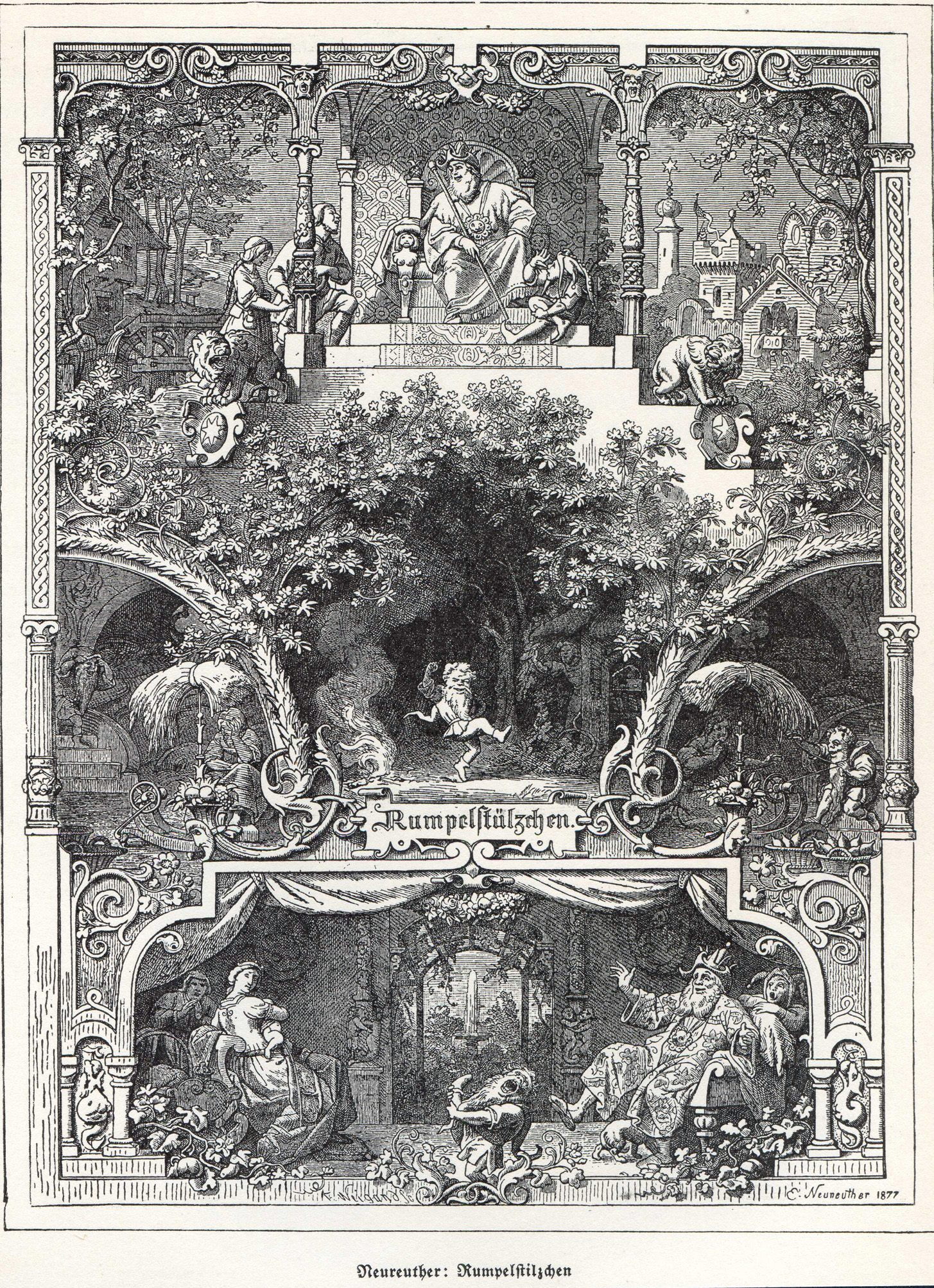
A hint of the tenacity available to the German people can be found in the tales collected by the Brothers Grimm when storytelling was still practised with the potency of embodied memory. Children growing up with the characters, animals and landscapes of these stories are absorbing timeless themes through symbols and metaphors. Censors protested, and still do, that these themes are cruel and unfit for the innocent child.

The Grimm brothers comment in the introduction to the second, updated 1819 edition of their collection: ‘The right usage discovers nothing bad is in these tales, but as a beautiful word has it – a testimony in our heart. Children point without fear into the stars while others, as popular belief has it, would insult the angels.’

Was the melancholy that gripped so many German people their nemesis or their salvation? Tales that contain symbols of mythic time need to be deciphered again and again within a temporal context. Yet because the emotive power of symbols defies rationality, the sentiments evoked are always in danger of being abused by myopic national concerns. When a nation loses balance by being overly defended or irrationally unleashed, differences of religion, race or politics are thought to explain the matter – yet we all know there is no pure race.

England, like Germany, struggled through internal conflicts but achieved a sense of unity by conquering the world. Felling forests to build boats which sailed under the banner of the Royal Navy, explorers and missionaries spreading across the waters formed a Colonial Empire that brought great wealth and influence. The Commonwealth still lingers like a halo and gives Britain a sense of sovereign pride. Cultural Imperialism, natural to nations with access to the sea, had created the other at a safe distance rather than at home. Yet spoils of victory, too, come at a cost.

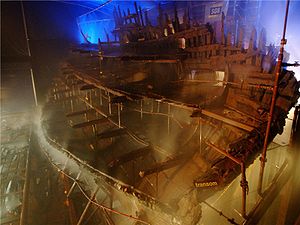
When the flagship of King Henry VIII was lifted from the depth of the Solent Estuary into the twentieth century on 11 Oct 1982, the Mary Rose flared back into view and boosted national confidence, adding a powerful impetus to Mrs Thatcher’s resolution to win back the Falklands. It worked – just. Yet now it seems conflicting images of the past, informed by freed-up information providing more and more varied perspectives, are testing every nation’s conscience.

In the twenty-first century, with migration being a global reality, nations are obliged to open their doors to the other. Given changing policies, foreign individuals are often able to acquire legal membership. Since the Schengen agreement, European borders, apart from Britain’s, can be crossed freely, though the agreement is regularly challenged by exceptional circumstances. http://www.migrationinformation.org/Feature/display.cfm?ID=859 

Migrants – who are we?  If there are tendrils resembling roots, they connect to the deep impressions left by parental figures and childhood landscapes, and to the layers of national symbolic themes, ancient, historic and contemporary. Social and ethnic codes ricochet among children in every school-playground, even between neighbours like Germany and Britain. We use icons to sum each other up. At times they move us to tears, at times to laughter, often they serve humorous self-reflection, but mostly they envelope us in a ritualistic trance:

Bratwurst with Sauerkraut, Fish & Chips, Schubert and Kurt Weil songs, God save the Queen, the first four notes of Beethoven’s 5th symphony, a blinking eye of Shakespeare in a hologram,   Goethe’s Faust, the Thatched Cottage, das Edelweiss, The Royal Jewels, der Adler, Jack and Jill, King Ludwig’s Castles, Stonehenge, Rapunzel, Big Ben, Karl Valentin, Spike Mulligan, Lorelei, or the Mary Rose:

In order to preserve them, we gave the Mary Rose Trust a chemical solution called polyethylene glycol. Once these items (such as wooden bowl and leather shoes) have been soaked in this solution, they undergo a freeze-drying process that will preserve them for posterity … ‘You can be sure of Shell.’     (Shell advertisement  1985)

Patrick Wright in his book ‘On Living in the Old Country,’ recounts the findings of a young journalist, Charles Moore. He was commissioned in 1982, after Lord Scarman’s report on the Brixton disorders, to interview the really oppressed people in the area, defined as the elderly white people of Lambeth. The findings expose a national sentiment which, in essence, could equally apply to other nations and individuals: it remembers the state of grace and laments the fall which is said to occur when ‘the blacks’ and the welfare state arrive:

In the beginning there was order, friendliness, dignity, sharing and mutual respect: ‘Everyone mucked in and was properly neighbourly.’

A betrayal of the idea of paradise – in the absence of divine certainty someone or something other needs to become bad, in order to preserve the good.

Seeking fault with the other is meant to shield paradise. An oversight – truth stagnates in the fenced gardens of eternity. Enduring human vitality flows from change and is born of vulnerability. The trance of blame sucks us into its gravitational slow time. Unawares, we perpetuate the shielding in the collective psyche, leaving it for the next generation to absolve.

Recorded history is like a rope broken in many places and knotted together again and again. In the light of new truths these knots are strained and made brittle until they snap. Tribes, nations and ideas are strung along this rope. But new concepts of time are changing our perceptions; many individuals struggle to free themselves of knotted history. The desire to make things solid is an automatic reaction to the fear of losing the familiar we nurture – people, environments, passions and beliefs we bond with, that are mirroring us and allow us to discover ourselves. The problem is not loss, but the manner in which we deal with loss, as if it is destroying our identity. Inevitably, if not death, someone or something will be the agent of change in our lives.  Something dear is wrenched from us, a way of life is gone, those around us and the rest of the world may care for a moment, but our identity, the sum of all our embodied experiences, is ours to keep or lose. The valid anger in the face of change is not lifted by words of wisdom, only plastered up. The heart has to suffer and soften before the conscious decision of an individual can unplug resentment and embrace the enduring presence that truly connects us within. Only individuals can release blame and lift the veil of ignorance.

Dich im Unendlichen zu finden, must du unterscheiden und dann verbinden.

To find yourself in the infinite, you must first distinguish then combine.

–  Johann Wolfgang von Goethe

A truly global citizenship must be composed of enough individuals brave enough to explore their own psyche, brave enough to think for themselves and realise that our collective identity unfolds beyond the existence of individual transitory lifespans. We know that, given respect, tolerance and stimulation, a child will engage with life creatively and trusts in the future. Applying this insight to how we educate our children nourishes the collective intelligence of humanity.

The German filmmaker Edgar Reitz has with great sensitivity restored a balanced meaning of the German Heimat in his TV series of the same name, spanning from 1919 to the fall of the Berlin Wall. The series follows three ordinary families and comprises 52 hours of film. The yearning to belong, so distorted by the idealism of the Third Reich, is shown in localised context and conveys the human aspects of the war story. The impetus for the creation of this document was an American Holocaust series on TV in 1978. Reitz was horrified that German intellectuals seemed to accept the sentimental spin as treatment for national guilt.

The knots in the rope of time we constructed are brittle with guilt, the burdening guilt of not loving humanity enough to fully take on its pain, the way Christ did. He said, ‘Thy will be done.’ Does such surrender of will, even if taken symbolically, really release us of using our own will to effect change?    The concept of surrender is more subtle than giving up the power to will. I see surrender as an alignment of our conscious will to the dynamic flow of change, the universal will, enabling evolution to happen and work freely through us, so that here is everywhere. In instances when this shift happens inside, we are.

*    *     *

References other than mentioned in the text:

The Angel of History: Walter Benjamin’s Vision of Hope and Despair – by Raymond Barglow, published in ‘Tikkun Magazine,’ November 1998

Recently 500 more tales, collected by a contemporary of the Grimm Brothers, were uncovered:

http://apps.facebook.com/theguardian/books/2012/mar/05/five-hundred-fairytales-discovered-germany


5 Comments

Filed under Blog