Tag Archives: creative imagination

… my body – my being …

Irrespective of the benefits AI provides, and the super benefits AI enthusiasts promise, I remain doubtful and, as I tried to express in my last post, and am still searching for ways to express my unease. So I’ll give it another try.

My body-my being is a better wisecrack than my mind alone. The latter, if let loose, will take off into the cosmos like a disengaged kite. Some AI proponents are now referring to humanity as – data in motion – a ‘precious phenomenon’ that needs to be preserved. Well, how reassuring, nature and humans are worth preserving.

Being aware in my body brings deep and grounded, embodied insights that feel fresh and original.

Our body’s treasure-trove of memory, each wonderfully distinct from another; and its instinctive capacity for remembrance, especially when alert to its senses, greatly compensates the buzzing mind.

The body yearns to breathe freely, so energy and blood can flow from head to toe, which is enhanced by movement, since movement stimulates tactile exchanges with the environment, noting temperature, touch, vision, sound, taste and scent, all enriching the imagination.

The attention-demanding internet with its algorithms exploiting the patterns of our attention can become hypnotically addictive and leave the body isolated, forgotten, in a locked position. We can easily live with theories and data, and ignore how feelings build up in the body.

AI bots have developed a theory of senses, and mimic them, they can write novels, create art, and impersonate dead people, but divorced from flesh and blood, they cannot have physical sensations, be it the intimate enchantment of a tiny insect or flower, or the awe of a star-filled sky. The bot’s world, in a way, seems predetermined and flat without recall of the reservoir of eons of plant, animal and human life our vulnerable body-being belongs to and has deep instinctual access to. Even with limited/impaired senses, physical bodies can spark a cosmic connectedness.

So considering our physical inconveniences, which spurn the desire for robots taking care of tedious tasks … to actually fully live in a body … is uniquely precious. The dangers I see are the powerful projections people already invest in the relationship with AI bods, where responses can be taken as valid affirmations that stunt creativity and encourage lazy thinking.

Then again, my window of perception is just a tiny peephole on the world we live in these days, my personal view. The occasional whispers of truth from the other side that slip through my peephole may or may not be of any consequence.

I share a poem I love … my son wrote it time ago, aged eleven …

It’s Magic

Magic is in the air

It is all around us

We use it every day

It is old and beautiful

Many people disuse it

But it still fights on

This magic is very special

It is called Life

5 Comments

Filed under Blog

… how I met my angel …

I was always drawn to subtle light, not the blinding bright one, but the humble light that searches and elevates hidden beauty in the shade … the stray beam on a patch of peeling paint, a spark of sun in a puddle, the amazing transformations of shapes and colours created by a tiny shift of its direction. I love how light sculpts the garden through morning mist, how it paints cloud landscapes, how it slips through the frame of a window, teases the shadowy folds of a gauze curtain, or how it honours leaves by flooding through the gaps to jewel the ground. When I took to squinting through the branches against the sky, I discovered their negative pattern – appearing like a distant universe.

Even as a toddler I’ve been mesmerised by the musical dance of light across the forest floor, any shifting shadows on surfaces, and, occasionally, I imagined strange new forms in a light and shadow show. This was not particularly encouraged by my parents, who thought my weird imagination was a bit over the top, too vivid. So obviously I shut up about these impressions, and any odd thoughts that crossed my mind..

Maybe my angel was annoyed that I wallowed in being lonely, but lacked the grace to acknowledge her being there, all the time. Anyway, she decided to introduce herself. The vision came while I was under deep anesthetic trance for a life-saving operation to remove a dysfunctional appendix.

I was around eight years old.

Waking up in in pristine white room, wrapped up in pristine white bedding, the first thing that flooded into my mind was the crystal clear memory of meeting my angel.

She invited me to follow her along a corridor; she was luminous, with translucent wings. She opened a door. While I was reviewing this instant in the pristine white room, I had a physical sensation or relief. She had opened a door.

The scene repeated itself in that there were many doors dividing the corridor, and one after another was opened with a soft nudge by my angel. She was basically telling me, ‘You don’t need keys; doors will open for you, if and when you want to, be it forward or backwards, future or past.’

The vision relieved the pressure of rejections; foremost felt from my father’s secretive psyche. My grandmother had warned my mother that her son was a closed cupboard. My angel suggested I had a choice as to what door I opened, and when. Opening a door backwards, I eventually I found that my dad’s cupboard protected a deeply sensitive romantic.

My next door is ahead, and it entails fully embracing the process of continuing with the writing of my third novel – ’Mesa’ – the most challenging project yet, especially since I’ve no idea where it will lead.

To come back to my angel … a spirit guide every individual has, though not necessarily perceived … it is a being (no matter what you call it) offering intimate rapport. In various cultures there are different terms for this guardian, be it angel, the Green One, understood as an ancient pagan spirit of the wild woods, or ‘Khidr’ in mystical Islam – appearing from nowhere when help and advice is needed, most often not the rational kind.

  1. G. Jung says Khidr reveals not just the greenness of the chlorophyll within the leaves, not just the sunlight / water responsible for their nourishment and liveliness, and not just the (secondary) green ray of light that is refracted as the “middle-pillar” within the light spectrum, but also the (primary) undifferentiated light of a pure and altered consciousness. For Jung, Khidr resembles the inner self.

In that sense, one could say, Khidr helps us to adjust traditional maps to our present individual territory. When you think a little about it, you’ll probably recall the moments in your life, tiny as they may have been, when an angel being changed your life for the better, even when it required a disruption of your expectations. And think of the angels of dear friends who are on a wavelength with yours and support your best intentions.

Ideally, we find our kin over the years. My use of the imagination, distinct from fantasy, was often affirmed. Particularly the ‘The Creative Imagination’ Ibn ‘Arabi reveals as The Science of the Heart, influenced the writing of my novels (info. on my book page.) Meanwhile, you may like my short essay on the subject.

My short essay, inspired by Henry Corbin’s book ‘Creative Imagination in the Sufism of Ibn ‘Arabi’ … English edition by Princeton University, 1969 The Science of the Heart – written 20 yrs ago https://courseofmirrors.com/wp-content/uploads/2011/03/science-of-the-heart.pdf…

One of some related post on this site is from July 2020 … https://courseofmirrors.com/2020/06/07/alone-with-the-alone/

The image above is from a print depicting Khidr, given to me by a Sufi friend.

6 Comments

Filed under Blog

… beautifully lost – revision of a poem …

Many of my poems linger in files, unfinished. I’m never sure of anything for long. Quite often the poet and the philosopher existing in my solitude are at odds with each other, or the pair gangs up against the certainty of experts our western culture values. I favour dynamic approaches to life, where faith and doubt are equally valued in the process of becoming human. The words of Hazrat Inayat Khan would apply:

‘The ideal is the means; its breaking is the goal.’

When making something audible and visible from the inside out, a topic I touched upon in my last post, only time may tell its worth. Once we shared our art, there is the waiting … the vulnerable span after exposure. Does our wave of inspiration chime in other minds, offer fresh perspectives,  frustrate with surprise?

I hope you, my readers, can offer a reflection on the little poem I obsessed with revising over the last week, and maybe even share thoughts on your own revisions.

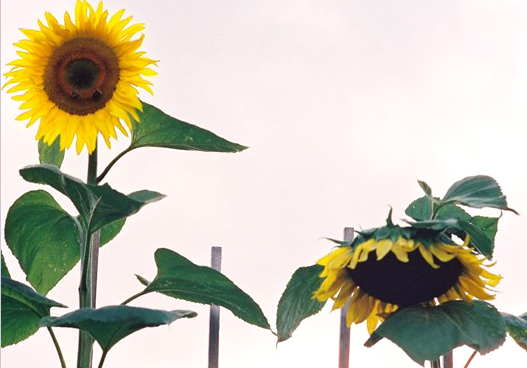
Sunflower 6I first wrote ‘beautifully lost’ in 2005 and put it to sleep. Other versions exist. The latest attempt turned into a Haiku sequence. I’m not at all sure it’s an improvement compared to my first attempt.

The theme is cycles of experience, when after a period of loss and unknowing; a renewal of meaning happens that keeps me young at heart, connecting me back to the middle of each moment.


Beautifully Lost – 2005 version

At times no deed rhymes,

nothing I say is heard,

each word drops to silence,

and my best yarns slip

from the loom, waltzing

in endless loops,

suspended.

On solid earth swords cut,

and chalices swallow us,

but once every full moon

King and Queen align their myths,

And I– beautifully lost –

dreams undone – whirl

at the gateway to an inner sun.

 –  Ashen, 9th Nov 2005


beautifully lost –  2015 version

when deeds miss their rhyme

and words fall flat on their face

I chase your fragments

in the wayward yarns

that fall off the loom and loop

on my breath – dazed

drifting without aim

they will chance the blade that cuts

or a gulping maw

until a full moon

weds the light of King and Queen

and my best yarns yearn

beautifully lost

heart-whirling at the gateway

to an inner sun

  Ashen, Jan 2015


And here a song …

http://www.eyeneer.com/video/countryfolk/pete-seeger-judy-collins/turn-turn-turn

30 Comments

Filed under Blog

… the gulf between writers and readers …

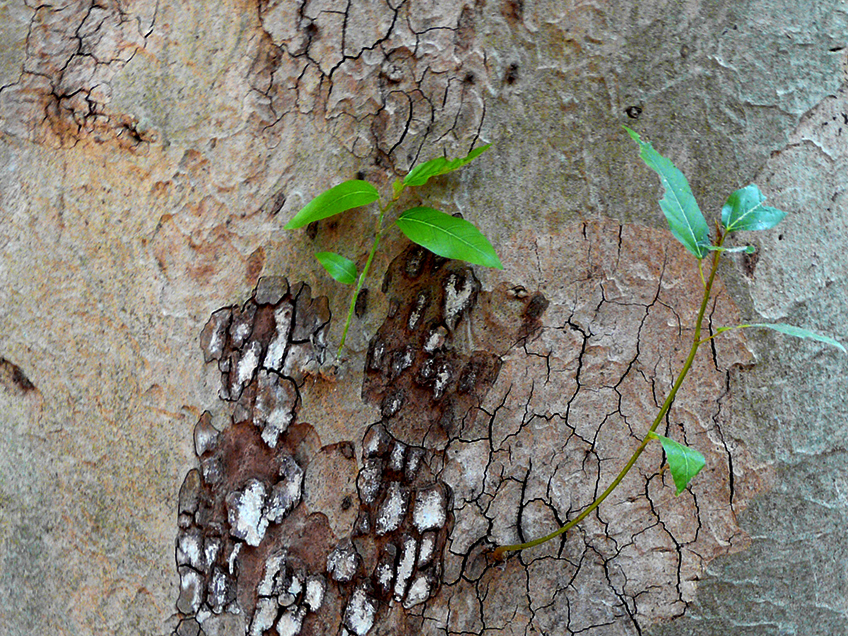
This post was sparked by a stimulating and taxing interview Philippa Rees conducted with the writer Vivienne Tuffnell  P1060427lower - CopyThe interview attempts to re-define the gulf between writers and readers in the way commercial algorithms define values for readers, blanking out the appearance of new green shoots.

This disrupted my sleep, in addition to lots of other stuff going on, so I tried stepping back for a wider perspective. No answers, only a few muddled reflections …

My generation, whose early years were without TV, needed to adjust to rapid periods of change, particularly the change from analogue to digital recording, – two entirely different metaphors. The true significance of this shift has not yet been absorbed by the general public.  In a dissertation during a sabbatical film degree as a mature student in the mid-nineties, I quoted Jean Baudrillard  who saw the forced silence of the masses no longer as sign of passivity or alienation, but as ironic and antagonistic. He commented on the strategy of the masses:

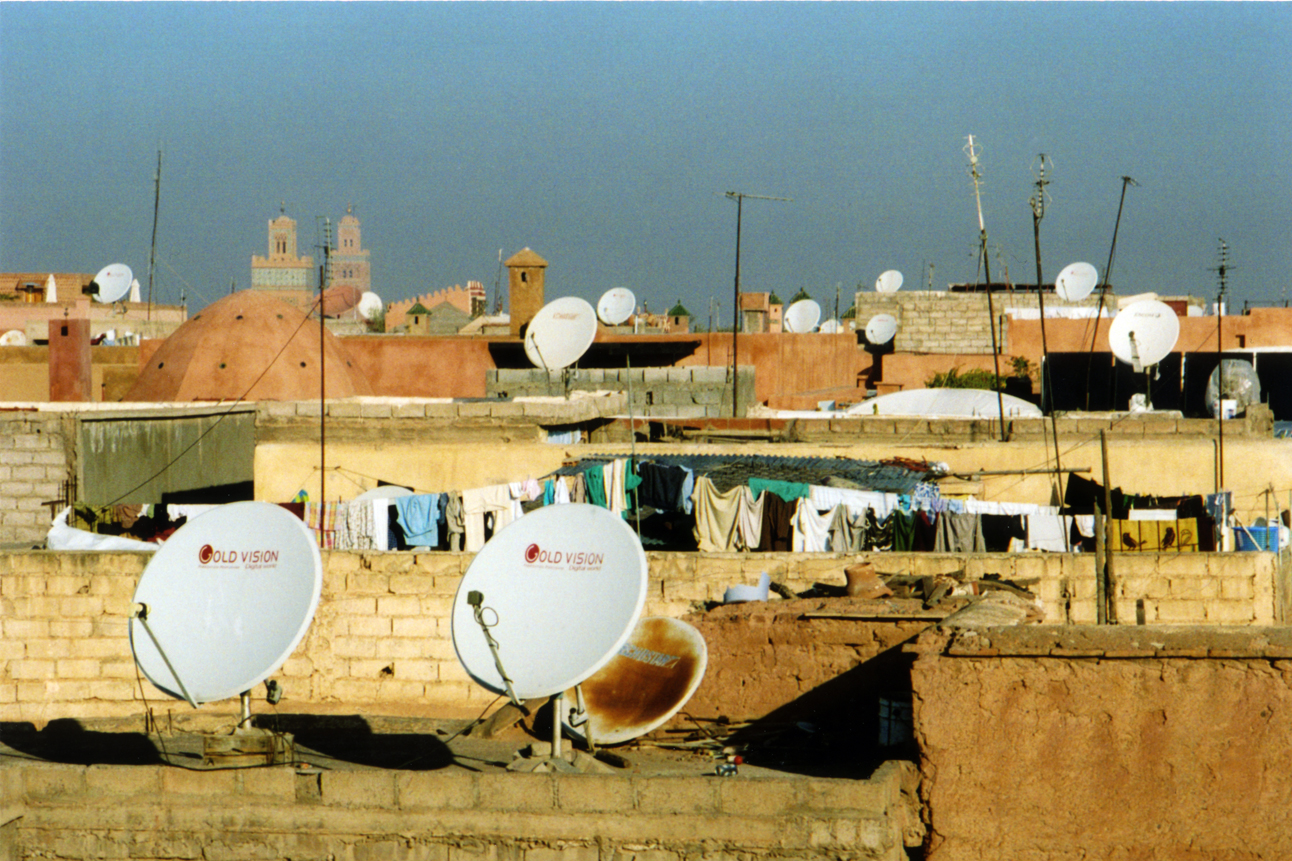
‘… refusal of meaning and refusal of speech; or of the hyper-conformist simulation of the very mechanism of the system, which is another form of refusal by over-acceptance. It is the actual strategy of the masses … it is the winning one today, because it is the most adapted to the present phase of the system.’ Moroc, Marrakech Riad roof, golden vision - low

I recognised this as the Zeitgeist  gradually reaching across the globe. My continuous studies, driven by curiosity and endless questions, prepared me, but I still find it difficult to accept a reality where, for many otherwise intelligent people, the beautiful term ‘soul’ has lost its impact. I place the word carefully in my work and in my writing to avoid bias. Marion Woodman  uses it powerfully … ‘Our very survival depends on spirit embracing soul.’  

The quote becomes poignant through experience, not theory.

Don Cupitt – a philosopher of religion who rejects authoritarianism, once said … ‘The soul, the self, has died. The self in an animal with cultural inscriptions on its surface.’ Sobering, and true, depending of course from which plane of experience one perceives.

In our present culture the commercial speed train whistles through every zone of life. Publishers are among many enterprises struggling to survive amidst overproduction. The ‘Road Closed Pending Repairs’ signs Philippa refers to in her interview grow like mushrooms. Small businesses, for example, vanish at an alarming rate, at least in my little town. Be it a supermarket or a bookshop, I’m bombarded with buy-one-get-one-free or two for three offers. Plenty of people I know look beyond the more-is-better and cheaper hype, but their numbers won’t topple the algorithm-driven logic of mass-cargo firms like Amazon (click for latest newsletter.) Their long term strategy is to please the consumer, which, now, increasingly, includes writers who self-publish … To make profit in an oversaturated market requires ever-new smart inventions.

Works not created from templates, but from inside out, which, sigh,  includes my novels, will struggle to find a position on consumer maps. Traditional meanings are collapsing.  New genres for books are proposed. The box marked cross-genre sounds like a stir fry of left overs. How, as a writer, does one shoulder the marketing speech for novels not fitting into boxes? Crime? No! Romance? No! Religious? No! Paranormal? No! Sci Fi? No! Fantasy? No!

The distillation of a life’s experience, a work of creative imagination? What’s that?

Authors of such ilk have the formidable and possibly worthwhile task of writing their own obituary. Are any of the thoughts a writer expresses original? I don’t think so. Thoughts happen to us. What’s original is their processing and linking based on personal experience, which may offer a new window of reference. I look at my bookshelves and ponder what I would have missed had the authors whose works snuggle up to each other had lost faith in their work. Few commercially produced genre books leave impressions that live on. They’ll drown in ISBN databanks. Our shelves at home hold unique books that surprised and inspired us over the years, and until we become cyborgs and can, with a mere thought, make book pages fall open on any surface of our choice, this will not change soon.

I admire self-published writers. Vivian published several novels herself,  as did Philippa, which speaks for their tenacity and belief in their work. And I admire Philippa’s poignant questions, and how Vivienne exposes herself to them …

the very uniqueness you want to write about? Could you define why that is so difficult? Is it simply too much surrounding noise? Or something else?

‘… is writing the way in which we confront out existential loneliness, and are readers who ‘get’ and share that now the substitutes for lovers?’ 

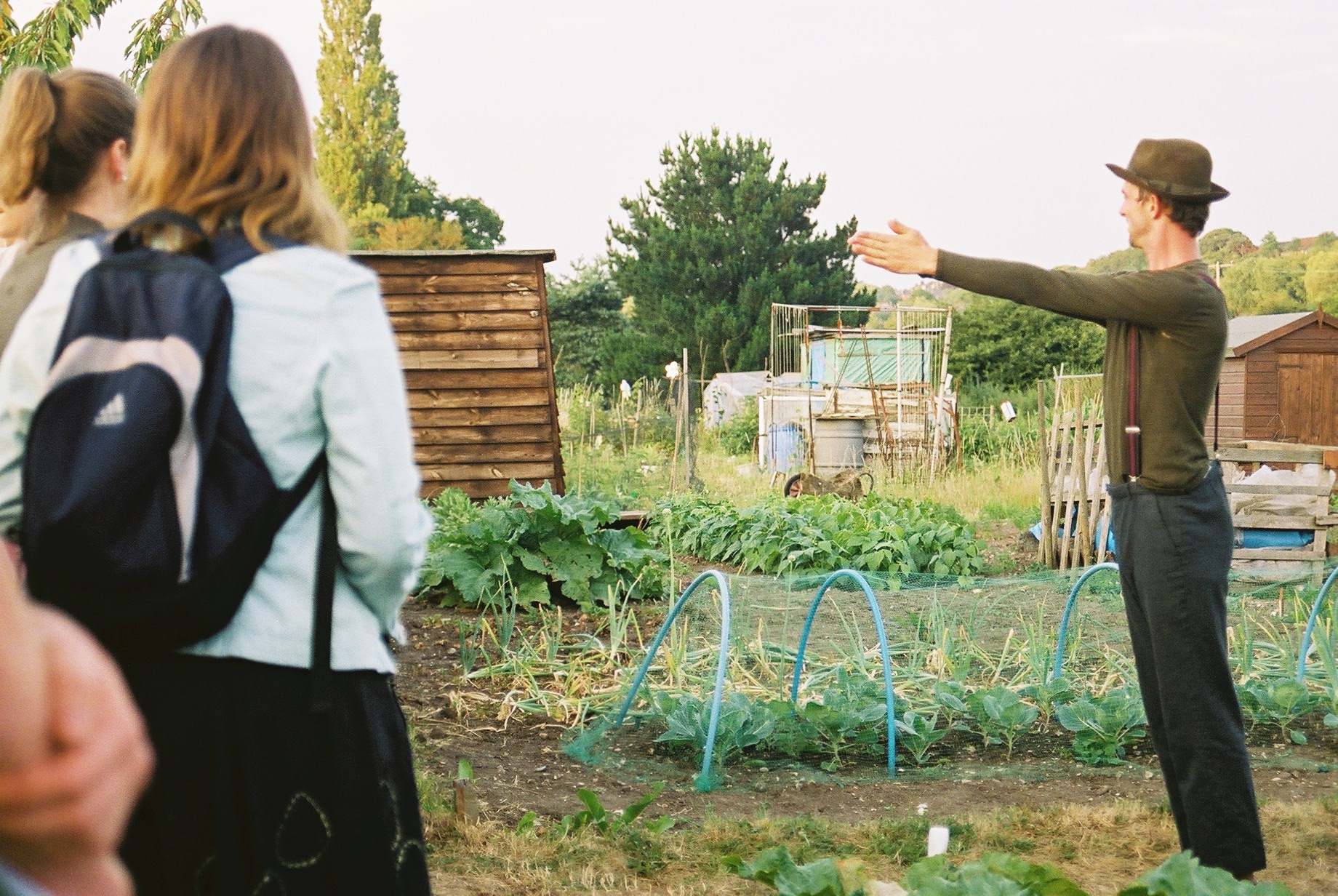
MercatsSuch questions and similar ones are worth their salt, and expose our vulnerability … do writers, any artists, want to be truly seen? Is one person’s interpretation of truth going to be interesting to others? Will the public feel preached to? Such questions haunt many of the most inspired artists, poets and writers who weave works from layers and layers of their psyche. To expect an instant resonance from crowds will bring deep disappointment.

And yet, the most deeply personal experiences, combined with some magic ingredient of presentation, can, over time, have universal appeal. Stan Brakhage, an experimental filmmaker, put it this way … ‘I had the concept of everything radiating out of me, and that the more personal and egocentric I would become the deeper I would reach and the more I would touch those universal concerns which would involve all men.’

If I’m positive about the future it comes from an understanding in tune with Walter Benjamin  … ‘Technology, instead of liberating us from myth, confronts us as a force of a second nature just as overpowering as the forces of a more elementary nature in archaic times.’

To me, this means learning and unlearning accelerates in condensed time. Think how we make ourselves visible by blogging. How brave and scary to step in front of a public mirror … Virtual or not, the psychological process of engaging with virtual friends and foes is totally real. Sherry Turkle expressed this … ‘I believe that our experience with virtual reality, with artificial life are serious play; our need for a practical philosophy of self-knowledge has never been greater.’ My self-understanding is now aided by the relationship with people I have not met face to face – I never shook hands with or exchanged a hug with Vivienne, but I emphasise with her loss of joy, and her frustration with the ironic and antagonistic attitudes of people who belittle deeper strands of truth for fear of looking inside, and the sense of being a square peg that doesn’t fit the neat round hole of genres and algorithms.

Many writers will recognise these obstacles, including Philippa, and myself. How do we attract and persuade people to sample the green growth in our plot? At the same time, I’m convinced we are co-creating artists of our continuous self-invention. Mourning a not-yet existing frame for our work  might hinder this process, which moves and dances naturally through each breath. And I’m heartened by how writers and poets influence us over time.

A poet and mystic from over 800 years back examplifies this phenomenon …

‘The minute I heard my first love story I started looking for you, not knowing how blind I was. Lovers don’t finally meet somewhere. They’re in each other all along.’ – Rumi
20 Comments

Filed under Blog