Tag Archives: C.G. Jung

… the ones who walk away …

Ursula Le Guin’s short metafiction, ‘The Ones who Walk Away from Omelas,’ first published in 1973, had its 40th anniversary last year. My first reading, when Google and book review sites were non-existent, left a deep impression. This week’s re-reading, once, twice, three times – the story deserves it – made me curious as to what other readers might have made of it. Obsessing in a web-crawl I came upon predominantly moral interpretations, which I distinctly remember resisting, though these associations are understandable. The way our systems deal with the unadjusted tends to appease the troubled conscience for the rest of us normal citizens.

For me, there were deeper complexities in this brilliant piece of writing. I decided to share my thoughts and tempt those of you who don’t know the story to read it and derive their own insights. I’ll use spoilers, so if you want to read the story first, here is a link: http://genius.com/Ursula-k-le-guin-the-ones-who-walk-away-from-omelas-annotated

… With a clamor of bells that set the swallows soaring, the Festival of Summer came to the city of Omelas, bright-towered by the sea …  
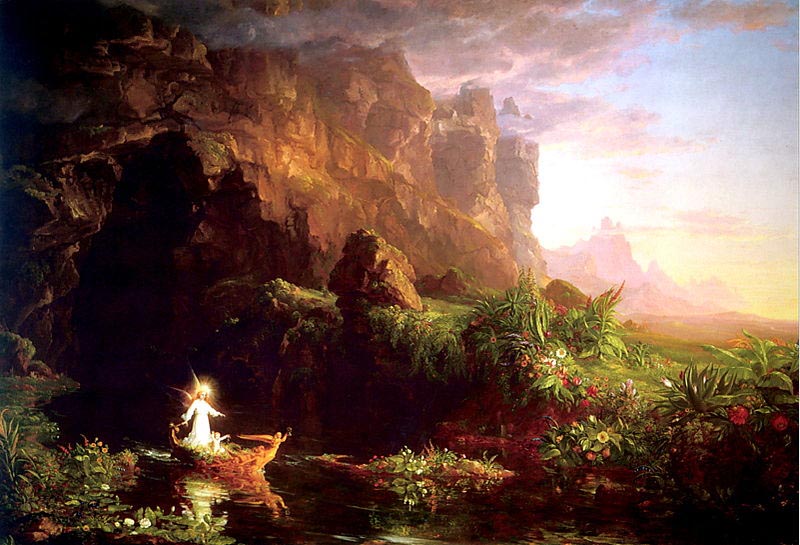
Childhood, Thomas Cole, 1842

Childhood, Thomas Cole, 1842

We are shown a charming city where order and harmony reign, a city well-protected in a bay, resembling a womb. Reality is suspended. There’s a sense of timelessness. It is a civilised place, decorous, joyful, without hierarchy. No king, no swords, no slaves … no power games. Utopia comes to mind, the idea of eternal life – the eternal innocent child.

No science has yet dispelled the vision of a haven without strive, where everyone is happy. In the wake of traumatising wars and unspeakable atrocities, there are always attempt to re-create places like Omelas, attempts to soften the reality of birth and death, the extremes of joy and pain, nature, the cosmos our life depends on and which we try to fathom. But since our spiritual lore cautions that life is an illusion – an ornament that covers ultimate truth we can’t perceive with our senses, we get anxious when life becomes too comfortable.

The narrating voice, anticipating our scepticism, invites us to fill in the sketches of this perfect democracy. We are told, ‘They were not simple folks, you see, though they were happy.’ After all, Omelas may strike some as goody-goody. Smiles, bells, parades, horses, bleh. ‘If so please add an orgy.’ More delightful pleasures are suggested – celebrating life, with one significant addition, ‘One thing I know there is none of in Omelas is guilt.’

In contrast, the voice notes the bad habit of a different place, where pedants and sophisticates consider happiness as something rather stupid. ‘Only pain is intellectual, only evil interesting … the treason of the artist: a refusal to admit the banality of evil and the terrible boredom of pain.’ The voice insists that the citizens of Omelas were mature, intelligent, passionate people whose lives were not wretched.

The Festival of Summer has begun. ‘Do you believe?’ the narrator asks. ‘Do you accept the festival, the city, the joy? NO? Then let me describe one more thing.’

And there it is, the secret lurking out of sight, a child, kept in the darkness of a tiny cellar room, with only a faint ray of hope based on a dull memory. The child is not driven out of the city, like the traditional scapegoat, but contained below ground; there to absorb everyone’s fear of reality and its cruel justice, embodying, maybe, submerged histories, rather like the depths of the iceberg below water keeps its peak afloat in the light.

… They all know it is there, all the people of Omelas. Some of them have come to see it; others are content merely to know it is there. They all know that it has to be there. Some of them understand why, and some do not, but they all understand that their happiness, the beauty of their city, the tenderness of their friendships, the health of their children, the wisdom of their scholars, the skill of their makers, even the abundance of their harvest and the kindly weathers of their skies, depend wholly on the child’s abominable misery …

Terms are clear, should this child be freed, the beauty would wither and be destroyed. The pragmatic solution seems such: One punished and suffering child is meant to redeem the rest from coming to terms with their inherited sins and traumas.

To leave this comfortable enclave of Omelas means leaving security and loved ones behind. It requires crossing mountains, stepping into the unknown, with no charm against collective guilt.

Omelas’ citizens are free to look at the unacceptable child. While reactions, those of young ones mainly, vary from disgust to outrage, most accept the necessity of this child’s sacrifice, though some fall quiet and leave Omelas in the middle of night, alone.

For me the child is there to serve cohesion, symbolizing a lid on the unconscious, primitive, wild aspects of the psyche. Isn’t dis-ease a loss of order and rhythm? If you judge this pragmatism harshly, consider the purpose of trip-switches in an electricity-wired house. Or, consider how people under social or dictatorial pressure may choose to safeguard the lives of their loved ones at the cost of betraying their knowing heart.

Le Guin does not condone staying or leaving Omelas, she provides no answers. I am one of those who walked away, many times, always at a cost, because I preferred guilt to shame. C G Jung developed the concept of individuation, hoping for it to expand collective consciousness from the inside out, through the individual, sometimes involving a precarious personal journey, going through a process of separating psychologically from parents, state, authority, to become whole. Like in the Zen story where the seeker eventually returns, better able to serve the community. While a single brain does not survive its limited life-span, the collective memory of matter, and each human experience lives on and is transmitted to every new-born life.

Each one of us carries the traumas of our histories, though not everyone has the opportunity to redeem such wounds, contribute new ideas, or explore different states of being. What drives one to walk away from the familiar – is it inner conflict, allegiance to one’s heart, fear to upset the order, the need for a wider perspective, or simply a calling? We bond to the systems we grow up in, in cases we adjust our behaviour in order to emotionally survive, along with the implicit bargain to keep quiet about the shit, our shit, others’ shit, and how we deal with all the shit.

There are those who leave a comfortable place and those who stay. Maybe a balance between conservative forces that protect structures and revolutionary forces that seek change is necessary. Not everyone, for example, can face existential pain and futility without succumbing to psychosis. There is a case for Festivals of Summer, sport, drugs, ecstasy, trance …

Was the power of the imagination born from fear of mortality? Is this why we envisage dystopias or utopias, and, ultimately, scenarios that make us feel in control of our destiny?

What we hide from ourselves and from each other often relates to our most prominent outcast, the neglected inner child, so embarrassing to the adult world. This child in Omelas seems to embody the ongoing ritual of shame for walking from Eden into the dawn of creation, a reality burdened with consciousness, and free will that frequently misses the mark, but, heck, is the very process of becoming human.

My naïve hope is that we can learn to embrace our all too human failures, show patience with our children, stop seeking blame and end scapegoating, yet also acknowledge our individual and collective need for comfortable realities … protecting us … from what?

Here a quote from a former friend and teacher, Fazal Inayat-Khan … taken from a lecture on Reality:

‘For the whole collective of the human mind – outside that self-created reality there is a storm. That storm – that wind – that pressure – that influence and space is for our existence and permanency completely annihilating and destructive … our assignment outward is because of a deep decay … Reality is a veil that is spun with the finest and thinnest and strongest silk. It weighs nothing – it covers a little darker area behind – and yet the moment when you reach out with your hand to draw the veil away it will skin your hand till blood is drawn.’ 

To fill this emptiness we assign our meaning outward. Call it the human project. Sorry to trouble you, my friends, but the function of reality is worth contemplating, and, in my view, Ursula Le Guin’s story does just that.
14 Comments

Filed under Blog

… physical books I loved to bits…

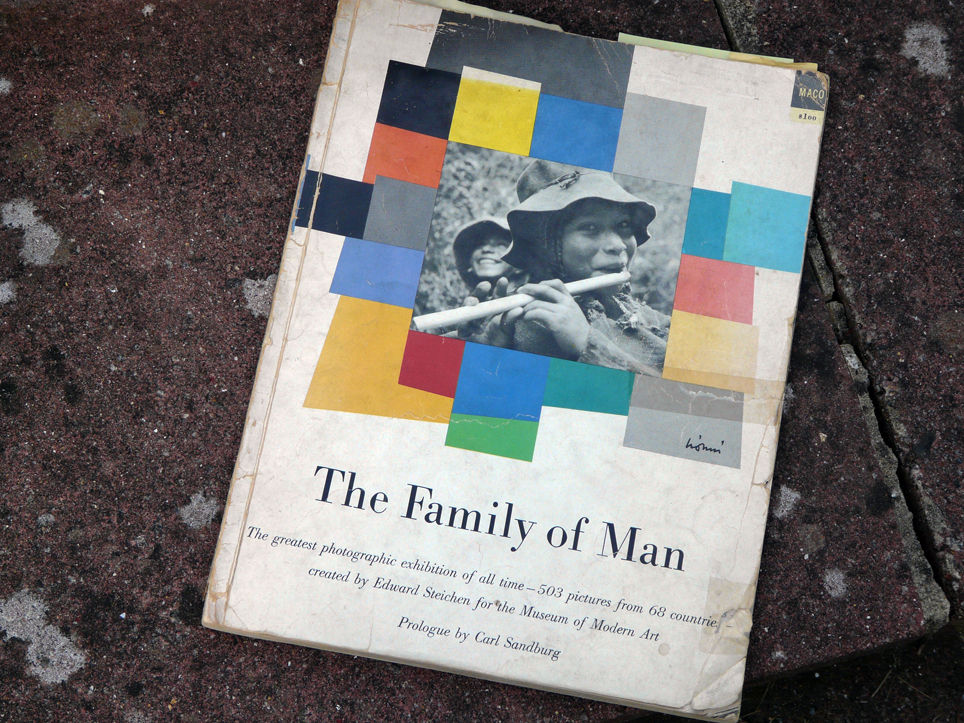
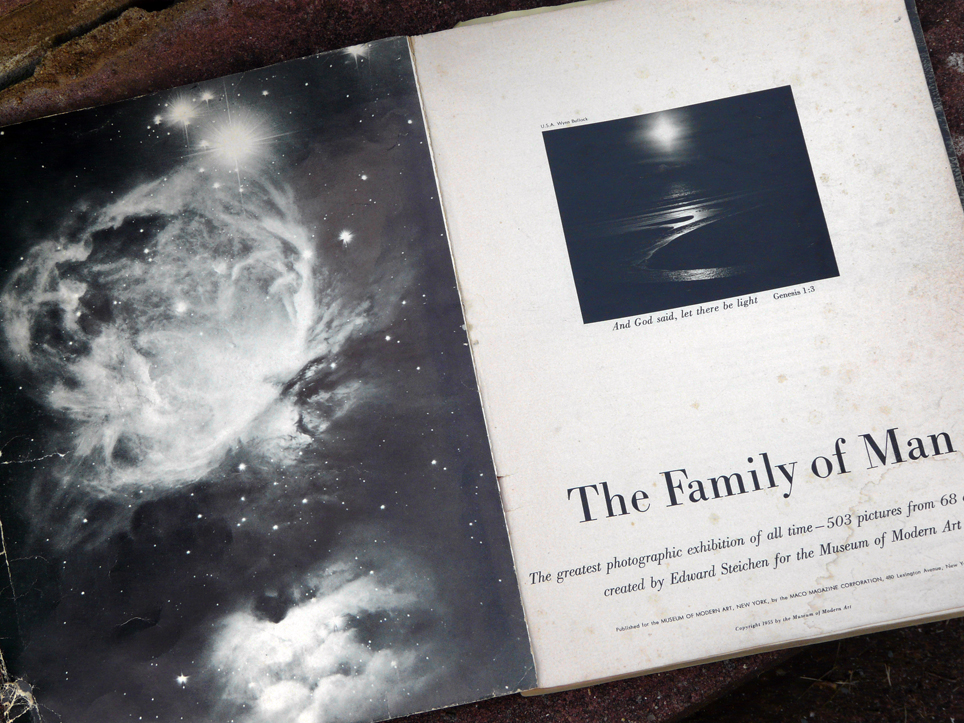
Aged eighteen, while staying with a family friend in London, I came upon the catalogue of the greatest photographic exhibition of all time – The Family of Man – a mirror to the essential oneness of mankind throughout the world.

The exhibition was assembled by Edward Steichen for the Museum of Modern Art and contained photographs from sixty-eight nations …

P1060180 smaller


There is only one man in the world

and his name is All man

There is only one woman in the world

and her name is All Woman

There is only one child in the world

and the child’s name is All Children


The inspiring collection of images decided my first career as a photographer.

P1060181 smaller

Ironic, given that my parents’ photographic business had held no interest for me. I realised my search was for what shone through reality, the essence in people and situation. I was inspired by poetry, story, light and shadow, movement, point of view and framing.

Fully embracing this passion started an active and adventurous period of my life, with opportunities to travel and mingle with groups of highly eccentric and creative people.


A decade later, at New York’s Kennedy airport, after a several momentous months in Washington DC, while waiting for a flight back to Amsterdam with my husband to be, a title on a book rack screamed for my attention … well, it jumped at me like a dream tiger.

P1060064 lowres

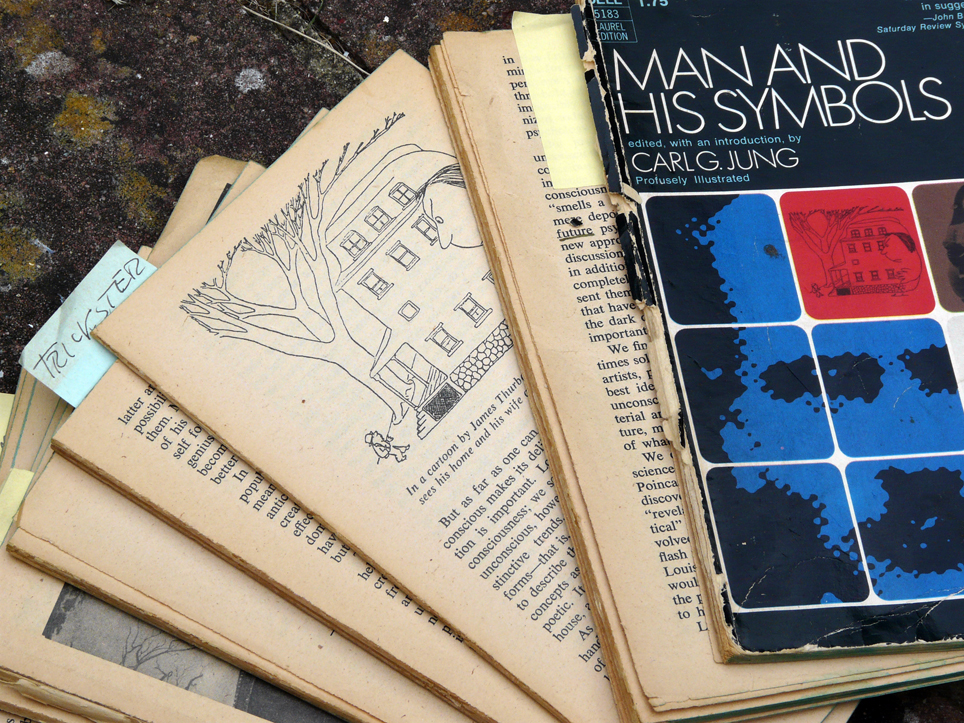
Man and his Symbols.

You couldn’t find a better window into the ideas of Carl Gustav Jung.

It was Jung’s last project, addressed to a wider public, readers who would not normally come upon the over 17 volumes of his work.

Due to its pocket size, as you can see, the yellowed pages of my copy travelled and have been well-read over the years ….

The book came about through the persistence of the remarkably diverse John Freeman: http://www.newstatesman.com/politics/politics/2013/03/john-freeman-face-face-enigma

He interviewed Jung in a Face to Face programme for TV: https:/ /www.youtube.com/watch?v=FPGMWF7kU_8

Seeing the programme, Wolfgang Foges (Aldus Books,) urged Freeman to persuade Jung to write a book for the general public. Jung firmly refused – until he had a dream. He consequently asked Freeman to act as editor and co-ordinator with the average reader in mind. So it became a collective project between Jung and four of his followers, M L von Franz, Joseph L Henderson, Aniela Jaffe and Jolande Jacoby, and was completed before Jung’s death in 1961,

In his introduction Freeman suggests the reader will find it a persuasive and profoundly absorbing journey … which, for me, was true from the start. During eight hours on the plane, with an occasional glance at my partner, the receding skyscrapers of Manhattan, and the expanse of oceans, my interest in dreams and the unconscious were powerfully validated. The book makes a convincing case for the imaginative life as the most distinctive characteristic of human beings. I totally grokked this: The unconscious is no mere repository of the past but also full of germs of future psychic situations and ideas … they grow up from the dark depths of the mind like a lotus and form a most important part of the subliminal psyche.

Two years on, having become a mother, and living for five years in rural Somerset with treasured time to study, it was C G Jung’s work that inspired me to delve into cultural and mythological research, leading on to my training in psychotherapy, and later still, to write novels.

My shelves contain many more books I loved to bits, and I wonder if digital version of these publications would have had the same lasting impact.

Frankly, I doubt it.

Only today I shared a tattered copy of Kahlil Gibran’s ‘The Prophet’ with a supervision client. She had never heard of the poet and was delighted.

Do you have books that fall apart through love and physical touch and still inspire?


17 Comments

Filed under Blog

… global vision & synchronicity …

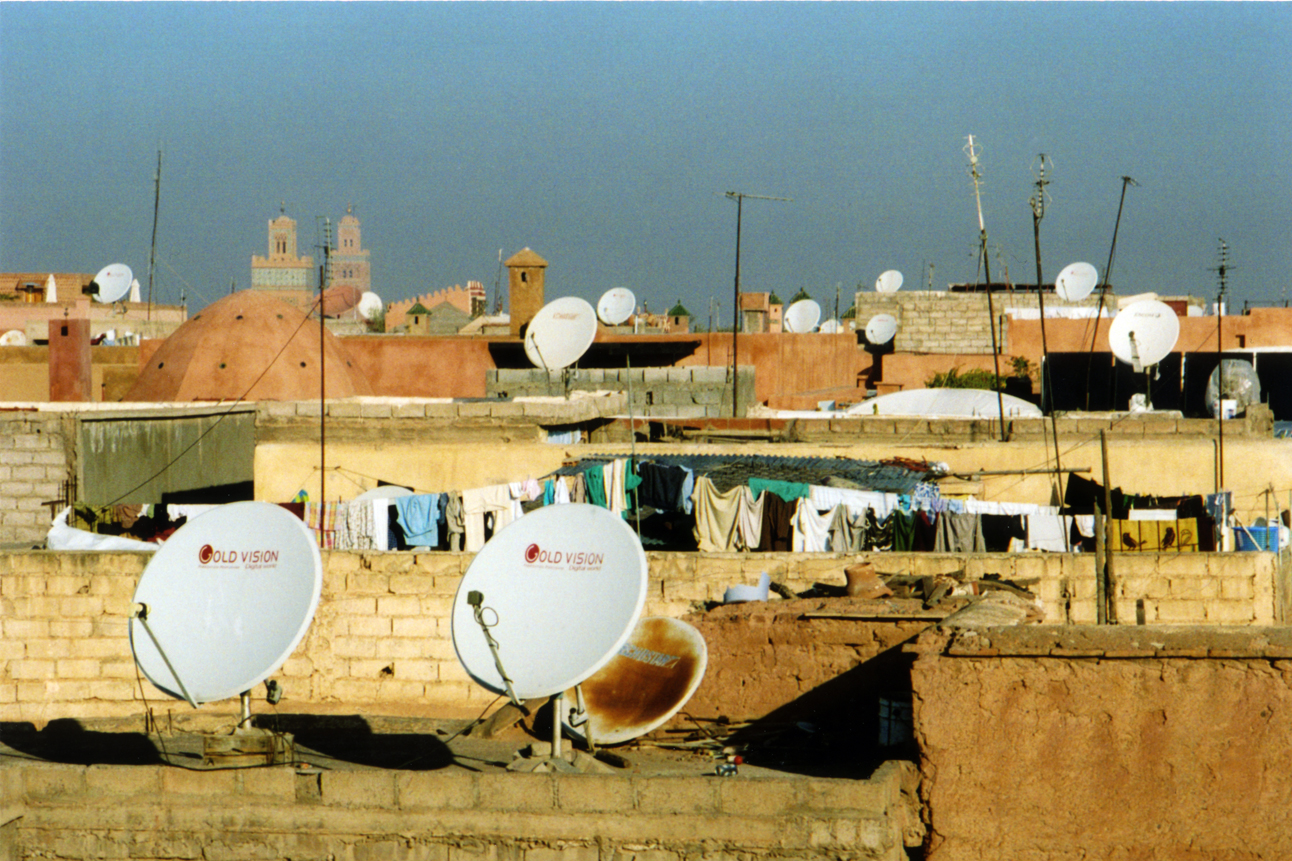
Moroc, Marrakech Riad roof, golden vision - low     Less than 80 years ago, across the world, only about 200 televisions sets were in use. Today, a simulated reality confronts us with our collective mind. A click away, we sample the zeitgeist and witness some disturbing trends, like the continuous robbery of world resources.

How do we filter the mass of information? Do we shout treason when we see the failure of economic systems that allow 1 % of the population to own 40 % of global wealth, or when we discover that certain corporations privatise water –  even rainwater  –  in underdeveloped countries? Traversing from one patch of light to another, do we make connections that apply to our scope of action? Or, lacking a meaningful context, are we hypnotised by this enlarged mega-screen, the global vision of a world that can mirror our inner fragmented states  –  a world where every viewpoint exists simultaneously, that over-exposes so-called reality and blinds us? Are we ourselves living inside the screen-myth, as extras, freed into bits, a reservoir of data?

As writers, what in-forms us, what material do we disseminate? And what is it that makes choices, switches from one networks of influence to another? What guides us through the data jungle? Are there perceptions beyond our wilful personalities that determine, agencies that operate through us from beyond time and space? I’m weary of the term God. For me this agency is a consciousness composed of past, present and future intelligences, a light-wave that echoes different signals according to the receptivity and needs of each animated vessel. Humans can be dense, but a calm mind recognises clear signals of this wave, since they chime with a joyous feeling of connectedness, a larger symphony, maybe even the sense of a destined purpose.

In my experience, this consciousness operates through synchronicity. There exist conceptual similarities between the behaviour of sub-atomic particles and archetypal images, (C G Jung and Wolfgang Pauli discussed such similarities in the context of synchronicity), a striking link between mind and matter that has been largely ignored. It implies that mind and matter connect, relate, mirror each other, and reciprocate. The process is given life in the realm of the psyche as imagination, not structured by time and space, but through layers of meaning illuminated by consciousness. Psyche is the changing room between cosmos and pneuma.

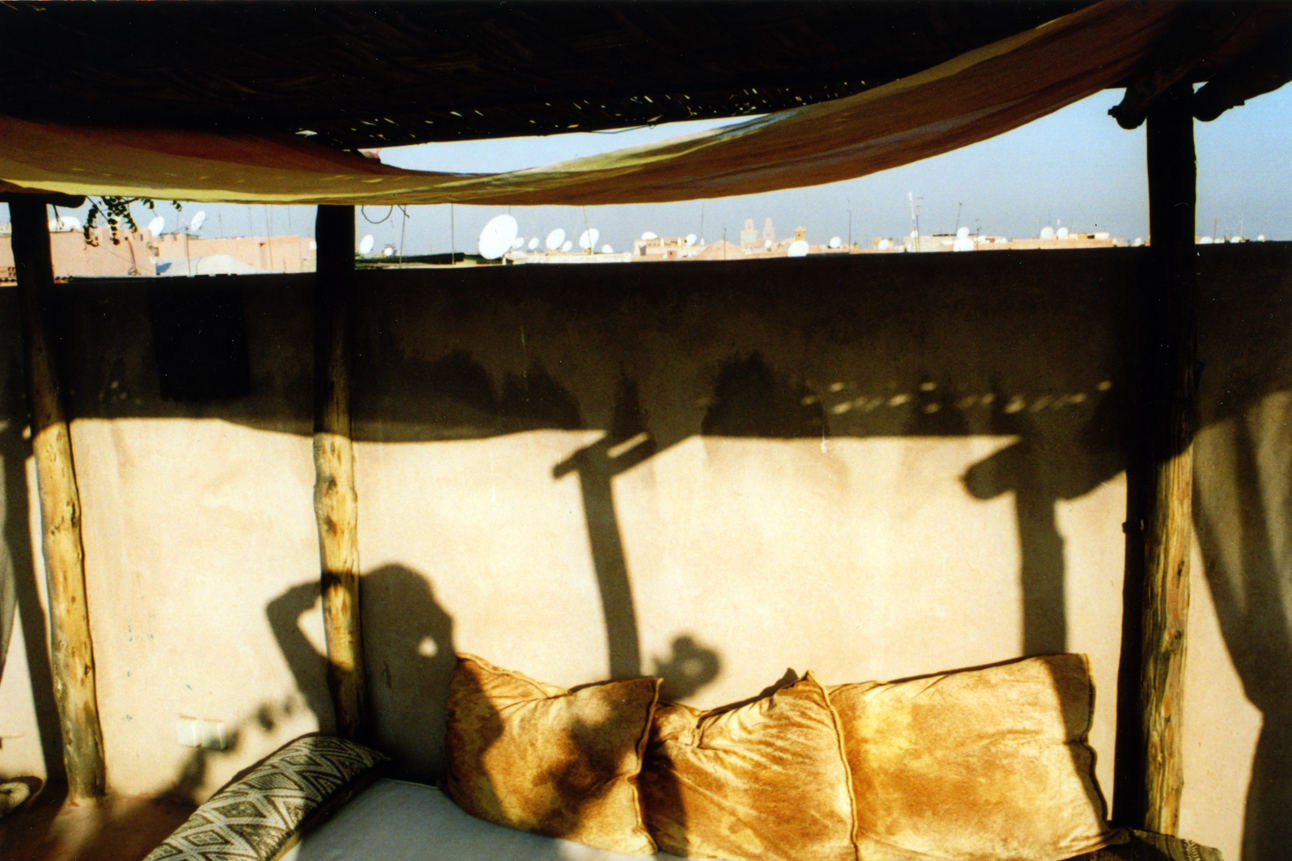
Moroc, Marrakech, Riad roof, shadow - lowJung thought of archetypes not as fixed, but as changing predispositions, universal patterns inherent in the human psyche, images that comprise our collective past and future unconscious. A pattern stirred into activity by an emotionally charged event in our lives, brings home related experiences, often through meaningful coincidences in a non-linear and a-causal way.

Such synchronicities draw on a deeper life-sap, as if an eternal intelligence were at work.

David Bohm proposed that subatomic particles remain in contact with one another regardless of the distance separating them, and that their separateness is an illusion. Here a facet of his thinking – a short first part of a 5 part series  http://www.youtube.com/watch?v=oGyDVF8GrLk                                                                                              A great and humble man I greatly admire. He has beautiful hands  🙂

A dream, for example, can attract an outer event, a meaningful coincidence, that powerfully substantiates a message from the unconscious, often accompanied by a numinous quality. In my own life, synchronistic events have challenged my narrow reasoning at certain crossroads towards seemingly irrational decisions. Exploring a hunch, while not attaching to the outcome, often clarifies a situation for me. Consequently, I respect the unconscious, and heed my intuitions.

‘The universe does not exist, out there, independent of all acts of observation. Instead, it is in some strange sense a participatory universe.’ – John Wheeler

Just as scientist are branching out from traditional imperatives that divide the world into subjects and objects, so we all, presented with a global vision, must modify some of the archetypal imperatives, images and ideas that have outlived their use, and look for symbols that carry a fresh mystery.

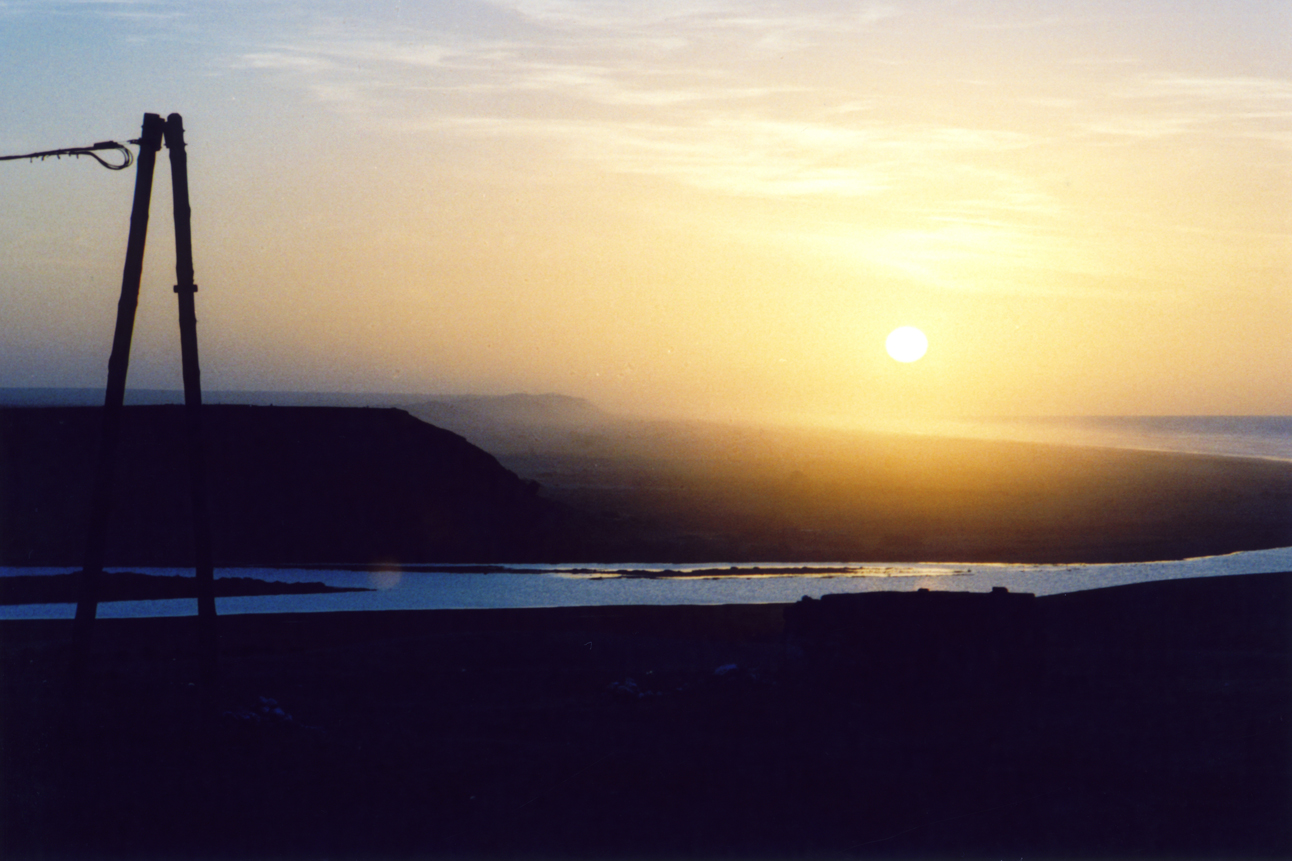
Moroc, Plage Blanche sunset - low

While sun and moon are forever formative and feed our imagination, they are no more our only lights.

With new associations from science come fresh symbols and exciting probabilities, in that we can question assumptions about time and progress, about the relationship between matter and mind, about our view of social units, and even the meaning we give to gender.

‘It’s a poor sort of memory that only works backwards’. The White Queen says to Alice.

*    *    *

Many of my posts here touch upon similar themes, but maybe pattern-which-connect in particular: https://courseofmirrors.wordpress.com/2012/05/25/pattern-which-connects/

6 Comments

Filed under Blog

… erotic charge of flawed characters …

Literature thrives on flawed characters. With the sinister Heathcliff in Wuthering Heights, for example, Emily Bronte tapped into the shadowy aspect of masculinity.

C G Jung calls the latent masculine within women the Animus. Both in its light and dark aspects, this archetypal blueprint can put women under a spell.

I can see Jonny play the disparate twins in my novels :)

I can see Jonny play the disparate twins in my novels 🙂

Equally, the latent feminine potential within men, the Anima, can evoke both, the guiding wisdom of Sophia or the dark erotic charge of Medusa, causing tremendous fear of nature and its awesome power.

Rather than using the image of a femme fatal, I choose to show what  fear of the feminine inspires in some cultures.

Rather than using the image of a femme fatal, I choose to show what fear of the feminine inspires in some cultures.

Our irrational attractions can be sparked and coloured by the parent of the opposite sex. Like a woman with a brooding and unapproachable father may have to kiss many frogs before she discovers the prince inside, while an idealising father can trap his girl in vacuous fantasies. And the boy of a manipulative mother may develop resentment or idealisation for women, or both in a toxic mix. What we tend to project onto the opposite sex is however deeply sculpted by a collective archetypal storehouse of experiences with dual aspects. Paradoxically, this storehouse is also the source of our most powerful experiences and innovations. Whether in a life-giving shape or a dark and petrifying shape, either way, the Animus and Anima hold a numinous fascination until their autonomous grip on us emerges into awareness, becomes conscious, is redeemed, turns creative and makes us truly human.

In my first novel, Course of Mirrors, my protagonist, Ananda, is torn between two disparate men, twins. The theme continues into the sequel – Shapers – with higher stakes in another time zone. In the excerpt below, Gart is rescued from a dangerous impasse by a trickster and transported into the twentieth century, where he meets the story teller and myth-maker, Cara.

*     *     *

Short excerpt from chapter 12, Shapers

Back in Derrynane

Five hundred years back, at the Kerry peninsula, Gart pondered how he came to sit at this familiar coast, under a dull sky that matched his mood, the sea before him rolling and spitting at his soiled boots. It was the trickster’s doing, of course. He did not thank Zap for transporting him back here, where an old crone had hexed him and a group of weird artisans had made him look like a fool. Yet it was here that he first met Mesa, who he now pined for in his bones. He must get back to Rhonda and outdo Crim. And Leo must be terminated, since he had obviously gone mad, and courted disaster if he planned to control Rhonda’s army. The Governor of Guardians, ha, they despised the fat man. It was him, Gart they followed.

‘I messed up,’ Zap acknowledged, stretching on the wet sand nearby and cracking his joints. ‘Forgot, I can’t activate coordinates for the hub, and this happens to be the only other place we’ve been in together before. I had little choice. ’

‘You’re not so bright after all, are you?’ Gart grunted.

‘At least we’re not consumed by noxious fumes of our own making. Best not dwell on the past.’

‘We are in the past, eejit.’

‘Local slang, eh? You’re a fast learner. You score a point. Zap jumped up and ran a circle of cartwheels. ’Let’s go up to the estate, see who’s there.’

Derrynane estate looked deserted. ‘Nippy air on the plateau,’ Zap said, ‘you would’ve thought they’d light a fire, but not a whisk of smoke from the chimneys.’ The men slipped through the narrow gap between green-smothered walls, the two dragons, Zap recalled, though now their shape was lost under rampant ivy. The yard, empty of dogs, cats, geese or horses, had a silver car parked near the main entrance. Zap whistled, ‘Flashy design, time’s moved on since we’ve been here last.’

Gart’s heart lurched at the sight of the woman appearing in the porch.

‘Hi,’ she said, ‘do I know you? You’ve been here before, haven’t you?’

Zap, in Shaper style, put a hand to his heart. He too recognised her, though she had turned into a mature woman. ‘You’re Cara, I remember. Where’s everybody?  Saki, Anke, Mushki …’

‘Oh the troupe, goodness, that was years ago. When Gutch and Craig joined them they hit the road together. I think they operate from a place at the English coast.’

‘And that witch?’ Gart wanted to know.

Cara gave him a piercing look. ‘You mean the oracle of my mentor, Tilly. She has sent me here, for a retreat. I only just arrived. I plan to spend some time writing on my story of Mesa.’

‘I hope the story includes us,’ Zap said, we’re friends of Mesa.’ He shot a glance at Gart, whose mouth opened and shut in confusion.

‘You better come in.’ Cara’s scalp tingled. This must have been what Tilly had had in mind, to process the strange occurrences from so many years ago. ‘Zap and Gart, is it?’ Like Tilly, they hadn’t aged at all, while she herself had gained ten years. To mask her excitement she whizzed around the kitchen. She stacked kindling in the cooker, emptied her shopping into the fridge, plonked bread and cheese on the table, put a kettle on, fetched plates and cups and cutlery, all the while feeling Gart’s eyes on her. She told her guest about her life, her journeys, and studies. Zap helped with arranging the table and kept nodding, eager to hear all she had to say. Cara only tried to gain time to collect herself before she was ready to ask the questions pressing on her mind, about Sax, about Rhonda, about Mesa.

‘Shall I get logs?’ Zap asked sweetly.

‘Oh yes, please. I was planning to camp in the cottage, but we might as well get rid of the chill in the big house. The cooker is attached to a central heating.’ She watched Zap walking out with a basket, charmed by the ease of his manner.  Gart made way for Zap but did not offer any help. Rooted to one place since entering the kitchen, he resumed his position, leaning casually against the door frame  Now they were alone Cara couldn’t avoid him. Their eyes met. She blushed. He had followed her every movement with an air of aloofness. A hint of curiosity sneaked into his eyes.

‘I look like her. Is that it?’ Cara said.

‘In a way.’ Gart moved towards the table and pulled out a chair to sit on. ‘What happened to your lover, Dillon?’

‘We split, went our different ways. He had his quest.’

‘What quest?’ Gart asked. The term perked his interest since Oruba had called his underground journey a quest.

‘Not my tale to tell. He may have found whatever he was looking for.’

Zap returned, groaning under the heavy basket of wood on his shoulders. He piled logs over kindling in the cooker and neatly stacked the rest against the wall before he went to get another load. Cara lit the fire. Gart, intrigued about her remark regarding Dillon’s quest, struggled to grasp what precisely intrigued him. He scratched his ear, as if hoping for a message. He resented how confusion undermined his confidence. The kettle whistled. To snap out of his dazed state, Gart got up to pour the boiling water over the coffee in the percolator Cara had prepared. ‘Thank you,’ she said, surprised. When Zap returned they settled to a meal. It was Cara’s turn to ask questions. Intermittently Zap fed the fire and they moved from coffee to drinking wine. The story Cara was so eager to hear unfolding was punctured by heated disagreements between Zap and Gart.

‘Some names have changed, but I recognise the characters.’ Cara said, jotting down notes, pen hot in her hand. ‘I thought they’d outlawed weapons in Rhonda. Where did the laser guns come from?’

Gart said. ‘Leo must have raided the Archives. Everything from ancient pasts is stored in the pyramids surrounding the archives – and there maybe catacombs under them. I know this because Leo let it slip once. ‘The man’s a danger to Rhonda. I’ll put an end to him.’

Zap shook his head. ‘Killing Leo, and start a war! Use your imagination. He turned to Cara. ‘If you’ve a say in this story, keep this man away from Mesa. He’s murdered in the past, he can do it again. Mesa deserves better.’

Gart pushed back his chair and sent it cluttering to the tiled floor. He stormed from the kitchen. Cara felt the hurt pride under Gart’s rage. Zap crunched his fist and stared into space. Fiercely protective of Mesa, he had clean anger under his pain. ‘Please keep the fire going, Zap, there may be frost tonight. I’ll talk to Gart,’ Cara said. And she knew where to find him.

The sky had cleared towards the horizon. Beyond the yard, the autumn breeze picked up, biting through Cara’s light coat. She saw him standing at the cliff, looking towards the faint silver band that now divided sea and sky. A diaphanous layer of cloud screened the late sun, against which Gart’s lean body looked delicate, like a feather drawing. Why had she invested her story with two lovers, men who did not see eye to eye, men as different as Assisi and Caligula?  He did not turn to look at her as she stepped close to him. He did not move at all, his mind had wandered off through time’s veil, searching for Mesa, no doubt. ‘You see,’ Cara said, ‘once we have given life to something we can’t control it, we can only try to influence an outcome with truth, which is not always in tune with our wants.’

‘I don’t understand.’ Gart finally met her eyes. ‘You created this damn story. Whose side are you on?’

‘Truth is hard to discern, its meaning is held in another reality, where on-going myths are spun. You became part of my story because you walked into it, in a most brutal and controlling manner, though it wasn’t entirely your fault. Does the name Batin mean anything to you?’

Gart felt a stab of fear, but quickly shrugged it off. ‘I think I met a ghost of that name.’

‘How your path unfolds depends on your engagement with what you attract. It’s the same for me, but in addition I’m recording fates, yours, Leo’s, Zap’s, Mirre’s, Oruba’s, Mesa’s, Crim’s… ‘

He cut in. ‘Crim’s one too many.’

Cara sighed. ‘I care for all of your fates, they affect me deeply.  My feelings swing about, gyrate like a weathervane does when it storms, which should kind of answer your question. Right now, as I stand here next to you, sensing the pain you can’t quite admit, I’m on your side, but my alliance can change, from moment to moment, from day to day, from chapter to chapter, since like you, I’m compelled by this quest for truth.’

‘Truth again …’ Gart’s lips curled and broke into a devastating smile. ‘Tell me this then – why does Mesa look like you?’

Cara swallowed her shock. He had touched on her core identification, revealing her disparate affections, the turmoil she experienced between the two types of men she was enmeshed with across time, of whom one now exploited her vulnerability, took complete possession of her with his eyes. And faithful to his nature, he relished in the conquest. Cara’s heart quickened. From deep inside her body she felt his pull, as if by a rope. His seductive power made her tremble. Yet she knew he cared only about himself. And coerced by her divided nature, her concern instantly switched to Crim.

*    *    *

If you’re not familiar with the concepts of the Shadow, Animus or Anima, the Wikipedia pages can serve as introduction.

http://en.wikipedia.org/wiki/Shadow_(psychology)

http://en.wikipedia.org/wiki/Anima_and_animus

And anyone who has never heard of Joseph Campbell – this book is a must for writers.

http://www.amazon.com/Thousand-Faces-Collected-Joseph-Campbell/dp/1577315936

2 Comments

Filed under Blog

… the cast in the shadows …

Perhaps all the dragons of our lives
are princesses who are only waiting to
see us once, beautiful and brave.
Perhaps everything terrible is in
Its deepest being something
that needs our love.                — Rainer Maria Rilke

Last week I volunteered a short session in the context of a variety of monthly events organised by a group of friends under the umbrella of Archventures.

… the cast in the shadows …  …

We have inside us a cast of players for every imaginable scene. Occasionally banned and hidden characters pop up. Excluded from our script, they emerge inadvertently through surprise encounters, act irrational and appear cartoon-like. Unacknowledged, a wild player roams in the unconscious unconnected, until an emotional trigger hits a sensitive node. We are not amused when an unsophisticated trait breaks to the surface with behaviour that will embarrass and shame us, belying our self-image.

We learn as children to shield ourselves from rejection and injustice. Our strategies are endless and contrary …  like being compliant and withholding or defensive and angry. Think of a natural and well-meaning quality persons in your early environment disapproved of in the name of moral perfection. Your trust may have been betrayed, manipulated and taken advantage of. We adjust as best we can. Rules are needed for societies to function.

We spend our life until we’re twenty deciding what parts of ourselves to put in the bag, and we spend the rest of our lives trying to get them out again. – Bly

In relation to our genuine nature, the sacrifices we make in order to belong can be as disproportionate as the sacrifices we make to defy authority. Feelings we edit out of our lives gather a strange luminosity and succumb to an archetypal force beyond our command. Yet a closer look at the rawness and imperfections of disowned players may surprise. They invariably hold a gift, often the very essence of our creativity.

A way to re-own the locked up energy is to honour our battle scars and weaknesses. We don’t have to agree with inner and outer adversaries, only accept their existence in us. This acceptance opens the heart to tolerance, rapport, understanding, empathy – and insight.

‘Our friends show us what we can do – our enemies teach us what we must do.’ – Goethe

We make room for imperfection … 25th Feb 2012

What is uplifting about our monthly Archventures gatherings are the hugs … yup … never underestimate the invigorating power of hugs. What I also appreciate – and this applies to many groups whose core members meet regularly – is that we form a different entity each time, enriched by everyone’s fresh constellation of experience and insight. Newcomers feel welcome and at ease in this irreverent group that does not follow any one creed, ideology or person.

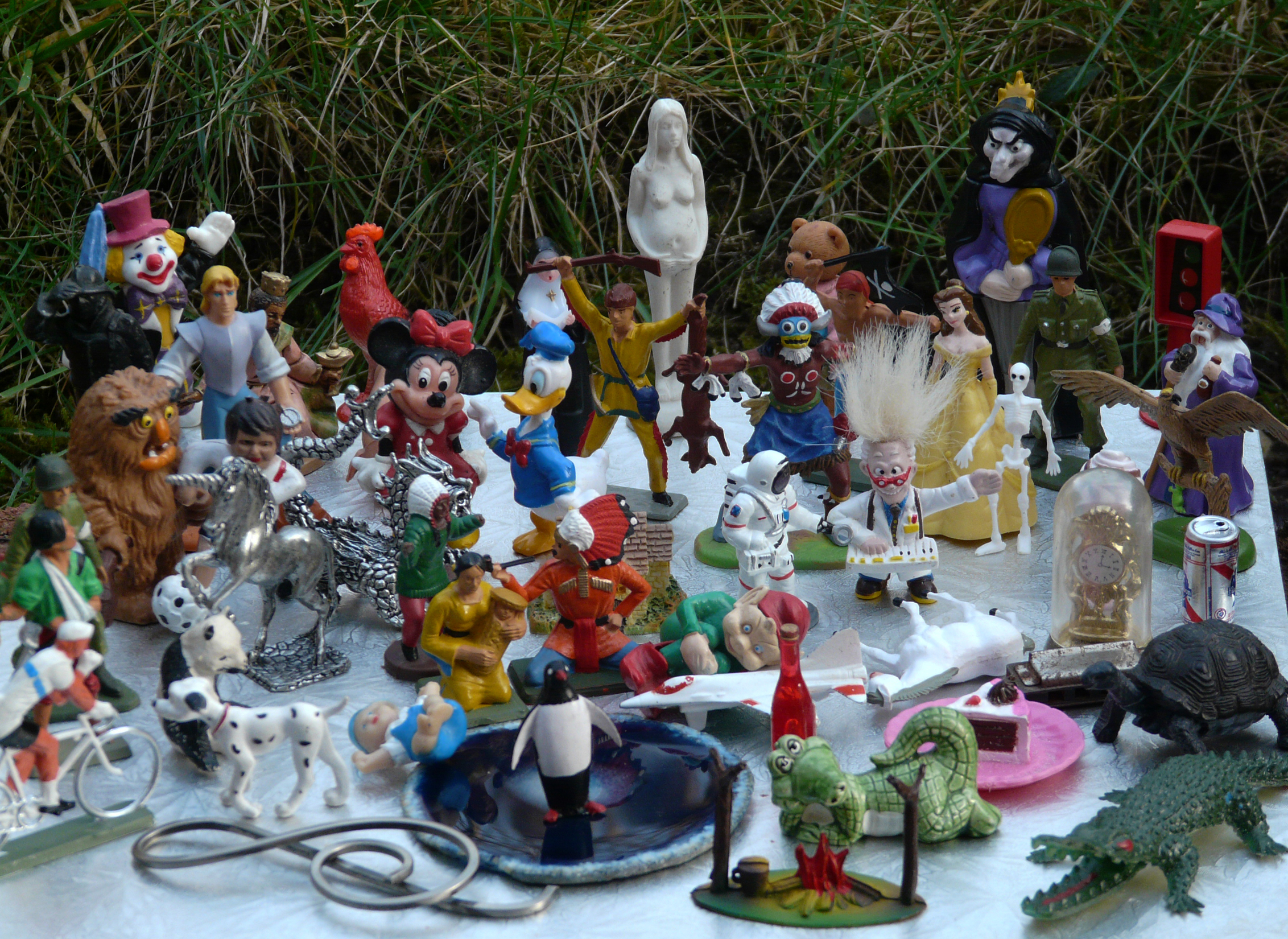
The most powerful player this afternoon was the seven-year-old son of a participant. The boy was fascinated by the boxes of miniature world-objects I had brought along.

He outplayed us all, instantly creating a legion of his world.

The young will be forever potent in their ability to play and invent …

We adults shared unique and moving stories about early misdeeds, raising questions to be explored individually. (The photo is of a  different occasion)

Some shadows we drag along are not of our own making, a dilemma that also applies to families and nations.

‘The best political, social, and spiritual work we can do is to withdraw the projection of our shadow onto others.’  ― C. G. Jung

Understanding the origins of shadow-projections softens the compelling affect they have in defining us, and our reactions to being fitted into a frame. Observing politics, it is obvious that negotiations are not enough to solve longstanding conflicts. It takes the awareness and inner work of individuals to let go of resentment, release the spark of creativity that enables lateral thinking, and the flow of compassion tied up in the entanglement of righteousness.

And there remains the unknowable, luminous black hole, and a sixth sense of something that evades us. What is mysterious, not accessible emotionally or through analysis, drives us on to dig deeper, expand our consciousness, and re-discover the link to our innermost self.

‘We are born at a given moment, in a given place, and like vintage years of wine, we have the qualities of the year and of the season in which we are born.’ ― C. G. Jung

With only three hours’ time available, the session at least inspired us to remember what is in our power to do. There remains the ever impelling potential of greater intensity and more poise between safety and risk on the tightrope of our life.

Our dear friend Rahima outlined the shadow theme as C. G. Jung defined it. If you have not heard of the term ‘shadow’ in this context you might want to investigate: http://en.wikipedia.org/wiki/Shadow_(psychology)

And in relation to the activity of writing – here a dream image in the eye of its beholder  http://www.youtube.com/watch?v=M19S89UcaKQ&feature=related

If we could read the secret history of our enemies, we should find in each man’s life sorrow and suffering enough to disarm all hostility. Henry Wadsworth Longfellow


*    *    *

4 Comments

Filed under Blog