Mystical texts and phrases can annoy the rational mind, since they hardly ever get to the point or, indeed, contradict themselves. Still, at rare, often fleeting moments, sometimes in nature, a vein of light can reveal a profound truth, even in an overused mystical quote. Or, if one finds the occasional balance between the outer and inner reality, a sudden awe may unfold in consciousness and surprise.
‘Some’ scientifically minded folks, fewer these days, tend to scoff at mysticism with its vague hints and speculations as a waste of time, or look down on the fools of this world who suffer from subjective illusions. And yet, the novel feelings emerging from direct numinous experiences greatly expand the consciousness of ‘The One.’ I guess firmly set rational minds shy away from numinous personal experiences that might rattle their worldview.
The latter may shake their heads at some baffling mystical musings. I re-found this write-up on the Kaif System among many papers heaped up in corners of my home. It was shared by Morag Murray, born in Scotland, who lived and travelled in Central Asia, Tibet, India and the Far East. Her autobiography, ‘My Khyber Marriage,’ 1934, features her marriage to an Afghan chieftain. She is also known as Saira Elizabeth Luiza Shah, mother of Idries Shah.
So here goes … The Kaif System
Kaif is the effect a person, idea, event, object, etc., has upon one. But it is distinct from aesthetic pleasure or any familiarly labelled experience.
When an experience which was trivial or routine gives one a sense of uplift – this may be Kaif. Repeated experiences yielding pleasure or attractive sensations do not have Kaif.
Eating, drinking, dancing, meeting people, visiting, travel, reading, seeing, feeling, hearing, thinking – may have Kaif.
The term for something which has Kaif is Kaifdar – ‘Kaif holding.’
A person who can provoke the sensation of Kaif in an individual or a number of people is called a Kaiyyad (Rhymes with ‘I laugh.’) The instructor in Kaif is called the Sahib el-Kaif (Kaifmaster.) Also used is the term Kaifiat – which means something like ‘Howness.’
The Kaifmaster Barik Ali said: ‘Kaif is the determining ingredient in an enjoyment. If it is not there, true enjoyment is not there. If it is not there, people may divert themselves with happiness – this is not Kaifiat.
The Kaifmaster Ankabut said: ‘Kaif is imparted into a thing. It may be imparted by anyone or anything. When it leaves only the shell is left. People eat shells when they cannot get nuts.’
The Kaifshinas is the Kaif-knower. He can appreciate Kaif (Rhymes with Life.) He may not be able to induce it. His house may be untidy. But it will be full of Kaif.
Kaifju means a Seeker of Kaif. He starts by seeing other people appreciate Kaif, and tries to find it wherever it manifests itself.
Kaif is used either as an indulgence on its own, or in order to provoke higher consciousness, known as ‘the secrets’ (Asrar.)
Kaif may be found in any community, at any time, under any circumstances. It is not bound by language, history, geography.
Certain professions are held to be Kaifdar. They include those of chief of state, builder, artizan, poet and designers of all kinds. Few professions are bereft of Kaif. Certain places are more difficult for Kaifshinasi.
The very term Kaif has become cheapened, so that people use it to mean ‘This is something I like’, or ‘I enjoy that,’ or ‘He has presence,’ or ‘This is satisfying, attractive, stimulating.’ You must be aware of yourself using this term, and also of those who use it, so that the coin may not be debased.
Kaif is defeated very easily. It is defeated in its attempted manifestations by false ideas, by self-esteem, by hypocrisy of any kind
There is a danger in Kaif. People who perceive it and do not respect or honour those who have Kaif, or respect Kaifdar situations, places, and so on, become ‘inverted to themselves.’ This is a state in which a person’s bad characteristics become stronger, and where his self-control becomes less, and where his hidden unpleasantnesses undermine his very being.
Kaif is in shape and in form, as well as in shapelessness and formlessness. It lies dormant in places and among people where it is not perceived for a long time. Then only the introduction of a conscious Kaifshinas will activate it again in that community so that it may take its place to help mankind.
Kaif is not confined to humanity, but can be perceived by all living organisms.
Something which is aesthetically adequate or emotionally stimulating can at the same time be devoid of Kaif.
Certain exercises, which vary in accordance with the person, place and the general situation of his community, enhance Kaifshinasi.
Kaifmasters subject their students to experiences, related incidents, objects and other matter which have Kaif, or can provoke it.
Kaif has a ‘moment,’ called the Dumm-i-Kaif (Breathspan of Kaif) during which it may be, as it were, ‘inhaled’. The Kaifshinas strengthens and makes permanent his perception of it by exercises which apply to this moment.
In religious, musical and even social ceremonials, a Kaifdar is present. One of his activities is to ‘infuse’ Kaif into the proceedings at a time when uninformed onlookers might assume that the people are doing nothing, or else are engaged in an activity (such as a recitation) which is only the vehicle for the application of the Kaif.
Special Kaif-chambers exist, in which an individual with the correct preparation may concentrate and accumulate Kaif, and study it in its manifestations.
In degenerated usage, such Kaif-chambers continue to be used, sometimes as devotional buildings. More often they are thought to be tombs fallen into ruin because there was no apparent use for them, or seem to have other applications, such as kitchens or bath-houses.
There is a well-known watchword: Innna el-Kaif, hadha el Kaif (Assuredly the Kaif is a Sword.) Hence the word SWORD is often used as password and even as a synonym of the working of Kaif.
Objects charged with a certain portion of Kaif are given, lent and carried by many people who know. These, like Kaif-chambers, are generally disguised as something functional, or else are ordinary objects which have been endowed with Kaif. The vulgar often confuse them with talismans or charms.
The saying: ‘Kaif-alaik!’ is a sort of blessing. It means: ‘May you have Kaif.’
In Turkey the Kaif-Agha was the individual entrusted with the royal Kaif. He was a Kaifdar, and generally assigned a court function as well.
Because its smokers have appropriated the term Kaif to describe (inaccurately) their sensations, Hashish has become known as Keef, a mispronunciation of Kaif. There is no real connexion, of course.
* * *
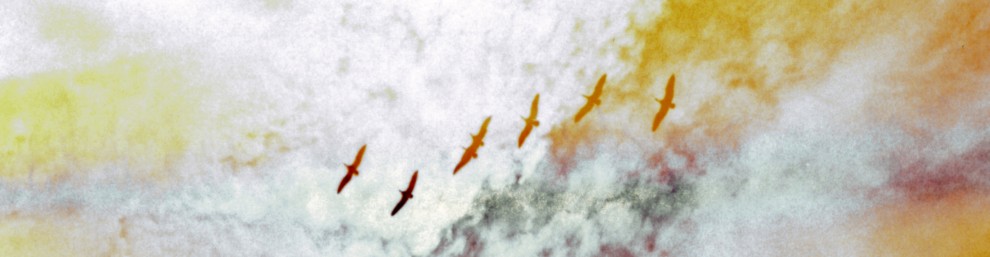
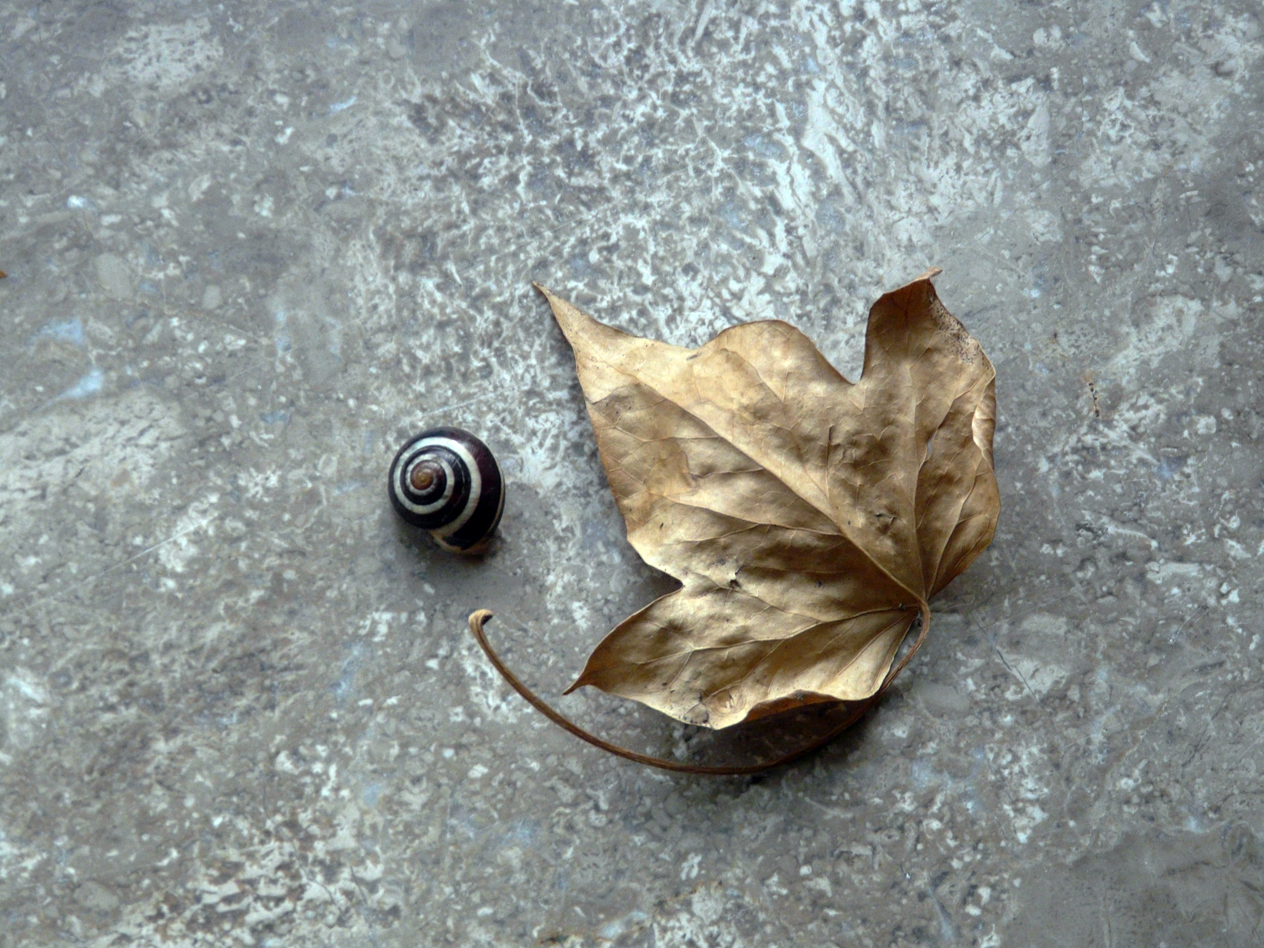
I tend to encapsulate instances of Kaif in photography or haiku.
You may have another term for Kaif, and ways to share inspiring experiences.
In any case … May you have Kaif my friends …


 Course of Mirrors