Tag Archives: Course of Mirrors

… apples, flu, altered states, wedding plans …

This autumn is drunk with colours and fruit. Red-blushed, in their own sweet time, apples have been falling with soft thuds onto the dewy lawn for weeks. Each morning they blink at me, and shout – help, pick me up, the slugs are coming. They’re good for something, but did you know that slugs and snails are hermaphrodite, and lay up to 500 eggs a season? Re: fruit, after last year’s poor crop, this year’s harvest is a tad overwhelming. The scale by which nature balances excesses evades rational comprehension.
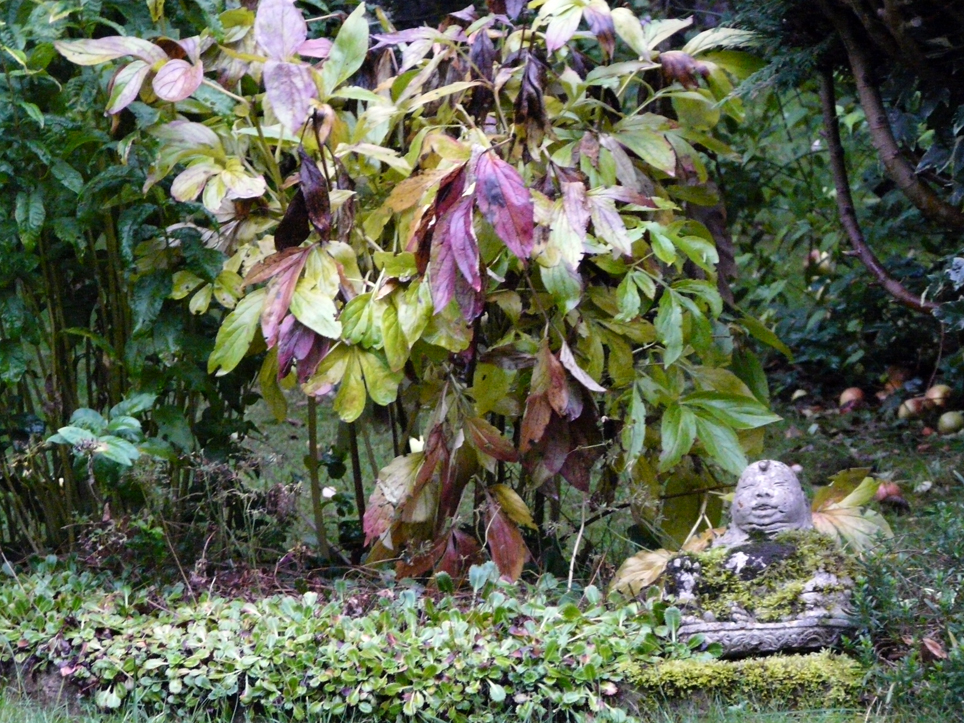
autumn colours

autumn colours

Too much of a good thing brings obligations. Eaters taste best when fresh, so I’m urged to act fast. Slug-nibbled and bruised fruit lands on the compost heap. The bulk of apples, several kilos a day, I wash, dry, box and put out on the road for passers-by, mainly kids on their way home from school. This time-consuming and noble deed has left me exhausted, and with numerous bumps on my head. Here’s the apple saint, drop now. For lack of a resident family to boss into cider-making, I’m left with ‘waste not’ ringing in my ears. If you remember scarcity, you’ll co-suffer the enforced hypocrisy of a  twenty-first-century system that thrives on waste.

I could blame the nagging ‘waste-not‘ guilt for frustrating the flow of my writing. I could blame three early morning trips to London on crowded trains, or  alien dust settling on my skin … whatever …  my body succumbed to the annual purge of flu. So a week ago I sneezed and coughed through fever and chills. Sweaty nights occasioned surreal dreams and visions, and there were days when I lost faith in my invulnerability, reminded that I need to clarify some matters in my Will. I survived – with tons of lemons. You’ve guessed by now that I’m shy of conventional medics, a story I won’t regale you with. The last official need for a doctor’s visit to my home was benign, and over three decades ago,  after I’d given birth to a healthy baby in deepest rural Somerset.

So last Sunday, following a week of altered states, I ventured out to put petrol in my car. I support small enterprises for their human idiosyncrasies. The cashier gazed absent-mindedly over the forecourt and across the street towards a line of taxies, while automatically debiting my Visa and, at my want, pressing another button to produce a tax receipt. Sensing a process at work, I said, ‘You’re bored.’

His head moved independently from his neck. You may remember the craze of bubble-head mascots:  http://en.wikipedia.org/wiki/Bobblehead that’s exactly how his head moved while his eyes rolled in their sockets to take note of my witnessing. His mouth then rounded and huffed before emitting a speech he must have rehearsed all morning. Slow, precise thoughts poured out, including snippets of existential dialogues he had had with taxi drivers from across the road. Written down, it could have edged itself towards some literary prize. His exposition ended with : ‘Nothing to be done. I’m bored stiff.’ Reminiscent of Beckett. Promises, waiting … in tune with my dull-witted flu-states. Missing most words, I was captivated by the man’s brilliant and spooky slaying of meaning. Another customer entered the cubicle. On leaving, some wise-crack in me I’ve no control over, said, ‘You’re reading …’ thinking, you’re observing life  from a distance, co-creating  its absurdities and joys. It’s what writers do.

 ‘Boredom is the dream bird that hatches the egg of experience. A rustling in the leaves drives him away.’   –  Walter Benjamin. 

*    *    *

This post was meant to be short and about my son and his partner, to brag a little.
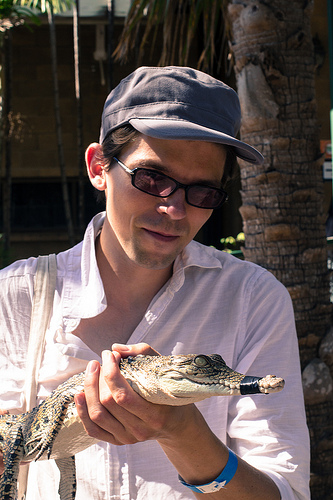
Yeshen with baby croc, photo by Natasha, Aug. 2013

Yeshen with baby croc – there’s a story
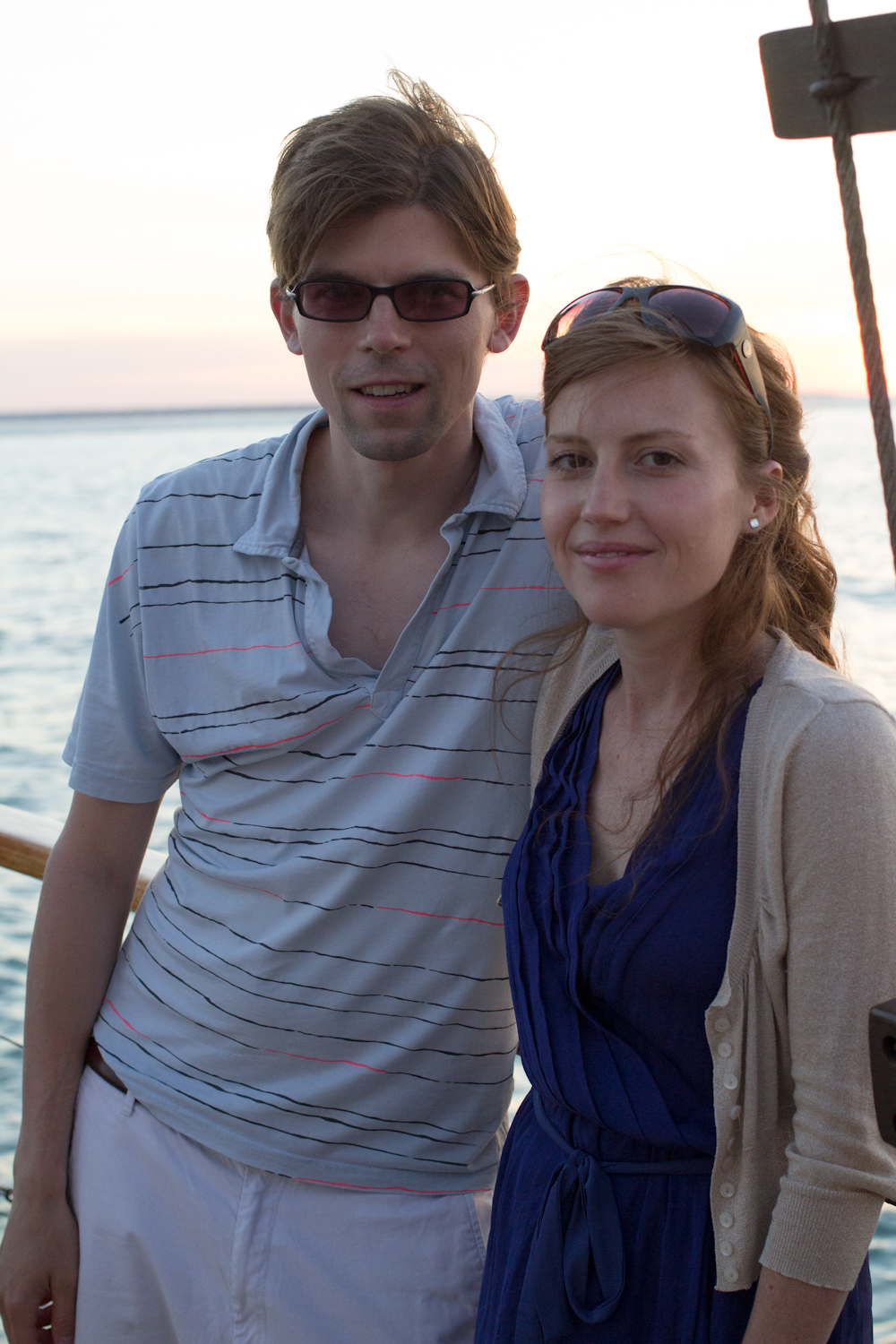
Yeshen and Natasha

Yeshen and Natasha

They were engaged this year and their August journey to Australia had been a reconnaissance for their wedding plans next July, organised by Natasha’s family, who live in Darwin and Perth.

I asked if I could share a few images from their trip. Yesh and Tash have featured on my blog before, indirectly. You’ll find them, for example, under ‘Inspiration’ or ‘Story of an Animation.’ They’re self-employed and work extremely hard, like many young people in super-expensive London, to make a living. They’re lucky being able to do creative and fulfilling work.


I’ve not been to Australia, and am now looking forward to this journey – you can see why.  
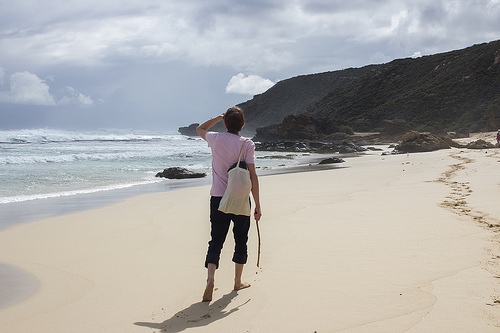
Australia's west coast

Australia’s west coast

17 Comments

Filed under Blog

… interludes – and poetry by W S Graham …

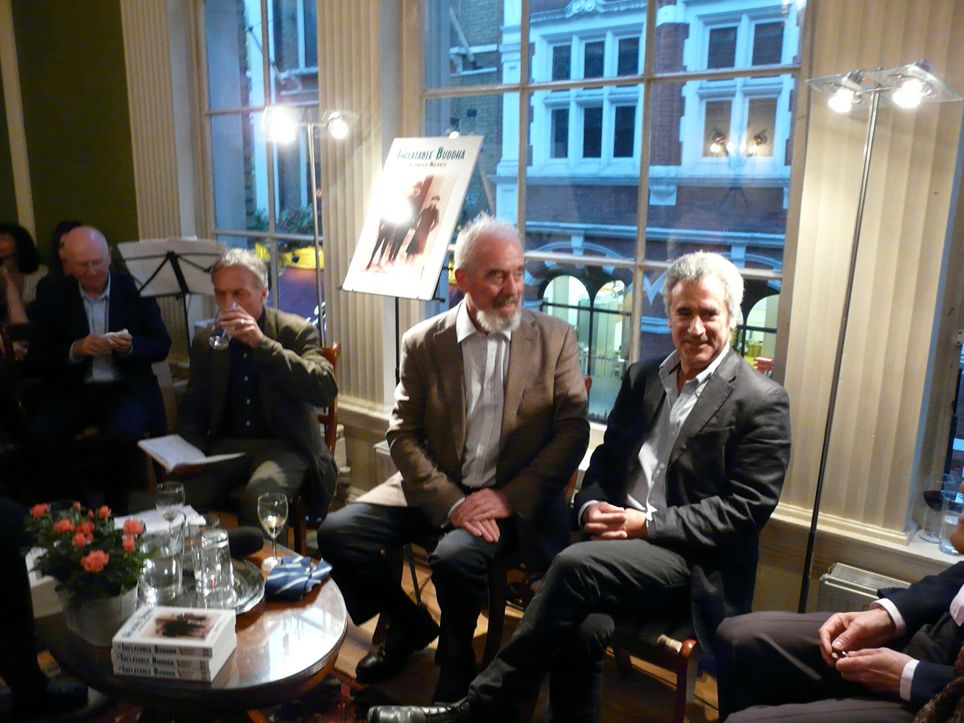
I’ve neglected you, my reader friends, immersed in writing the sequel to ‘Course of Mirrors’ and a few interludes. Like, my writing fixation was pleasantly disrupted last week through meeting my son at Covent Garden, and later attending the launch of ‘The Inflatable Buddha’ by András Kepes at the Hungarian Cultural Centre in London.

Armadillo Central launches 'The Inflatable Buddha.'

Armadillo Central launches ‘The Inflatable Buddha.’


It is the newest project of my to-be publisher http://www.armadillocentral.com/  András’s novel offers a more subtle perspective than officially recorded history, showing the fictional lives and wits of three ordinary, idiosyncratic Hungarians during the twentieth century. The sample readings enticed me, and I’m now looking  forward to reading the book. The well-attended, grand launch event also gave me a taste of what is to come – being exposed to questions about my own epic .


Then came a traumatic interlude to my writing …

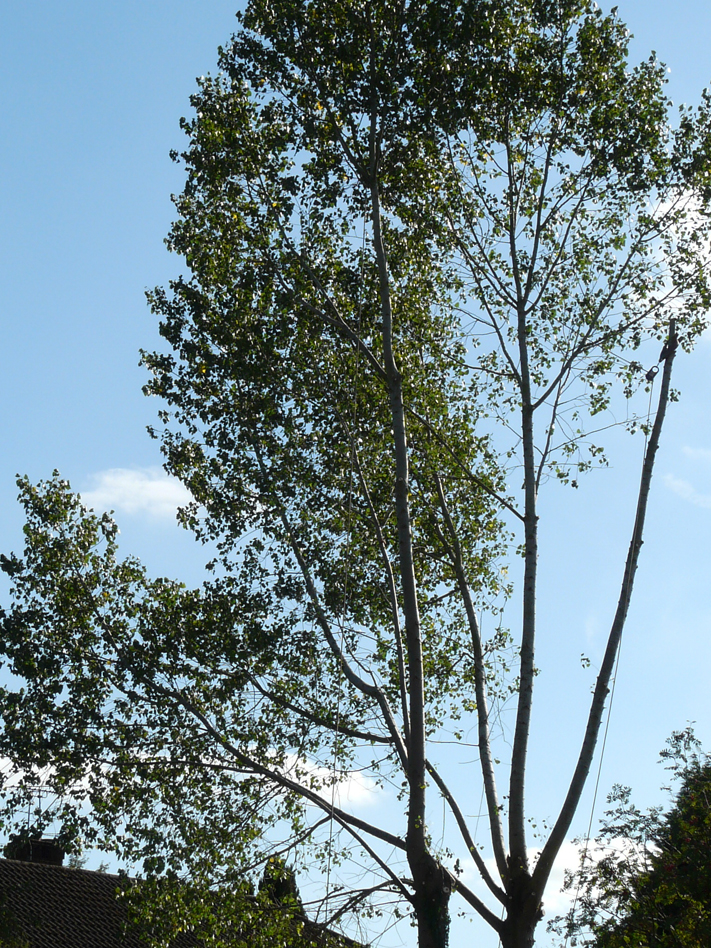
I mourn the shimmer and music of its leaves.

I mourn the shimmer and music of its leaves.

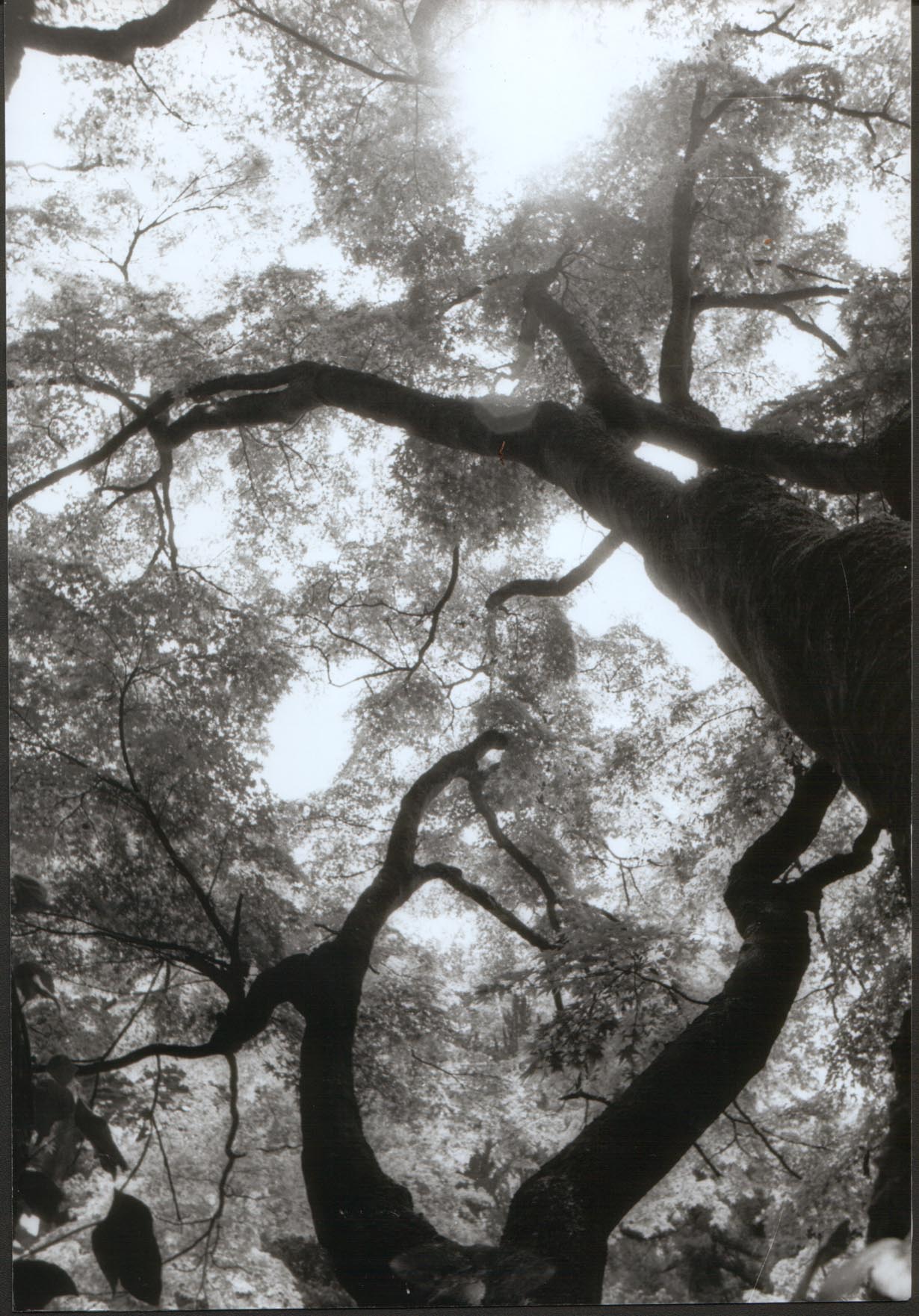
During the last two days, to the grinding noise of chainsaws and a shredder, I mourned the loss of a beautiful poplar/aspen tree in my neighbourhood, which has grown too high for its owner. The now mutilated tree (the image shows a third of its size) will be gone completely next week. I’ll miss the shimmer and the watery music of its leaves, produced by the slightest breeze, and the golden hearts trailing into my garden come autumn. I picked a few early leaves to treasure, pressed to dry in my dictionary.

Today a most pleasant surprise … a poetry book arrived unexpectedly in the post, sent by a Scottish friend/poet, who is at this moment working with a visual artist on a project about Tin-mining in St Ives. Due to blank spots in my education I rely on stumbling upon poets less publicised, and was delighted to receive this gift of an expertly edited ‘New Collected Poems’ by W S Graham. So I thought I’ll share excerpts from his poems – on themes that will chime with fellow writers .

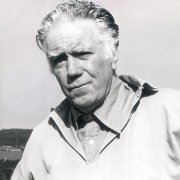
W. S. Graham (1918-1986) grew up in Clydeside, Scotland, and initially followed the footsteps of his father, who was a structural engineer in the ship-building trade. However, a year studying philosophy and literature at an adult education centre outside Edinburgh set him on the path of writing poetry for the rest of his life, irrespective of meagre financial rewards. He travelled to London and New York City, but later lived with his wife in Cornwall.

W S Graham, image by Sally Fear

W S Graham, image by Sally Fear

I was delving into the book this morning. Here some facets, unconnected lines, the first from THE NIGHTFISHING    (1955) – a melodic composition, speaking to the seen and unseen,  from a night in a herring boat out on the North Sea.

… Gently the quay bell

Strikes the held air …

Strikes the held air like

Opening a door

So that all the dead

Brought to harmony

Speak out on silence …

I am befriended by

This sea which utters me …

… Far out calls

The continual sea.

Now within the dead

Of night and the dead

Of all my life I go.

I’m one ahead of them

Turned in below

I’m borne in their eyes

Through the staring world.

The present opens its arms …

… Each word is but a longing

Set out to break from a difficult home. Yet in

It’s meaning I am …

… The bow wakes hardly a spark at the black hull.

The night and day both change their flesh about

In merging levels …

The iron sea engraved to our faintest breath

The spray fretted and fixed at a high temper,

A script of light …

… The streaming morning in its tensile light

Leans to us and looks over on the sea.

It’s time to haul. The air stirs its faint pressures

A slat of wind …

… The white net flashing under the watched water,

The near net dragging back with the full belly

Of a good take certain …


Some of the last lines of – THE NIGHT CITY – a turning point … I found Eliot and he said yes … T S Eliot was then with Faber and Faber. He became Graham’s publisher.

… Midnight. I hear the moon

Light chiming on St Paul’s

The City is empty. Night

Watchmen are drinking their tea …

Between the big buildings

I sat like a flea crouched

In the stopped works of a watch.


From IMPLEMENTS IN THEIR PLACES (1977) I picked a refrain from WHAT IS LANGUAGE USING US FOR ?

… What is the language using us for?

It uses us all and in its dark

Of dark actions selections differ …


And last – AIMED AT NOBODY – Poems from Notebooks (1993)

PROEM

It does not matter who you are,

It does not matter who I am.

This book has not been purposely

made for any reason.

It has made itself by circumstances

It is aimed at nobody at all.

It is now left just as an object by me

to be encountered by somebody else.


*    *    *

This may well be how it feels for most writers who simply can’t help sculpting experiences into words. What do you think?

6 Comments

Filed under Blog

… mother tongue & other tongue …

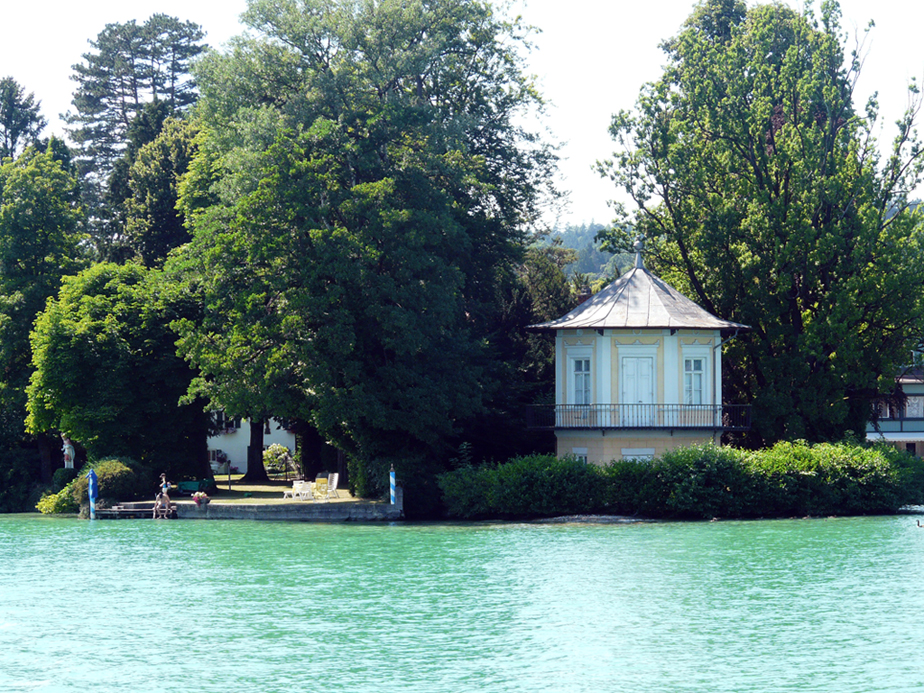
Starnbergersee

Starnbergersee


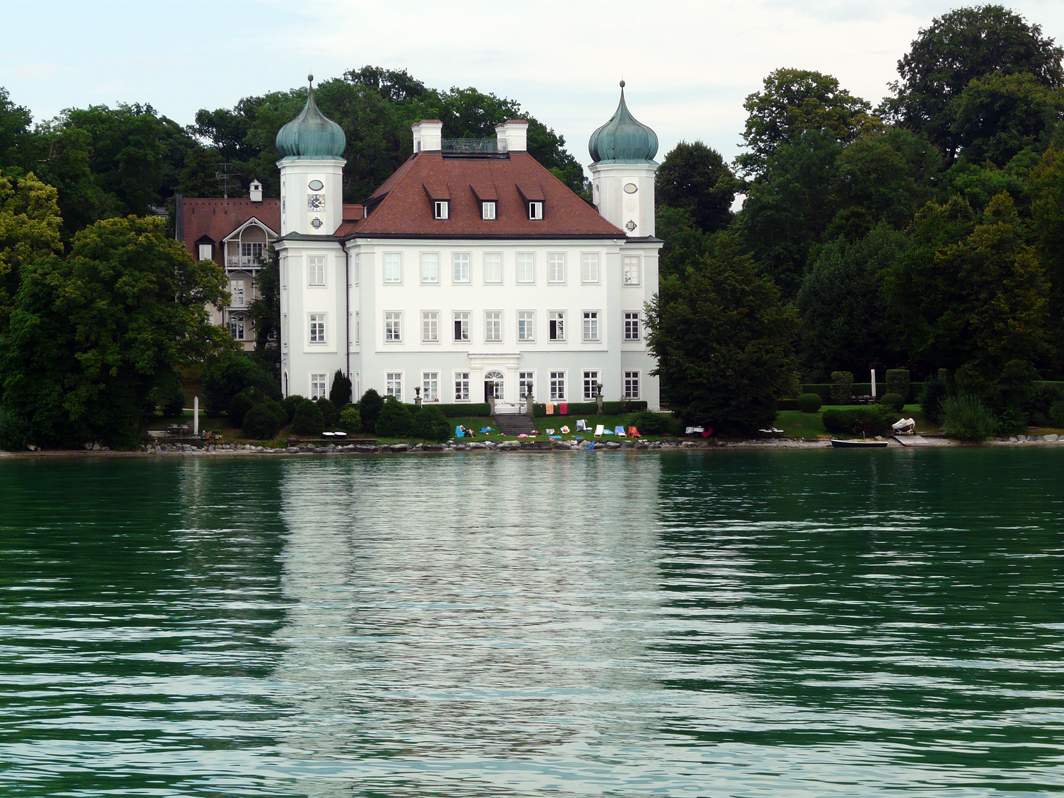
Two languages, two rhythms, two patterns, two spheres, two perceptions … last week I attended a re-union of my primary school class in Bavaria. Around 20 of us turned up.  The event included a ship ride on the lake that marks the geography of my childhood – Starnbergersee – whose shores are garlanded with castles and grand villas. Once I’ve won the lottery I’ll snap up one of these dream places and invite all my readers to a prolonged party with performances of magic theatre. Yeah!


Das Vogelhäuserl

Das Vogelhäuserl


The tour added a refreshing breeze to the sweltering heat. Later in the day a smaller group gathered at a lakeside restaurant, the same spot where, as a child, I turned up in summer holidays, at sunrise, to assist the local fishermen bringing in their full nets, in return for the free use of a small sailing boat during afternoons.

A re-union

A re-union

The encounter with classmates I hadn’t seen for over half a century unfolded like a surreal dream as we cooled down with beer and wine and gossiped time away into the evening. I’m still trying to fit names to faces and places, and make sense of stories that cast stray beams on my memories of the village I grew up in, a village close to the Alps, set in landscapes whose ambiance morphed into the beginning of my first novel.


Schloss Berg

Schloss Berg


Among my class mates were a few women I quickly chimed with, not surprisingly, we were close friends during those early years, though we lost touch when we moved on to different schools. It’s deep and wondrous – the mystery of this precious resonance called friendship.


This is me, aged 6, on my first school day. I was a single child.

Erster Schultag

Erster Schultag

And I well remember the excitement. The Zuckertüte, the upside down magician’s hat filled with bonbons, chocolates and presents to sweeten the transition into the big world seems to grace my head in the photo my dad took. I can’t find the image right now, but I did receive a proper Zuckertüte on the day, filled to the rim.

My favourite teacher (in the group photo with the village poem post, link below) turned up at the re-union, slow on his legs but sharp witted. His eyes lit up when he recognised me, which gave me a warm feeling all over.

Living in England since several decades, I visit Germany periodically to see my grumpy late-artist-dad, and dear German friends, made during my later Sturm und Drang phase. What struck me about the school re-union was how the primary sensation of my childhood was brought to life through words tossed into the conversations, keywords from my mother-tongue, embedded in local dialect. My mother, who came from Berlin, never picked up the Bavarian dialect, neither did I, however, the term mother tongue incorporates for me my early environment, the village. https://courseofmirrors.wordpress.com/2012/08/31/village-poem/

For the greater part of my life I thought by and spoke in the other tongue, which I first learned at school. Aged 18, unsure of my path, I spent a cultural year with a family friend in London. She cherished me. Our relationship was a healing experience for both of us, given her loss of friends and family members in the Holocaust, and my inherited burden of the atrocities having taken place in my country. Later, studying in Munich, English was the language connecting a multicultural student population. When 9 years on I married a Dutch man and we moved to England together, my German vocabulary gathered dust during further studies. The distance from my mother tongue freed up a wider perception. It also helped me overcome an encoded traumatic experience. At secondary school I had written an essay, freely based on a painting of my choice by Spitzweg – writing was then a blissful creative process. The teacher read the essay aloud, praising its brilliance, after which she informed the whole class that I could not have composed this myself – a screaming insult! And yet, I thank the stupid woman, it changed the course of my studies. I initially used photography to express myself, resuming poetry and imaginative writing later, finding that English allowed me the necessary wings.

Who knows what the dusted off layer of my mother tongue will bring round. Writing in the other language helped me to transcend the mere facts of my life to essential themes, universal metaphors. The divided kingdom of parents, the psychology of the single child, her assumed bridging function between patterns of seeing, like the rational and imaginative perception, the distorted mirrors of relationships, betrayals, the search for the real, and the meeting of soul families. Essential themes lifted like green islands from dark waters during my protagonist’s river journey west.

Course of Mirrors is a gripping adventure story, as well as a psycho mythical opus. In its sequel the teller of the story is revealed as the visionary myth-maker overtaken by her myth – in the way that we can re-arrange the past and postulate possible futures, explore different time-zones, and expand expectations.

I must leave it to my readers to judge the results of my experiment. The first book, Course of Mirrors, will be published next year, by a small but devoted publisher.


Are you a writer/artist who processes experience through two or more languages?


38 Comments

Filed under Blog

… we attract more of what we hold in our heart …

I appreciate feedback – please comment. Wrapped up in doing another edit of Course of Mirrors before I head for Spain , I came upon this scene in chapter 21 – below – where Cara, Ana’s soul-sister from the twentieth century, interacts with her in a dream. In the previous scene Ana finally learns from her mother who her natural father is and has her suspicion confirmed. To mend hearts is not easy.

This first novel was character driven, and I get never tired of editing (reading) it. This must be a good sign.

*    *    *

Having wandered unseeing through a copse, I nearly  tripped over a branch. Beyond a downhill clearing, amongst a cluster of beeches, were the tell-signs of a tree house.

Animated, I ran as fast as my legs allowed. A rope ladder dangled from the beech, which I climbed. Under tattered canvas awnings the generous platform had a low table and seating. In a casket, I found items wrapped in waxed cloth – oil-lamps, and blankets. My beloved sanctuary all over again, Luke must have been here or even built the den. Expecting a clue I found one. Carved in the main trunk were the weathered remains of the familiar heart with wings and underneath it faint letters – S&Z – clear evidence to torture my mind – S for Sirus. And Z for Zara, whom I had not met. They were pupils of Ruskin. They would not have known they were siblings. I had heard of their tender friendship. Sudden jealousy crushed me. Luke cared for her – I had no special place in his heart. I wrapped a blanket round me like a tent. Was he still caged in that dark room? Fingering the ruby heart, memory brought a scent – musk trailing in Luke’s step. Curling up on the hard planks, a fantasy unfolded – us together in Magna Spring. We could both explore new ways of seeing … the song of a blackbird lulled me to sleep … 

I walk through endless corridors. A shimmering being by my side radiates golden light and opens a door for me to step through – and another – door upon door. I am guided through a labyrinth. I wake to voices. My eyes open to the surroundings of a sick ward. I don’t want to be here and shut my eyes again.

‘Is she all right? Has she lost her voice?’ Mother worries.

The ward sister reassures. ‘She will come round.’

 I want to prolong the peace and drift into another dream. Cara appears and says, ‘This was my dream. The golden being resembles your Sat, a protective presence that is part of me.’ Cara observes my surprise. ‘Unseen beings live within us. Reality – in any world – is what we accept as real in our imagination. Come, Ana, I will show you something.’

She takes my hand. We enter a small room crammed with students around complex machinery. Colourful lights flicker on dark panels with rows of buttons. They are marked by numbers and letters. The atmosphere is one of a starlit night. Behind the panels sits the tutor, a burly man with a red beard, resembling Tatum. He talks excitedly about the expansion of a single bird sound and demonstrates how this is done. 

At the press of a button the melodious trill of a blackbird fills the room. The tutor runs his fingers over the lights and slides knobs on a panel. The blackbird’s tune repeats itself. Its sound is stretched and then overlaid, softened, strengthened, speeded up, slowed down, turned round in time and overlaid again, forwards and backwards. The tutor extracts a rhythm, sets a base note and adds different keys at different speeds, until the bird’s song has been absorbed into a strange and beautiful symphony. A hush fills the room. The tutor sits back and beams. We share his happiness. ‘This, my friends, can evolve from the trill of a blackbird, using a digital system.’ 

I want this explained. Cara pulls my hand and we drift into another space, a garden, where we settle on a stone seat. She looks at me with eyes that always seem like my own. ‘In your world, sensual date is recorded on surfaces. Scores, texts, images and numerical figures are imprinted on tablets and fibres. Copies are made, and copies of copies that eventually decay. In my lifetime we record sound and condense any kind of information into binary codes, which can be multiplied and rearranged indefinitely. 

‘What’s a binary code?’ I ask 

‘A system based on light pulses that switch on and off. Used in endless combinations and sequences these pulses transmit unimaginable amounts of information – weightless – in abeyance – send as bit-strings to a particular location. On arrival they are temporarily assigned to a context, decoded, expanded and reassembled. A play of random associations can offer fresh insights, as happens in dreams. Snippets, like the bird sound that became a symphony.’

What she describes is beyond my grasp, but the idea of reassembly sparks my excitement. ‘I cut my paintings of seascapes into squares and patch them together into a new image, joining different perspectives to express my sense of the vast body of water.’

Cara laughs, ‘Exactly you’ve been using the same idea!’

‘Some fellow students think I am making a farce of reality. My tutor thinks I show what is beyond the eye. It is not a lie. I express what I perceive, a kind of energy.’ 

Cara says, ‘our heart-mirrors reflect deeper realities. Value your imagination, but choose what you give energy to, be clear what you want to reflect. When a thought is ripe it manifests. What we hold in our heart acts like a magnet, attracting more of the same.’

I woke with the phrase – we attract more of what we hold in our heart – and cringed. What I held in my heart today was resentment. I did not want more of the same. Climbing back up the hill to the mansion I saw my mother standing with Rheine. They looked out over the harbour from where faint music and revelling could be heard. My conscience pleaded and would not be ignored. Rheine met me halfway. We embraced easily, deeply, like back in Kars, when we were refugees in the night. Rheine was going to be my witness. I reached for mother’s hand. She stepped close, eyes wide in astonishment. ‘Mother,’ I said, ‘I love you.’ She folded into my arms, like a child. For that moment I was the mother she had longed to have.


7 Comments

Filed under Blog